An early 1800’s glimpse into both the frivolous and more serious occupations filling a young lady’s day in the lifetime of Jane Austen, or the Regency Era. Historic images and historical information show her fashions and frolics. Shows the often-frivolous life and fashions of a young lady in the early 1800’s, plus a glimpse into the more serious occupations a young lady may undertake. Through historic images, historical information, and funny anecdotes, it shows how a young lady fills her day. Young Lady’s Day Regency Life Series Book 4 by Suzi Love. https://books2read.com/suziloveYLD
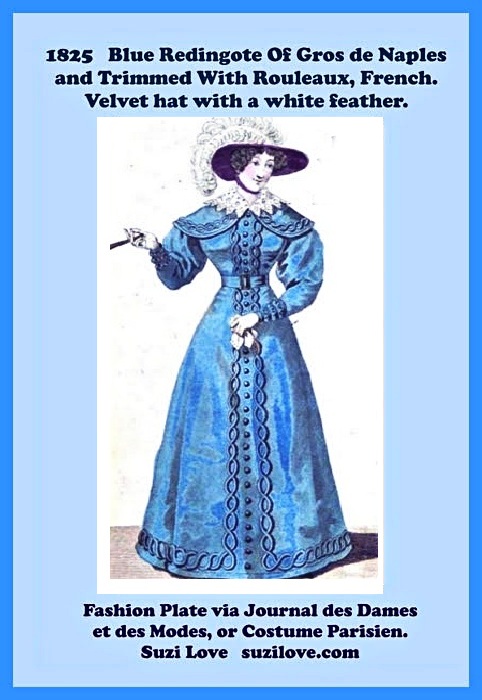
1805 Pink Redingote With Train, French. White dress with high neck frill, green shawl, velvet hat with leaf shapes to decorate the front, necklace, silk scarf as a belt and white gloves.Fashion Plate via Journal des Dames et des Modes, or Costume Parisien.
Jane Austen and her contemporaries would have wore long coats like this one to keep warm when out and about, visiting, shopping etc. The thin muslin dresses worn in the early 1800s were little protection against European winters so coats of some sort were added, plus colorful accessories like this shawl and the hat to add color and another layer of warmth.
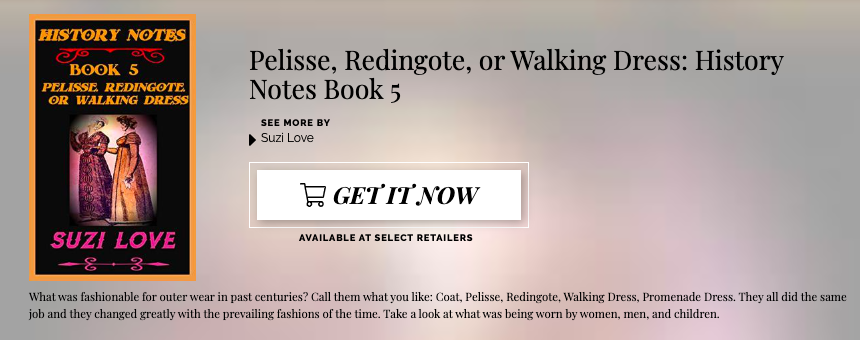
Definition Redingote Or Coat Or Pelisse: Long fitted outdoor coat worn over other garments for warmth. French word developed from English words, riding coat. French fashion plates call these coats Redingotes and they are designed for women, men and children. English fashion plates call them a Pelisse, a walking dress, Promenade dress, or Carriage dress.
Regency Era Overview: Images, information, funny anecdotes give overview of Jane Austen’s and Bridgerton’s times. #Bridgerton #RegencyEra #JaneAusten #BritishHistory https://books2read.com/suziloveROver
Love the Bridgerton Series? Fan of Jane Austen? What did men wear in the early 1800s? Suits, hats, shoes, underclothing, military and bedroom fashions. #Bridgerton #RegencyFashion #JaneAusten #BritishHistory.
The Regency Era saw a wide variety of acceptable pants for men. Breeches were worn as part of a man’s daily outfit during the early 1800s and were necessary for formal occasions, such as court appearances, during the entire Regency Era. However, younger gentlemen moved away from breeches for daytime wear around 1807 and adopted a variety of long pants called trousers, pantaloons, buckskins or inexpressables. Knee-length breeches, worn with stockings, continued to be worn by older gentlemen through the entire Regency Era.
Around 1807, upper class gentlemen wore trousers held up by suspenders or pantaloons, which were closely fitted and worn with tall boots. Buckskins, made from deerskin, were comfortable to wear for riding. Inexpressibles were very tight leggings that left little to the imagination of young ladies. Every Regency man’s outfit included a hat, gloves, shoes or boots, and a selection of added accessories from a walking stick, watch on a chain, fobs, coin purse and a handkerchief.
1809 January Walking Dress, English. Polish bonnet, mantle of gold velvet with an invisible hood trimmed with ermine, antique collar fastened with a gold ornament in form of a shell. Morning dress, white muslin Brussels spot, with worked stomacher, trimmed down the front and at the bottom, worked along hanging sleeves, twisted and fastened at the wristband with small gold ornament to match mantle and cincture of the dress, gold sandals laced with brown cords and tassels and York tan gloves. Plate via Rudolph Ackermann’s ‘The Repository’ of Arts.
1810 Three Piece Gentleman’s Purple Court Suit, French. Worn by a rich and fashionable gentleman after Napoleon Bonaparte revived court traditions when he crowned himself Emperor of France in 1804. Gentlemen were expected to wear extravagant court dress, but the working class despised these luxurious fashions and royal overspending. Wastage of France’s money spurred French peasants to rise up in revolt and create the French Revolution. via Metropolitan Museum, N.Y.C., U.S.A.metmuseum.org
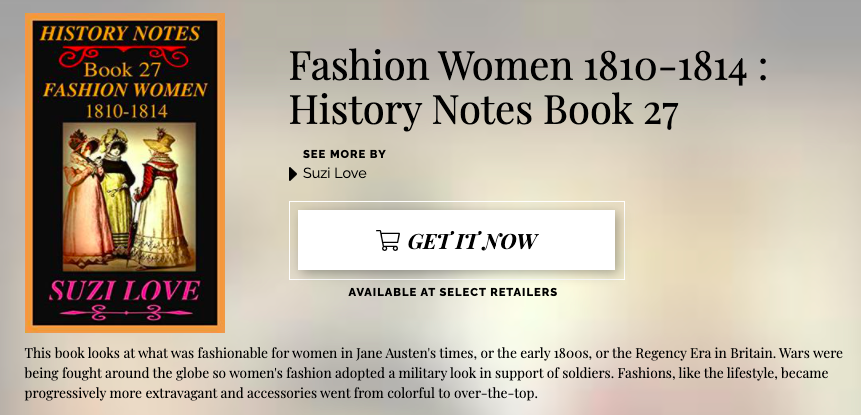
An overview of women’s fashions in the first twenty years of the 19th century. What was fashionable for women in Jane Austen’s times, or the early 1800s. Wars were being fought around the globe so women’s fashion adopted a military look in support of soldiers. In Britain, the Prince Regent ruled instead of his father, King George III, so fashions, like the lifestyle, became more extravagant and accessories went from pretty to opulent. This set includes books 12, 25, 26, 27 and 28.
What was fashionable for women in Jane Austen’s times, or 1800s, or Regency Era. High-waisted dresses were extravagantly accessorized and hats, shoes, parasols and bags were added. Set includes History Notes Books 12, 25, 26, 27 and 28.
1807 Two Ladies and a Gentleman, English. Lady in lavender walking dress, or Pelisse, with fur trim, holding a blue reticule or bag, fitted lavender bonnet with tassel and yellow gloves. Lady in white evening dress with salmon tunic caught up at one side and evening turban. Man in long blue overcoat, or Redingote, with contrasting collar, high white cravat, yellow gloves, tall Hessian boots with tassels, and wearing a top hat. via Le Beau Monde, or Literary and Fashionable Magazine, London, U.K.
These are the types of outfits worn by Jane Austen and contemporaries in England and shown in their English magazines. The same designs had probably already been seen in France, because English publishers obsessively copied French fashions despite the two countries being at war for many years.
1812 Military Pelisse, Or Shoulder Cape, British. Charles Stewart in hussar uniform with a military pelisse slung over his shoulder. By Thomas Lawrence.
1800 Gentleman and Son, French. Man in brown, double-breasted, cutaway coat with wide fur collar, ankle length loose trousers with a fob at his waist, black shoes. Son in high-waisted trousers, white shirt, red jacket, black hat and shoes and carrying a sword. Fashion Plate via Journal des Dames et des Modes, or Costume Parisien.
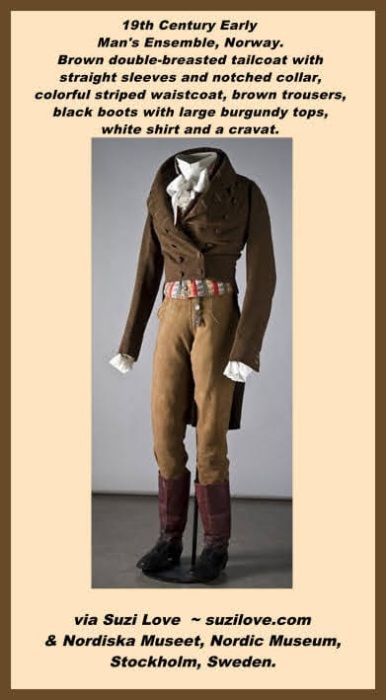
During the early 1800s skirted coats were replaced with short-fronted, or cutaway, tailcoats worn over fitted waistcoats and plain, white linen shirts. Knee breeches were gradually replaced by tight-fitting pantaloons and later trousers, decorative shoes were replaced with boot, such as the tan topped boots worn here, and fussy neckwear gave way to intricately tied, white linen neck cloths.
A Regency Era, or early 1800s, gentleman was outfitted in more practical fabrics, such as wool, cotton and buckskin rather than the fussy brocades and silks of the late 1700s. The men in Jane Austen’s life would have worn an elegant outdoor ensemble like this for everyday excursions around the countryside.