1750-155 ca. Writing Cabinet, Probably by Michael Kimmel, Germany. Veneered in kingwood, marquetry of mother-of-pearl, ivory and brass on pine, stained alder or birch. Mounted in gilt brass and with giltwood, carving of cypher of Augustus III. via suzilove.com Victoria and Albert Museum, London, UK. collections.vam.ac.uk.
19th Century Mid Dance Card or Aide de Memoire. Jeweled and enameled gold dance card with concealed timepiece. Lid with a blue enamel with rose-cut diamonds floral wreath, opening to compartment with watch dial, pencil, and notebook. via Sotheby’s Auctions. sothebys.com
1700 ca. Chess and Backgammon Box, Augsburg. Decorated in violet wood veneer, ebony and ivory. Ivory checkers and chess pieces, hinges and push button lock in gilded brass, two horn goblets, two ivory dice, thirty-none checkers’ pawns stamped both sides with effigies of cities, Munich, Vienna, Nuremberg, Prague, Danzig, of kings and queens, Prussia, England, Scotland, Poland, and various scenes. Via AnticStore.com
This book depicts the often-frivolous life and fashions of a young lady in the early 1800’s, but also gives a glimpse into the more serious occupations a young lady may undertake. Through historic images, historical information, and funny anecdotes, it shows how a young lady fills her day, where she is permitted to go, and who she is allowed spend time with. These light-hearted looks at the longer Regency years are an easy to read overview of what people did and wore, and where they worked and played. There is plenty of information to interest history buffs, and lots of pictures to help readers and writers of historical fiction visualize the people and places from the last years of the 18th Century until Queen Victoria took the throne. Young Lady’s Day Regency Life Series Book 4 by Suzi Love. https://books2read.com/suziloveYLD
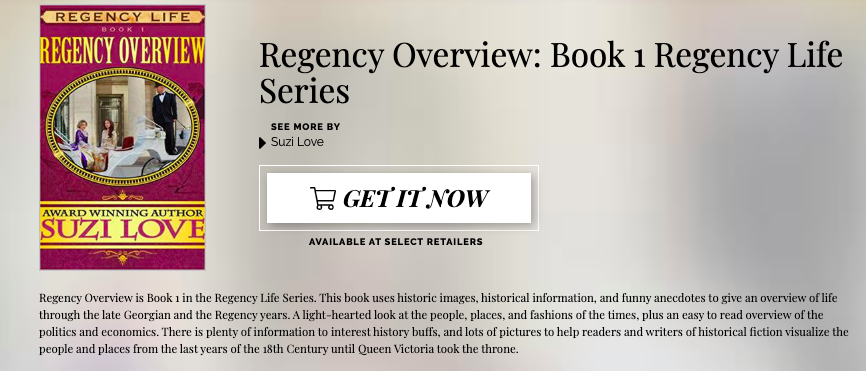
Regency Era Overview: Images, information, funny anecdotes give overview of Jane Austen’s and Bridgerton’s times. #Bridgerton #RegencyEra #JaneAusten #BritishHistory https://books2read.com/suziloveROver
1807 Lady In A Trained White At-Home Dress With Blue Trim Taking Tea, French. Very low cut bodice and white lace cap. Fashion Plate via suzilove.com and Journal des Dames et des Modes, or Costume Parisien.
The Journal des dames et des modes was a French fashion magazine published between 1797 and 1839 and was the second oldest fashion magazine published in France, replacing the Cabinetdes Modes (1785-1793). The magazine was the main source for French fashions, both in France and internationally. Pierre de la Mesangere was editor and main journalist for most of the time the magazine was in existence and he published a magazine every five days, which is why there is an abundance of French fashion plates from these years. The magazine had eight pages of text, one or two colored fashionplates, plus poetry, theatre reviews, current social news and fiction. During the Napoleonic wars, everything to do with France was unpopular, especially in Britain, yet French fashions thrived and so did the Journal des Dames et des Modes, despite the numerous other fashion magazines that copied the magazine.
19th Century Tantalus, or Drink Holder, With Hand-Painted Glasses and Bottles, as would have been used in the homes of Jane Austen and the Bridgertons. via 1st Dibs Auctions 1stdibs.com
Tantalus: A small wooden cabinet containing drink decanters. The box has a lock and key to keep unauthorised people from drinking the contents e.g. servants and younger sons, yet still allowing the decanters of drinks to be on show. The word, Tantalus, is a reference to the unsatisfied temptations of the Greek mythological character Tantalus. Patented in the UK in 1881 by George Betjemann, a cabinet maker from the Netherlands, whose workshop was on Pentonville Road, London from the 1830s.This type of small drinks cabinet would have been used in most households during the Bridgerton family’s and Jane Austen’s times, unless the householders were teetotalers. via 1st Dibs Auctions 1stdibs.com
1860 ca. Gilt Chatelaine With Etui. Hanging chatelaine with seven carbochons, gilt tools inside etui, or small container, of scissors, bodkin, knife, stiletto, pencil case, combination tweezers and ear spoon and ivory aid memoire, or notepad. via Needle’s Work Antiques. needleworkantiques.com
Definition Chatelaine: The word Chatelaine is French and means the keeper of the keys. Chatelaine” derives from the Latin word for castle. In Medieval times, the chatelaine was in charge of the day-to-day running of the castle. Women in charge of households dangled long chains from their waists to keep essentials within easy reach e.g. keys, notebook and pen, watch, sewing items, vinaigrette or perfume, or magnifying glass. Early chatelaine were simple essentials. Later chatelaine were decorative and expensive.books2read.com/SuziLoveChatelaines
Are you a Bridgerton fan? Love Jane Austen? Love history? Take a look at a Young Gentleman’s Day in the early 1800s. Light-hearted look at a young man’s day in the early 1800s. Depicts the ups and downs of a young gentleman’s day in the Regency Era, or Jane Austen’s years. Through historic images, historical information, and funny anecdotes, it shows how a young man about town fills his day, where he goes, and who he spends time with. This light-hearted look at the longer Regency years is an easy to read overview of what people did and wore, and where they worked and played. There is plenty of information to interest history buffs, and lots of pictures to help readers and writers of historical fiction visualize the people and places from the last years of the 18th Century until Queen Victoria took the throne. books2read.com/suziloveYGD
Historic images, historical information, and funny anecdotes give an overview of life in the early 1800s. Information for history readers and writers of the Regency Years, for Jane Austen fans and all history buffs. Pictures help visualize the people and places of the long Regency period. https://books2read.com/suziloveROver Regency Overview Regency Life Series Book 1 by Suzi Love.
The Regency Life Series By Suzi Love depicts the ups and downs of life in the early 1800’s, or Jane Austen’s years, or the Regency Era. Fun pictures, historical information, and funny anecdotes show how people fill their days, where they go and with whom they spend their time. These light-hearted looks at the longer Regency years are an easy to read overview of what people did and wore, and where they worked and played. Plenty of information for history buffs and lots of pictures help readers and writers of historical fiction visualize the last years of the 18th Century until Queen Victoria took the throne.