1845 Woman’s Dress, Probably Made In England. Silk Taffeta and glazed linen plain weave. via Los Angeles County Museum of Art, California, USA. collections.lacma.org



1845 Woman’s Dress, Probably Made In England. Silk Taffeta and glazed linen plain weave. via Los Angeles County Museum of Art, California, USA. collections.lacma.org
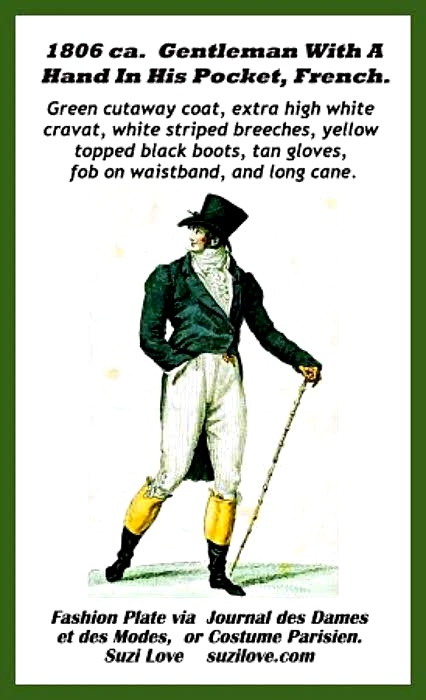
1806 Gentleman With A Hand In His Pocket, French. Green cutaway coat, extra high white cravat, white striped breeches, yellow topped black boots, tan gloves, fob on the waistband, and long cane. Typical Gentleman’s outfit as worn by men to daytime activities, such as escorting his female family members to the shops in Bond Street,London,or for walking in the park in Jane Austen’s times. Fashion Plate via Journal des Dames et des Modes, or Costume Parisien.

1805 Red Velvet Redingote, French. Shoulder cape with satin piping on the coat, white dress underneath, black hat with flowers to trim and white gloves. Fashion Plate via Journal des Dames et des Modes, or Costume Parisien. This is the type of outdoor walking dress, or pelisse, worn by Jane Austen and contemporaries in England as French fashion plates were obsessively copied despite the two countries being at war for many years. English fashion magazines frequently published plates copied from French fashion magazines.
This is the type of outdoor walking dress, or pelisse, worn by Jane Austen and contemporaries in England as French fashion plates were obsessively copied despite the two countries being at war for many years. English fashion magazines frequently published plates copied from French fashion magazines.
Definition Redingote, Pelisse, Walking Dress: The term, Redingote, was used more in France and other parts of Europe and Pelisse or Walking Dress was used more in England. While the terms Redingote and Pelisse are often used interchangeably, the Redingote usually features a close fitted top and flares out at the hemline with a more tailored or military look than a Pelisse.


An overview of women’s fashions in the first twenty years of the 19th century. What was fashionable for women in Jane Austen’s times, or the early 1800s. Wars were being fought around the globe, so women’s fashion adopted a military look in support of soldiers. In Britain, the Prince Regent ruled instead of his father, King George III, so fashions, like the lifestyle, became more extravagant and accessories went from pretty to opulent. This set includes books 12, 25, 26, 27 and 28. https://books2read.com/SuziLoveFashionWomenBoxSet
Ladies clothing in the early 1800’s featured a high waist line called an Empire Line, or Empire style dress, with a waist line just under the natural bust line and much higher than the natural waist. The high-waisted, or short-bodied, Regency styles shifted focus away from the natural waist and so left the natural waist unconstricted, in direct contrast to previous and future styles. Britain took these simple European styles and progressively made them more elaborate by adding more and more complicated embroidery onto white fabrics to create the white on white look popular for many years.
The empire look of fine muslin dresses left women more exposed than in the Georgian Era when fabrics had been thicker and styles bulkier. Women, especially in England, preserved their modesty by adding lace, frills, flounces, ruches, and fabric plaits to dresses to adequately cover any parts that might inadvertently be exposed. Outer layers, such as Spencers, Redingotes or Pelisses or coats, and shawls, were also added for warmth and to brighten outfits.
This Empire fashion was totally dependent on a supply of fine, translucent cotton muslin – at first imported from India, then later, less exclusive imitations often woven and printed or embroidered in Britain. Fabrics were soft and lightweight and muslins and other cotton fabrics from India and other Asian countries were in high demand.


1780 Stays and Panier, or Hoop Petticoat, England. via suzilove.com and Los Angeles County Museum of Art, California, USA. Stays: Brown linen twill and baleen. Panier: Woman’s hoop petticoat, or pannier, of linen plain weave and cane 1750-1780. via Los Angeles County Museum of Art, California, USA. collections.lacma.org


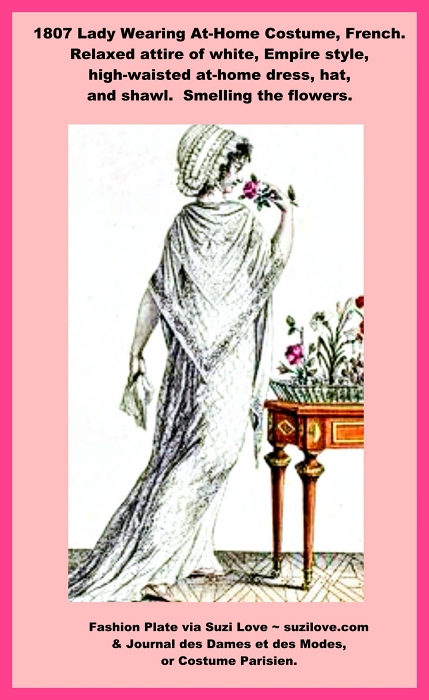
1807 Lady Wearing At-Home Costume, French. Relaxed attire of white, Empire style, high-waisted at-home dress, hat, and shawl. Smelling the flowers. Jane Austen and her family and friends would have worn this style of dress. Fashion Plate via Journal des Dames et des Modes, or Costume Parisien.
Typical outfit worn at home in the morning when at home and to be seen only by family or close friends. A lady might wear this while writing having breakfast, writing letters, or reading. Called by the various names of Undress, to At-Home dress, or Morning dress, it is the most relaxed ensemble a lady will wear all day.


1815 Man’s Cutaway Coat, American. Blue patterned linen, double breasted cutaway coat with a V-cut collar. via The Metropolitan Museum metmuseum.org


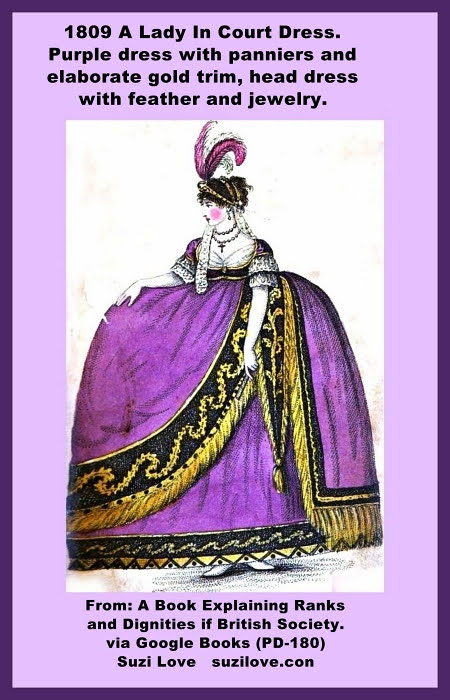
1809 A Lady In Court Dress. From: 1809 A Book Explaining Ranks and Dignities in British Society. via Google Books (PD-180)
Definition Court Dress: Usually, the difference between a court dress and a ball dress was in the quality of fabrics used, how elaborate the design, and the number and quality of the accessories. Plus, in England in the early 1800s court dresses were required by Queen Charlotte to have hoops and in France and other European countries court dresses a long train, usually expensively decorated. During the Regency Era, white cotton dresses were considered suitable for many evening events, but definitely not for an evening event in a palace.
Fashion Women 1805-1809 History Notes Book 26 What did Jane Austen and friends wear? This book looks at early 1800s fashions, which were elegant and pretty with high waists and fabrics that were almost transparent. These Empire style gowns, named after Napoleon’s first Empress, became popular throughout Europe, and were then copied around the world. Colorful outwear was added to make an ensemble more attractive and warmer.
1809 Lady In Purple Court Dress Worn In Jane Austen's Times. #JaneAusten #RegencyFashion #CourtDress https://books2read.com/SuziLoveFashionWomen1805-1809 Share on X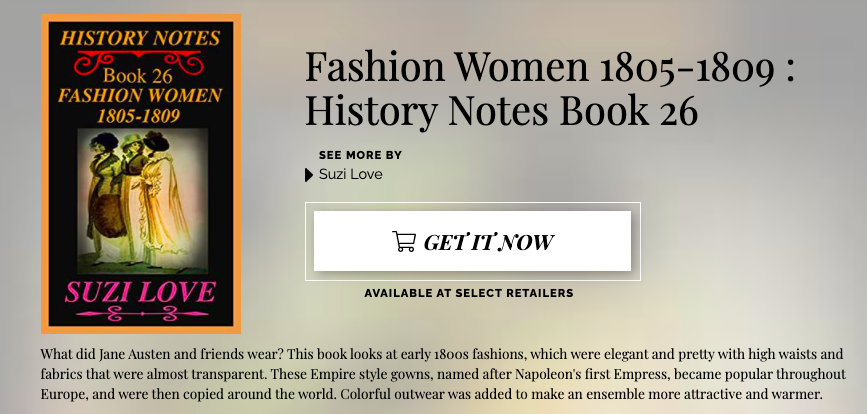
1800 ca. Tan Corduroy Breeches. Drop down front flap, or ‘fall’, with two buttons, three silver metal buttons at the waistband, watch pocket, corner pockets with buttons, pieced back with waist tie, saggy back with extra fabric to allow for easier movement when riding or sitting, four buttons and silk ties at knee. via Whitaker Auction whitakerauction.smugmug.com. Typical of a gentleman’s breeches worn during the early 1800s, or the Regency Era, or Jane Austen’s times. They have a front flap, or fall, which unbuttons and drops down and a back waist tie to adjust the waist size and there are buttons and ties to secure the breeches below the knee. https://books2read.com/SuziLoveFashionMen1800-1819


