1795-1805 ca. Green Silk and Metal Vest, Or Waistcoat, Probably French. The style of waistcoat worn by men in Jane Austen’s times. Interesting cross-over front and tasteful embroidery, standing collar, back has ties to adjust the fit. via Metropolitan Museum, N.Y.C., U.S.A. metmuseum.org
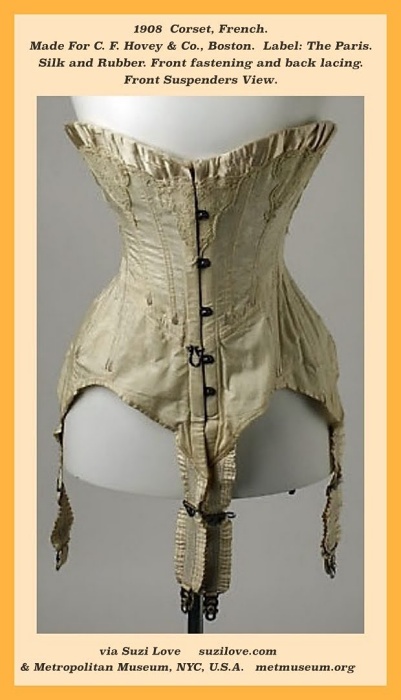
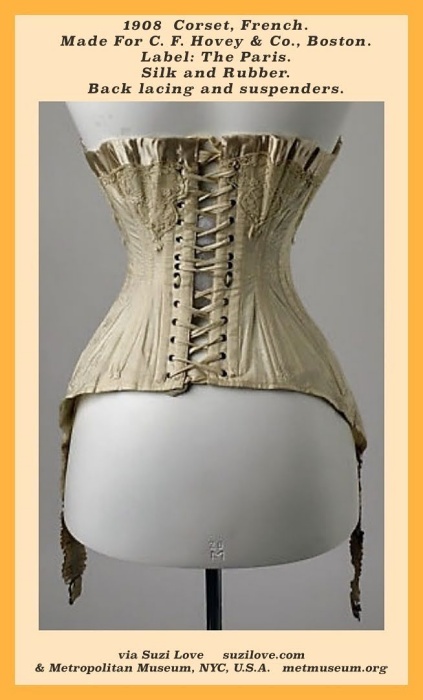
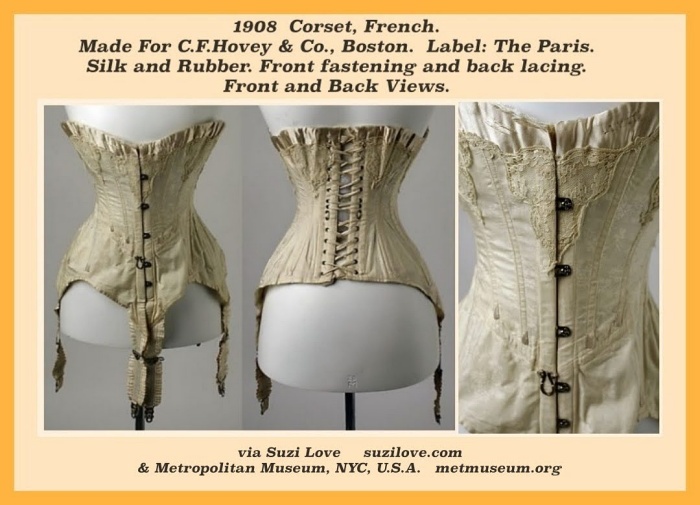
1908 Silk and Rubber Corset, French. Front fastening, front suspenders, and back lacing. Made For C. F. Hovey & Co., Boston. Label: The Paris. Marking: label “7.50, Made in France, Véritable Baleine, Brévété S.G.D.G., Best Whalebone THE PARIS, Made in France, expressly or C.F. Hovey and Co., Boston.” stamped on bone lining of corset]; “Corset de Paris” paper label via Metropolitan Museum, NYC, USA Credit Line: Gift of Mrs. Earl Rowe, 1951 Accession Number: C.I.51.15.25a, b
1908 Front Fastening View Of Corset, French. Made For C. F. Hovey & Co., Boston. Label: The Paris. Silk and Rubber. Front fastening and back lacing. via Suzi Love suzilove.com & Metropolitan Museum, NYC, U.S.A. metmuseum.org1908 Front Fastening View Of Corset, French. Made For C. F. Hovey & Co., Boston. Label: The Paris. Silk and Rubber. Front fastening and back lacing. via Suzi Love suzilove.com & Metropolitan Museum, NYC, U.S.A. metmuseum.org1908 Back Lacing Of Corset, French. Made For C. F. Hovey & Co., Boston. Label: The Paris. Silk and Rubber. Front fastening and back lacing. via Metropolitan Museum, NYC, U.S.A. metmuseum.org1908 Label For Front Fastening and Back Lacing Silk and Rubber Corset, French. Front fastening and back lacing. Made For C. F. Hovey & Co., Boston.1908 Front Suspenders and Back Lacing Silk and Rubber Corset, French. Front fastening and back lacing. Made For C. F. Hovey & Co., Boston.1908 Front Suspenders and Fastenings and Back Lacing Silk and Rubber Corset, French. Front fastening and back lacing. Made For C. F. Hovey & Co., Boston.1908 Silk and Rubber Corset, Front Fastenings and Suspenders and Back Lacing, French. #Edwardianera #Corset #HistoricalFashion #France #Boston books2read.com/SuziLoveCorsetBook21 Share on XCorsets 1900s History Notes Book 21
Corsets during early 1900s when a fashionable
silhouette became of paramount importance
and a well-fitted corset a fashion essential.
books2read.com/SuziLoveCorsetBook21
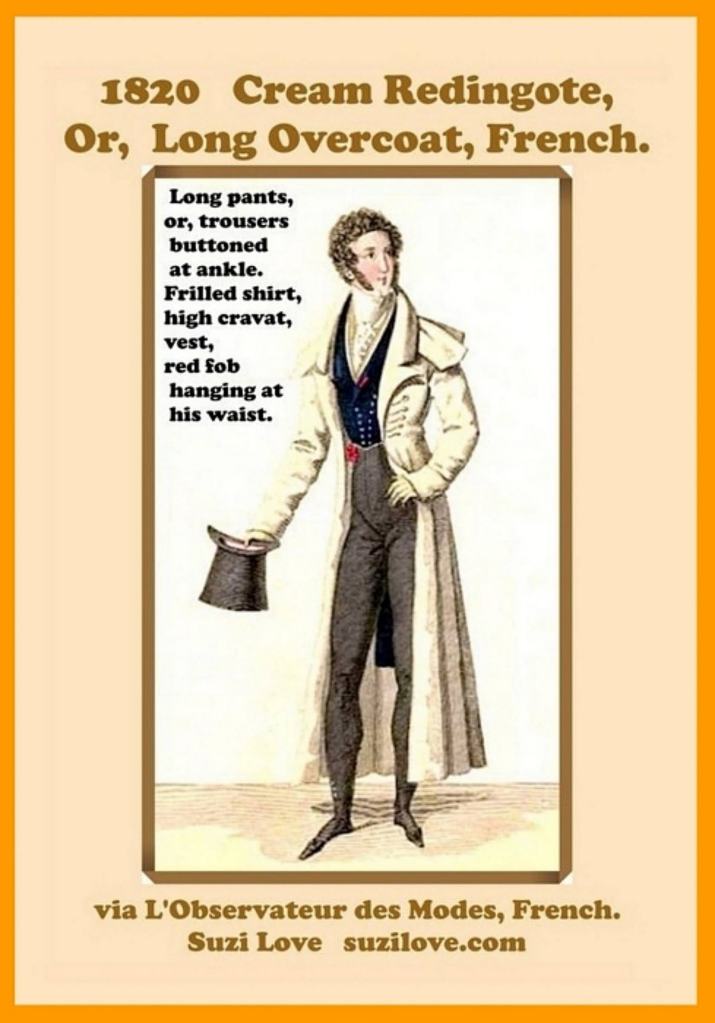
1820 Gentleman’s Cream Redingote, Or Long Overcoat, French. Long pants, or trousers, buttoned at the ankles, frilled shirt, high cravat, vest, red fob hanging at his waist. via L’Observateur des Modes, French.
19th Century Writing Set, French. Old Paris porcelain pot with ormolu fittings, set on a pen tray that is papier mache and hand painted in Chinoiserie, Or Japonaise, Style. The type of writing sets that households would have in Jane Austen’s times for writing letters and keeping track of estate matters. Chinese and Japanese styles of household goods were very fashionable during the English Regency and Victorian years. via Ruby Lane Antiques. rubylane.com
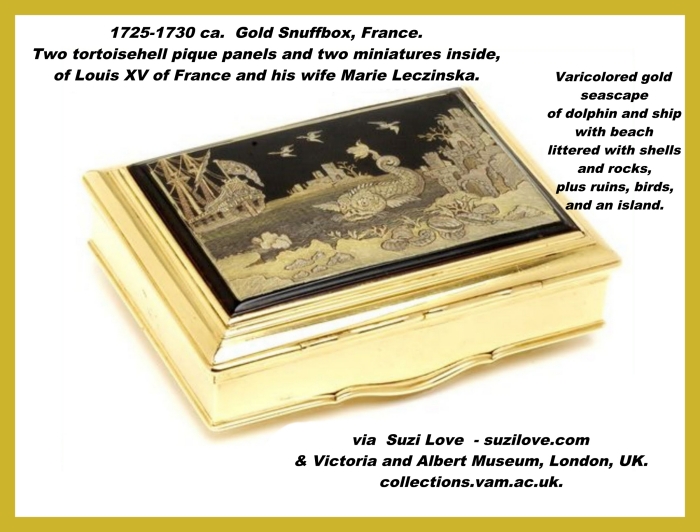
1725-1730 ca. Gold Double-Opening Snuffbox, France. Two tortoiseshell pique panels and two miniatures inside, of Louis XV of France and his wife Marie Leczinska. Made by Jean Baptiste Massé, painter.
Varicolored gold seascape of dolphin and ship with beach littered with shells and rocks, plus ruins, birds, and an island. Inside the box are miniature portraits of Louis XV of France and his wife Marie Leczinska. It has been suggested that the box commemorates the birth of the ‘dauphin’ Louis in 1729, the royal couple’s fourth child, and first son, heir to the throne. A few elements contradict this suggestion: the dolphin does not bear any regal symbol such as a crown, the marks that date the box indicate that it was initiated before the birth of Louis, when the arrival of a son was unknown. It is most probable that these delicate panels, together with the miniature of Louis XV, date from 1725-1730 and have been associated later into this gold snuffbox, and a later miniature of Queen Marie Leczinska.The miniature of the king may have been painted by Jean-Baptiste Massé – he is recorded as supplying miniatures of the king for boxes intended as diplomatic gifts from 1720-26-, or by his lesser known contemporary Jean-Baptiste Ducanel.
The lid is hinged to reveal a miniature, under glass, of Marie Leczinska, queen of France, probably 19th century or heavily restored, wearing a cloak of blue embroidered with gold fleurs-de-lis and lined with ermine overa lace-trimmed dress of red embroidered with gold. In the base is a panel of tortoiseshell pique with a cornucopia of small shells, also hinged to reveal a contemporary miniature of Louis XV of France in armour, wearing a whitestock and the sash of the Order of the Holy Ghost. The gold box, probably early 19th century or later, has plain walls, reeded borders, and a double thumbpiece.
Sir Arthur Gilbert and his wife Rosalinde formed one of the world’s great decorative art collections, including silver, mosaics, enamelled portrait miniatures and gold boxes. Arthur Gilbert donated his extraordinary collection to Britain in 1996.
Snuff Boxes: Decorative boxes of all types were prized, especially in the 18th Century when everything decorative and extravagant was in vogue and taking a pinch of snuff was fashionable. Snuff is made from ground or pulverized tobacco leaves, flavorings added, and then a pinch of snuff is placed on the back of the hand and sniffed.
1815 Blue Dress Bodice, French. Layers of frills on dress back. Hairstyle and Various Bonnets as Jane Austen would have worn. Fashion Plate via Journal des Dames et des Modes, or Costume Parisien.
1801 Dress With Train, French. English style coat and Polonaise hat to match dress. Fashion Plate via Journal des Dames et des Modes, or Costume Parisien.
1813 Yellow Redingote Or Coat, French. Hooded coat with gorgeous white trim, yellow boots, yellow velvet bonnet with a white plume. Jane Austen and her female family and friends wore fashions like these. Fashion Plate via Journal des Dames et des Modes, or Costume Parisien.
Redingote, or Pelisse, or Walking Dress, or Promenade Dress: Going by many names, this is a coat copied from men’s overcoats but worn by both men and women. Generally, opens down the front, worn for warmth over a dress or coat and breeches, and has a military look with front vertical buttoning or decoration. Called a Redingote in French periodicals but English magazines called them by many other names: pelisse, carriage dress, walking dress, promenade costume.
1814 Couple In Walking Ensembles, French. Gentleman in a brown tailcoat with a notched collar and back pockets, vest, white breeches tied under his knees, red fob at the waist, white stockings, high white shirt collar, white cravat, top hat and cane. Lady in adorable pink Redingote with capes.