19th Century Mid Child’s Red Leather Shoes, American. Bow decoration on fronts.via Metropolitan Museum New York City, U.S.A. metmuseum.org

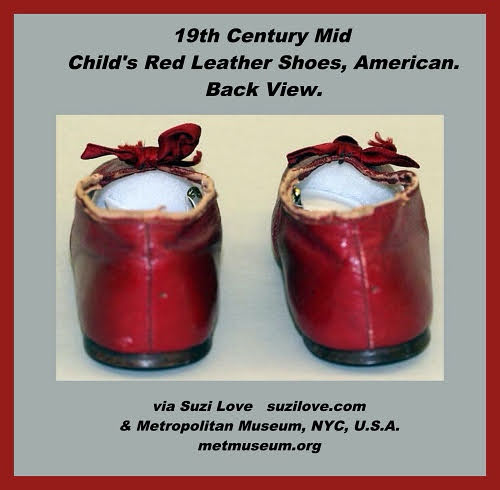



19th Century Mid Child’s Red Leather Shoes, American. Bow decoration on fronts.via Metropolitan Museum New York City, U.S.A. metmuseum.org
1812 August. Ball Dress, English. Dress with lower waistline than normal in the Empire period, pink laced bodice, with decorative sleeves, skirt with pink hem decoration, pink hat with pretty plume, and yellow gloves. Fashion Plate via John Belle’s ‘La Belle Assemblee’, London. https://books2read.com/SuziLoveFashion1810-1814
Definition: Ball Gown or Dress: From the early 19th century onwards, ball gowns were regularly illustrated and described in women’s magazines as minute distinctions between ball, dinner, evening and opera gowns. Ball gowns were of expensive silk fabrics, light or heavy, decorated with lace, embroidery or beading, with low-cut bodice, short or no sleeves, and a full skirt.

Writer Or Reader Of Regency Era?What did Jane Austen and friends wear? Women’s clothing changed dramatically in early 1800s. New silhouette copied simplistic styles of Greeks and Romans. High-waisted white dresses and flowing skirts with color and warmth added by outerwear and accessories. Fashion Women 1801-1804 History Notes Book 25 https://books2read.com/SuziLoveFashionWomen1801-1804
Definition Empire Style Dress: High-waisted white gowns defined women’s fashion during the Regency Era. ‘Empire’ is the name given to the period when Napoleon Bonaparte built his French Empire. High-waisted, loose gowns were adopted by the aristocracy as a symbol of turning away from the elaborate clothing worn in the 1700s. This sort of high-waisted dress would have been worn by Jane Austen and her contemporaries in England.
Definition Shawls: The shawl started off in India as a fine wool garment for men that could be worn as a scarf, turban or as a mantle: the word comes from the Persian shäl. Originally imported from the East, European Kashmir shawls were made first in Norwich and Edinburgh in Britain in the late 18th century. Shawls were an essential item in the early 1800s to cover the thin gowns women wore. They were made of muslin, gauze, silk, wool, and velvet, though cashmere shawls were the softest and most prized.

Older Lady’s Day, Regency Life Series, Book 5, by Suzi Love. books2read.com/suziloveOLD
Light-Hearted look at an Older Lady’s Life In Jane Austen’s Times, or early 1800s. An easy to read overview of what an older lady did, wore, and how she lived in the early 19th Century. Information for history buffs and pictures for readers and writers of historical fiction.
The older lady’s day usually started with her toilette in her bedroom, where her maid helped her dress for the day and styled her hair. After that, she would join her family downstairs for breakfast unless she preferred a tray with either tea or hot chocolate in her bedroom as she prepared for her busy day. Her day would be made up of speaking with the housekeeper and the cook about the week’s menus, assuring that the servants were all available that day and no one was ill, and checking the list of foods needed. She would also enquire if the laundry was up to date and that they had enough good linen to make up all the beds before extended family members and guests arrived. If she was in the country and hosting a weekend house party, she would assign rooms to the guests on her lists and query that all was in readiness for their arrival.

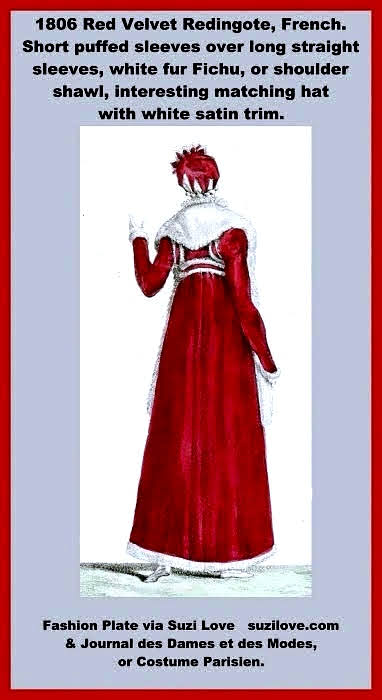
1806 Red Velvet Redingote, French. Short puffed sleeves over long straight sleeves, white fur Fichu, or shoulder shawl, interesting matching hat with white satin trim. Fashion Plate via Journal des Dames et des Modes, or Costume Parisien.
Redingotes or Pelisses were needed to cover the flimsy dresses made of lightweight fabrics of the Regency years to provide warmth and some protection from windy conditions when gowns might lift and cause modesty issues. Jane Austen and her contemporaries often walked to places and so would have needed the warmth of a Pelisse or coat in the cold British winters. https://books2read.com/SuziLoveFashionWomen1805-1809

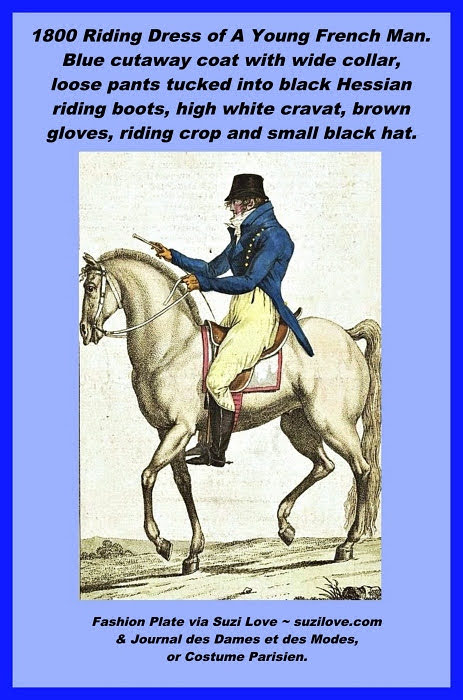
1800 Riding Dress of A Young French Man. Blue cutaway coat with wide collar, loose pants tucked into high black riding boots, high white cravat, brown gloves, riding crop and a very small black hat. Fashion Plate via Journal des Dames et des Modes, or Costume Parisien.

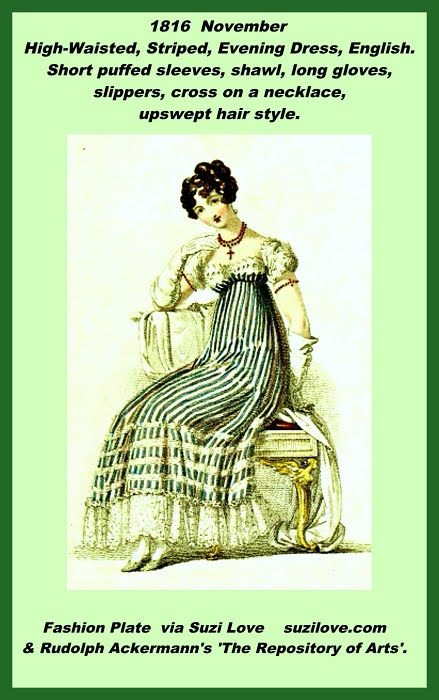
1816 November. A lilac and white striped gauze dress over a white satin slip; the bottom of the skirt is ornamented with five rows of white silk trimming, of a very light and elegant description: it has just been introduced, and the patterns has more novelty than any thing we have seen for some time; a single flounce of deep blond lace completes the trimming. The body is also very novel; the upper part is formed of lace, and the lower of gauze, to correspond with the dress; the latter is quite tight to the shape, but the former has an easy fullness, which forms the shape in a manner extremely advantageous to the figure. The sleeve is short and very full; it is composed of lace, looped high, and finished by a trimming to correspond with that of the skirt. The hair is full dressed, without any ornament. Necklace, cross, armlets, and bracelets of rubies. White satin slippers, and white kid gloves.Fashion Plate via Rudolph Ackermann’s ‘The Repository of Arts’.
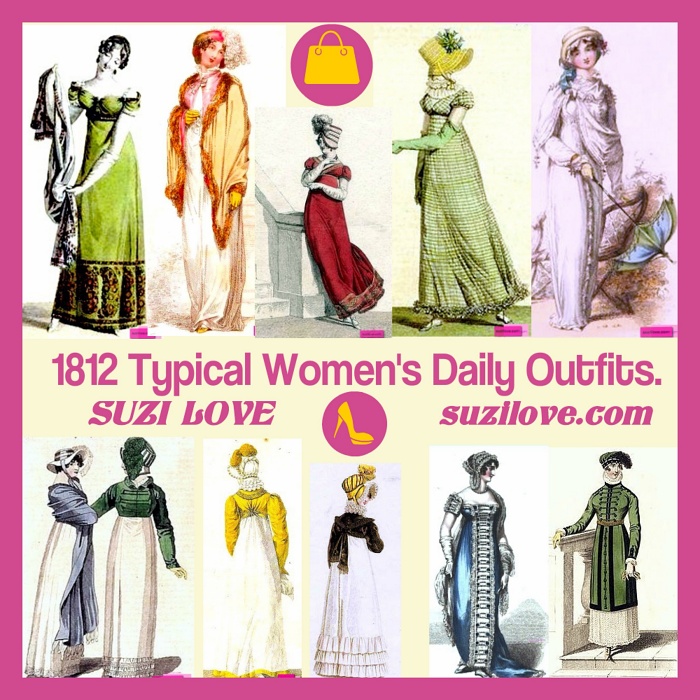
Gorgeous Regency Era clothing came in a wide range of styles to suit every season and occasion. Ladies in Jane Austen’s times wore Empire style dresses which were usually of light fabric and floaty in style. By the later 1810s, stripes were very popular and lace and frills were added to make the dress more individual.

1808 Orange Redingote, or Pelisse, French. Walking dress with white vertical front trim and wearing a blue hat with three rows of lace trim hanging down to cover the face. Fashion Plate via Journal des Dames et des Modes, Costume Parisien. Jane Austen and her female contemporaries wore coats like these when outdoors because they needed the warmth over the fashionable light muslin dresses that all women wore. Redingotes could be both comfortable and decorative. They often had military elements in support of the thousands of men involved in ongoing wars.
Definition Redingote Or Pelisse Or Walking Dress Or Coat: Long fitted outdoor coat worn over other garments for warmth. Often left open at the front to show off the dress underneath. French word developed from English words, riding coat.

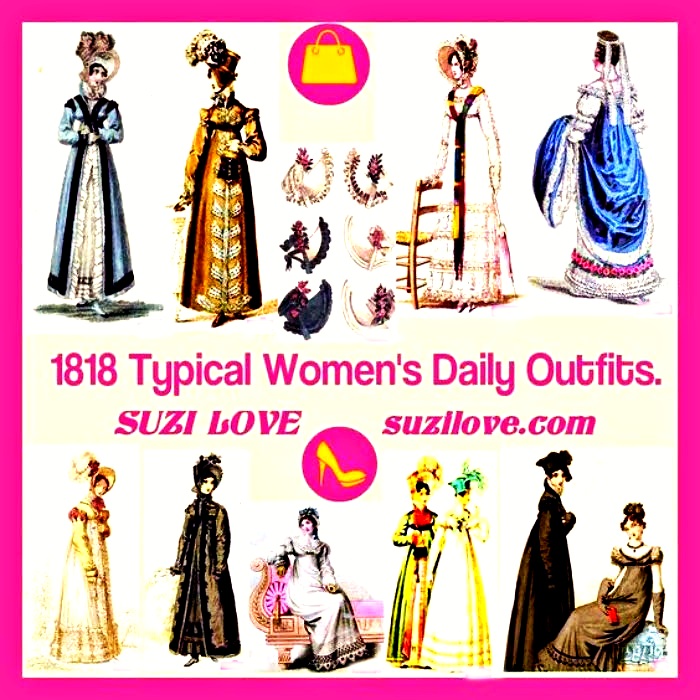
1818 Descriptions for types of ‘DRESS’ during Bridgerton’s and Jane Austen’s years. Dresses, coats or Redingotes, Spencers, shawls, fichu or shoulder cape, shoes, hats and headdresses, gloves, and Reticules or bags were displayed in various fashion magazines and copied by ladies and their modistes.
Fashion Women 1815-1819 History Notes Book 28 What did Jane Austen wear? What was fashionable for women in Regency Era? Mourning and riding fashion, dresses, hats, shoes, reticules or bags, underclothing and fashion accessories. books2read.com/SuziLoveFashionWomen1815-1819
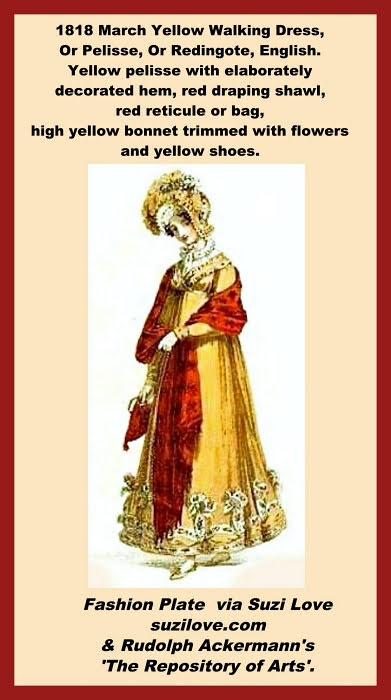
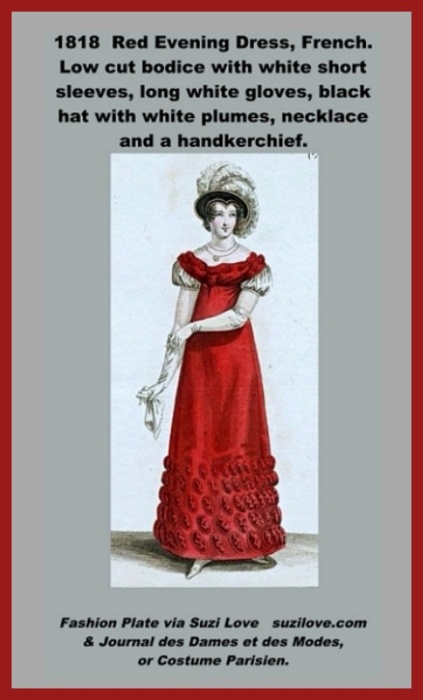
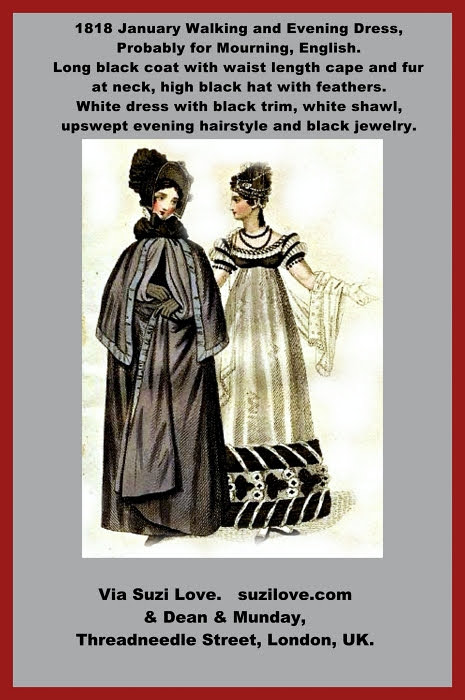
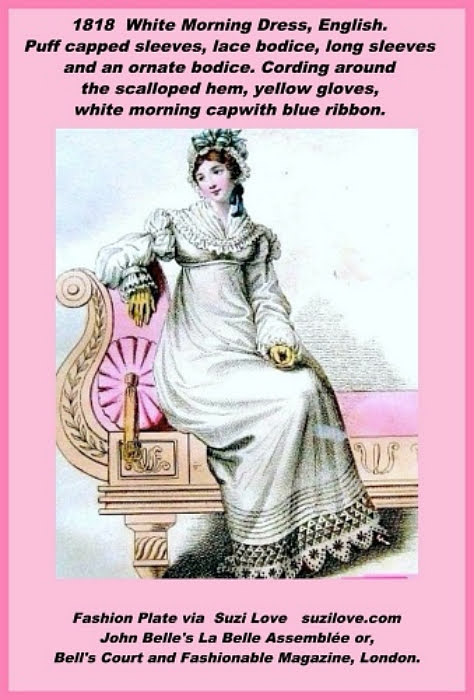
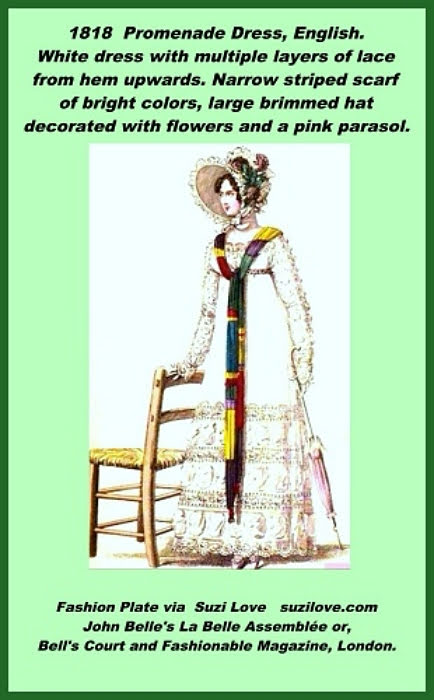
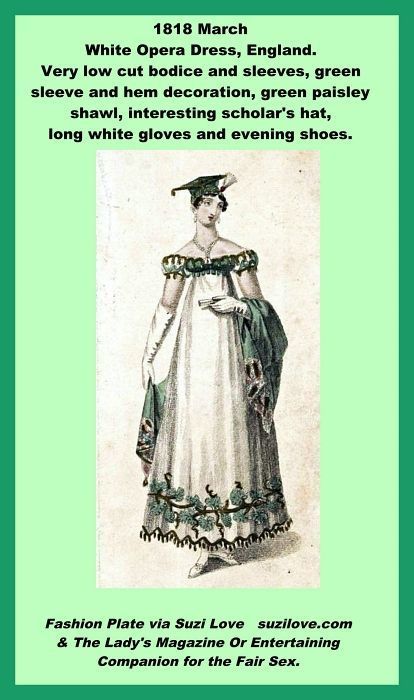
1805 White Morning Dress, French. White tunic over the dress, pink shawl with paisley patterned ends, white cap tied under her chin and slippers. Fashion Plate via Journal des Dames et des Modes, or Costume Parisien. This flowing white dress show the transition from the round dresses of the late 1700s to the Empire style dresses with the waistline high under the bust. Small trains were still worn in the early 1800s, but much more manageable than the larger and more elaborate trains of the late 1700s. Jane Austen and her friends would have worn dresses like this when at home with the family or close friends. It’s easy to picture Jane Austen wearing a dress like this while writing her manuscripts.
Definition Cashmere Shawl: Extremely fine, soft, handwoven shawl. Two-ply yarn in warp, single yarn in filling. May be embroidered, with pattern appearing on both sides, or woven in one or more colors. French shawl is woven in multicolored designs on jacquard loom with designs showing only on one side. Presumably originating in Kashmir region of India and Pakistan. These sort of cashmere shawls were a much-prized fashion accessory for all ladies who could afford them. Jane Austen and her family and friends would have been extremely fortunate to either buy one or have one gifted to them.
Definition Morning Dress: Worn either at home, out shopping, or for walking in the park or country. Presentable but not overly accessorized. Often a round gown where the bodice and skirt were made from one piece of material. Usually with a high-neck and long sleeves and made from sprigged or plain muslin, cotton, or wool.
