1801 Dress With Train, French. English style coat and Polonaise hat to match dress. Fashion Plate via Journal des Dames et des Modes, or Costume Parisien.

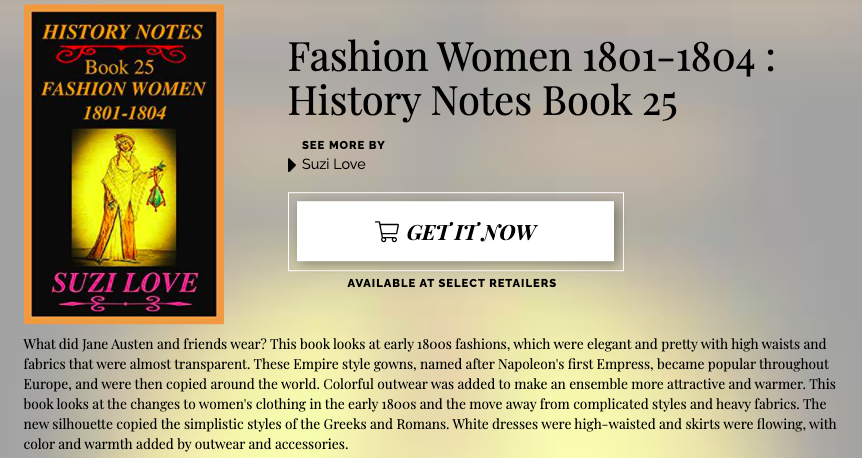

1801 Dress With Train, French. English style coat and Polonaise hat to match dress. Fashion Plate via Journal des Dames et des Modes, or Costume Parisien.
1815 Blue Striped Dress, Norway. Empire style, or high-waisted, dress with short puffed sleeves over long straight sleeves and gold trim. I can picture Jane Austen and her female friends and family wearing this sort of dress to an evening event. via Nordiska Museet, Nordic Museum, Stockholm, Sweden. digitaltmuseum.se


1813 Yellow Redingote Or Coat, French. Hooded coat with gorgeous white trim, yellow boots, yellow velvet bonnet with a white plume. Jane Austen and her female family and friends wore fashions like these. Fashion Plate via Journal des Dames et des Modes, or Costume Parisien.
Redingote, or Pelisse, or Walking Dress, or Promenade Dress: Going by many names, this is a coat copied from men’s overcoats but worn by both men and women. Generally, opens down the front, worn for warmth over a dress or coat and breeches, and has a military look with front vertical buttoning or decoration. Called a Redingote in French periodicals but English magazines called them by many other names: pelisse, carriage dress, walking dress, promenade costume.

1798 Woman’s Light Blue Douillette, Or Housecoat, French. Trimmed with pink velvet, pink fan, black slave sandals, apricot hat with black trim. Fashion Plate via Journal des Dames et des Modes, or Costume Parisien.
Description Douillette: A coat or housecoat, sometimes quilted, worn in France.


1810 ca. Spencer, Or Short Jacket, Of Printed Cotton, Europe. White base with rose and zigzag motifs in pink, red, yellow and green. via Mode Muze, Netherlands ~ modemuze.nl. Spencers were needed to cover the flimsy dresses made of lightweight fabrics of the Regency years, to provide warmth and some protection from windy conditions when the transparency of gowns might cause modesty issues. Jane Austen and her contemporaries often walked to places and so would have needed the warmth of a Spencer over her dress in the cold British winters.
Definition Spencer: Short body-hugging jacket worn for warmth and modesty. Said to have originated in an accident to Lord Spencer while hunting when his coat tails were torn off and he wore it as a short jacket.

1814 Couple In Walking Ensembles, French. Gentleman in a brown tailcoat with a notched collar and back pockets, vest, white breeches tied under his knees, red fob at the waist, white stockings, high white shirt collar, white cravat, top hat and cane. Lady in adorable pink Redingote with capes.

1801 November 9th Playing Cards. Men and women play cards at round table. Supreme Bon Ton Plate 2. Published by S W Fores. Men and women play cards at round table. Man and woman talk to players. Woman sleeps in upright chair, two others, one with parasol and other fan, walk off arm-in-arm.Men: High-waisted coats, high collars, huge neck-cloths, with pumps or Hessian boots. Women: High-waisted dresses, short sleeves, long trains, very low necklines, short ringlets, two in caps. Via British Museum, London, UK. britishmuseum.org (PD-Art)
In Jane Austen’s times, cartoons posted in the windows of shops were one of the main ways people found news. Common people couldn’t afford newspapers so cartoonists ridiculed the people and the places with cartoons of the daily events happening in London and other cities. The ridiculous fashion trends of the late 1700s and early 1800s were easy targets for satirical cartoons as was the addiction to gambling by women and men alike.


1798 Two ladies in Jane Austen style white walking dresses. Left: Dress has gold trim, white bonnet, green Parasol. Right: Stand up collar, short puffed sleeves, brown shawl and coiled head dresses, both with necklaces. via Rijks Museum, Amsterdam, Netherlands. rijksmuseum.nl


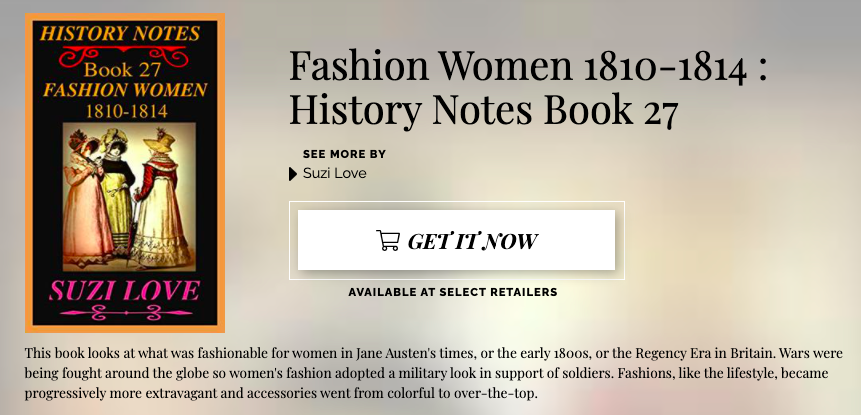
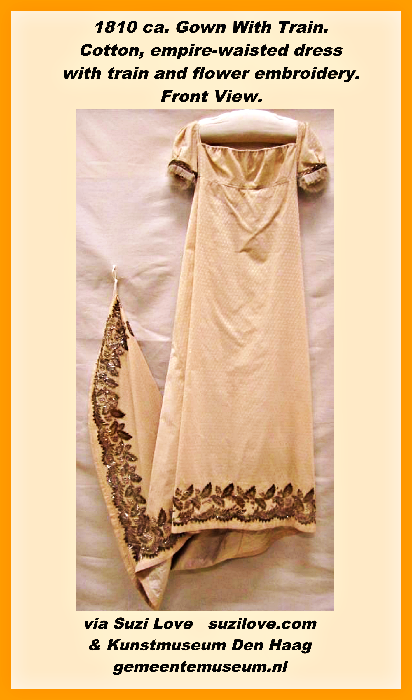
1810 Fawn Cotton Gown, with a train decorated with embroidered flowers. Regency fashion at its prettiest. The style of Empire style, or high-waisted, dress worn by Jane Austen and her contemporaries. via Gemeenteneun Museum Den Haag. Dutch Museum, the Netherlands. http://www.gemeentemuseum.nl

1800s “Admiration”. By Vittorio Reggianini. Oil on canvas. This looks like a typical drawing room scene from Jane Austen’s lifetime, or the early 1800s, or the Regency Era. Via Wikimedia Commons commons.wikimedia.org
