1813 French Couple In Morning Dress. Man: Brown overcoat and tan trousers. Lady: White dress and bonnet, long yellow gloves and holding a watering can. Fashion Plate via Journal des Dames et des Modes, or Costume Parisien. books2read.com/SuziLoveFashionMen1800-1819
1809 White Walking Dress, French. Green paisley shawl, green shoes and close-fitting hat. Fashion Plate via Journal des Dames et des Modes, or Costume Parisien.
These lightweight white cotton dresses were fashionable in Jane Austen’s times, but they were certainly not warm when a lady was out walking or when riding in a carriage. Numerous outer layers could be added for warmth and to brighten and personalize an outfit. These might be an overdress, pelisse or redingote, hat, shawl, gloves, or large fur muff.
Definition Paisley Shawl: Made of intricately woven and delicate wool with a teardrop motif that originated in Persia and India.
Fashion Women 1805-1809 History Notes Book 26 What did Jane Austen and friends wear? This book looks at early 1800s fashions, which were elegant and pretty with high waists and fabrics that were almost transparent. These Empire style gowns, named after Napoleon’s first Empress, became popular throughout Europe, and were then copied around the world. Colorful outwear was added to make an ensemble more attractive and warmer. https://books2read.com/SuziLoveFashionWomen1805-1809
I love Pinterest for keeping thousands of historical images in some sort of order.And I love using Pinterest Boards as inspiration for my romance books.What about you? Do you use Pinterest for planning something, or just for fun?Need more hints for what to do with your boards and pins? Take a look at these fascinating articles on Pinterest. if you want even more Pinterest information and tips for becoming a power user, check out my Suzi Love Pinterest Boards
1806 White Bodice and Red Scarf. Various Hats, Bonnets and an evening headdress. Fashion Plate via Journal des Dames et des Modes, or Costume Parisien. French fashions like this were copied by English magazines so these styles of hats would have been worn by Jane Austen and her contemporaries. https://books2read.com/SuziLoveFashionWomen1805-1809
1820 ca. Collection of Reticules, or Purses. Silk silver gauze, netting, fine crochet. Bags have drawstrings, chains and tassels. via Ruby Lane Auctions. #RegencyFashion #JaneAusten #British
Definition Of A Reticule; Bag or purse, often with a drawstring to pull closed and usually made of cloth or covered cardboard and often decorated with beading or embroidery. A reticule, or purse, or handbag, was usually carried by a woman during the Regency period to carry all their daily necessities. Earlier, women used pockets that tied at the waistline and were hidden in the folds of their skirts. Empire style, or early 1800s, high-waisted dresses made it impossible to either sewn in a pocket or to tie on a pocket, so women began carrying small, decorated bags called Reticules, or ridicules, which generally pulled close at the top with a drawstring. These Reticules, or bags, were the forerunners of our modern day purses.
In Jane Austen’s years of the early nineteenth century, women often wore light-weight dresses under which was worn a range of underclothing to stop gowns appearing transparent and sticking to a lady’s body. To preserve modesty, underclothing included a chemise next to the skin, then a corset, and then petticoats to give shape to a dress and to keep it away from her body.
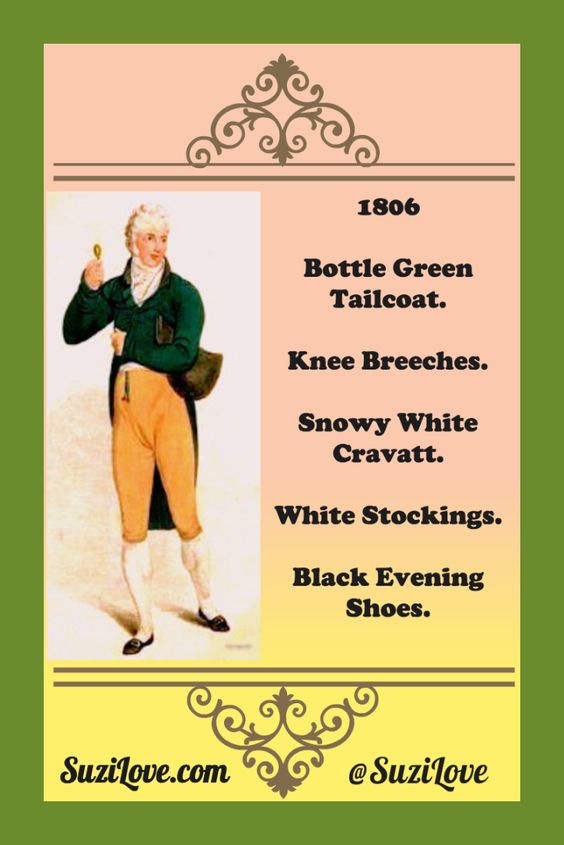
1802 Full Dress of Blue Court Suit, French. Man’s grand parure, or full dress, with white lace on the tailcoat and ruffles on the shirt, jewels, white stockings, black dress shoes, sword and a bicorn hat under his arm. Fashion Plate via Journal des Dames et des Modes, Costume Parisien. Typical menswear for court in most parts of Europe in the early 1800s, or Regency Era, or Jane Austen’s times, included a tailcoat, a vest or waistcoat, breeches, stockings, dress shoes, and hat.
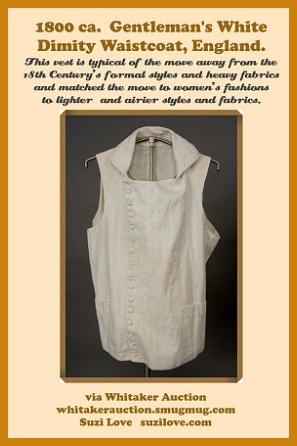
1700s Late Gentlemen’s Coats. A fitted coat was an essential part of a gentleman’s wardrobe in the late 1800s and were generally tailored and cut to fit tightly. Therefore, gentlemen needed a valet, or some other helper, to extricate himself and his shoulders from his glove-like coat. Breeches and a waistcoat in the same fabric usually completed the 18th century’s gentleman ensemble. Coats were generally worn long at the back and had elaborate decoration down the front openings, collars, and sleeve cuffs.
1818 Printed Cotton Gown, American. Brown high-waisted, or Empire line, gown as would have been worn during Jane Austen’s lifetime. Sleeves are puffed at the shoulders with unusual puffs to decorate the long straight sleeves. Hem has multiple rows of ruffles to decorate. via Metropolitan Museum New York City, U.S.A. metmuseum.org
1800-1850 ca. Reticule, Or Bag. Brown bag with monogram and drawstring, British. The Bridgerton family and Jane Austen and their female contemporaries would have sewn, gifted and used a bag similar to this. via Snowshill Manor, National Trust, U.K. nationaltrustimages.org.uk
Definition Reticule: Bag or purse, often with a drawstring to pull closed and usually made of cloth or covered cardboard and often decorated with beading or embroidery. A reticule, or purse, or handbag, was usually carried by a woman during the Regency period to carry all their daily necessities. Earlier, women used pockets that tied at the waistline and were hidden in the folds of their skirts. Empire style, or early 1800s, high-waisted dresses made it impossible to either sewn in a pocket or to tie on a pocket. So women began carrying small, decorated bags called Reticules, or ridicules, which generally pulled close at the top with a drawstring.