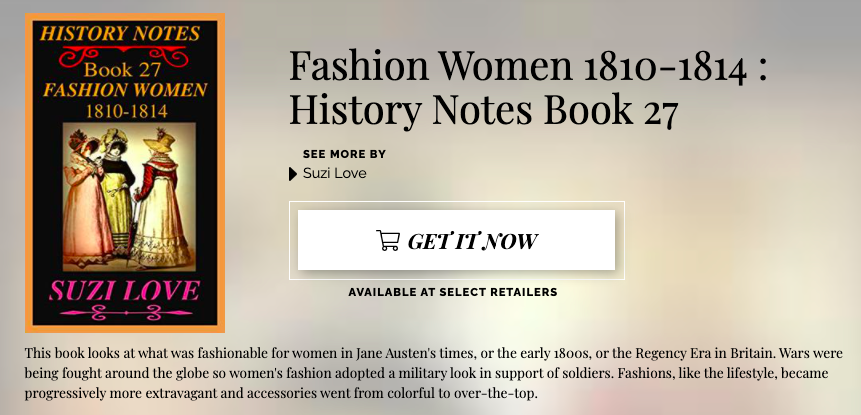
Are you a reader or writer of Regency Romance? Love Jane Austen’s books? Want to know more about the mourning, riding, underclothing and other Regency Era women’s fashions in Regency romances? What was fashionable for women in Jane Austen’s times? Mourning, riding, daytime, evening clothing, plus underclothing, corsets and accessories. This book looks at what was fashionable for women in Jane Austen’s times, or the early 1800s, or the Regency Era in Britain. Wars were being fought around the globe so women’s fashion adopted a military look in support of soldiers. Fashions, like the lifestyle, became progressively more extravagant and accessories went from colorful to over-the-top. https://books2read.com/SuziLoveFashion1810-1814
1804 Royal Mint, Stamping Room, London, U.K. As Jane Austen would have known it. From Ackermann’s Microcosm of London by A.C. Pugin and Thomas Rowlandson.
1804 Royal Mint, Stamping Room, London, U.K. From Ackermann’s Microcosm of London by A.C. Pugin and Thomas Rowlandson. RL_1_D2D_Regency Overview RetailerLinks
https://books2read.com/suziloveROver
1800s Different Degrees Of Nobility In Great Britain and Ireland. FIVE LEVELS.
BENEATH THESE COME THE BARONS: The rank and precedence of Baronets is immediately after the younger sons of Barons, and before all Knights, whether of the Order or Knights. When the Order of Baronets was first instigated, its numbers were limited to 200. Members were carefully selected from the most wealthy and distinguished families of landed gentry. In the reign of the first Charles, it was the stimulus and reward for devoted loyalty. Later, it was often bestowed as an honorary recompense for sufferings and attachment when royalty was unable or unwilling to give solid remuneration. FROM: 1835 Debrett’s Baronetage of England
PRINCES of the BLOOD ROYAL: The Sovereign’s sons, brothers, and uncles are styled Princes of the Blood Royal, and have precedency of all other dukes, with the title of Royal Highness, which title was also, by special warrant, in 1816, conferred on the duke of Gloucester, deceased, and, 6th April 1818, on Prince Leopold of Saxe Cobourg (King of the Belgians). FROM: 1840 Debrett’s Peerage of the UK
THE PRIVILEGES OF THE PEERS OF THE UNITED KINGDOM OF GREAT BRITAIN AND IRELAND. The nobility of England enjoy many great privileges, the principal of which are as follow:-
1. They are free from all arrest for debts, as being the king’s hereditary counsel
lors. Therefore a peer cannot be outlawed in any civil action and no attachment lies against his Person. This privilege extended also to their members of the lower house, till the year 1770, when their lordships joined the house of commons in a bill for abolishing it.
2. In criminal causes they are only tried by their peers, who give their verdict, not upon oath as other juries, but only upon their honor: and then a court is fitted up for the purpose in the middle of Westminster hall, at the king’s charge.
3. To secure the honor of, and prevent the spreading of any scandal upon peers, or any great officer of the realm,there is an express law called scanda lum magnutum by which any man convicted of making a scandalous report against a peer of the realm ( though true ) is condemned to an arbitrary fine , and to remain in custody till the same be paid .
4. Upon any great trial in a court of justice a peer may come into the court and sit there uncovered. No peer can be covered in the royal presence without permission for that purpose, except the lord baron of Kinsale, of his majesty’s kingdom of Ireland. In case of the poll tax, the peers bear the greatest share of the burden, they being taxed every one according to his degree.
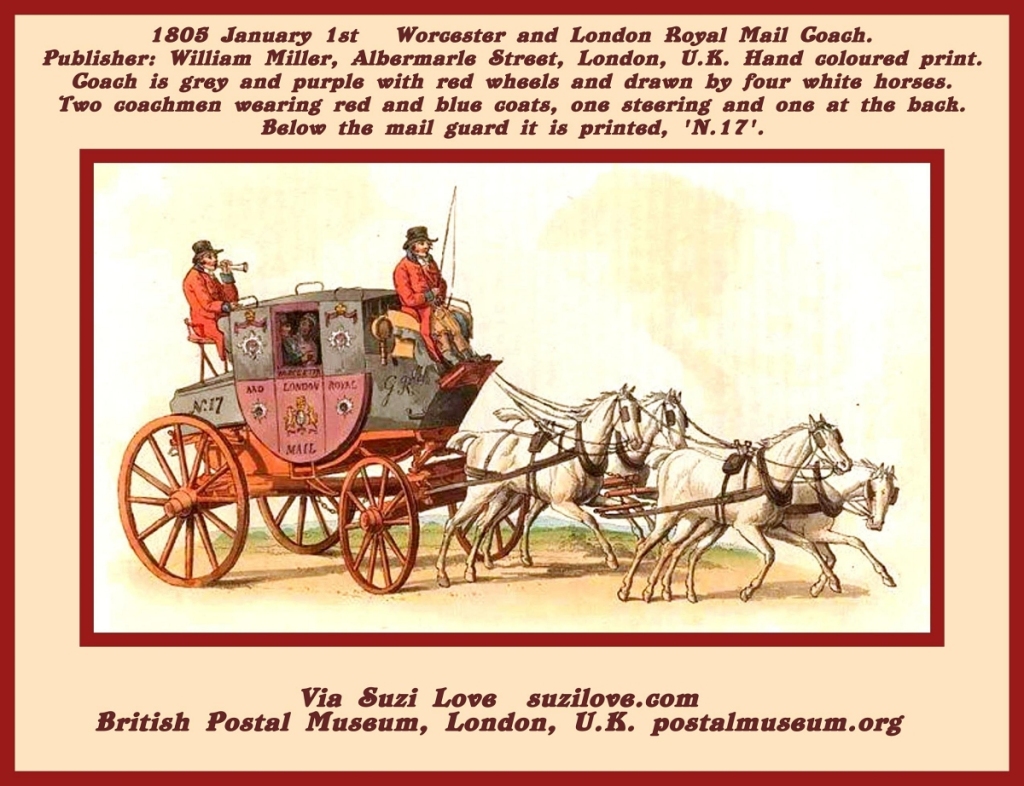
11805 January 1st Worcester and London Royal Mail Coach. The sort of mail coach that Jane Austen and famioy would have either ridden in or sent mail through. Publisher: William Miller, Albermarle Street, London, U.K. Hand colored print. Coach is grey and purple with red wheels and drawn by four white horses. Below the mail guard it is printed, ‘N.17’. Via British Postal Museum, London, U.K. postalmuseum.org
1805 January 1st Worcester and London Royal Mail Coach. Publisher: William Miller, Albermarle Street, London, U.K. Hand colored print. Coach is grey and purple with red wheels and drawn by four white horses. Below the mail guard it is printed, ‘N.17’. Via Suzi Love suzilove.com British Postal Museum, London, U.K. postalmuseum.orgD2D_RetailerBuyLink_HN_10. books2read.com/SuziLoveTravel
1818 September 18th Le Palais Royal de Paris. ‘A Peep at the French Monstrosities’. Two English tourists dressed as dandies walk arm-in-arm under the arcade of the Palais Royal, interested in the promenading courtesans. Their dress is rather similar to that of the Englishmen, but the latter wear bell-shaped top-hats, while the Frenchmen have flower-pot shaped hats. By George Cruikshank. Via British Museum, London, UK. britishmuseum.org (PD-Art)
Cartoons For Riders At The Hunt. Typical comical scenes from The Bridgertons and Jane Austen’s Daily Lives. From: 1860 Mr. Sponge’s Sporting Tour by Robert Smith Surtees. via Google Books (PD-100)
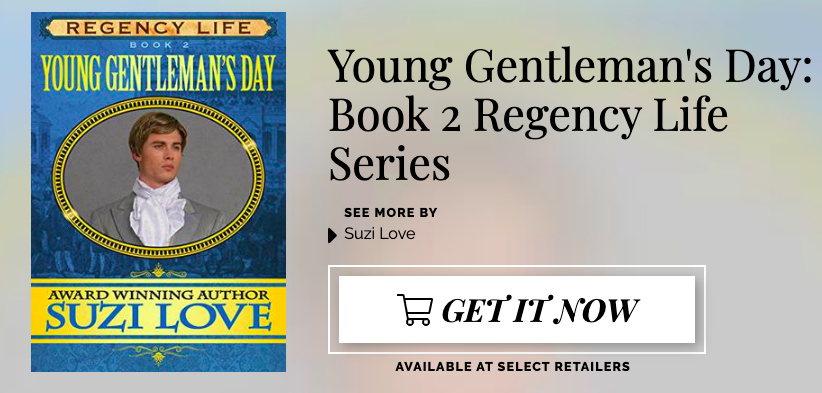
Success At The Hunt. Riding with the hounds separates the good riders from the pretenders. How embarrassing! Coming to grief on the hunt. Excitement of The Hunt for all riders. A Good Place To Watch the Hunt Go Past.A Young Man Speaking To A Young Lady At the Hunt. RL_2_D2D_RetailerBuyLink_RL_2
https://books2read.com/suziloveYGD
1830 Hatchetts, the White Horse Cellar, Piccadilly, London, UK. By James Pollard. Denver Art Museum.
The dreadful condition of British roads caused great apprehension to all classes of travelers. Making a journey anywhere in the country was a big undertaking and often a gentleman composed his last will and testament before his departure. Traveling in vehicles was only possible during the day or on the nights with very bright moonlight with few vehicles attempting road travel in winter and any travel on a Sunday was frowned upon. books2read.com/SuziLoveTravel
Description of Stage Coach Travel in England. via 1815 Journal Tour of Great Britain. “The gentlemen coachmen, with half-a dozen great coats about them, immense capes, a large nosegay at the button-hole, high mounted on an elevated seat, with squared elbows, a prodigious whip, beautiful horses, four in hand, drive in a file to Salthill, a place about twenty miles from London, and return, stopping in the way at the several public-houses and gin-shops where stage-coachmen are in the habit of stopping for a dram, and for parcels and passengers on the top of the others as many as seventeen persons. These carriages are not suspended, but rest on steel springs, of a flattened oval shape, less easy than the old mode of leathern braces on springs. Some of these stage coaches carry their baggage below the level of the axletree.”
1830 Hatchetts, the White Horse Cellar, Piccadilly, London, UK. By James Pollard. Denver Art Museum. HN_10_D2D_RetailerBuyLink_Travel and Luggage By Suzi Love History Notes Book 10 #History #travel How did people travel in past centuries? What did they take with them to make their long journeys easier? books2read.com/SuziLoveTravel
1826 Almack’s Revisited by Charles White. The ball of this evening passed off as all other balls at the same place, creating envy, jealousy, and hatred in the minds of many of those who have been unsuccessful in procuring tickets; affording real amusement to few, and disappointing a greater portion of those who, by dint of manoeuvring, petitioning, parliamentary interest, or presents, have been enabled to obtain the desired vouchers; and as this was one of the last balls of the season, and a general election already talked of, the mixture of company and the number was much greater than usual; and, consequently, it was what the most correct persons called, “horrid bad Almack’s!”
Almack’s or Willis’s Rooms, King Street, St James, London, UK. Almack’s Assembly Rooms, founded by William Almack at No. 26-28, were on the site of the present Almack House. The club was originally a gaming establishment but moved from Pall Mall. The Assembly rooms were on the South side of King Street in St James’s and were opened on February 12, 1765. At the time the subscription was ten guineas for which there was a ball and supper each week for the twelve weeks of the season.
1826 Almack’s Revisited by Charles White.: ‘It was what most correct persons called ‘horrid bad Almack’s’. #RegencyEra #London #BritishHistory
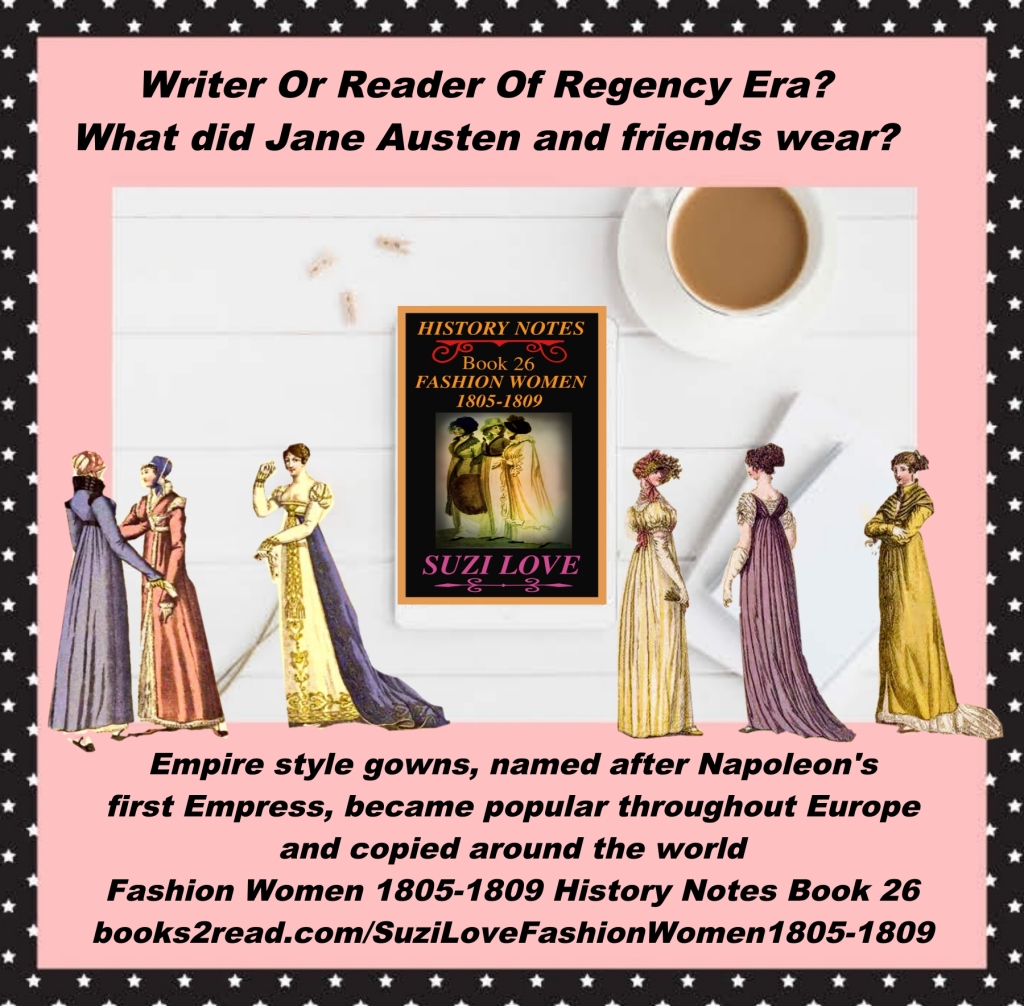
What did Jane Austen and friends wear? Early 1800s fashions were elegant and pretty with high waists and fabrics that were almost transparent. These Empire style gowns, named after Napoleon’s first Empress, became popular throughout Europe, and were then copied around the world. Colorful outwear was added to make an ensemble more attractive and warmer. History Notes Book 26 Fashion Women 1805-1809. https://books2read.com/SuziLoveFashionWomen1805-1809
What did Jane Austen and friends wear? Early 1800s fashions were elegant and pretty with high waists and fabrics that were almost transparent. These Empire style gowns, named after Napoleon’s first Empress, became popular throughout Europe, and were then copied around the world. Colorful outwear was added to make an ensemble more attractive and warmer. History Notes Book 26 Fashion Women 1805-1809. https://books2read.com/SuziLoveFashionWomen1805-1809
The Empire waist gown defined women’s fashion during the Regency Era. ‘Empire’ is the name given in France to the period when Napoleon built his French Empire. High-waisted, loose gowns were adopted by the aristocracy as a symbol of turning away from the fussy, elaborate and expensive clothing worn in the 1700s. Jean-Jaques Rousseau advocated copying peasants and returning to a simpler life and more natural fashions. Unrestricting clothing was part of the new Democracy in France and these simpler and flowing fashions were adopted all over Europe, including Britain and despite the continual wars being fought against France during the early 1800s. Not even war stopped fashions from being copied everywhere.