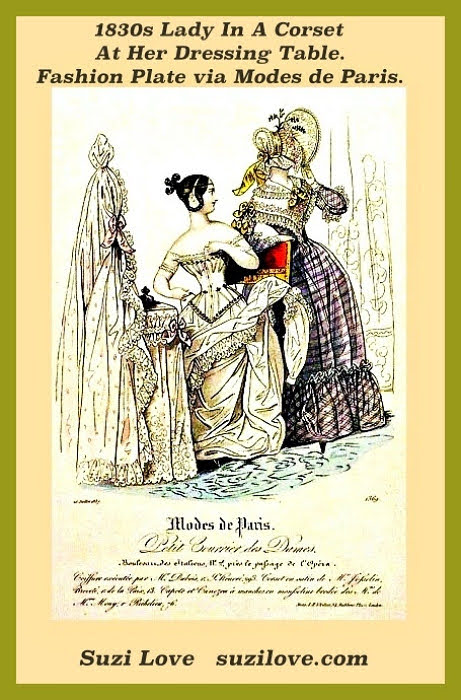
1830s Lady In A Corset At Her Dressing Table. Fashion Plate via Modes de Paris.
Romantic Era women’s corsets supported plus fitted well to give a fashionable silhouette. Becoming a fashion item, rather than simply hidden underclothing. https://books2read.com/SuziLoveCorsetBook18
1805 White Morning Dress, French. White tunic over the dress, pink shawl with paisley patterned ends, white cap tied under her chin and slippers. Fashion Plate via Journal des Dames et des Modes, or Costume Parisien. This flowing white dress show the transition from the round dresses of the late 1700s to the Empire style dresses with the waistline high under the bust. Small trains were still worn in the early 1800s, but much more manageable than the larger and more elaborate trains of the late 1700s. Jane Austen and her friends would have worn dresses like this when at home with the family or close friends. It’s easy to picture Jane Austen wearing a dress like this while writing her manuscripts.
Definition Cashmere Shawl: Extremely fine, soft, handwoven shawl. Two-ply yarn in warp, single yarn in filling. May be embroidered, with pattern appearing on both sides, or woven in one or more colors. French shawl is woven in multicolored designs on jacquard loom with designs showing only on one side. Presumably originating in Kashmir region of India and Pakistan. These sort of cashmere shawls were a much-prized fashion accessory for all ladies who could afford them. Jane Austen and her family and friends would have been extremely fortunate to either buy one or have one gifted to them.
Definition Morning Dress: Worn either at home, out shopping, or for walking in the park or country. Presentable but not overly accessorized. Often a round gown where the bodice and skirt were made from one piece of material. Usually with a high-neck and long sleeves and made from sprigged or plain muslin, cotton, or wool.
Fashion Women 1805-1809 History Notes Book 26 What did Jane Austen and friends wear? https://books2read.com/SuziLoveFashionWomen1805-1809
1808 Lady In A Dancing Dress, French. Dress of Tulle Broderie, short puffed sleeves, floral embroidery, dancing slippers and upswept hairstyle. Fashion Plate via Journal des Dames et des Modes, Costume Parisien. When attending assemblies or balls, ladies in Jane Austen’s times women wore Empire style dresses which were usually made of light fabric and floaty in style and often of a shorter length suitable for dancing.
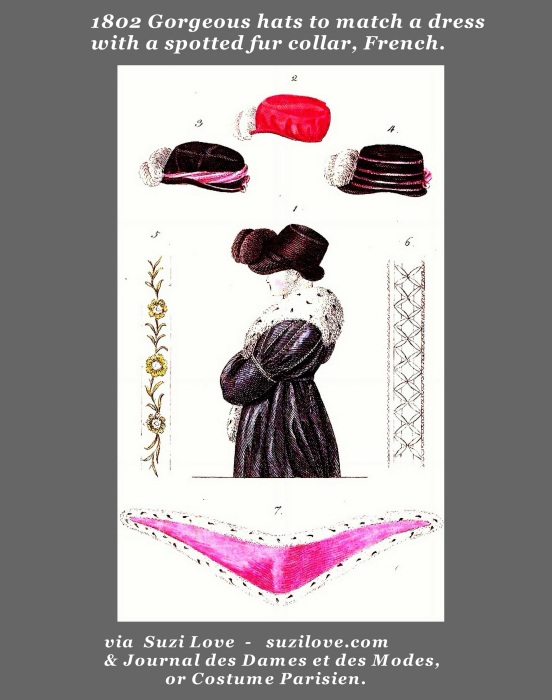
1802 Gorgeous French Hats. Bodice and Trims. To match a blue dress with a spotted fur collar. Fashion Plate via Journal des Dames et des Modes, Costume Parisien. French fashions like this were copied by English magazines so these styles of hats would have been worn by Jane Austen and her contemporaries. https://books2read.com/SuziLoveFashionWomen1801-1804
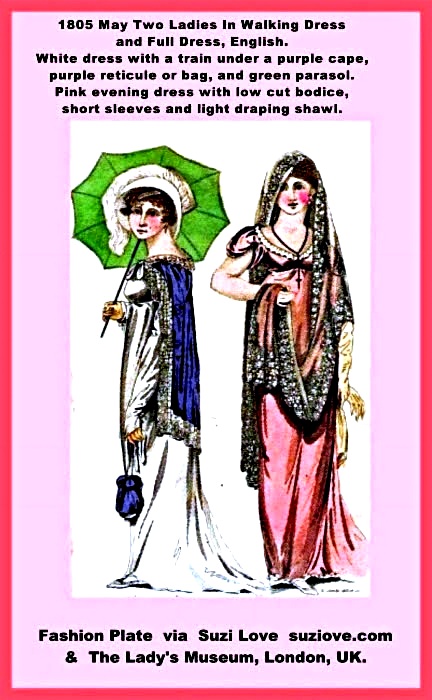
1805 May Two Ladies In Jane Austen Style Walking Dress and Full Dress, English. White dress with a train under a purple cape, purple reticule or bag, and green parasol. Pink evening full dress with low cut bodice, short sleeves and light draping shawl. via Vernon and Hood at The Lady’s Monthly Museum, London, U.K. Definition Reticule, or Ridicule, or Bag or Purse: Often with a drawstring to pull closed and usually made of cloth or covered cardboard and often decorated with beading or embroidery. A reticule, or purse, or handbag, was usually carried by a woman during the Regency period to carry all their daily necessities. Earlier, women used pockets that tied at the waistline and were hidden in the folds of their skirts. Empire style, or early 1800s, high-waisted dresses made it impossible to either sewn in a pocket or to tie on a pocket. So women began carrying small, decorated bags called Reticules, or ridicules, which generally pulled close at the top with a drawstring.
1813 October White Empire style, or high-waisted, Carriage Dress, English. Brown shawl, brown boots, and a lace cap tied under the chin. Typical of the carriage fashions that would have been worn by Jane Austen and her contemporaries. Fashion Plate via The Lady’s Magazine Or Entertaining Companion for the Fair Sex.
Definition Empire Style Dress: High-waisted white gown defined women’s fashion during the Regency Era. ‘Empire’ is the name given to the period when Napoleon Bonaparte built his French Empire. High-waisted, loose gowns were adopted by the aristocracy as a symbol of turning away from the fussy, elaborate and expensive clothing worn in the 1700s. https://books2read.com/SuziLoveFashion1810-1814
1810-1815 ca. Salmon Pink Empire Style Dress, Norway. Typical Regency high-waisted dress. Long sleeves with puckered sleeve cap. Deep neckline with short shirred bodice. Long full skirt. via Digital Museum, Norway. digitalmuseum.no Regency fashion at its prettiest. The style of Empire style, or high-waisted, dress worn by Jane Austen and her contemporaries and the ladies in the Bridgerton family.
The Empire waist gown defined women’s fashion during the Regency Era. ‘Empire’ is the name given in France to the period when Napoleon built his French Empire. High-waisted, loose gowns were adopted by the aristocracy as a symbol of turning away from the fussy, elaborate and expensive clothing worn in the 1700s. Jean-Jaques Rousseau advocated copying peasants and returning to a simpler life and more natural fashions. Unrestricting clothing was part of the new Democracy in France and these simpler and flowing fashions were adopted all over Europe, including Britain and despite the continual wars being fought against France during the early 1800s. Not even war stopped fashions from being copied everywhere.
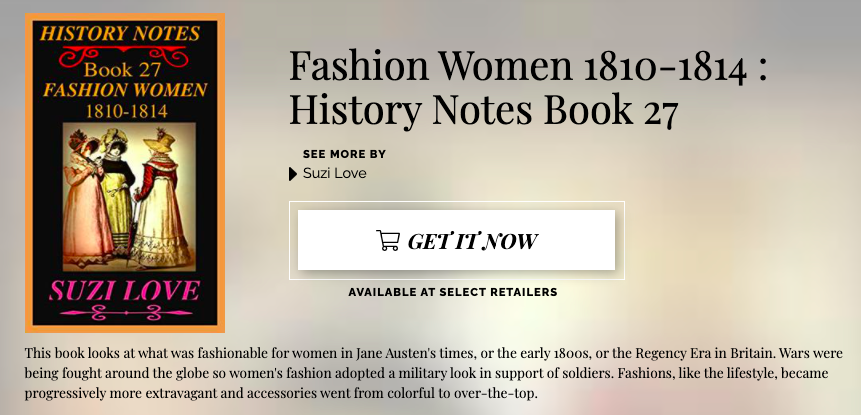
This book looks at what was fashionable for women in Jane Austen’s or the Bridgerton family’s times, or the early 1800s, or the Regency Era in Britain. Wars were being fought around the globe so women’s fashion adopted a military look in support of soldiers. Fashions, like the lifestyle, became progressively more extravagant and accessories went from colorful to over-the-top.
1803 Jane Austen Style Dress Bodice and Five Trimmed Hats. Low cut bodice, puffed sleeves, scarf, four variations of trimmed hats. Fashion Plate via Journal des Dames et des Modes, or Costume Parisien. https://books2read.com/SuziLoveFashionWomen1801-1804
Hats: Early 1800s: Lightweight caps or muslin, linen, lace or net were worn as morning caps, night caps, or under other hats. Jane Austen and her family and female friends would have worn caps like these, sometimes during the morning at home, to bed to keep their long hair from becoming knotted, or under a bonnet to hold a hairstyle in place. But for outdoor ventures, hats were more substantial and for the evening a lot more individual and elaborate. The ties of a bonnet that were secured under the chin vary from the very simple to the quite fanciful.
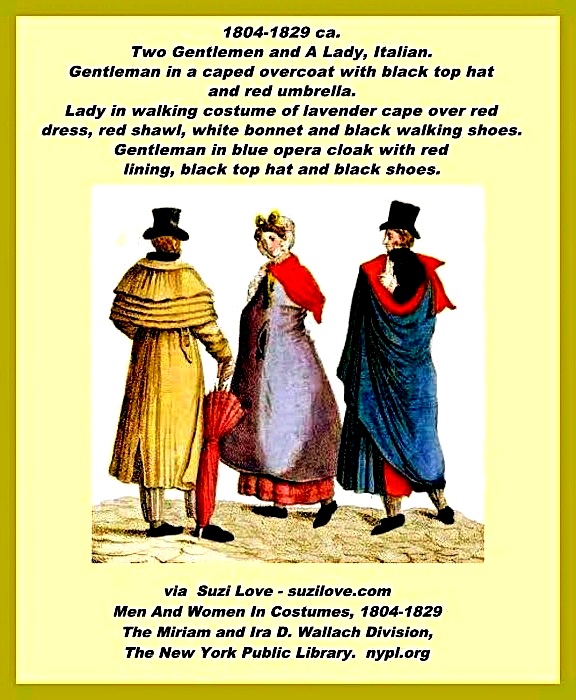
1804-1829 ca. Two Gentlemen and A Lady, Italian. Dressed as ladies and gentlemen would be in the times of the Bridgerton family and Jane Austen and friends. Gentleman in a caped overcoat with black top hat and red umbrella. Lady in walking costume of lavender cape over red dress, red shawl, white bonnet and black walking shoes. Gentleman in blue opera cloak with red lining, black top hat and black shoes. Men And Women In Costumes, 1804-1829 The Miriam and Ira D. Wallach Division, The New York Public Library. nypl.org The sort of fashionable outfit and items worn or carried by Jane Austen and her contemporaries when out walking. Outfits were always heavily accessorized with coats, shawls, hats and parasols.