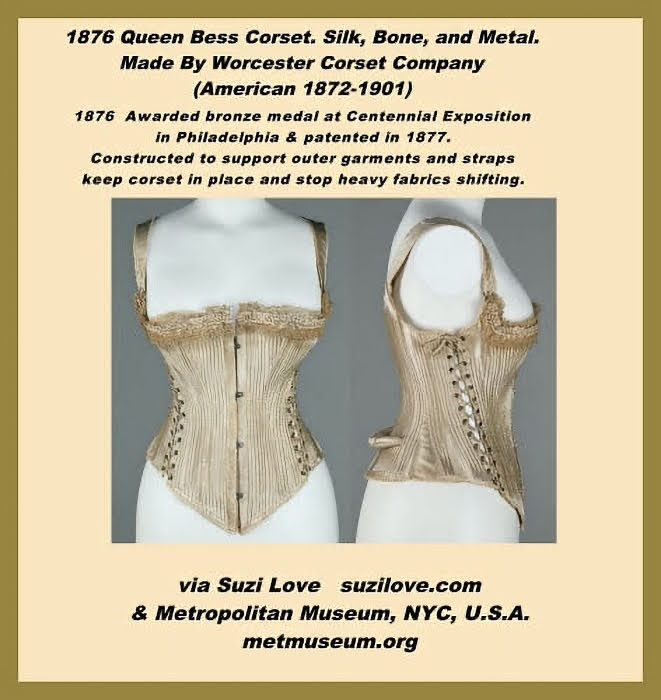
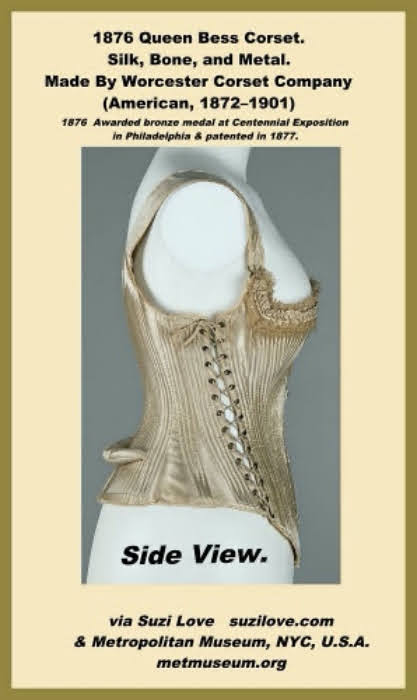
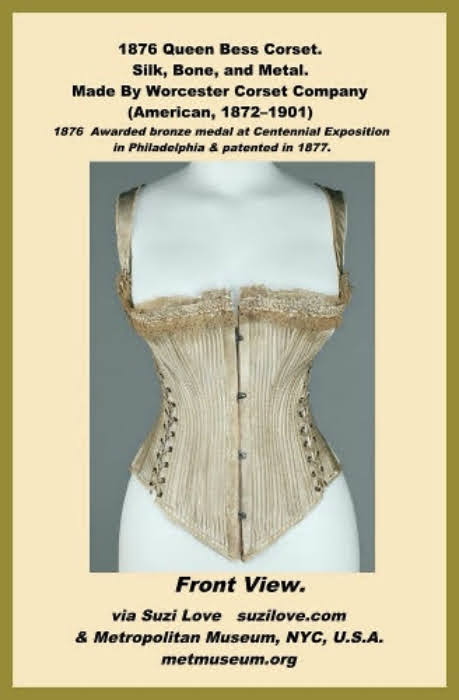
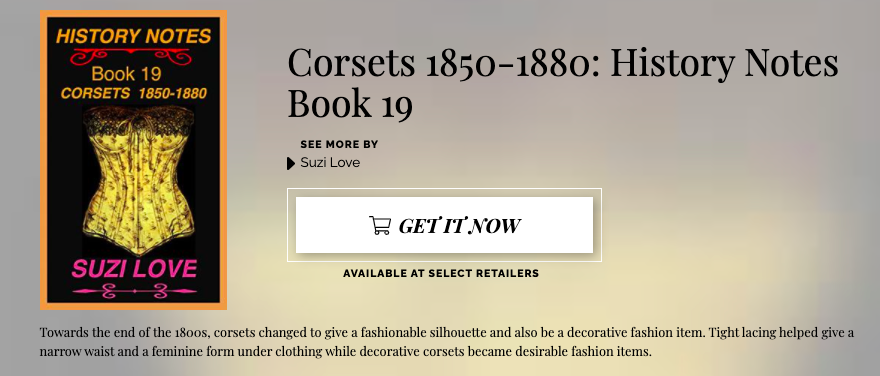
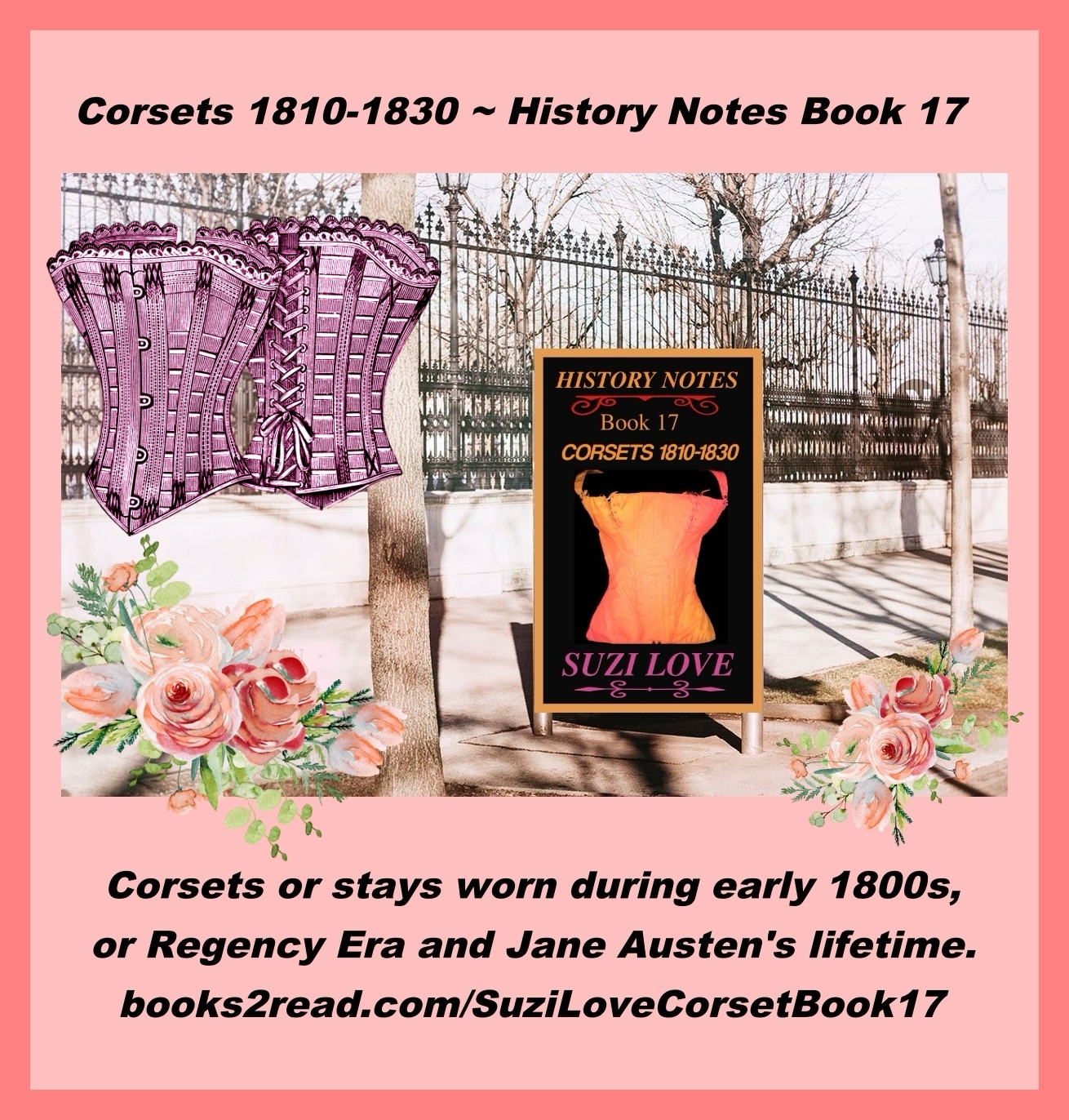
This book shows how corsets changed to both provide support and also fit well under clothing to give a fashionable silhouette. Corsets started being a fashion item, rather than simply underclothing to be hidden. Romantic Era women’s fashionable corsets. Corsets worn from 1830-1850, or the Romantic Era of fashion. https://books2read.com/SuziLoveCorsetBook18 Corsets 1830-1850 History notes Book 18
1800 ca. Sleeveless Chemise or Nightgown of white cotton and lace. Length just below knee. Gathered back and front onto yoke of lace and gathered fabric inserts. Gathers around neck by tape in casing. ‘Blanche’ embroidered centre front. Waist up to 50 in or more. via National Trust Collections, UK. nationaltrustcollections.org.uk
Definition Chemise Or Shift: Sleeveless, mid-calf length garment of white cotton or muslin was worn next to the skin under stays or corset. Called ‘Shift’ from early Georgian (1700-1750) until Late Georgian (1750-1790) to replace ‘Smock’. By 1800, name replaced by ‘Chemise’. Sometimes doubled as a nightshift, or nightrail. From around 1700, women wore a long garment, like a man’s shirt, next to their skin, day and night. ‘Costume In England’ describes this as originally a shirt or smock and adopted by women as an undergarment.
This undergarment fell from their shoulders to calves, and was called a chemise, shift, or vest. During the day, it was worn under stays, or a corset, and at night it could be worn as a nightshirt. Wealthier women could afford specific bedroom attire, but lower and working class women wouldn’t have had this luxury and so wore a chemise as both an undergarment and as sleepwear. The rich and the upper classes wore embroidered and otherwise decorated versions of this simple linen or cotton shift. Other classes of women wore a very simple version with little or no decoration as they had no time for decorative embroidery and no money to buy silk threads.
1800-1805 ca. White cotton petticoat of the sort worn by Jane Austen in the early 1800s. Worn under a sleeved, trained dress and over a loose knee length chemise and corset which covered the exposed bust area. The skirt of the petticoat has an apron front open down the side seams. Drawers were not commonly worn at the time. via The John Bright Collection. thejohnbrightcollection.co.uk
Petticoats were made to fit under the low cut bodices of the early 1800s fashions, and to not be seen under a wide and square bodice. This meant thin ribbons were sometimes attached at the shoulders so the petticoat would be virtually without a bodice.
1887 Front View. Wedding Corset, American. Cotton twill, silk thread embroidery. Fully boned wedding corset with front hooks and back lacing. Every boning channel is flossed top and bottom. Via Chicago History Museum, U.S.A. digitalcollection.chicagohistory.org https://books2read.com/SuziLoveCorsetBook20
1887 Front View. 1877 Back Lacing View. 1877 Side View. 1877 Flossing View. HN_20_Corsets1880-1900 https://books2read.com/SuziLoveCorsetBook20
1770-1790 ca. Child’s Stays, American. Linen plain weave, baleen, or whalebone, silk braided tape. Dimensions: Center Front Length: 5 3/4 inches (14.6 cm) Waist: 18 inches (45.7 cm). Made in United States of America. This pair of stays is only eighteen inches around, and might have been worn by a small child of eighteen months to two years old. Putting stays on young girls and boys was not seen as harsh, but rather as insurance that their figures would develop the correct form, with chest out and shoulders down. While boys usually wore stays only in early childhood, they were considered essential for females throughout their lives. via Philadelphia Museum of Art philamuseum.org Accession Number: 1988-15-1Credit Line: Purchased with the Bloomfield Moore Fund, 198
1790-1810 ca. Jane Austen Style White Linen Shift Or Chemise, American. #RegencyEra #JaneAusten #underclothing https://books2read.com/SuziLoveFashionWomen1801-1804
Lover of Jane Austen and the Regency Era fashions? History Notes Book 25. #JaneAusten #RegencyFashion #HistoricalFashion books2read.com/SuziLoveFashionWomen1801-1804
What did an older lady do in the Bridgerton family’s and Jane Austen’s times, or the early 1800s. An easy to read overview of what an older lady did, wore, and how she lived in the early 19th Century. Information for history buffs and pictures for readers and writers of historical fiction. Older Lady’s Day, Regency Life Series, Book 5, by Suzi Love. books2read.com/suziloveOLD
Through historic images, historical information, and funny anecdotes, it shows how an older lady in Jane Austen’s times fills her day, where she goes, and with whom she spends her time. This light-hearted look at the longer Regency years is an easy to read overview of what people did and wore, and where they worked and played. There is plenty of information to interest history buffs, and lots of pictures to help readers and writers of historical fiction visualize the people and places from the last years of the 18th Century until Queen Victoria took the throne.
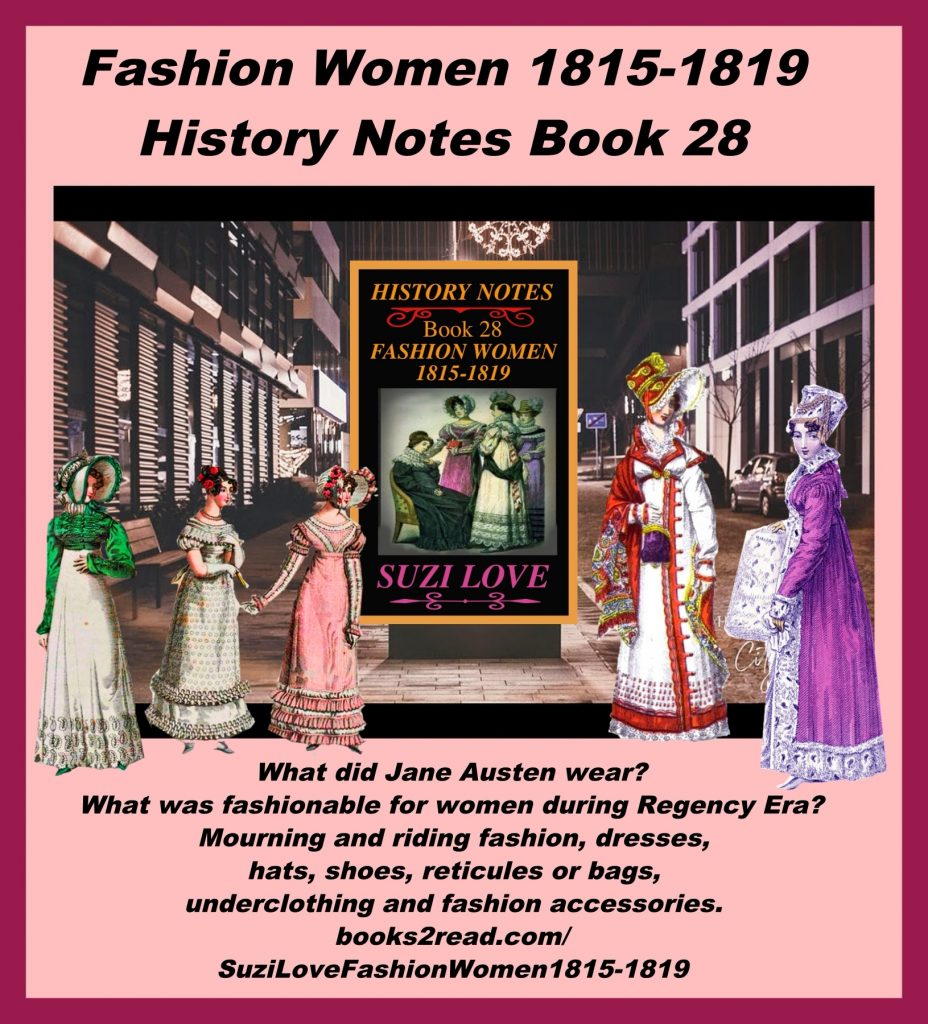
Love the Bridgerton family and Jane Austen? Reader Or Writer of Regency Era stories? Mourning and riding fashion, dresses, hats, shoes, reticules or bags, underclothing and fashion accessories. books2read.com/SuziLoveFashionWomen1815-1819
History Notes 28 Fashion Women 1815-1819: This book looks at what was fashionable for women in the Georgian Era and at the end of the Regency Era in Britain and the reconstruction in Europe after the wars. Lifestyles were freer and fashions expressed this by becoming the focus of most women’s lives. A wardrobe full of opulent accessories was requisite. Includes mourning and riding fashion, dresses, hats, shoes, reticules or bags, underclothing, and fashion accessories.