I'm an Australian author of contemporary and historical romances, plus history non-fiction.
My books range from sexy to erotic, late 1700s to the mid 1800s, and with a dash of Australia thrown into the mix. My heroes and heroines challenge tradition and my stories often expose the seamier levels of life.
I now live in a sunny part of Australia after spending many years in developing countries in the South Pacific. My greatest loves are traveling, anywhere and everywhere, meeting crazy characters, and visiting the Australian outback.
I hope my books bring history alive and you have fun adventuring with my roguish heroes and feisty heroines.
1807 Women’s French Coats, or Redingotes, or Pelisses, or Walking Dresses, as worn in the early 1800s, or early Regency years, or in the times of Jane Austen. Fashion plates from the 1807 volumes from the French magazine, Journal des Dames et des Modes or Costume Parisien.
The Journal des dames et des modes was a French fashion magazine published between 1797 and 1839 and was the second oldest fashion magazine published in France, replacing the Cabinet des Modes (1785-1793).
The magazine was the main source for French fashions, both in France and internationally. Pierre de la Mesangere was editor and main journalist for most of the time the magazine was in existence and he published a magazine every five days, which is why there is an abundance of French fashion plates from these years. The magazine had eight pages of text, one or two colored fashionplates, plus poetry, theatre reviews, current social news and fiction. During the Napoleonic wars, everything to do with France was unpopular, especially in Britain, yet French fashions thrived and so did the Journal des Dames et des Modes, despite the numerous other fashion magazines that copied the magazine.
1807 Green Redingote or Pelisse or Walking Dress, British. Green velvet decorated with yellow satin military style yellow shoulder trim, green Capote, or hat, trimmed with yellow satin, and matched with yellow shoes. Fashion Plate via Journal des Dames et des Modes, or Costume Parisien.1807 Blue Redingote Or Pelisse Or Coat With Yellow Trim, French. Striped short sleeves over straight blue sleeves, yellow bonnet tied under the chin, white paisley shawl. Fashion Plate via Journal des Dames et des Modes, or Costume Parisien. 1807 Blue Redingote, French. Blue drap Redingote, or Pelisse, or Walking Dress, decorated with velvet, short pleated sleeves over long straight sleeves, yellow velvet and satin hat with blue contrast, and yellow shoes. Fashion Plate via Journal des Modes et des Dames, or Costume Parisienne. 1807 Blue Redingote, French. Back view of a pleated, blue Merino wool, redingote with a high-waist and gathered short back bodice, worn with a jaunty yellow hat with a matching blue feather. Fashion Plate via Journal des Dames et des Modes, or Costume Parisien.1807 Peach Redingote, Or Pelisse, Or Walking Dress, French. With white shawl collar and a close fitting hat to match. Fashion Plate via suzilove.com and Journal des Dames et des Modes, or Costume Parisien.1807 Golden Yellow Redingote Or Pelisse, French. High collar and frill around the entire hem, short puffed sleeves over long straight sleeves. Fashion Plate via Journal des Dames et des Modes, or Costume Parisien. Fashion Women 1805-1809 History Notes Book 26 What did Jane Austen and friends wear? https://books2read.com/SuziLoveFashionWomen1805-1809
1845 Woman’s Dress, Probably Made In England. Silk Taffeta and glazed linen plain weave. via Los Angeles County Museum of Art, California, USA. collections.lacma.org
1845 Woman’s Dress, Probably Made In England. Silk Taffeta and glazed linen plain weave. via Los Angeles County Museum of Art, California, USA. collections.lacma.org
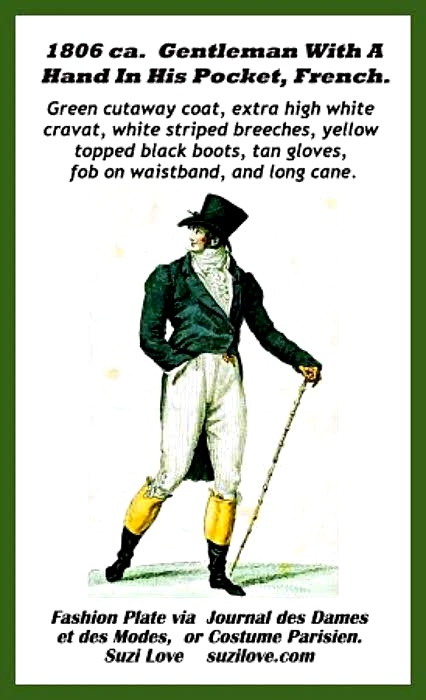
1806 Gentleman With A Hand In His Pocket, French. Green cutaway coat, extra high white cravat, white striped breeches, yellow topped black boots, tan gloves, fob on the waistband, and long cane. Typical Gentleman’s outfit as worn by men to daytime activities, such as escorting his female family members to the shops in Bond Street,London,or for walking in the park in Jane Austen’s times. Fashion Plate via Journal des Dames et des Modes, or Costume Parisien.
1780 Stays and Panier, or Hoop Petticoat, England. via suzilove.com and Los Angeles County Museum of Art, California, USA. Stays: Brown linen twill and baleen. Panier: Woman’s hoop petticoat, or pannier, of linen plain weave and cane 1750-1780. via Los Angeles County Museum of Art, California, USA. collections.lacma.org
1780 Stays and Panier, or Hoop Petticoat, England. via suzilove.com and Los Angeles County Museum of Art, California, USA. collections.lacma.org
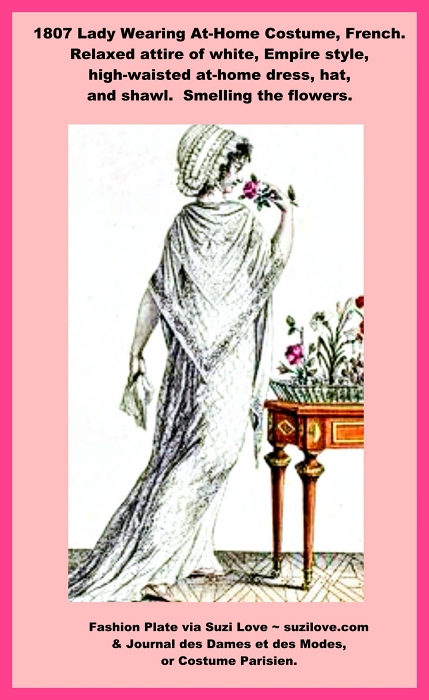
1807 Lady Wearing At-Home Costume, French. Relaxed attire of white, Empire style, high-waisted at-home dress, hat, and shawl. Smelling the flowers. Jane Austen and her family and friends would have worn this style of dress. Fashion Plate via Journal des Dames et des Modes, or Costume Parisien.
Typical outfit worn at home in the morning when at home and to be seen only by family or close friends. A lady might wear this while writing having breakfast, writing letters, or reading. Called by the various names of Undress, to At-Home dress, or Morning dress, it is the most relaxed ensemble a lady will wear all day.
Fashion Women 1805-1809 History Notes Book 26 What did Jane Austen and friends wear? https://books2read.com/SuziLoveFashionWomen1805-1809
Writing and Publishing? Tips and Tricks in Self Publishing: Absolute Beginner’s Guide. Information, contacts, and checklists steer you towards professionally produced books. Helps both fiction and non-fiction authors and available in digital and paperback. Co-Authored by two Australians: multi-published Imogene Nix and best-selling and award winning Suzi Love. books2read.com/selfpublishing
D2D_SP_Contacts, lists, cheat sheets, and checklists to set goals and steer you towards professionally produced books. eBook and paperback #amwriting #nonfiction #selfpublishing books2read.com/selfpublishing
Fashion Must Haves In Jane Austen’s Times: Reticules, Spencers, Redingotes. History Notes Series Books 3, 4, and 5.
Reticule Or Bag: Purse, often with a drawstring to pull closed and usually made of cloth or covered cardboard and often decorated with beading or embroidery. Carried by a woman during the Regency period to carry all their daily necessities. in the place of pockets.
Spencer: Short jacket, cropped at the waist, worn over a dress, or gown. Delicate and regency dresses provided so little protection from the cold, so over garments were essential for warmth, modesty and good health.
Pelisse Or redingote Or Walking Dress: Coat worn over clothing of both sexes for warmth and protection from the elements.
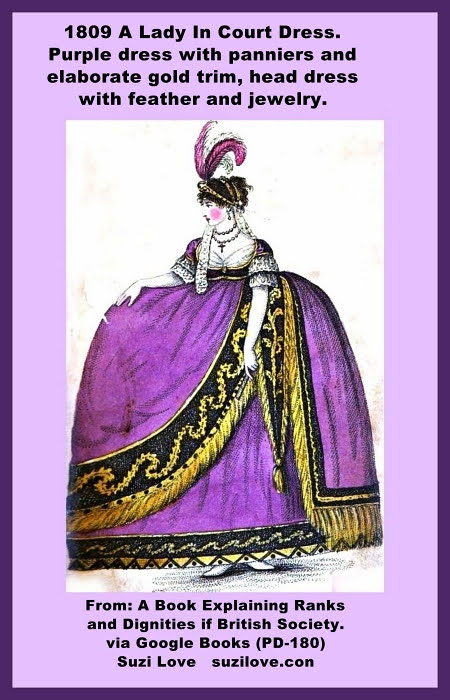
1809 A Lady In Court Dress. From: 1809 A Book Explaining Ranks and Dignities in British Society. via Google Books (PD-180)
Definition Court Dress: Usually, the difference between a court dress and a ball dress was in the quality of fabrics used, how elaborate the design, and the number and quality of the accessories. Plus, in England in the early 1800s court dresses were required by Queen Charlotte to have hoops and in France and other European countries court dresses a long train, usually expensively decorated. During the Regency Era, white cotton dresses were considered suitable for many evening events, but definitely not for an evening event in a palace.
1809 A Lady In Court Dress. From: 1809 A Book Explaining Ranks and Dignities in British Society. via Google Books (PD-180)
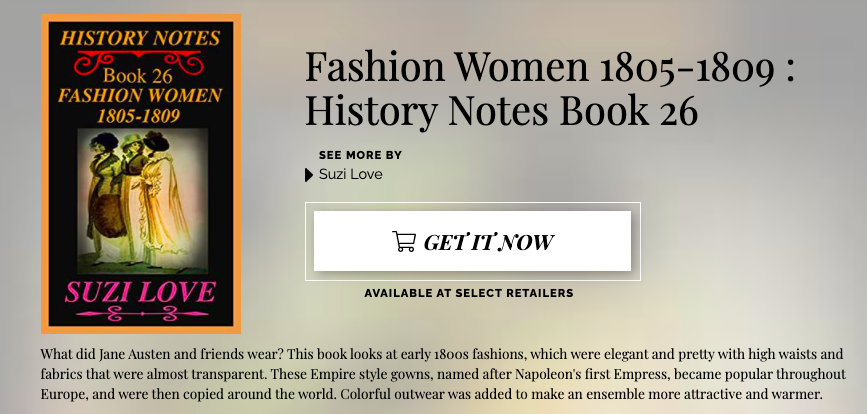
Fashion Women 1805-1809 History Notes Book 26 What did Jane Austen and friends wear? This book looks at early 1800s fashions, which were elegant and pretty with high waists and fabrics that were almost transparent. These Empire style gowns, named after Napoleon’s first Empress, became popular throughout Europe, and were then copied around the world. Colorful outwear was added to make an ensemble more attractive and warmer.
1800 ca. Tan Corduroy Breeches. Drop down front flap, or ‘fall’, with two buttons, three silver metal buttons at the waistband, watch pocket, corner pockets with buttons, pieced back with waist tie, saggy back with extra fabric to allow for easier movement when riding or sitting, four buttons and silk ties at knee. via Whitaker Auction whitakerauction.smugmug.com. Typical of a gentleman’s breeches worn during the early 1800s, or the Regency Era, or Jane Austen’s times. They have a front flap, or fall, which unbuttons and drops down and a back waist tie to adjust the waist size and there are buttons and ties to secure the breeches below the knee. https://books2read.com/SuziLoveFashionMen1800-1819
1800 ca. Tan Corduroy Breeches. Drop down front flap, or ‘fall’, with two buttons, three silver metal buttons at the waistband, watch pocket.
1800 ca. Tan Corduroy Breeches. saggy back with extra fabric to allow for easier movement when riding or sitting.
1800 ca. Tan Corduroy Breeches. Drop down front flap, or ‘fall’
1800 ca. Tan Corduroy Breeches. four buttons and silk ties at knee.
1800 ca. Tan Corduroy Breeches. four buttons and silk ties at knee.