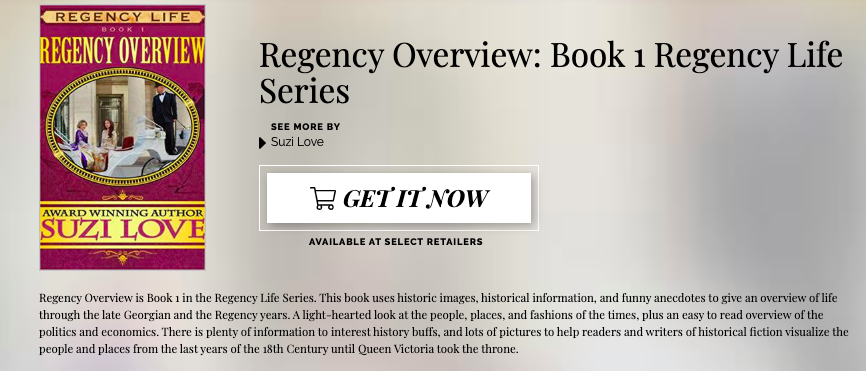
Writing Regency Era Fiction Or Nonfiction? Need more information on Older Gentleman’s Day in early 1800s, or Bridgerton’s and Jane Austen’s Regency Era. A lighthearted overview of an older gentleman’s clothing, social life, and responsibilities in the early 1800s. Take a look at where an older man went, what he wore, and how he managed the family’s finances and his estates. Older Gentleman’s Day Regency Life Series Book 3 books2read.com/suziloveOGD
The word ‘carol’ comes from the old French ‘carole’ for a song written and played as a courtly dancing song. Carols then took on a more popular form, telling stories and celebrating religious themes for all seasons until the late 19th century when they became associated with Christmas.
Carols took the place of Psalms in all churches on Christmas Day and, as the whole congregation could join in, were greeted with huge approval. Carols were passed on orally from place to place, often with different words or tunes. The published carols included songs still popular today, including The First Noël, I Saw Three Ships, and God Rest Ye Merry Gentlemen. This collection was followed by compilations of carols from other scholars such as William Sandy’s works in 1833 and 1852.
At the end of the winter term, schoolmasters would set their pupils to work on Christmas Pieces, samplers of writing on superior paper with engraved borders, to show parents how they had progressed during the year. By about 1820, the engraved borders were enhanced with color and the children’s pieces became more decorative.
However, the custom of sending cards at Christmas was started in the United Kingdom in 1843 by Sir Henry Cole. Postage had been standardized three years earlier and Cole was a civil servant who had played a key role in initiating Uniform Penny Post. He wanted ordinary people to become more interested in the new ‘Public Post Office’. With his artist friend John Horsley, they designed the first card which was issued from a periodical, Felix Summerley’s Home Treasury, and were sold for 1 shilling each.
The card was lithographed, hand-colored, had three panels and was in a rustic frame of carved wood and ivy. The outer two panels showed people caring for the hungry and the naked. The centre panel showed a family of three generations having Christmas dinner, although the temperate classes strongly objected to the idea of a child being given a glass of wine with dinner.
New railways carried more post, and a lot faster, than a horse and carriage so the Post Office offered a Penny stamp. Cards became even more popular when they could be posted in an unsealed envelope for one halfpenny. Christmas cards became truly popular when printing improved and cards could be produced in large numbers, around 1860. By the early 1900s, the custom had spread over Europe and especially in Germany.
Early cards usually pictured Nativity scenes, but in the late Victorian times, robins and snow-scenes became popular because the postmen wore red uniforms and were nicknamed ‘Robin Postmen’. Snow-scenes were also popular because they were a reminder of the very bad winter of 1836.
Snow scenes reflected the snowy and often harsh northern hemisphere winters when opening and reading Christmas cards was an enjoyable family experience. In 1860, Charles Goodall & Son, a British publisher of visiting cards, began mass producing cards to be used for visits during the Christmas period. These Christmas and New Year’s visiting cards were decorated with simple designs such as a twig of holly or flowers.
Sales of cards grew and designs and sizes changed. The first cards were meant to appeal to the masses and encourage them to send large numbers by post, so rather than focus on religious images, they showed sentimental or humorous images of family and children, fanciful designs of flowers, fairies, or reminders of the approach of spring. Religious themes of nativity scenes, children looking at the manger, or angels and candles remain popular to the modern day.
Cards could be shaped like bells, a fan, a crescent, a circle, or a diamond and were folding, decorated with jewels, iridescent, embossed, and carried either simple Christmas and New Year greetings or had verses and carols written in them. The next year, Mr W.C.T. Dobson produced a sketch symbolizing the ‘Spirit of Christmas’ which sold many more than the previous thousand and the novelty caught on.
Many artists became famous for their annual illustrations that became postcards and cards. Printing technology became more advanced in the age of industrialisation and the price of card production dropped. With the introduction of the halfpenny postage rate, the Christmas card industry industry increased until in 1880 11.5 million cards were produced.
At Christmas time, households had guests to stay and games were played to either fill in the time inside when the weather was too bad to venture out with sleds or skates, or to keep tradition. Blind man’s bluff, forfeits, and snap dragon were all played.
A list of some entertainments for Christmas…From The book Of Christmas by Thomas kibble Hervey. “jugglers, and jack-puddings, scrambling for nuts and apples, dancing the hobby-horse, hunting owls and squirrels, the fool-plough, hot-cockles, a stick moving on a pivot, with an apple at one end and a candle at the other, so that he who missed his bite burned his nose, blindman’s buffs, forfeits, interludes and mock plays :” — also of ” thread my needle, Nan,” ” he can do little that can’t do this,” feed the dove, hunt the slipper, shoeing the wild mare, post and pair, snap dragon, the gathering of omens….
Snap Dragon A favorite game was Snap Dragon, often played on Christmas Eve. Raisins were put into a large, shallow bowl and brandy was poured over them and then ignited. Lights were extinguished to increase the eerie effect of the blue flames playing across the liquor. The object of the game was to reach through the blue flames and grab as many raisins as possible from the flaming brandy and pop them into your mouth. The risk of burning yourself increased the excitement.
Samuel Johnson’s Dictionary of the English Language in 1755 describes the. game as “a play in which they catch raisins out of burning brandy and, extinguishing them by closing the mouth, eat them”. According to an eighteenth-century article in Richard Steele’s Tatler magazine, “the wantonness of the thing was to see each other look like a demon, as we burnt ourselves, and snatched out the fruit.”
Snap-dragon was played in England, Canada, U/S.A, and probably other countries with British backgrounds. The words snap-dragon and flap-dragon can refer to the game, the raisins used in the game, or the bowl with brandy and raisins.
The first reference to Snap-dragon as a game is in Francis Grose’s Dictionary of the Vulgar Tongue in 1811. “Christmas gambol: raisins and almonds being put into a bowl of brandy, and the candles extinguished, the spirit is set on fire, and the company scramble for the raisins.” Snap-dragon as a Christmas parlour game was mentioned in 1836 in Charles Dickens’ The Pickwick Papers and in 1861, in Anthony Trollope’s novel Orley Farm. Lewis Carroll, in Through the Looking-Glass, and What Alice Found There in 1871 describes “A snap-dragon-fly. Its body is made of plum pudding, its wings of holly-leaves, and its head is a raisin burning in brandy.”
Agatha Christie’s book Hallowe’en Party describes a children’s party during which a child’s murder causes Hercule Poirot to be brought in to solve the case and at which Snap-dragon is played at the end of the evening.
Angels – Heralds for the news of the birth of a baby in a manger.
Bells – Bells have rung out for all important events for centuries, plus lost sheep are found by the sound of the bell.
Candy Cane – Symbolizes the crook of the shepherds who visited Christ. Red represents the blood that was spilled and white is for purity. The peppermint oil that flavors is known for its strong healing properties.
Cards – Produced in Britain in 1843 to be sent with love to family and friends around the world by the new Postal services.
Carols – Poems and stories of worship made into songs.
Carolers – Groups of people who strolled the streets singing Christmas songs
Feasting – To celebrate the joy of the baby’s arrival on the 25th December.
Gift Giving – The Wise Men bowed before the baby and gave him gold, frankincense and myrrh.
Gold – Decorating using the color of one of the gifts of the wise men.
Green – Decorating using the color of evergreens which show everlasting love.
Holly – Represents Eternal Life and the crown of thorns worn by Jesus.
Mistletoe: In the 18th Century, men kissed a woman who stood under mistletoe to show love, friendship and goodwill. If a woman was un-kissed, she would (supposedly) never marry.
Nativity: The birth of Jesus Christ
Poinsettia – Red flowers used in countries such as Mexico to symbolize Christmas time.
Stockings – Hung by children to receive gifts
Twelve Days of Christmas: Twelve days between the birth of Christ on December 25 and the coming of the Magi on January 6, the Epiphany.
Tree – Evergreen tree symbolizes eternal life and love
Wreath – Made of evergreens to symbolize never ending love
Our modern Christmas tree tradition probably began in Germany in the 18th century, though some argue that Martin Luther began the tradition in the 16th century. An evergreen fir tree was used to celebrate winter festivals (pagan and Christian) for thousands of years. Nobody is really sure when Fir trees were first used as Christmas trees but it probably began 1000 years ago in Northern Europe. Many early Christmas Trees seem to have been hung upside down from the ceiling using chains.
The English phrase “Christmas tree”, first recorded in 1835, came from the German words Tannenbaum (fir tree) or Weinachtenbaum (Christmas tree). The Christmas tree is often explained as a Christianization of pagan tradition and ritual surrounding the Winter Solstice, which included the use of evergreen boughs, and an adaptation of pagan tree worship. At first, a figure of the Baby Jesus was put on the top of the tree. Over time it changed to an angel or fairy that told the shepherds about Jesus, or a star like the Wisemen saw.
Christian tradition associates the holly tree with the crown of thorns, and says that its leaves were white until stained red by the blood of Christ. Along with a Christmas tree, the interior of homes were decorated with plants, garlands, and evergreen foliage and in Victorian times, Christmas trees were decorated with candles to represent stars.
The early Germans conceived of the world as a great tree whose roots were hidden deep under the earth, but whose top, flourishing in the midst of Walhalla, the old German paradise, nourished the she-goat upon whose milk fallen heroes restored themselves. Yggdnafil was the name of this tree, and its memory was still green long after Christianity had been introduced into Germany, when much of its symbolic character was transferred to the Christmas-tree. At first fitted up during the Twelve Nights in honor of Berchta, the goddess of spring, it was subsequently transferred to the birthday of Christ, who, as the God-man, is become the “resurrection and the life.”
Queen Victoria saw a Christmas tree as a girl in 1832. The little princess wrote excitedly in her diary that her Aunt Sophia had set up two “trees hung with lights and sugar ornaments. All the presents being placed around the tree.” In 1841, Prince Albert, Queen Victoria’s German husband, arranged for a fir tree to be brought from Germany and decorated. By 1850, Victoria and Albert had Christmas trees erected in the British Royal Palaces and their children started the tradition of gathering around the tree.
‘The Christmas-tree is doubtless of German origin. Though in its present form it is comparatively of recent date, yet its pagan prototype enjoyed a very high antiquity.’ From 1873 Harper’s Bazaar, America.
A print of the royal family gathered about the Christmas tree at Windsor Castle appeared in the Illustrated London News in 1848, then in Godey’s Lady’s Book in 1850, and was reprinted again ten years later. The six-foot fir sits on a table, each tier laden with a dozen or more lighted wax tapers. An angel with outstretched arms poses at the top. Gilt gingerbread ornaments and tiny baskets filled with sweets hang by ribbons from the branches. Clustered around the base of the tree are dolls and soldiers and toys.
Christmas trees did exist in America before Queen Victoria made them famous, but mainly only amongst migrant groups from Europe. The writer of an 1825 article in The Saturday Evening Post mentions seeing trees in the windows of many houses in Philadelphia, a city with a large German population. He wrote, Their “green boughs laden with fruit, richer than the golden apples of the Hesperides, or the sparkling diamonds that clustered on the branches in the wonderful cave of Aladdin.” Gilded apples and nuts hung from the branches as did marzipan ornaments, sugar cakes, miniature mince pies, spicy cookies cut from molds in the shape of stars, birds, fish, butterflies, and flowers. A woman visiting German friends in Boston in 1832 wrote about their unusual tree hung with gilded eggshell cups filled with candies.
Not until the mid-nineteenth century did Christmas trees start spreading to homes with no known German connection. But once Queen Victoria approved of the custom of a Christmas tree, the practice spread throughout England and America and, to a lesser extent, to other parts of the world, through magazine pictures and articles. Upper-class Victorian Englishmen loved to imitate the royal family, and other nations copied the custom. Late in the century, larger floor-to-ceiling trees replaced the tabletop size.
What did ladies do and wear in Jane Austen’s time, or early 1800s? #Regency #History #nonfiction Books 4 and 5 Regency Life Series. Young Lady’s Day and Older Lady’s Day in Books 4 and 5 in the Regency Life Series. These books depict the often-frivolous life and fashions of ladies in the early 1800’s, or during the lifetime of Jane Austen, but also gives a glimpse into the more serious occupations ladies may undertake. Through historic images, historical information, and funny anecdotes, they show how a lady fills her day, where she is permitted to go, and who she spends time with. These light-hearted looks at the longer Regency years are an easy to read overview of what people did and wore, and where they worked and played. There is plenty of information to interest history buffs, and lots of pictures to help readers and writers of historical fiction visualize the people and places from the last years of the 18th Century until Queen Victoria took the throne. Young Lady’s Day ~ Older Lady’s Day
1863 Traveler’s Chest, French. Sewing Tools, Ruby Perfume, Aide de Memoire or Notebook, etc. Inside lid with theatre curtains. via Ruby Lane Antiques. rubylane.com
1817 April Ladies’ Voucher for all the Wednesday balls at Almack’s Assembly Rooms, London, U.K. in April 1817. The voucher is for the Marchioness of Buckingham to attend the balls at Almack’s “on the Wednesdays in April 1817.” There are initials in the lower right hand corner marked, “MD”. These initials might be for Mary Marchioness of Downshire who may briefly have been a patroness ca. 1816-1817. The red wax seal is also intact on the front. “Pall Mall” is written on the back of the card.Via Huntington Museum, California, U.S.A. https://hdl.huntington.org/digital/collection/p15150coll7/id/10672/
Subscribers to Almack’s were allowed to bring a guest to a Ball, if they were approved first. They called at the Rooms in person and were either granted a Strangers Ticket of admission or were banned. Rooms were open for supper, gaming dancing lasting the night. At eleven o’clock, doors were closed and no one, not even celebrities were admitted. Once a young lady making her debut during the London Season had been granted a ticket to Almack’s, her social standing was assured. The Patronesses introduced the debutante to people of importance and selected her dance partners.