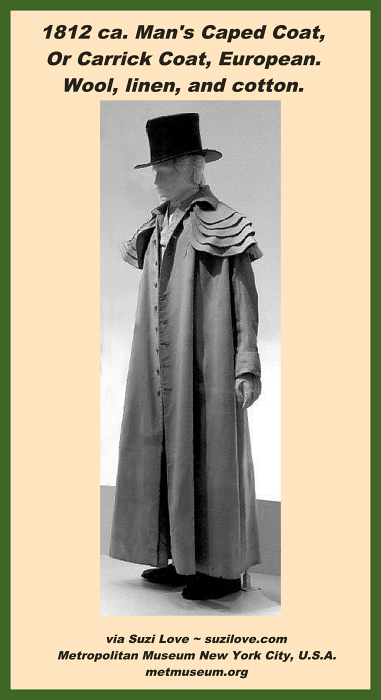
1812 Man’s wool, linen, and cotton long coat with four shoulder capes, European. Also called a Carrick Coat, a Driving Coat, or a Redingote in France. via Metropolitan Museum, NYC, USA. ~ metmuseum.org
A Regency Era, or early 1800s, gentleman was outfitted in more practical fabrics, such as wool, cotton and buckskin rather than the fussy brocades and silks of the late 1700s. The men in Jane Austen’s life and the Bridgerton men would have worn this sort of warm and practical coat like this when riding his horse in inclement weather or when driving his carriage.
Definition: Carrick Coat: Or Garrick or Coachman’s coat, with capes, or collars, popular in 19th century for riding and travel.
1812 ca. Back View. Man’s Caped Coat, Or Carrick Coat, European.
Wool, linen, and cotton. via Metropolitan Museum New York City, U.S.A. metmuseum.org1812 ca. Front View. Man’s Caped Coat, Or Carrick Coat, European.
Wool, linen, and cotton. via Metropolitan Museum New York City, U.S.A. metmuseum.org1812 ca. Back View Black and White. Man’s Caped Coat, Or Carrick Coat, European.
Wool, linen, and cotton. via Metropolitan Museum New York City, U.S.A. metmuseum.org1812 ca. Front View Black and White. Man’s Caped Coat, Or Carrick Coat, European.
Wool, linen, and cotton. via Metropolitan Museum New York City, U.S.A. metmuseum.org1812 ca. Front View Black and White With Umbrella. Man’s Caped Coat, Or Carrick Coat, European.
Wool, linen, and cotton. via Metropolitan Museum New York City, U.S.A. metmuseum.org
1816 December. Promenade Dress, or Pelisse, English, also called a Redingote in France. High cambric muslin dress trimmed at the bottom with a single flounce of work, shaped without any fulness to fit the body, plain long sleeve finished by a triple fall of narrow lace. Over this is the Angouleme pelisse of crimson velvet, lined with white Sarsnet, and trimmed with a single Welt of crimson satin, a shade lighter than the pelisse. Shaped the to the body and without much fullness, confined at the short waist with narrow velvet band, edged to match. Small stand-up collar, supports a rich lace ruff, which is worn open in front of the throat. Sleeve has little fullness and is confined at the wrist by three narrow bands of puckered satin. Bonnet of white satin a la Royale with a large bunch of flowers and tied under the chin with satin ribbon and finished in front with a full quilling of tulle. Black silk ridicule, exquisitely worked in imitation of the ends of an India shawl and trimmed with black silk fringe. White kid gloves and black walking shoes. Fashion plate, hand-colored engraving on paper. Published in Rudolph Ackermann’s ‘The Repository of Arts’, London.
Promenade Dress, Pelisse, Redingote, Or Walking Dress. Jane Austen and her contemporaries wore long coats like these to keep warm when out and about, visiting, shopping etc. The thin muslin dresses worn in the early 1800s were little protection against European winters.
1816 December. Promenade Dress, or Pelisse, English, called Redingote in France. High cambric muslin dress trimmed at the bottom, plain long sleeve finished by a triple fall of narrow lace. Over this is the Angouleme pelisse of crimson velvet, lined with white Sarsnet, and trimmed with a single Welt of crimson satin, a shade lighter than the pelisse. Bonnet of white satin a la Royale with a large bunch of flowers and tied under the chin with satin ribbon. White kid gloves and black walking shoes. Fashion Plate in Rudolph Ackermann’s ‘The Repository of Arts’, London. Fashion Women 1815-1819 History Notes Book 28 https://books2read.com/SuziLoveFashionWomen1815-1819
Love the Bridgerton family and Jane Austen? Reader Or Writer of Regency Era stories? Mourning and riding fashion, dresses, hats, shoes, reticules or bags, underclothing and fashion accessories. books2read.com/SuziLoveFashionWomen1815-1819
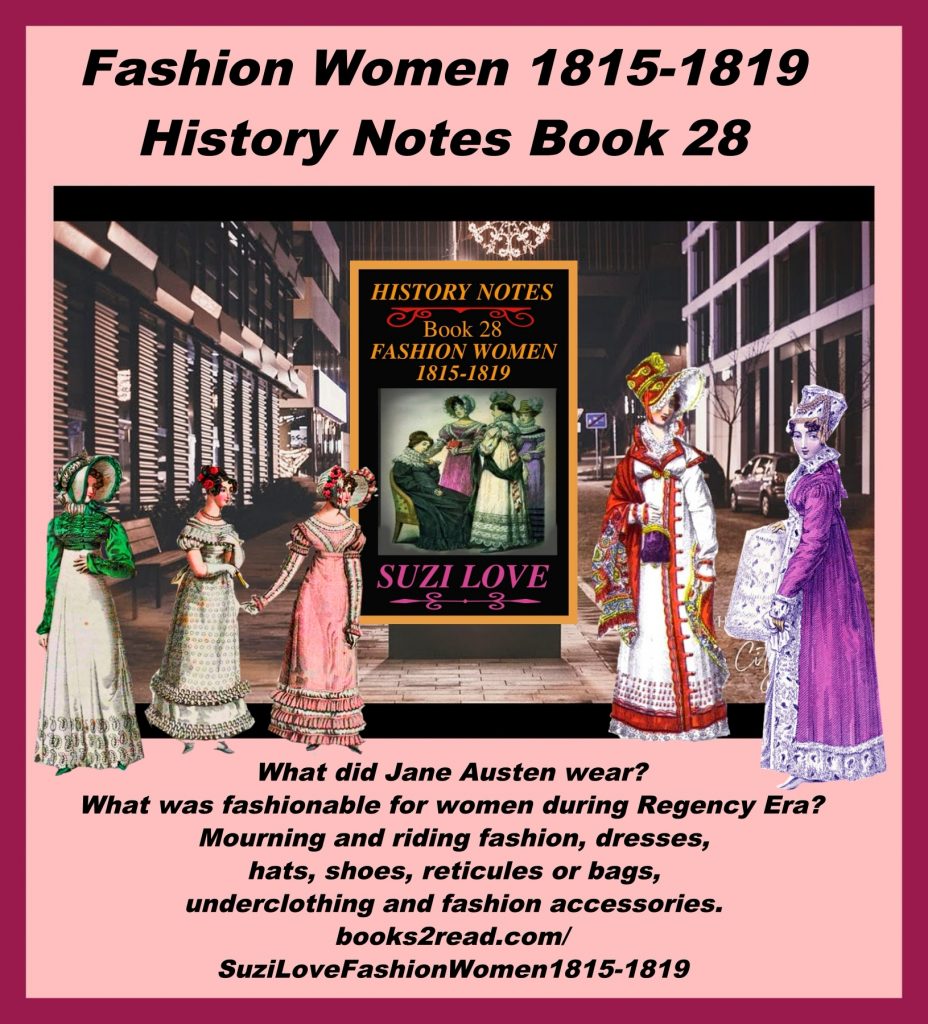
History Notes 28 Fashion Women 1815-1819: This book looks at what was fashionable for women in the Georgian Era and at the end of the Regency Era in Britain and the reconstruction in Europe after the wars. Lifestyles were freer and fashions expressed this by becoming the focus of most women’s lives. A wardrobe full of opulent accessories was requisite. Includes mourning and riding fashion, dresses, hats, shoes, reticules or bags, underclothing, and fashion accessories.Â
Are you a reader or writer of the Regency Era? Lover of the Bridgertons and Jane Austen? Mourning and riding fashion,underclothing and corsets. #Bridgerton #JaneAusten #RegencyFashion #mourningFashion https://books2read.com/SuziLoveFashionWomen1815-1819
Fashion Women 1815-1819 History Notes Book 28 What did Jane Austen wear? This book looks at what was fashionable for women in the Georgian Era and at the end of the Regency Era in Britain and the reconstruction in Europe after the wars. Lifestyles were freer and fashions expressed this by becoming the focus of most women’s lives. A wardrobe full of opulent accessories was requisite. Includes mourning and riding fashion, dresses, hats, shoes, reticules or bags, underclothing, and fashion accessories.
1823 Couple In Evening Costumes, French. Short length dancing dress of white gauze, short sleeves, pink ribbon trim, flowers, parure, or jewelry set, dancing shoes and hair in a bandeau. Man in half dress of black tailcoat, yellow vest, short length white trousers, high white cravat, blue fob, and curled hair style. via Modes Francaises L’Indiscreet, France.
From the finish of the 18th century until 1820, men’s fashions in European and European-influenced countries moved away from the formal wear of brocades, lace, wigs and powder to more informal and relaxed styles. Focus was on undress rather than formal dress. Typical menswear in the early 1800s included a tailcoat, a vest or waistcoat, either breeches, pants, or the newer trousers, stockings, shoes or boots, all worn with an overcoat and hat. This basic ensemble was accessorized with some form of neckcloth or cravat, gloves, walking stick, cane or riding crop, handkerchief, fobs, watch and perhaps a quizzing glass or eye glass.
Skirted coats were replaced with short-fronted, or cutaway, tailcoats worn over fitted waistcoats and plain, white linen shirts. Knee breeches were gradually replaced by tight-fitting pantaloons and later trousers, decorative shoes with buckles were replaced with a variety of boot styles, and fussy and ruffled neckwear gave way to intricately tied, white linen neck cloths. A Regency Era, or early 1800s, gentleman was outfitted in more practical fabrics, such as wool, cotton and buckskin rather than the fussy brocades and silks of the late 1700s.
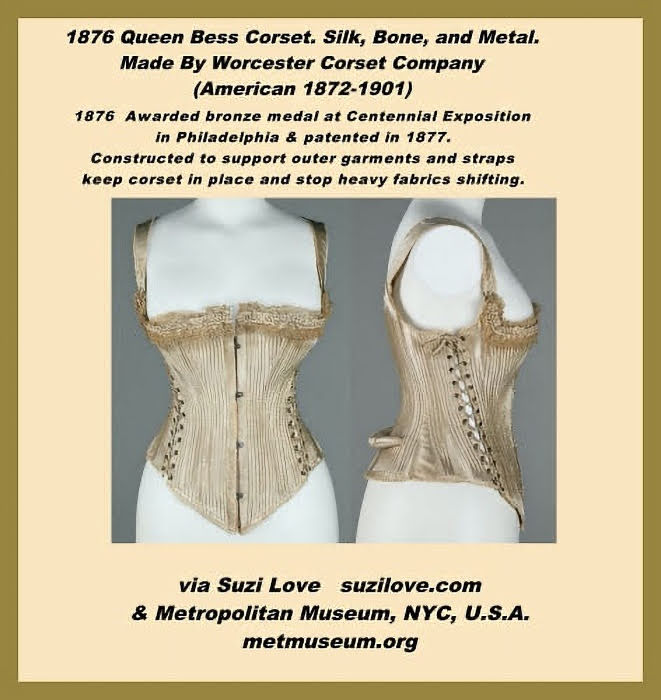
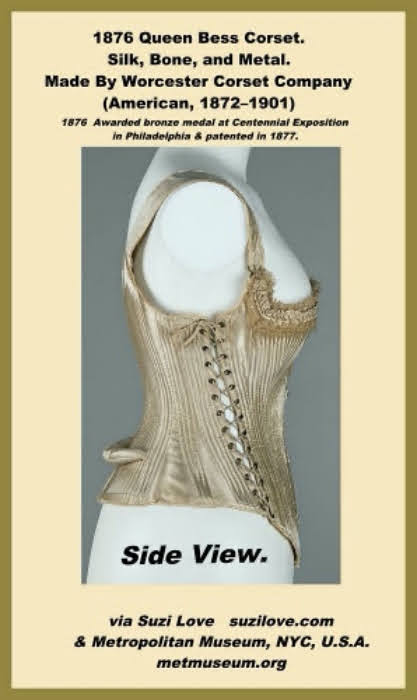
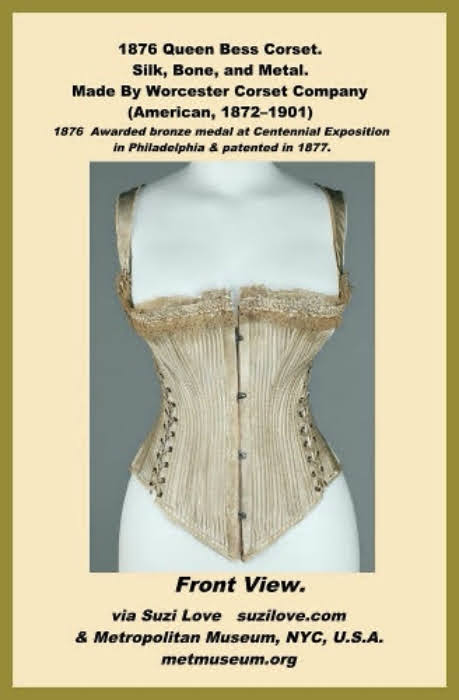
1876 ‘Queen Bess’ Corset By Worcester Company, American. Made of silk, bone, and metal. Named ‘Queen Bess’, this corset was awarded the bronze medal at the Centennial Exposition in Philadelphia in 1876 and was patented in 1877. A well documented piece, it is unique in its design, which has been carefully constructed to support the wearer’s outer garments. The straps would assist in keeping the corset in place and hinder any shifting due to the heavy fabrics, and the bustle roll at back would ease any strain the wearer might experience from the excessive weight of the skirt. Credit Line:Brooklyn Museum Costume Collection at The Metropolitan Museum of Art, Gift of the Brooklyn Museum, 2009; Gift of E. A. Meister, 1950 Accession Number:2009.300.3496a–e
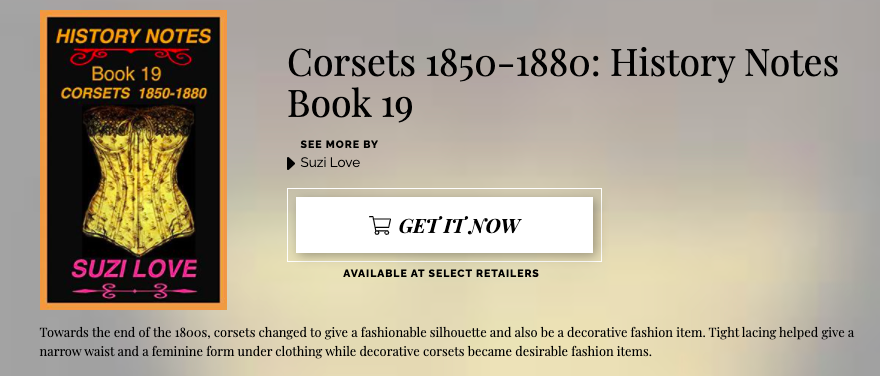
Corsets 1850-1880 History Notes Book 19 Towards the end of the 1800s, corsets changed to give a fashionable silhouette and be a decorative fashion item. Tight lacing helped give a narrow waist and a feminine form under clothing while decorative corsets became desirable fashion items. Victorian corsets for small waists and fashionable silhouettes. Corsets during the Victorian Era, or late 1800s, tightened to give tiny waists and fashionable silhouettes.
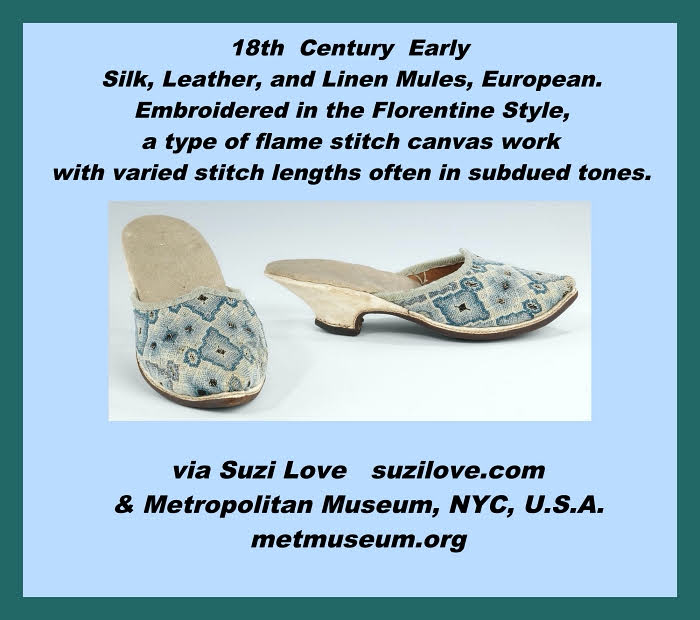
18th Century Early. Silk, Leather, and Linen Mules, European. Embroidered in the Florentine Style, a type of flame stitch canvas work with varied stitch lengths often in subdued tones. via Metropolitan Museum, NYC, U.S.A.
shoes_18th Century Early. Silk, Leather, and Linen Mules, European. Embroidered in the Florentine Style, a type of flame stitch canvas work with varied stitch lengths often in subdued tones. via Metropolitan Museum, NYC, U.S.A.
18th Century Early. Silk, Leather, and Linen Mules (shoes), European, and embroidered in Florentine Style. #shoes #georgianfashion #europe https://books2read.com/suziloveFashWomen1700s
HN_1 Fashion Women Late 1700s History Notes Book 1 by Suzi Love.
What was fashionable for women in the late 1700s? Extravagant colors and fabrics and outrageous styles were all seen in these flamboyant fashions.
books2read.com/suziloveFashWomen1700s
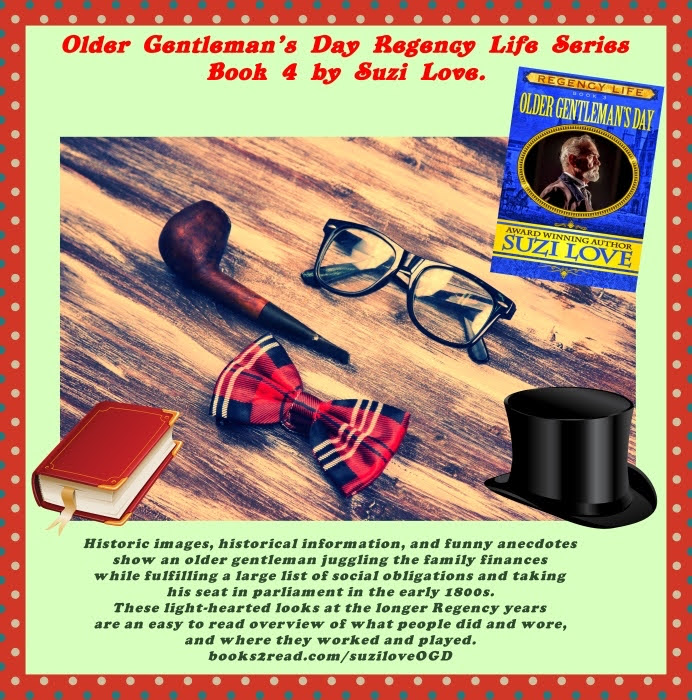
Writing Regency Era Fiction Or Nonfiction? Need more information on Older Gentleman’s Day in early 1800s, or Bridgerton’s and Jane Austen’s Regency Era. A lighthearted overview of an older gentleman’s clothing, social life, and responsibilities in the early 1800s. Take a look at where an older man went, what he wore, and how he managed the family’s finances and his estates. Older Gentleman’s Day Regency Life Series Book 3 books2read.com/suziloveOGD
What Did An Older Gentleman Do In Early 1800s, or Jane Austen’s Regency Era? An overview of an older gentleman’s clothing, social life, and responsibilities in the early 1800s. Take a look at where he went, what he wore, and how he managed the family’s finances. Older Gentleman’s Day Regency Life Series Book 3 books2read.com/suziloveOGD
Strictly speaking, the REGENCY ERA refers to the years between 1811 and 1820 when George IV acted as Prince Regent when his father was unable to remain in power due to his illness, or rather his madness. For convenience, the term REGENCY YEARS is used to describe the longer period from the last two years of the Georgian Era (1809-1810), plus the ten years under the Prince Regent (1811-1820), and up until 1837 when Queen Victoria came to the throne.Â
RL_3_OGD_Older Man’s Day Regency Life Series Book 3 by Suzi Love #Regency #History books2read.com_suziloveOGD
What Did An Older Gentleman Do In the Bridgerton’s or Jane Austen’s Regency Era? #Bridgerton #RegencyEra #JaneAusten #BritishHistory http://books2read.com/suziloveOGD
1827 ca. Gentleman’s Dressing Box, London. Mahogany box with brass carrying handles, lid opens to velvet and leather interior with twelve engraved silver topped bottles, all with an engraving of an oak tree engraving, ivory handled cut throat razors, scissors, boot pulls, tongue scraper, section for letters etc. Top tray lifts out to another tray of tools. via Antique Tea Caddies, U.K.
1827 ca. Mahogany Gentleman’s Dressing Box With Silver Topped Bottles, London. #RegencyEra #Antiques #London books2read.com/suziloveBoxesCases
HN_11_D2D_Craftsmen created containers of precious metals, leather, silks, and decorated them with jewels to make exquisite and expensive items as well as practical carrying cases. books2read.com/suziloveBoxesCases
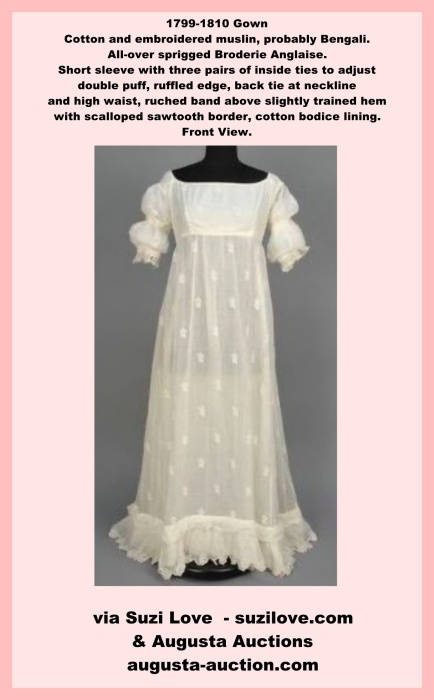
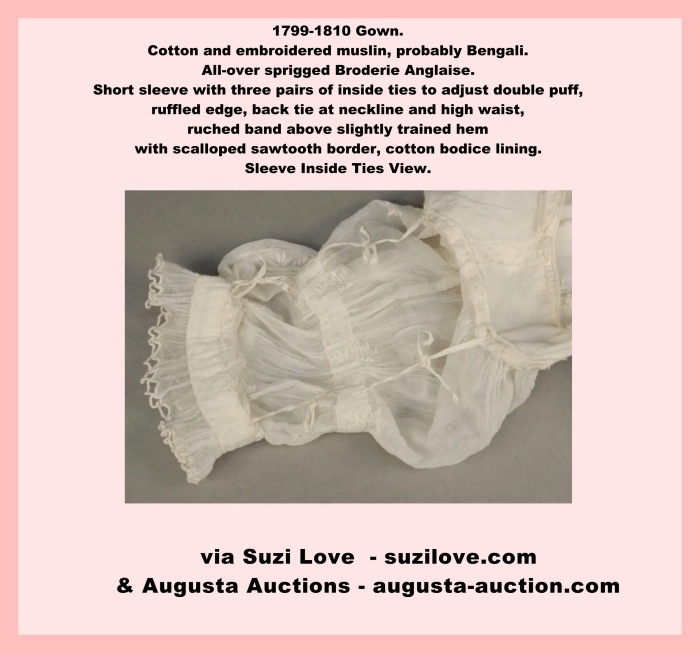
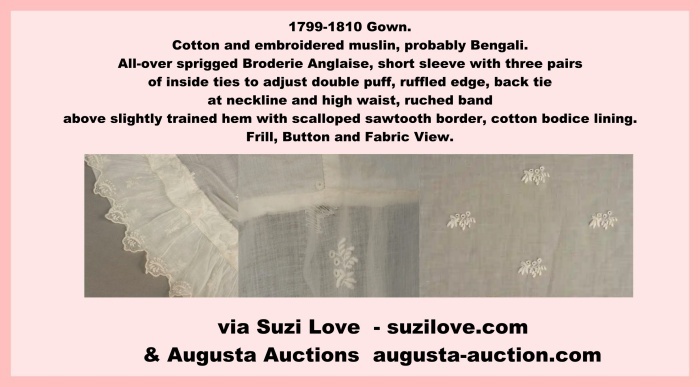
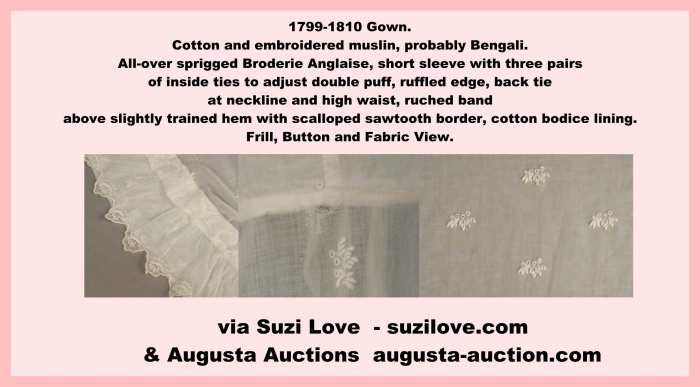
1799-1810 ca. Cotton Muslin Gown, Probably American. White cotton embroidered muslin, probably Bengal, all over sprigged broderie anglaise decoration,short sleeve with three pairs of inside ties to adjust the double-puff, ruffled edge, back tie at neckline and waist, ruched band above the slightly trained hem with scalloped sawtooth border and with cotton bodice lining. via whitakerauction.smugmug.com
These lightweight white cotton dresses were fashionable in Jane Austen’s times, but they were certainly not warm when a lady was out walking or when riding in a carriage. Numerous outer layers could be added for warmth and to brighten and personalize an outfit. These might be an overdress, pelisse or redingote, hat, shawl, gloves, or large fur muff.
1799-1810 ca. Jane Austen Style White Cotton Muslin Dress With Sprigged Broderie Anglaise. #RegencyFashion #JaneAusten #GeorgianFashion books2read.com/SuziLoveFashionWomen1800
Spencers Or Regency Jackets By Suzi Love. History Notes Book 4. What was fashionable for outer wear in past centuries? Call them what you like: Spencers, short jackets, or Regency jackets were very popular. Take a look at the jackets being worn by women in the early 1800s or the times of Jane Austen. books2read.com/suziloveSpencers
Definition: Spencer – Short, bodice hugging, usually long sleeved, outer jacket. For warmth and for fashion.
Definition Caroline Spencer: Worn during the Directoire and First Empire (1790-1815 C.E.). Spencer with pelerine cape that was made of white kerseymere and trimmed with light blue satin cut on bias.
Spencers were short jackets cut to match the high waistlines of Empire dresses. They often copied military styling, such as braiding, shoulder decoration, buttons and loop fasteners, and wrist adornments. They were generally of complex construction, often with a diamond shaped piece in the back.
Take a Look at Spencers, or Jackets Worn By Women In Bridgerton and Jane Austen’s Times, or Early 1800s. #Bridgerton#RegencyFashion #HistoricalFashion #History books2read.com/suziloveSpencers