Leaning in, Lord Mallory whispered in Lady Lillian’s ear. “Well, well. I certainly didn’t expect to find you in attendance at a scandalous ball.”
1820 Blackstone House, Twenty miles south of London. Brenton, Earl Mallory, secreted himself behind a life-sized statue of a naked man. Hiding from the two hundred guests spilling through the rooms Lord Browning had opened for the Pleasure House Ball. Clearly he’d suffered a moment of insanity when he’d yielded to his friend’s pleas to accompany him to this ball. ‘For God’s sake, Michael, why are we wasting our time here? I’ve no intention of engaging a mistress and….’
Brent shook his head. ‘Must be imagining things. I know only one person who wears that perfume and she mixes it herself. That woman is a lady and a duke’s daughter and certainly wouldn’t be attending a courtesan’s ball.’
‘Good God! You don’t mean−’
Pleasure House ball Book 3 Irresistible Aristocrats books2read.com/suzilovePHB. Lord Mallory, attends his first courtesan’s ball in ten years to appease his concerned friends, though he’d rather stay home and read to his motherless daughters.
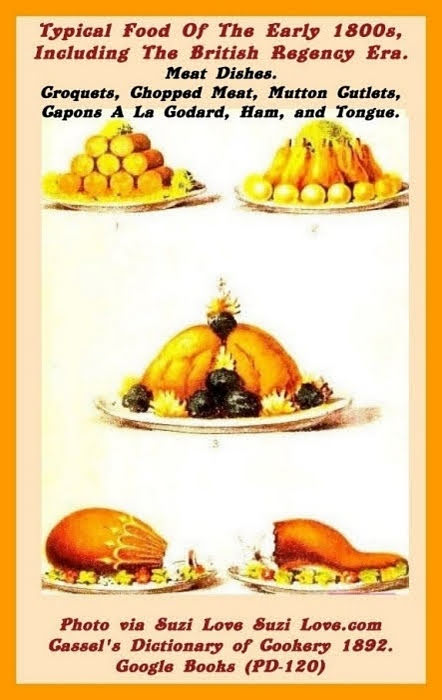
Because wild boar was the most feared animal, serving it at a meal represented the victory of good over evil. During the 17th century, wild boar became extinct in Britain so a pig’s head was used instead. The head was often presented on a decorated platter with an apple in its mouth and carried in by bearers in a dramatic manner. The tradition of serving ham for Christmas lunch or dinner probably came from the idea of serving boar’s head or roasted boar joints to guests at Christmas.
To say nothing of the roast beef and plum-pudding, Christmas pies, furmity, and snap-dragons, the Yule-log and the mistletoe have not finally abdicated, while the boar’s head, decorated with rosemary or prickly holly, maintains its place at the English Christmas dinner, and is still served up in great state at the royal Christmas table. At Oxford, U.K., the boar’s head was carried in by the strongest of the guardsmen, singing a Christmas carol, and preceded by a forester, a huntsman, and a couple of pages dressed in silk and carrying the mustard which was regarded as a great luxury and an infallible digester.
The following celebrated carol of the Boar’s Head is found in the book of ‘Christmasse Carolles’ published in 1521 by Wynkyn de Warde:
The boar’s head in bande bring I,
With garlandes gay and rosemary,
I pray you all synge merely,
Qui estis in convivio.
“The bore’s head, I understande,
Is the chefe servyce in this lande.
Loke wherever it be fande,
Servite cum cantico.
“Be gladde, lordes, both more and lasse,
For this bath ordayned our stewarde,
To chere you all this Christmasse,
The bore’s head with mustarde.”
At Oxford, U.K., the boar’s head was carried in by the strongest of the guardsmen, singing a Christmas carol, and preceded by a forester, a huntsman, and a couple of pages dressed in silk and carrying the mustard which was regarded as a great luxury and an infallible digester. A similar custom appears to have prevailed in Genoa in the times of the Dorias when a boar decorated with branches of laurel and accompanied by trumpeters was annually presented to the Doria family by the Abbot of San Antonio at Pré at midday on the 24th of December.
Another Christmas Tradition is kisisng under the Mistletoe. So have fun this Christmas and find someone to kiss. The problem in hotter climates is to find the Mistletoe, of course. Darn!
Mistletoe was used by Druid priests 200 years before the birth of Christ in their winter celebrations. They revered the plant since it had no roots yet remained green during the cold months of winter. The ancient Celtics believed mistletoe to have magical healing powers and used it as an antidote for poison, infertility, and to ward of evil spirits. The plant was also seen as a symbol of peace, and it is said that among Romans, enemies who met under mistletoe would lay down their weapons and embrace.
Scandanavians associated the plant with Frigga, their goddess of love, and it may be from this that we derive the custom of kissing under the mistletoe. Those who kissed under the mistletoe had the promise of happiness and good luck in the following year. Mistletoe was associated with Christmas as both a decoration under which lovers kiss, as well as a protection from witches and demons. Sounds romantic, although mistletoe is actually a parasitic plant that grows on other trees or plants and comes in many varieties.
In Britain, mistletoe was mainly found in the western and southwestern parts, so the custom wasn’t even followed in all parts of England. But where the mistletoe custom was followed, it was hung in doorways and the greenery was watched by young gentlemen in hopes of catching a pretty girl to kiss, usually on the cheek.
Traditionally, a man was allowed to kiss a woman who was standing underneath mistletoe and bad luck would befall any woman who refused. In some places, it was the custom to pick a berry for each kiss and when all the berries were gone, no more kisses could be taken.
“Bells are musics laughter.” By Thomas Hood (1799-1845), British poet and humorist.
Bells hold a long time association with Christmas. In Victorian times, carol singers used small handbells to play the tune of the carol. Sometimes there were bells without singing – Church bells are rung after sunset to signal the start of the Christmas Eve service, the first of Christmas. In England, the bellman goes round at midnight ringing his bell, and rattling off a stanza or two, for the gratuity which he confidently anticipates; while watchmen, firemen, rate-collectors, postmen, chimney-sweeps, street scavengers, the errand-boys of your baker, butcher, poultry merchant, and green-grocer, even to the hired singers in the churches all expect their Christmas-box. In Victorian times, carol singers used small hand bells to play the tune of the carol and sometimes there were bells without singing. Church bells are rung after sunset to signal the start of the Christmas Eve service, the first of Christmas.
The Bellman
The Bellman stands full face, shouting with wide-open mouth and ringing his hand-bell.
In his left hand he holds out his verses headed by a little figure of Napoleon wearing a huge tricorne and holding a gigantic sword:
‘This little Boney-says he’ll come At merry Christmas time,
But that I say is all a hum Or I no more will rhyme
Some say in Wooden house he’ll glide, Some say in air Balloon,
E’en those who airy schemes deride. Agree his coming soon.
Now honest people list to me, Though Income is but small, I’ll bet my Wig, to one Penney, He does not come at all.’ Hand-colored etching and aquatint.
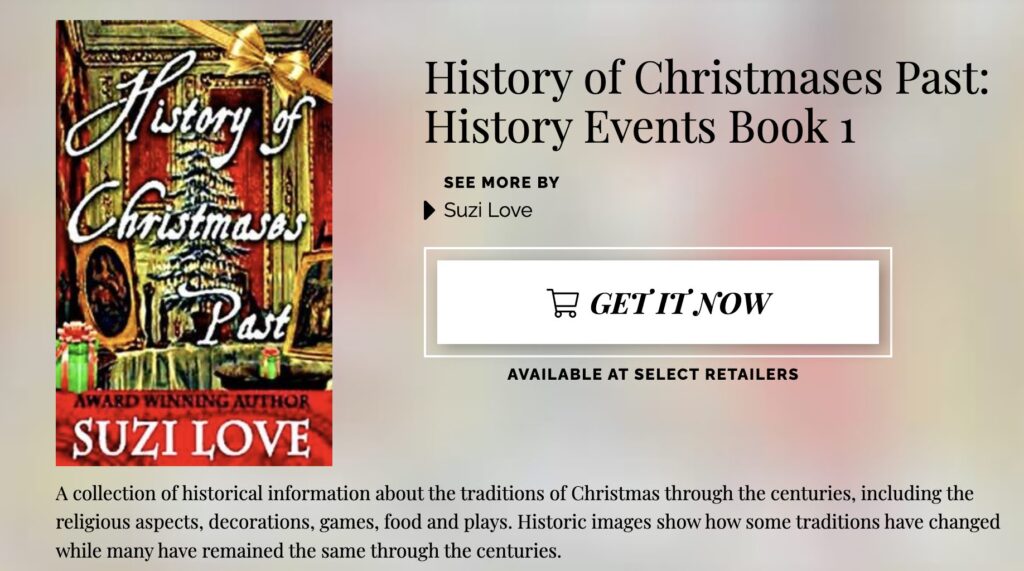
How did they celebrate Christmas in Bridgerton and Jane Austen times? Historical information about the traditions of Christmas through the centuries, including the religious aspects, decorations, games, food and plays. History Of Christmases Past has lots of information and images about Christmas through the centuries, including religious aspects, decorations, games, food and plays. Historic images show how some traditions have changed while many have remained the same through the centuries. books2read.com/suziloveHOCP
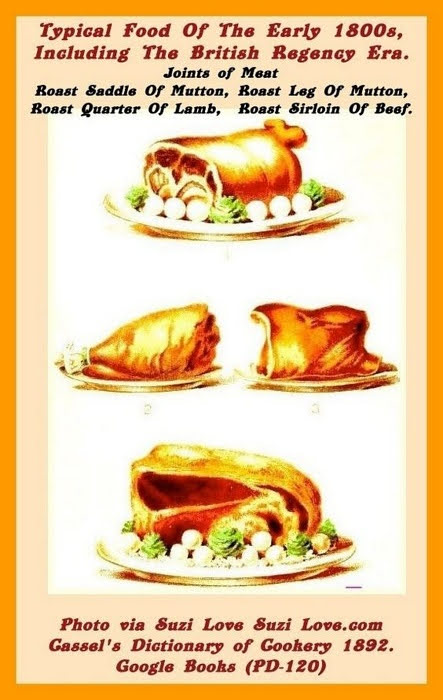
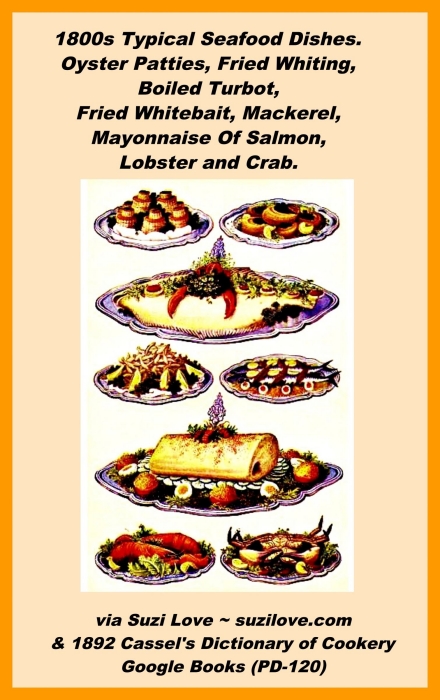
Christmas: Typical Christmas Food Eaten By the Bridgerton and Jane Austen Families. #Christmas #Food #JaneAusten #Bridgerton
On the Christmas menu was generally mince pies and perhaps a goose or a piece of beef, depending on the family’s wealth and status. Mince pies were not made of fruit mince as we do now, but of offal or meat such as bullock’s tongue cooked with spices, orange peel, and wine and then used to fill pastry cases.
Another Christmas specialty was a Yorkshire Christmas pie which would be filled with turkey, goose, a hen, or perhaps woodcocks, partridge, or pigeons. And after the main courses, came the Plum Pudding, mixed on Stir-Up Sunday according to each family’s recipe and then boiled in a cloth.
‘The following is a valued receipt that has been handed down in a Cornish family for many generations, and the hand-writing of the receipt book will vouch for its antiquity. ‘A pound of beef-suet chopped fine; a pound of raisins do. stoned. A pound of currants cleaned dry. A pound of apples chopped fine. Two or three eggs. Allspice beat very fine, and sugar to your taste. A little salt, and as much brandy and wine as you like. An ancient Cornish custom at Christmas.” A small piece of citron in each pie is an improvement.’ From: 1833 Christmas Carols, Ancient and Modern by William Sandys.
Mince meat pies, or Christmas or Twelfth Night pies, were always part of Christmas feasts. Originally the mince pies were oblong or oval but in the 1600’s, the pies became circular, although were quite large and could weigh up to 20 lbs. In London, they could be brought out on Lord Mayor’s Day which was the 9th of November.
Timeline of Mince Pies via Minced Pie Club.
In the 13th century, crusaders returned from the Middle Eastern with recipes containing meat, fruit and spices mixed together, which helped preserve meat without having to smoke, dry or salt.
1413 King Henry served a mincemeat pie at his coronation.
1588 Good Hous-Wiues Treasurie by Edward Allde: meats were still cut up to be eaten with a spoon and combined with fruits and heavy spices. His recipe for Minst Pye had practically the same ingredients as modern mince pies.
1657 Mince Pies were banned during the reign of Oliver Cromwell, along with other Christian traditions that were classed as gluttony.
1659 Oliver Cromwell’s Puritan influence spread to the American British Colonies and many towns banned mincemeat pies at Christmas time.
When pies were reintroduced in Britain, they were a lot smaller and could be served individually to guests and were named Wayfarer pies.
1832 Bill of Fare: no less than one hundred and eleven dishes of mince pies included.
More Minced Pie Trivia
When the monarchy was restored in 1660, the law regarding Minced Pies was disregarded but apparently never repealed so Mince pies are still, supposedly, illegal.
Pastry crusts sink in the middle and are thought to resemble Jesus’ manger so sometimes a small pastry doll was put in the middle and these were called crib pies.
Pies could last up to two months in cold weather.
Recipes varied by region, but usually included beef, poultry and other meats, suet, sugar, raisins or currants, spices, orange and lemon peel, eggs, apples and brandy.
Minced-meat was only supposed to be stirred clockwise, otherwise the stirrer would have bad luck in the coming year. bring bad luck for the coming year.
Filling included cinnamon, cloves and nutmeg to represent the gifts of the Magi to the infant Jesus and the star shaped pastry on top represents the star of Bethlehem.
If you ate minced pie every day of the twelve days of Christmas you were supposed to have twelve months of happiness, especially if the pies were baked by the dozen and offered by friends.
I love finding out the tradition behind some of the things we do and say at Christmas, don’t you? So I am going to do a series of posts this week covering lots of the historical aspects of our celebrations. Why we say things, why we do things, and why we use things to decorate our houses. Enjoy the festive season with me with more posts to follow.
CHRISTMAS
The word has been around for centuries, with some dictionaries putting it in the late Old English period and others to the 12th century. Old forms include cristes masse and christmasse, meaning the festival (mass) of Christ. It replaced other pagan midwinter festivals when the church tried to persuade Romans to convert to Christianity.
XMAS
This abbreviation annoys a lot of people but it isn’ t simply modern shorthand. X was used to represent the Greek symbol chi, which is also the first letter in Christ. This has been used since Roman times.
DECORATE
The word means to adorn and is from the 16th century, but the seasonal meaning of to deck with ornamental accessories dates from the 18th century. The word originates from the Latin decoratus (beautify).
TINSEL
It was first seen in the expression tinsell saten which means strips of shining metal used for ornament. It also describes things that are showy and worthless. It is believed to have come from the Anglo Norman with ancestors in Old French.
Christmas pudding originated as a 14th century porridge called ‘frumenty’ , made of beef and mutton with raisins, currants, prunes, wines and spices. Often more like soup, it was eaten as a fasting meal in preparation for Christmas festivities. By 1595, frumenty changed into a plum pudding thickened with eggs, breadcrumbs, dried fruit and flavoured with beer and spirits. It became the customary Christmas dessert around 1650, but in 1664 the Puritans banned it as a bad custom. In 1714, King George I re-established it as part of the Christmas meal, having tasted and enjoyed Plum Pudding.
“In December, the principal household duty lies in preparing for the creature comforts of those near and dear to us, so as to meet old Christmas with a happy face, a contented mind, and a full larder; and in stoning the plums, washing the currants, cutting the citron, beating the eggs, and mixing the pudding, a housewife is not unworthily greeting the genial season of all good things.” Via 1861 Beeton’s Book of Household Management.
The Sunday closest to St. Andrew’s Day was Stirring-up Sunday, and the day to prepare the family’s Christmas pudding. The eldest member of the household or a visitor would give the first stir and charms were stirred into the pudding. A ring meant a coming marriage, a button was bachelorhood, a thimble meant spinsterhood, and a sixpence was good luck. Puddings were steamed in a pudding bag and stored in a cool place until Christmas Day.