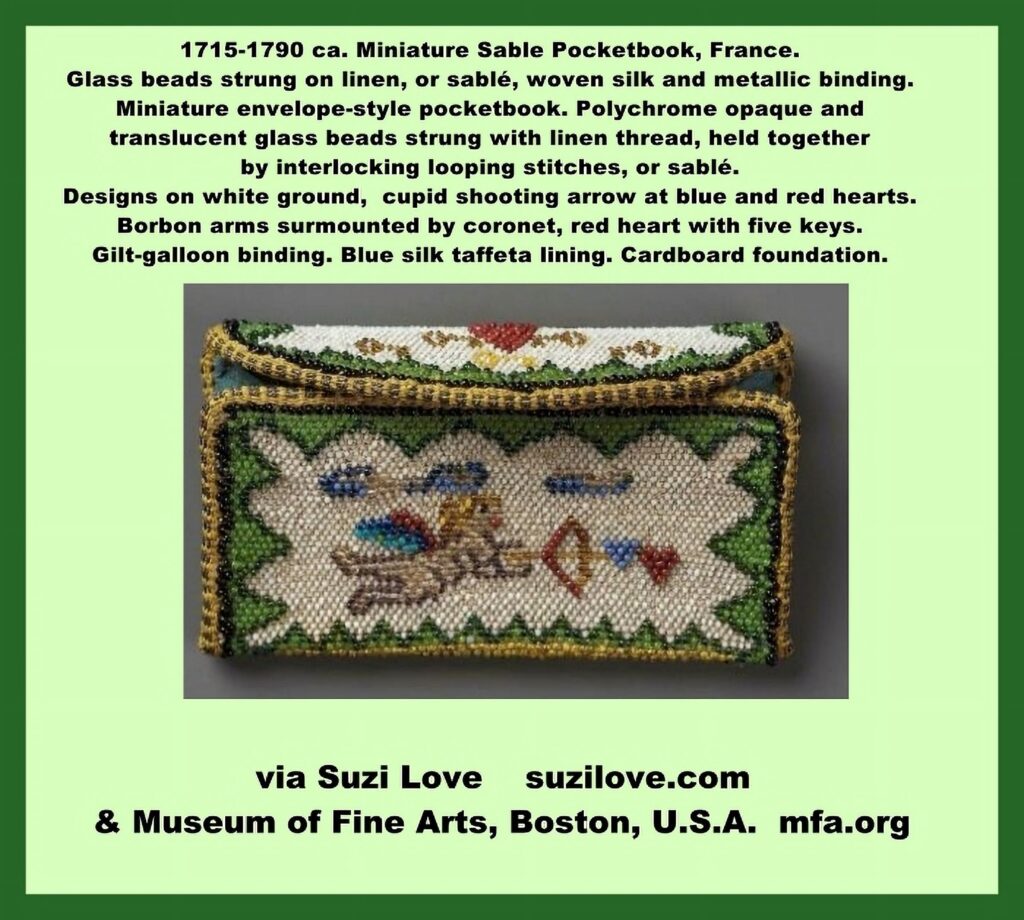
1715-1790 ca. Miniature Sable Pocketbook, France. Glass beads strung on linen, or sablé, woven silk and metallic binding. Miniature envelope-style pocketbook. Polychrome opaque and translucent glass beads strung with linen thread, held together by interlocking looping stitches, or sablé. Designs on white ground, cupid shooting arrow at blue and red hearts. Borbon arms surmounted by coronet, red heart with five keys. Gilt-galloon binding. Blue silk taffeta lining. Cardboard foundation. via Museum of Fine Arts, Boston. mfa.org
What did an older lady do in the Bridgerton family’s and Jane Austen’s times, or the early 1800s. An easy to read overview of what an older lady did, wore, and how she lived in the early 19th Century. Information for history buffs and pictures for readers and writers of historical fiction. Older Lady’s Day, Regency Life Series, Book 5, by Suzi Love. books2read.com/suziloveOLD
Through historic images, historical information, and funny anecdotes, it shows how an older lady in Jane Austen’s times fills her day, where she goes, and with whom she spends her time. This light-hearted look at the longer Regency years is an easy to read overview of what people did and wore, and where they worked and played. There is plenty of information to interest history buffs, and lots of pictures to help readers and writers of historical fiction visualize the people and places from the last years of the 18th Century until Queen Victoria took the throne.
Regency Life Series: Images, information, funny anecdotes give overview of Jane Austen’s and Bridgerton times. #bridgerton #RegencyEra #JaneAusten #BritishHistory https://books2read.com/suziloveROver
Love the Bridgerton family and Jane Austen? Reader Or Writer of Regency Era stories? Mourning and riding fashion, dresses, hats, shoes, reticules or bags, underclothing and fashion accessories. books2read.com/SuziLoveFashionWomen1815-1819
History Notes 28 Fashion Women 1815-1819: This book looks at what was fashionable for women in the Georgian Era and at the end of the Regency Era in Britain and the reconstruction in Europe after the wars. Lifestyles were freer and fashions expressed this by becoming the focus of most women’s lives. A wardrobe full of opulent accessories was requisite. Includes mourning and riding fashion, dresses, hats, shoes, reticules or bags, underclothing, and fashion accessories.
What did ladies do and wear in Jane Austen’s time, or early 1800s? #Regency #History #nonfiction Books 4 and 5 Regency Life Series. Young Lady’s Day and Older Lady’s Day in Books 4 and 5 in the Regency Life Series. These books depict the often-frivolous life and fashions of ladies in the early 1800’s, or during the lifetime of Jane Austen, but also gives a glimpse into the more serious occupations ladies may undertake. Through historic images, historical information, and funny anecdotes, they show how a lady fills her day, where she is permitted to go, and who she spends time with. These light-hearted looks at the longer Regency years are an easy to read overview of what people did and wore, and where they worked and played. There is plenty of information to interest history buffs, and lots of pictures to help readers and writers of historical fiction visualize the people and places from the last years of the 18th Century until Queen Victoria took the throne. Young Lady’s Day ~ Older Lady’s Day
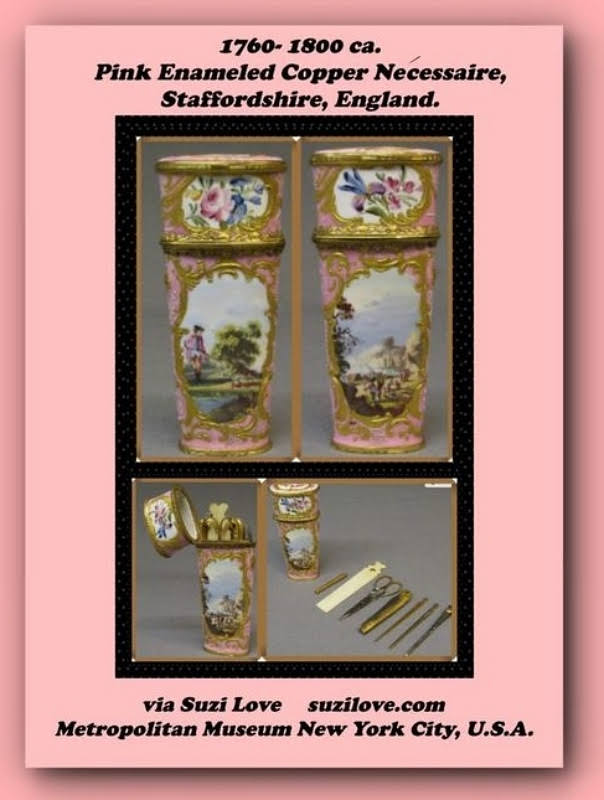
1760-1800 ca. Pink Enamel and Copper Necessaire Or Etui, Staffordshire, England. Dimensions: 3 3/4 x 1 5/8 in. (9.5 x 4.1 cm) Credit: Pierpont Morgan, 1917 via Metropolitan Museum, N.Y.C., U.S.A. metmuseum.org
Definition Necessaire Or Etui: Small toiletry, writing, or sewing containers were called Necessaire or Etui: Tiny boxes or containers were carried in large castles or sprawling manor houses so a lady or gentleman had their essentials with them all day. They were also important when traveling by coach, trains, or on ships where space was always limited. A necessaire or Etui was easily carried in a bag, reticule, or pocket so essentials were on hand for personal grooming, to repair a ripped hem, replace a button, to embroider, or to write a note or letter.
Travel and Luggage By Suzi Love History Notes Book 10. How did people travel in Jane Austen’s times. In past centuries? What did they take with them to make their long journeys easier? Travel by road, ship, canal, or railway all took a long time and had dangers so people learned to prepare. And then, in the nineteenth century, road improvements, inventions, and scientific developments made travel more pleasurable. books2read.com/SuziLoveTravel
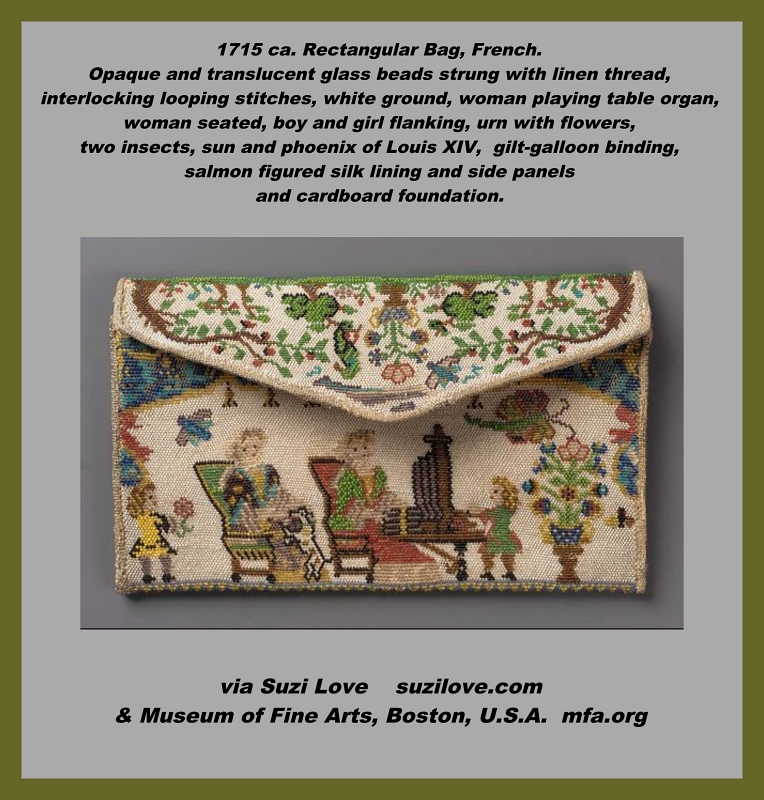
1715 ca. Rectangular Envelope Style Bag, French. Polychrome opaque and translucent glass beads strung with linen thread, held together by interlocking looping stitches (sablé). Design on white ground: woman playing table organ, woman seated, boy and girl flanking, urn with flowers right, two insects and curtain above (obv.); sun and phoenix of Louis XIV, ribbon above inscribed IE VIS SANS MOURIR, inscribed at bottom and right SI IE MEURS CE NEST QUE POVR REVIVRE (rev.); vegetative scene (flap). Gilt-galloon binding. Salmon figured silk lining and side panels. Cardboard foundation. via Los Angeles County Museum of Art, California, USA. collections.lacma.org
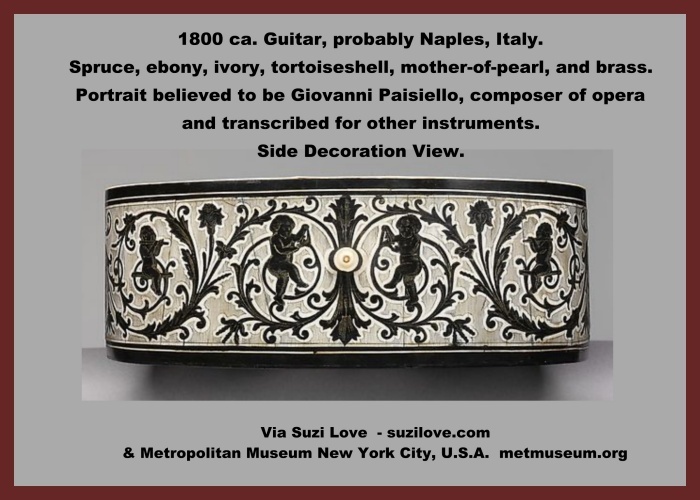
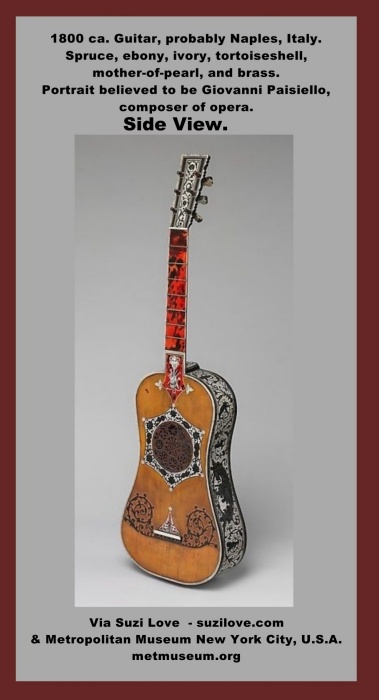
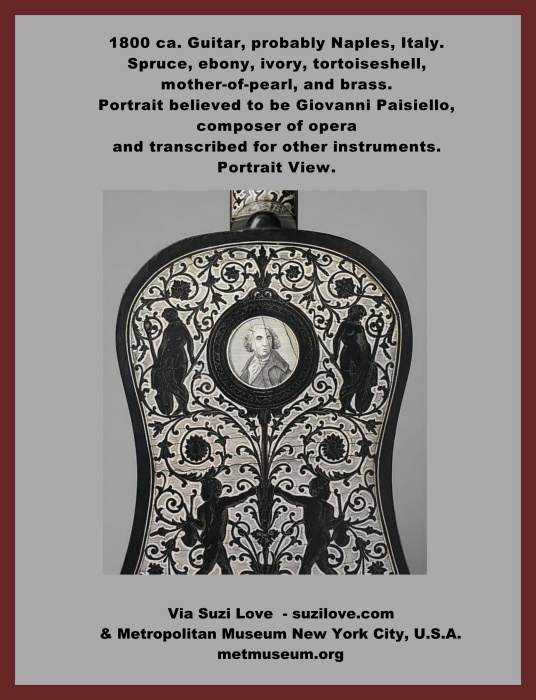
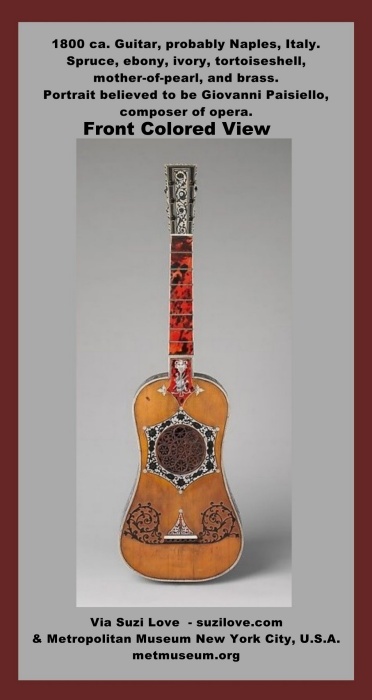
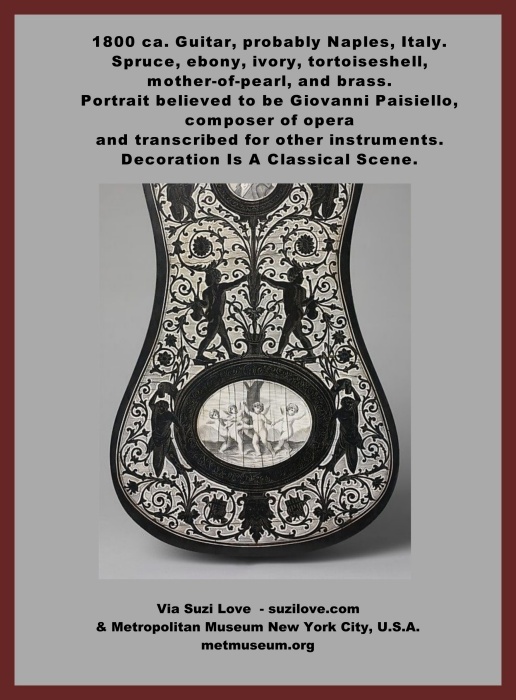
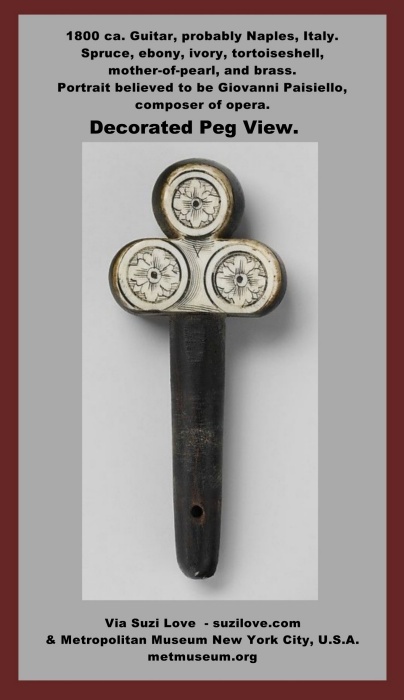
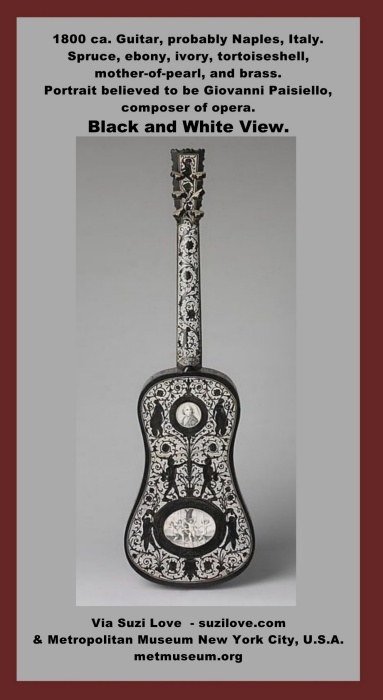
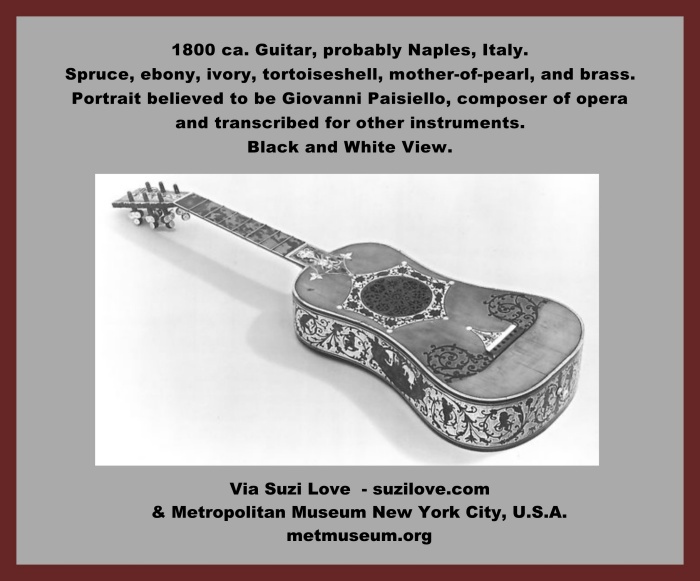
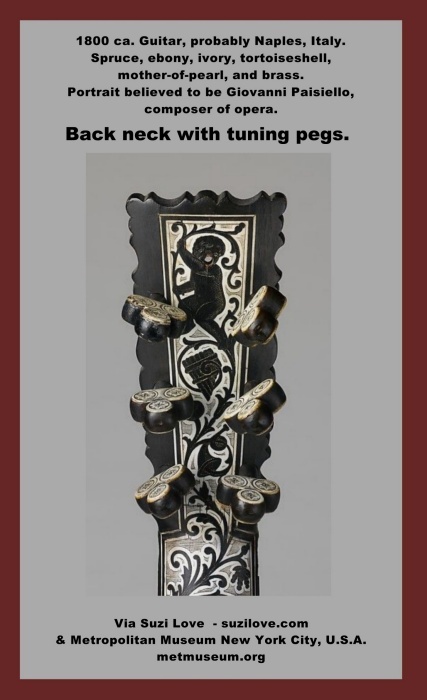
1800 Guitar, Probably Naples, Italy. The sort of guitar people in Jane austen’s era would have played in their homes. Spruce, ebony, ivory, tortoiseshell, mother-of-pearl, and brass. This highly decorated guitar is an early example of a six-string, single-course guitar. The elaborate decoration features classical figures, musical instruments, and floral motifs made from ebony and fit into an ivory ground covering the back, sides, neck, and headstock of the guitar.
A second guitar at the Yale Collection of Musical Instruments features the same decoration, only in reverse, indicating that the decoration was made at the same time by cutting through thin layers of stacked ebony and ivory. A portrait in the center of the upper back is believed to be of Giovanni Paisiello based on his 1791 portrait. Paisiello was a composer of opera and many of his works were transcribed for use on other instruments and his pieces were a favorite of guitarists.
The fingerboard is covered with tortoiseshell over read paint with an ivory satyr inlaid where the neck meets the body. A carved wooden rosette may be a replacement and is surrounded by an ivory hexagon with ebony inlaid instruments and flowers matching the back. The decorative style is evocative of so-called Baroque guitars of the seventeenth century. The six-string, single-course guitar became popular in Naples at the end of the eighteenth century and then spread throughout the rest of Europe replacing the earlier five and six double-course guitars. via Metropolitan Museum New York City, U.S.A. books2read.com/suziloveMusicGeneral