Light-Hearted look at an Older Lady’s Life In Jane Austen’s Times, or early 1800s. An easy to read overview of what an older lady did, wore, and how she lived in the early 19th Century. Information for history buffs and pictures for readers and writers of historical fiction. Older Lady’s Day, Regency Life Series, Book 5, by Suzi Love. books2read.com/suziloveOLD
The older lady’s day usually started with her toilette in her bedroom, where her maid helped her dress for the day and styled her hair. After that, she would join her family downstairs for breakfast unless she preferred a tray with either tea or hot chocolate in her bedroom as she prepared for her busy day. Her day would be made up of speaking with the housekeeper and the cook about the week’s menus, assuring that the servants were all available that day and no one was ill, and checking the list of foods needed. She would also enquire if the laundry was up to date and that they had enough good linen to make up all the beds before extended family members and guests arrived. If she was in the country and hosting a weekend house party, she would assign rooms to the guests on her lists and query that all was in readiness for their arrival.


1775-1825 ca. Bridgerton and Jane Austen Style Black Silk Breeches, American or European. #Bridgerton #JaneAusten #GeorgianEra #RegencyFashion books2read.com/SuziLoveFashionMen1800-1819
Continue reading →1805-1810 ca. Blue Silk Slippers With Silk Bow and Ribbon Ankle Ties. Woven square pattern and round toes. via Manchester City Galleries, UK.
Shoes in the early 1800s were flat or low heeled and occasionally decorated with a bow or floral embellishments and it wasn’t until the 1820s that square, rather than rounded or pointed toes became fashionable. Made of silk, soft kid or cloth, these delicate shoes were flimsy and wore out quickly. There was often no difference between a left or right shoe, so when one slipper had a hole it was easily replaced. Slippers were often bought in multiples at a time so there were spares.


1860 Corset, American. Cotton, metal, and bone. Manufacturer: Langdon Batcheller and Company, American, founded 1865. Stamped Thompson’s Patent Glove Fitting Corset. via Metropolitan Museum NYC, U.S.A. metmuseum.org

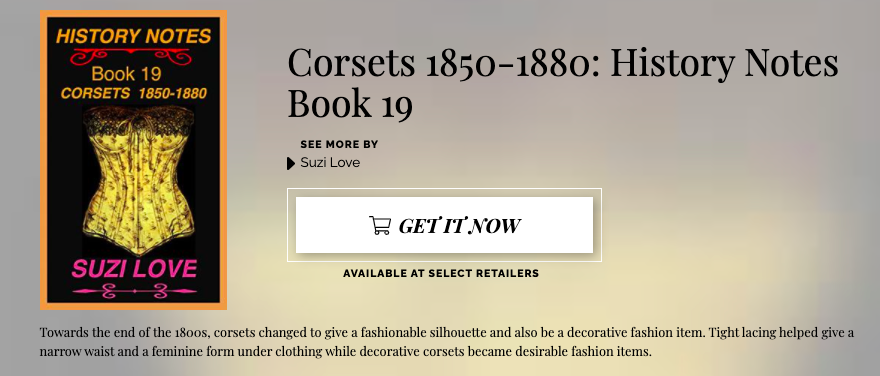

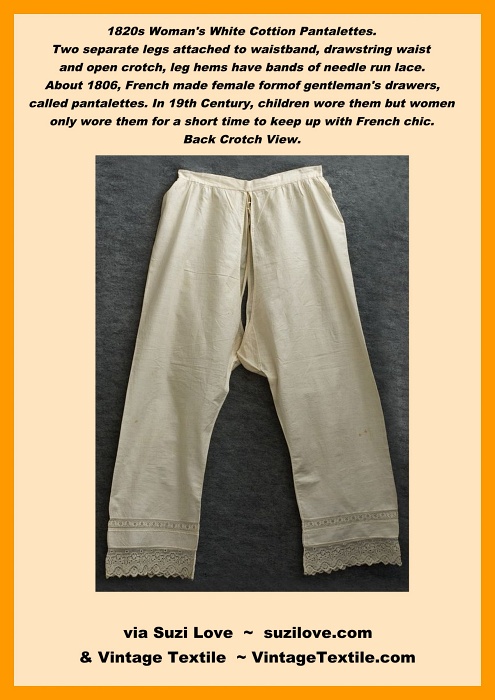
1820s Woman’s White Cotton and Lace Trimmed Pantalettes with Two Separate Legs. About 1806, French made female form of gentleman’s drawers, pantalettes. During the 19th Century, children wore them but women only wore them for a short time to keep up with French chic. The predecessor of women’s panties appeared about 1806 in the form of drawers like those worn by gentleman. Always the leader in forward chic, the French quickly came up with the female version—pantalettes. While the style persisted throughout the 19th century for children, pantalettes for adult women were only a passing fad. The pantalettes consist of two separate legs attached to a drawstring waistband, leaving the crotch open. The legs are bordered at the bottom with bands of needle run lace. The pantalettes are completely hand stitched and close in back with one mother-of-pearl button. The open edges of the crotch are finished with corded piping. via vintagetextile.com



Easy to read overview of what an older lady did, wore, and how she lived in Jane Austen and Bridgerton’s time. Information for history buffs and pictures for readers and writers of historical fiction. Older Lady’s Day Regency Life Series Book 5 by Suzi Love books2read.com/suziloveOLD
1890-1920 ca. Sterling Silver Chatelaine, England. Center Medallion With Portraits, three drops of monogrammed mesh purse, globe-shaped watch and book-shaped case. Via Augusta Auctions – augusta-auction.com
Definition
What did a chatelaine do?

What were chatelaines used for?


1820-1840 ca. Hand-Embroidered Wedding Corset, Connecticut, USA. Ivory cotton covered with hand embroidery, including love birds on hearts, front pocket for busk, eyelets for back lacing. Trapunto (to embroider) cording decorates and shapes corset. The back closure has ivory eyelets for the lacing. The center-front has a pocket panel for inserting a busk. Trapunto (to embroider) shapes the corset by outlining the design with two or more rows of running stitches and then padding from the underside which gives a raised effect.The technique was always considered very elegant. Trapunto first appeared in 14th century Sicily and was widely adopted for clothing in Tudor England, and then brought to America by the new settlers. In addition to the cording, the corset is totally covered with hand-embroidered flowers and there are two embroidered love birds on hearts at the center-front. Above the birds is a section of trapunto work. via Vintage Textiles


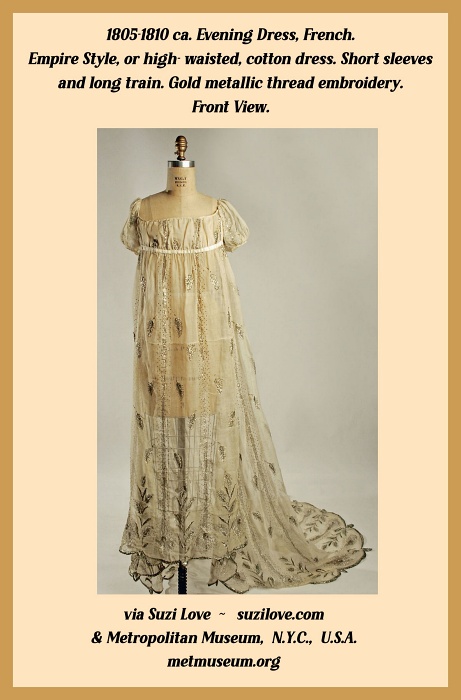
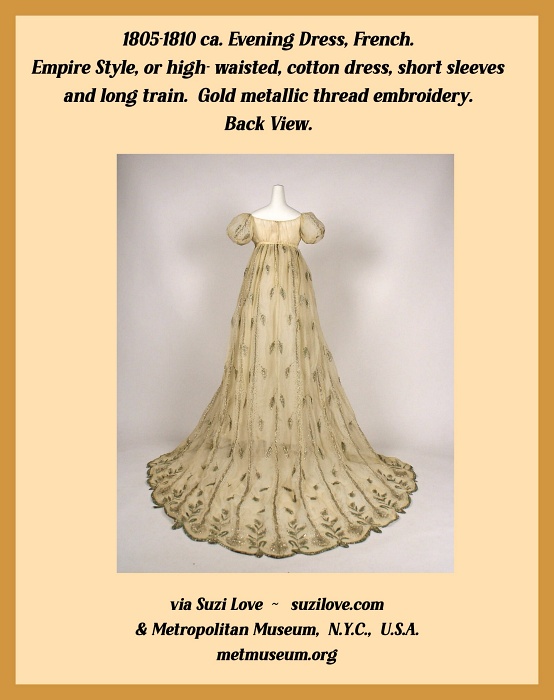
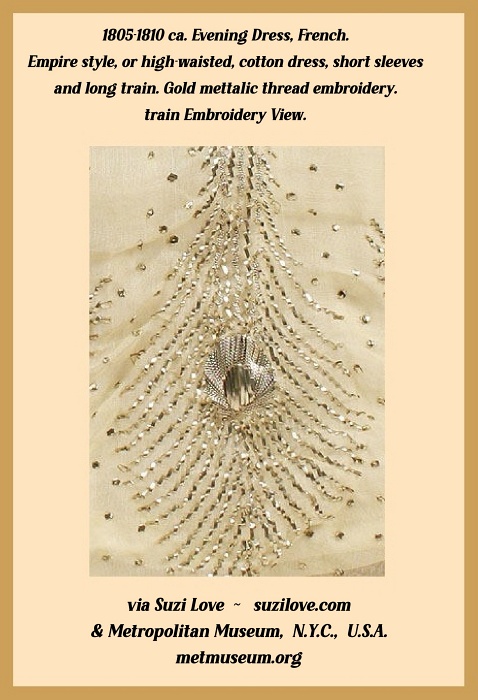
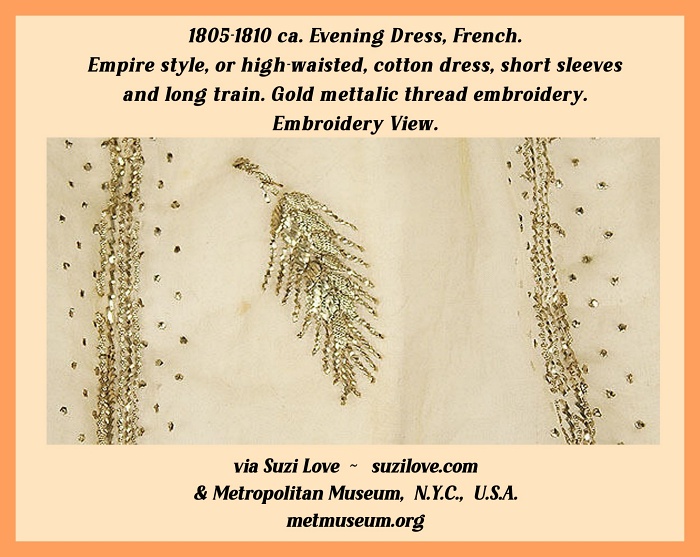
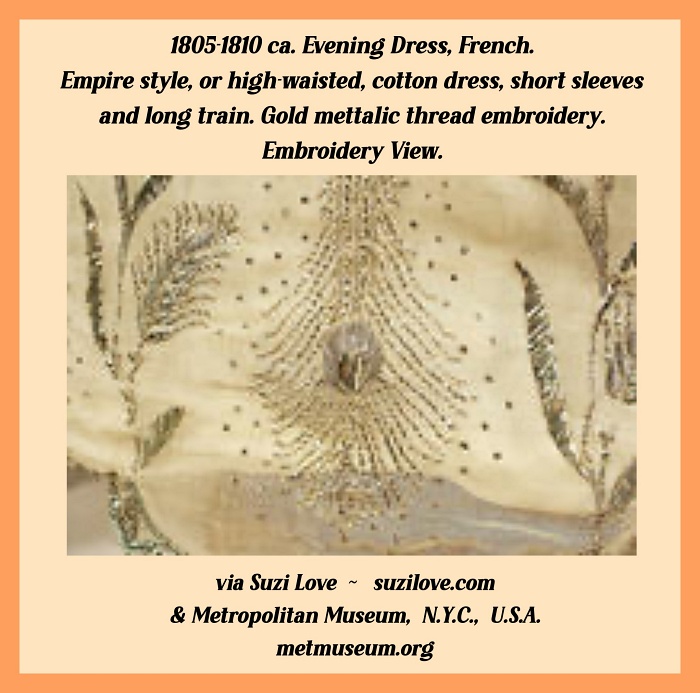
1805-1810 ca. Evening Dress, French. Empire style, or high-waisted, cotton dress, short sleeves
and long train. Gold metallic thread embroidery. via Metropolitan Museum, N.Y.C., U.S.A.