1812 August. Ball Dress, English. Dress with lower waistline than normal in the Empire period, pink laced bodice, with decorative sleeves, skirt with pink hem decoration, pink hat with pretty plume, and yellow gloves. Fashion Plate via John Belle’s ‘La Belle Assemblee’, London. https://books2read.com/SuziLoveFashion1810-1814
Definition: Ball Gown or Dress: From the early 19th century onwards, ball gowns were regularly illustrated and described in women’s magazines as minute distinctions between ball, dinner, evening and opera gowns. Ball gowns were of expensive silk fabrics, light or heavy, decorated with lace, embroidery or beading, with low-cut bodice, short or no sleeves, and a full skirt.
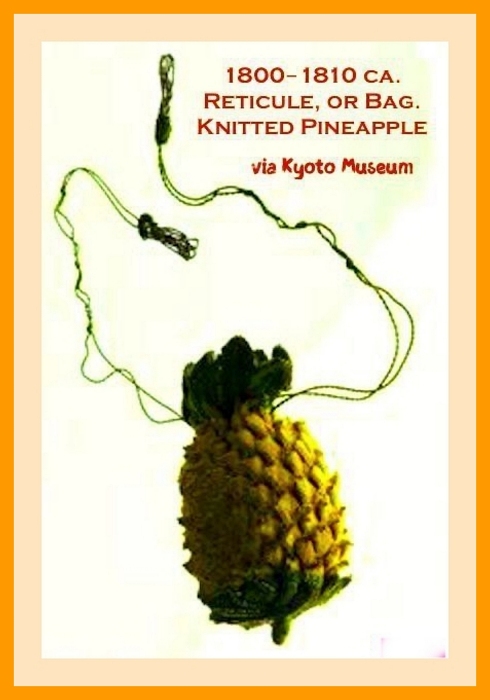
1800-1810 ca. Pineapple Reticule, or Bag. A knitted pineapple with long strings. In Jane Austen’s times, pineapples were a luxury imported item that most people in Great Britain had never seen, let alone tasted. When more pineapples were imported from hotter countries, or English gardeners started to grow some, pineapples became a much desired novelty and an exotic experience. Pineapple motifs appeared on dresses, furniture, household goods etc. Knitting pineapple reticules was part of this obsession with pineapples. via Kyoto Museum, Japan.
Definition Ridicule, Reticule, Indispensable, or Handbag: From the late 1700s, pockets could no longer be sewn into gowns, as skirts fell from just under the bust and were full and flowing. Instead, women began carrying small bags, known at first as ridicules and later as reticules, to keep necessary items on their person e.g. handkerchiefs, coins, vinaigrettes, calling cards, glasses etc. http://books2read.com/suziloveReticules
In the early nineteenth century, reticules started to look like future handbags as they were often made from rigid card or molded mâché or card into a variety of shapes. Early bags were circular and with a drawstring but as women wanted their reticules to look individual they could be made with two halves and a hinged metal closure or with concertina sides. Materials varied from silk, cotton and string and shapes were round, hexagonal or lozenge shapes with shell shaped bags becoming very popular during the Regency and Romantic Eras.
1800s magazines were written for well bred women who could read, so they gave plenty of ideas for how ladies could make and embellish reticules for their own use and as pretty gifts. Needlework was highly encouraged as a pastime for a lady so bags were frequently embroidered or decorated with beading. By the 1820s, reticules became more like our modern handbags using soft leather gathered at the top or hard leather with a rigid fastener and metal chain for carrying.
Writer Or Reader Of Regency Era?What did Jane Austen and friends wear? Women’s clothing changed dramatically in early 1800s. New silhouette copied simplistic styles of Greeks and Romans. High-waisted white dresses and flowing skirts with color and warmth added by outerwear and accessories. Fashion Women 1801-1804 History Notes Book 25 https://books2read.com/SuziLoveFashionWomen1801-1804
Definition Empire Style Dress: High-waisted white gowns defined women’s fashion during the Regency Era. ‘Empire’ is the name given to the period when Napoleon Bonaparte built his French Empire. High-waisted, loose gowns were adopted by the aristocracy as a symbol of turning away from the elaborate clothing worn in the 1700s. This sort of high-waisted dress would have been worn by Jane Austen and her contemporaries in England.
Definition Shawls: The shawl started off in India as a fine wool garment for men that could be worn as a scarf, turban or as a mantle: the word comes from the Persian shäl. Originally imported from the East, European Kashmir shawls were made first in Norwich and Edinburgh in Britain in the late 18th century. Shawls were an essential item in the early 1800s to cover the thin gowns women wore. They were made of muslin, gauze, silk, wool, and velvet, though cashmere shawls were the softest and most prized.
Fashion Women 1801-1804 History Notes Book 25 This book looks at the changes to women’s clothing in the early 1800s and the move away from complicated styles and heavy fabrics. The new silhouette copied the simplistic styles of the Greeks and Romans. White dresses were high-waisted and skirts were flowing, with color and warmth added by outwear and accessories. https://books2read.com/SuziLoveFashionWomen1801-1804
Light-Hearted look at an Older Lady’s Life In Jane Austen’s Times, or early 1800s. An easy to read overview of what an older lady did, wore, and how she lived in the early 19th Century. Information for history buffs and pictures for readers and writers of historical fiction.
The older lady’s day usually started with her toilette in her bedroom, where her maid helped her dress for the day and styled her hair. After that, she would join her family downstairs for breakfast unless she preferred a tray with either tea or hot chocolate in her bedroom as she prepared for her busy day. Her day would be made up of speaking with the housekeeper and the cook about the week’s menus, assuring that the servants were all available that day and no one was ill, and checking the list of foods needed. She would also enquire if the laundry was up to date and that they had enough good linen to make up all the beds before extended family members and guests arrived. If she was in the country and hosting a weekend house party, she would assign rooms to the guests on her lists and query that all was in readiness for their arrival.
1805 Typical Regency Era, or Early 1800s, Muslin Dress. Long sleeves, square neckline, and decorated with Palm Tree embroidery. via Whitaker Auction.
Definition Empire Style: Named after the First Empire in France, by 1800 Empire dresses had a very low décolleté, or neckline and a short narrow backed bodice attached to a separate skirt. Skirts started directly under the bust and flowed into the classical relaxed wide styles of Greece and Rome. This style of dress is associated with Jane Austen and her contemporaries as a simple cotton high-waisted dress was worn most days and accessorized according to the importance of the occasion.
Fashion Women 1805-1809 History Notes Book 26 What did Jane Austen and friends wear? https://books2read.com/SuziLoveFashionWomen1805-1809
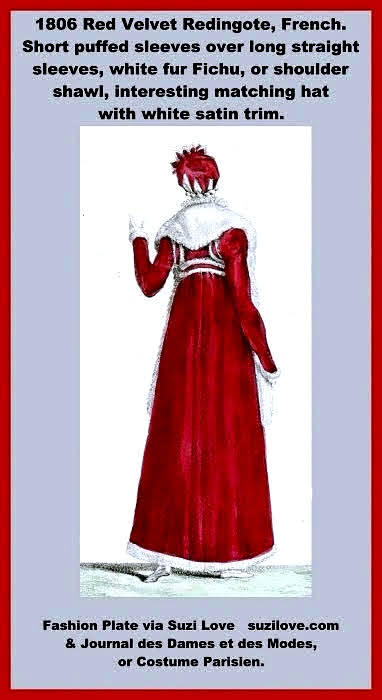
1806 Red Velvet Redingote, French. Short puffed sleeves over long straight sleeves, white fur Fichu, or shoulder shawl, interesting matching hat with white satin trim. Fashion Plate via Journal des Dames et des Modes, or Costume Parisien.
Redingotes or Pelisses were needed to cover the flimsy dresses made of lightweight fabrics of the Regency years to provide warmth and some protection from windy conditions when gowns might lift and cause modesty issues. Jane Austen and her contemporaries often walked to places and so would have needed the warmth of a Pelisse or coat in the cold British winters. https://books2read.com/SuziLoveFashionWomen1805-1809
Fashion Women 1805-1809 History Notes Book 26 What did Jane Austen and friends wear? https://books2read.com/SuziLoveFashionWomen1805-1809
This book shows how corsets changed to fit well under clothing, give maximum support and comfort. Corsets pushed up breasts and showed off the bust line beneath a square-cut and low-cut neckline as in the early 1800s, or Regency years. Jane Austen and her female and friends wore these corsets. Corsets or stays worn during the early 1800s, or Jane Austen’s lifetime. https://books2read.com/SuziLoveCorsetBook17
The main purpose of corsets was to support and shape the breasts. Though they still slimmed the midriff, this was not the prime purpose of a corset between 1810 and 1830. The waistlines of dresses were lowering to below the bust line but nearer to the true waist, so corsets were longer and were given added shaping by stitching and cording and by shaping the breasts with pleated or gathered cups.
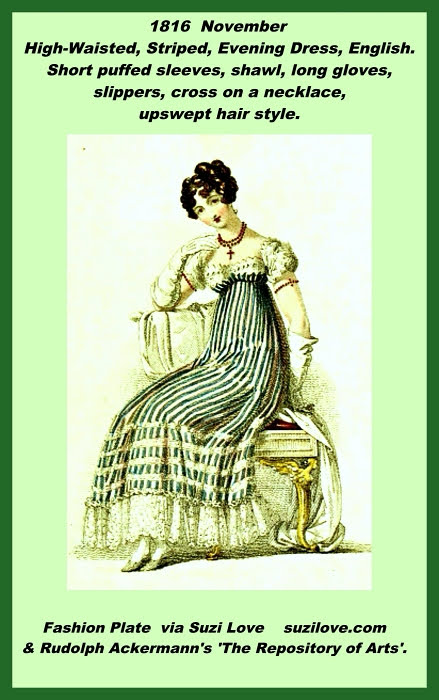
1816 November. A lilac and white striped gauze dress over a white satin slip; the bottom of the skirt is ornamented with five rows of white silk trimming, of a very light and elegant description: it has just been introduced, and the patterns has more novelty than any thing we have seen for some time; a single flounce of deep blond lace completes the trimming. The body is also very novel; the upper part is formed of lace, and the lower of gauze, to correspond with the dress; the latter is quite tight to the shape, but the former has an easy fullness, which forms the shape in a manner extremely advantageous to the figure. The sleeve is short and very full; it is composed of lace, looped high, and finished by a trimming to correspond with that of the skirt. The hair is full dressed, without any ornament. Necklace, cross, armlets, and bracelets of rubies. White satin slippers, and white kid gloves.Fashion Plate via Rudolph Ackermann’s ‘The Repository of Arts’.
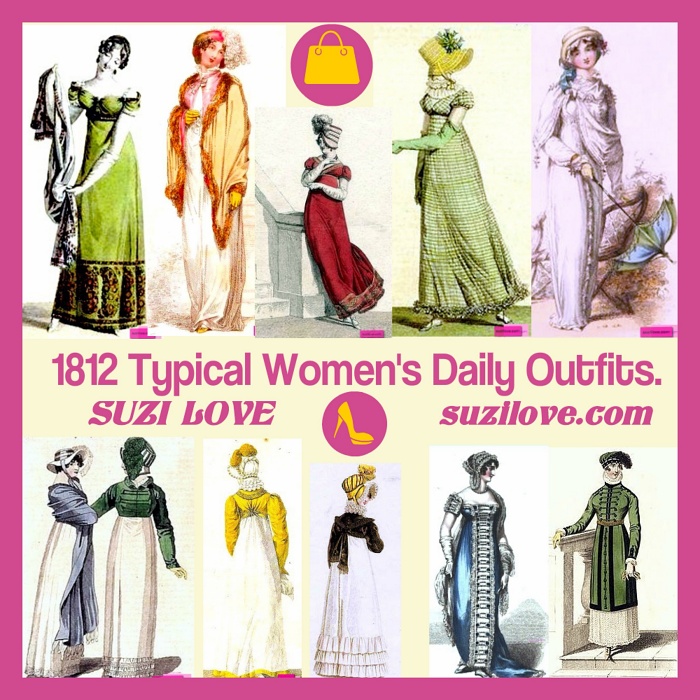
Gorgeous Regency Era clothing came in a wide range of styles to suit every season and occasion. Ladies in Jane Austen’s times wore Empire style dresses which were usually of light fabric and floaty in style. By the later 1810s, stripes were very popular and lace and frills were added to make the dress more individual.
Fashion Women 1815-1819 History Notes Book 28 https://books2read.com/SuziLoveFashionWomen1815-1819