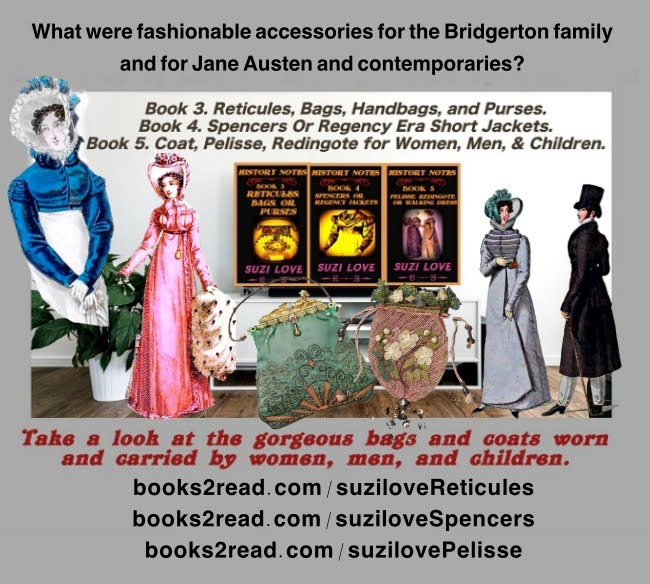
Reticule Or Bag: Purse, often with a drawstring to pull closed and usually made of cloth or covered cardboard and often decorated with beading or embroidery. Carried by a woman during the Regency period to carry all their daily necessities. in the place of pockets.
Spencer: Short jacket, cropped at the waist, worn over a dress, or gown. Delicate and regency dresses provided so little protection from the cold, so over garments were essential for warmth, modesty and good health.
Pelisse Or redingote Or Walking Dress: Coat worn over clothing of both sexes for warmth and protection from the elements.
1806 Short Sleeved White Muslin Dress With Train, French. Bodice and sleeves have ribbon decoration, evening flowered headdress, half parure of necklace and ear bobs, and gorgeous Indian hand loomed green shawl. Fashion Plate via Journal des Dames et des Modes, or Costume Parisien. https://books2read.com/SuziLoveFashionWomen1805-1809
Definition Shawls: The shawl started off in India as a fine wool garment for men that could be worn as a scarf, turban or as a mantle: the word comes from the Persian shäl. Originally imported from the East, European Kashmir shawls were made first in Norwich and Edinburgh in Britain in the late 18th century. Shawls were an essential item in the early 1800s to cover the thin gowns women wore. They were made of muslin, gauze, silk, wool, and velvet, though cashmere shawls were the softest and most prized.
Definition Jewelry – Parure: Matched set of jewelry, including a necklace, bracelet, earrings, pin etc. Half Parure had no headpiece.
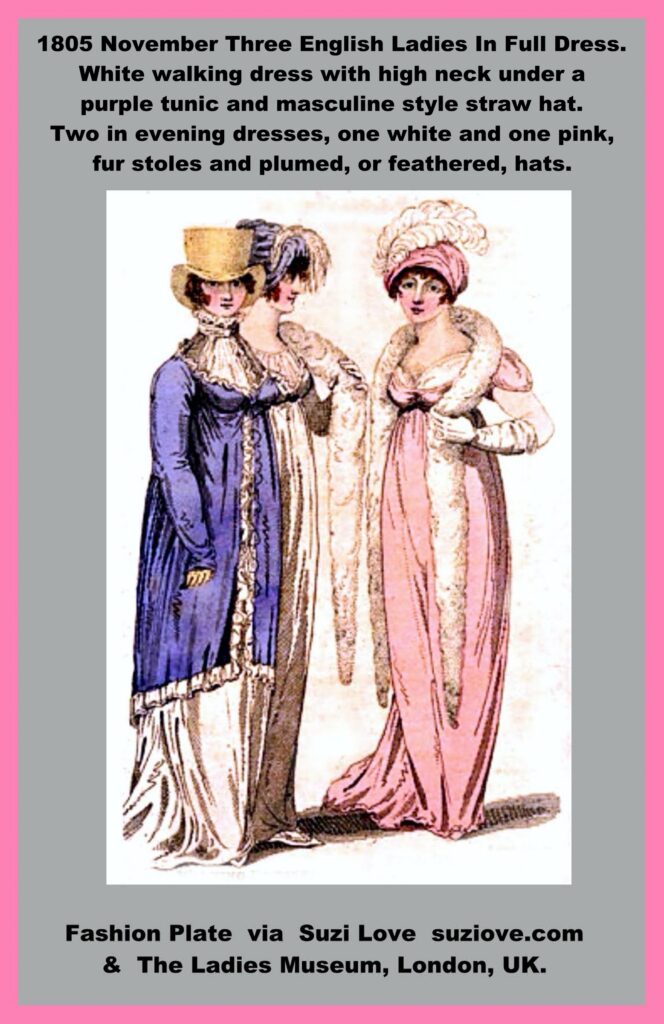
1805 November Three English Ladies In Full Dress. White walking dress with high neck under a purple tunic and masculine style straw hat. Two in evening dresses, one white and one pink, fur stoles and plumed, or feathered, hats. via Vernon and Hood Poultry at The Lady’s Monthly Museum, London, U.K. These gorgeous dresses show the transition from the round dresses of the late 1700s to the Empire style dresses with the waistline high under the bust. Small trains were still worn in the early 1800s, but much more manageable than the larger and more elaborate trains of the late 1700s. Jane Austen and her friends would have worn dresses like this to their assemblies and evening events.
Definition Accessory: An accessory completes and complements an outfit. Two groups – 1. Those worn e.g. bonnets, caps and hats, boots and shoes, cravats and ties, gloves, mittens and muffs, jewelry, scarves and shawls, socks and stockings. 2. Those carried e.g. bags, fans, and parasols.
Definition Full Dress: The most formal and complete ensemble, worn for day or night events, and includes the fullest range of accessories that could be added to the outfit to make the most impressive display.
Fashion Women 1805-1809 History Notes Book 26
What did Jane Austen and friends wear? This book looks at early 1800s fashions, which were elegant and pretty with high waists and fabrics that were almost transparent. These Empire style gowns, named after Napoleon’s first Empress, became popular throughout Europe, and were then copied around the world. Colorful outwear was added to make an ensemble more attractive and warmer.
https://books2read.com/SuziLoveFashionWomen1805-1809
1819 Pink Redingote, French. Also called a Walking Dress or Pelisse in England. Vertical front has pink satin bows, high white collar, matching pink satin hat and pink slippers. Short puffed sleeves over long straight, as was the fashion in 1819 across Europe. The type of outfit young Regency Era ladies would have worn if they were out shopping on Bond Street, walking in a park, or taking a carriage ride through Hyde Park. Fashion Plate via Journal des Dames et des Modes, or Costume Parisien. https://books2read.com/SuziLoveFashionWomen1815-1819
Definition Redingote Or Pelisse Or Walking Dress Or Coat: French word developed from English words, riding coat. Long fitted outdoor coat worn over other garments for warmth. Often left open at the front to show off the dress underneath. Sometimes cut away in front. Originally made with several capes and trimmed with large buttons. French fashion plates call these coats Redingotes and they are designed for women, men and children. English fashion plates call them a Pelisse, a walking dress, Promenade dress, or Carriage dress.
1815 July Walking Dress, English. Aqua blue walking dress with crossover straps at the back over a white bodice and with a cute sun hat with a scarf for decoration and with a matching shawl. Fashion Plate via The Lady’s Magazine Or Entertaining Companion for the Fair Sex.
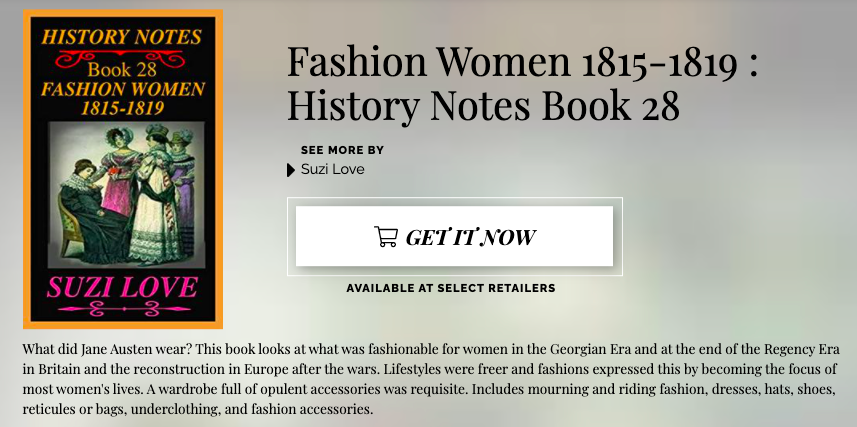
Fashion Women 1815-1819 History Notes Book 28 What did Jane Austen wear? . D2D_HN_28_https://books2read.com/SuziLoveFashionWomen1815-1819
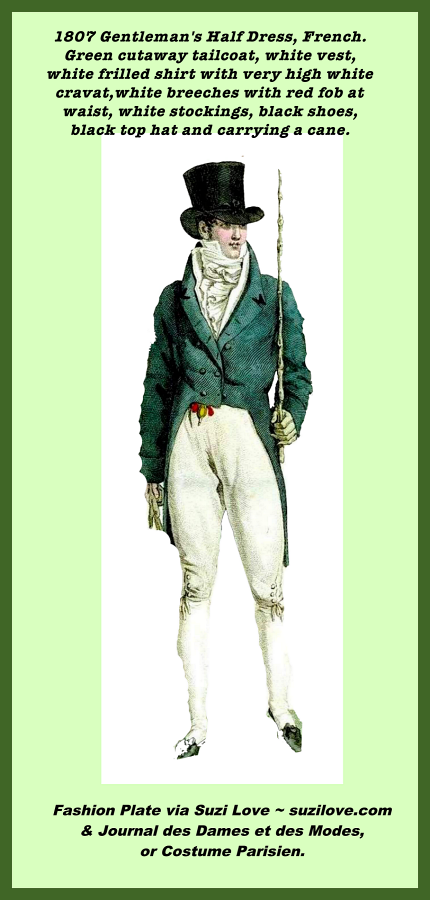
1807 Gentleman’s Half Dress, French. Green cutaway tailcoat, white vest, white frilled shirt with very high white cravat, white breeches with red fob at waist, white stockings, black shoes, black top hat and carrying a cane. Fashion Plate via Journal des Dames et des Modes, or Costume Parisien.
French fashions and Georgian and Regency Era fashions from Great Britain were copied around the world. This is the normal daily outfit for a gentleman in the early 1800s, or in the times of Jane Austen, for daily city and country life.
1820 ca. Collection of Reticules, or Purses. Silk silver gauze, netting, fine crochet. Bags have drawstrings, chains and tassels. via Ruby Lane Auctions. #RegencyFashion #JaneAusten #British
Definition Of A Reticule; Bag or purse, often with a drawstring to pull closed and usually made of cloth or covered cardboard and often decorated with beading or embroidery. A reticule, or purse, or handbag, was usually carried by a woman during the Regency period to carry all their daily necessities. Earlier, women used pockets that tied at the waistline and were hidden in the folds of their skirts. Empire style, or early 1800s, high-waisted dresses made it impossible to either sewn in a pocket or to tie on a pocket, so women began carrying small, decorated bags called Reticules, or ridicules, which generally pulled close at the top with a drawstring. These Reticules, or bags, were the forerunners of our modern day purses.
1820 ca. Collection of Reticules, or Purses. Silk silver gauze, netting, fine crochet. Bags have drawstrings, chains and tassels. via Ruby Lane Auctions.1830 ca. Collection of Four Tiny Purses, or Reticules with drawstrings to close. via Ruby Lane Antiques.D2D_RetailerBuyLink_HN_3 http://books2read.com/suziloveReticules
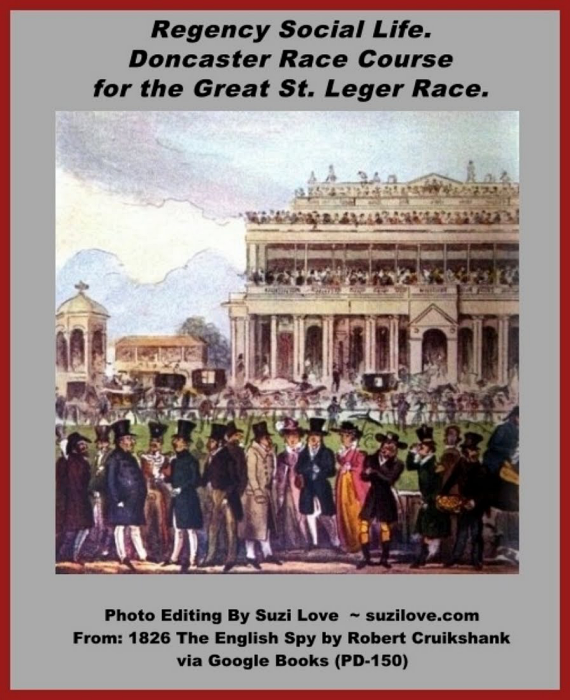
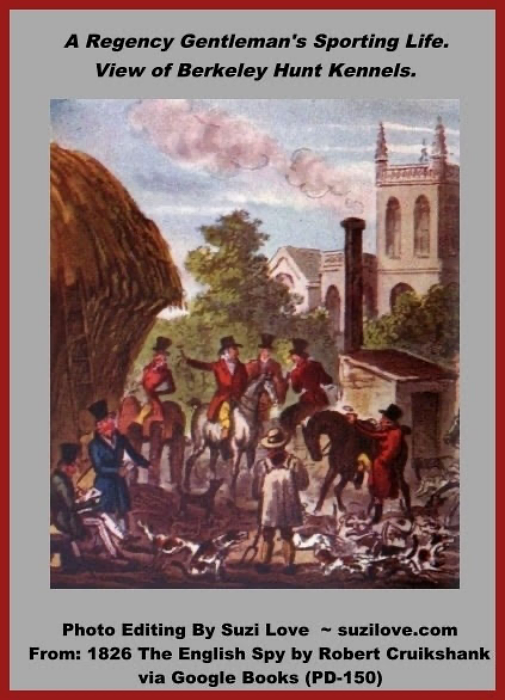
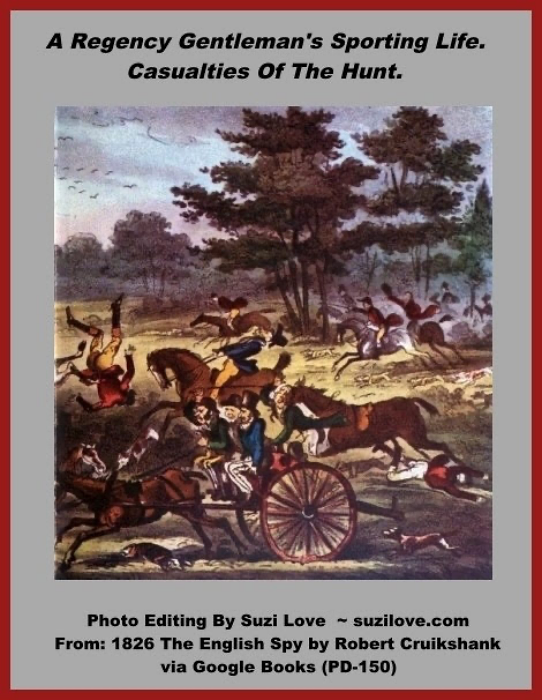
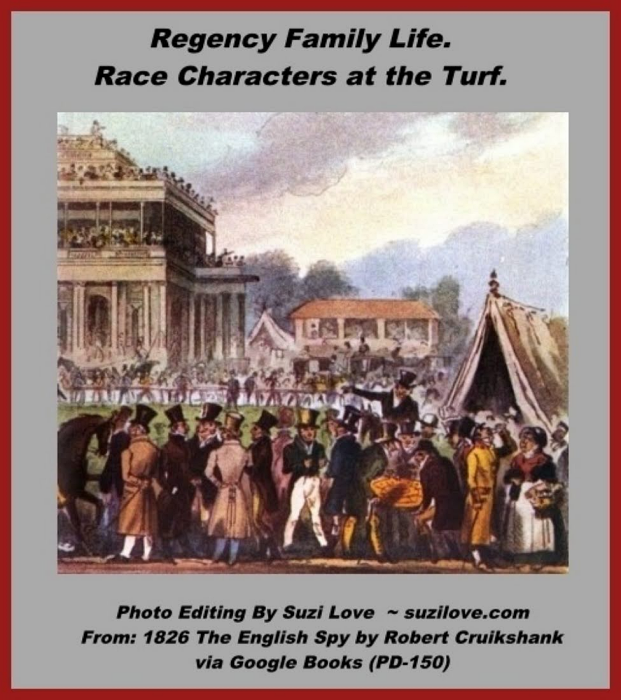
Regency Gentleman’s Sporting Life in the times of the Bridgertons and Jane Austen. By Robert Cruikshank via Google Books Races, bowls, sailing, fox hunting… all the sports enjoyed by people in Regency Era. From: 1826 The English Spy by Robert Cruikshank via Google Books (PD150)
1826 Doncaster Race Course for the Great St. Leger Race. Regency Sporting Life. via 1826 The English Spy By English Cartoonist, Robert Cruikshank.1826 Bowling Alley at Worcester, England. Regency Sporting Life. via 1826 The English Spy By English Cartoonist, Robert Cruikshank.1826 View of Berkeley Hunt Kennel, England. Regency Sporting Life. via 1826 The English Spy By English Cartoonist, Robert Cruikshank.1826 Casualties Of The Hunt.A Regency Gentleman’s Sporting Life. Regency Sporting Life. via 1826 The English Spy By English Cartoonist, Robert Cruikshank.1826 Race characters at the turf, Regency Sporting Life. via 1826 The English Spy By English Cartoonist, Robert Cruikshank.RL_2_D2D_RetailerBuyLink_RL_2
https://books2read.com/suziloveYGD
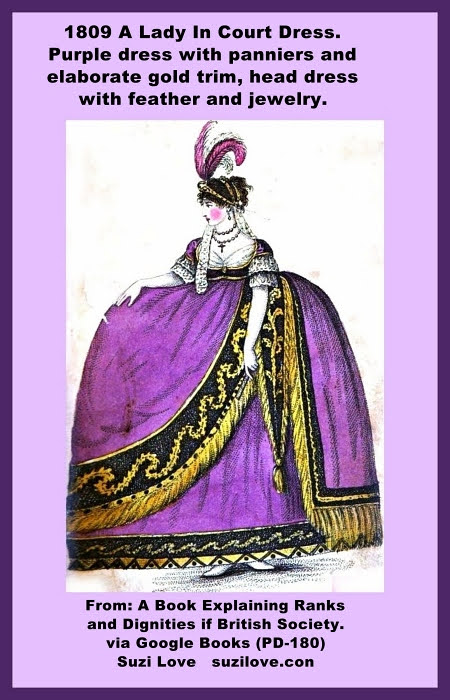
1809 A Lady In Court Dress. From: 1809 A Book Explaining Ranks and Dignities in British Society. via Google Books (PD-180)
Definition Court Dress: Usually, the difference between a court dress and a ball dress was in the quality of fabrics used, how elaborate the design, and the number and quality of the accessories. Plus, in England in the early 1800s court dresses were required by Queen Charlotte to have hoops and in France and other European countries court dresses a long train, usually expensively decorated. During the Regency Era, white cotton dresses were considered suitable for many evening events, but definitely not for an evening event in a palace.
History Notes Book 26. Fashion Women 1805-1809 This book looks at early 1800s fashions, which were elegant and pretty with high waists and fabrics that were almost transparent. These Empire style gown named after Napoleon’s first Empress, became popular throughout Europe, and were then copied around the world. Colorful outwear was added to make an ensemble more attractive and warmer. https://books2read.com/SuziLoveFashionWomen1805-1809
1800-1850 ca. Reticule, Or Bag. Brown bag with monogram and drawstring, British. The Bridgerton family and Jane Austen and their female contemporaries would have sewn, gifted and used a bag similar to this. via Snowshill Manor, National Trust, U.K. nationaltrustimages.org.uk
Definition Reticule: Bag or purse, often with a drawstring to pull closed and usually made of cloth or covered cardboard and often decorated with beading or embroidery. A reticule, or purse, or handbag, was usually carried by a woman during the Regency period to carry all their daily necessities. Earlier, women used pockets that tied at the waistline and were hidden in the folds of their skirts. Empire style, or early 1800s, high-waisted dresses made it impossible to either sewn in a pocket or to tie on a pocket. So women began carrying small, decorated bags called Reticules, or ridicules, which generally pulled close at the top with a drawstring.