↓
 

Suzi Love

Making history fun, one year at a time.

Header_
  • Home
  • Newsletter
  • Pre order form
  • Shop
    • Cart
    • Checkout
    • My account
    • Refund and Returns Policy
  • Blog
  • BOOKS
    • History Events
    • Kelly’s Justice
    • Irresistible Aristocrats
    • History Notes
    • Scandalous Siblings
    • Love After Waterloo
    • Regency Life Series
  • Privacy Policy
  • EVENTS
Home » household » Page 4 << 1 2 3 4 5 6 … 11 12 >>

Category Archives: household

Post navigation

← Previous Post
Next Post→

1800’s Chatelaine of  Five Pieces Of Mother-Of-Pearl as carried in the times of Jane Austen and the Bridgertons. #JaneAusten #Bridgerton #RegencyEra #Chatelaine #Antique

Suzi Love Posted on May 9, 2025 by Suzi LoveMay 9, 2025

1800’s Chatelaine of  Five Pieces Of Mother-Of-Pearl. Via Live Auctions ~  liveauctioneers.com

Definition

  • The word Chatelaine is French and means the keeper of the keys
  • Chatelaine” derives from the Latin word for castle
  • In Medieval times, the chatelaine was in charge of the day-to-day running of the castle.

What did a chatelaine do?

  • Most important task was keeper of the keys.
  • Also ordered supplies, did bookkeeping, supervised servants, taught castle children, and organized guests.
1800’s Chatelaine of Five Pieces Of Mother-Of-Pearl. Via Live Auctions ~ liveauctioneers.com

What were chatelaines used for?

  • Castle keepers needed keys safe, yet easily accessible.
  • By 1700’s, a metal jeweled ornament hung from pockets, attached to belts, or by hooks into skirt waistbands
  • During 1800’s, women wore large collections of tools hung from chains
  • Young girls sewed and did needlework and needed to carry sewing notions eg scissors, thimbles
  • Worn by women of all classes, from workers to nobility
  • Varied depending on class and finances.
  • Made of silver, brass, steel, leather, or fabric
  • During 19th century, fashionable dresses often had no waist and nowhere to hang chatelaines
  • Chatelaines became decorative brooches
  • Often given as a wedding present from a husband to bride
  • Later became fashion accessories
1800’s Chatelaine of  Five Pieces Of Mother-Of-Pearl as carried in the times of Jane Austen and the Bridgertons. #JaneAusten #Bridgerton #RegencyEra #Chatelaine #Antique https://www.books2read.com/SuziLoveChatelaines Share on X
D2D_RetailerBuyLink_HN_9
books2read.com/SuziLoveChatelaines
D2D_RetailerBuyLink_HN_9. Chatelaines and Chains History Notes Book 9 By Suzi Love. #regency Women in charge of houses wore long chains holding important household items around their waist e.g. keys, pen, notebook, sewing. books2read.com/SuziLoveChatelaines
Posted in 1800s, 1800s women's fashion, Box Or Container, Chatelaine, Decorative Item, England, Europe, fashion accessories, household, medical, money, postal, Regency Era, Regency Fashion, sewing, Suzi Love Images, Writing Tools | Tagged 1800s women's fashion, Book 9, chatelaines, decorative, fashion accessories, History Notes, Jane Austen, Regency Era, Romantic Era, Suzi Love Books

1855 ca. Napoleon III Grand Tour Souvenir Writer’s Box, Or Escritoire, French. #Victorian #Antiques #WritingBox

Suzi Love Posted on March 8, 2025 by Suzi LoveMarch 8, 2025

1855 ca. Napoleon III Grand Tour Influenced Travel Writer’s Box, Or Ecritoire, French. Double inkwell with rear stationery box, Gothic style brass accents and Grand Tour souvenir hand painted eglomise scene, the Palais de l’ Industrie from the 1855 Paris World Exposition! Figured veneers, ebonized edging, feet and pen tray and brass or bronze accents. via 1st Dibs 1stdibs.com

1855 ca. Napoleon III Grand Tour Influenced Travel Writer’s Box, Or Ecritoire, French. Double inkwell with rear stationery box, Gothic style brass accents and Grand Tour souvenir hand painted eglomise scene, the Palais de l’ Industrie from the 1855 Paris World Exposition! Figured veneers, ebonized edging, feet and pen tray and brass or bronze accents. via 1st Dibs. via 1st Dibs 1stdibs.com
1855 ca. Napoleon III Grand Tour Souvenir Writer's Box, Or Escritoire, French. #Victorian #Antiques #WritingBox https://books2read.com/SuziLoveWritingTools Share on X
HN_13_D2D_WritingTools Book 13 What did the lady of the house use to pen notes? What sat on the desk of the man of the house when managing his accounts? #History #Nonfiction #travel books2read.com/SuziLoveWritingTools
Posted in 1800s, Box Or Container, Decorative Item, France, Grand Tour, History, household, postal, Suzi Love Images, travel, Victorian Era, Writing Tools | Tagged 1st Dibs Auctions, antiques, Box Or Container, France, Grand Tour, household, travel, Writing Tools

Love Jane Austen and the Bridgertons? Easy to read overview of what an older lady did, wore, and how she lived in Jane Austen’s time. #Bridgerton #JaneAusten #RegencyEra #BritishHistory

Suzi Love Posted on January 28, 2025 by Suzi LoveJanuary 18, 2025

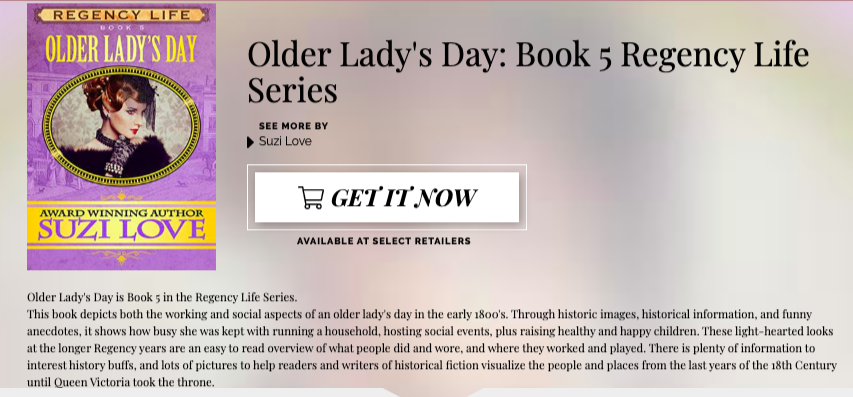
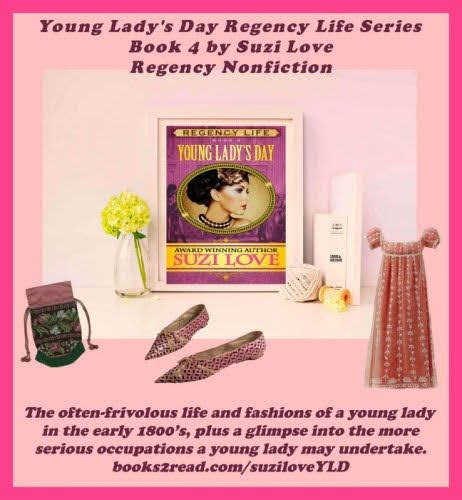
Easy to read overview of what an older lady did, wore, and how she lived in Jane Austen and Bridgerton’s time. Information for history buffs and pictures for readers and writers of historical fiction.  Older Lady’s Day Regency Life Series Book 5 by Suzi Love books2read.com/suziloveOLD

Older Lady’s Day Regency Life Series Book 5 by Suzi Love #Regency An easy to read overview of what an older lady did, wore, and how she lived in the early 19th Century. Information for history buffs and pictures for readers and writers of historical fiction.   books2read.com/suziloveOLD
Love Jane Austen and the Bridgertons? Easy to read overview of what an older lady did, wore, and how she lived in Jane Austen's time. #Bridgerton #JaneAusten #RegencyEra #BritishHistory https://books2read.com/suziloveOLD Share on X
RL_5_D2D_RetailerBuyLink_RL_5_2
https://books2read.com/suziloveOLD

Posted in 1800s, 1800s women's fashion, art, bedroom fashion, Canada, Coat or Pelisse Or Redingote, Corset, Customs & Manners, dancing, Decorative Item, Dress Or Robe, England, Europe, fashion accessories, Food and Drink, Google Books, hats, household, Jane Austen, London, medical, mourning, Pastimes, postal, Quotations, Regency Era, Regency Fashion, Regency Life Series, Reticule or Bag, riding, Royalty, sewing, shoes, Spencer, Suzi Love Books, Suzi Love Images, U.S.A, underclothing | Tagged 1800s women's fashion, art, Book 5, Bridgerton, Cartoons, Dress Or Gown, Fashion Plate, Hats And Hair, Jane Austen, Journal des Dames et des Modes, medical, Regency Fashion, Regency Life Series, Shoes, Suzi Love Books, The Repository Of Arts, WikiMedia Commons

1890-1920 ca. Sterling Silver Chatelaine With Medallion With Portraits. #VictorianEra #EdwardianEra #Chatelaine #Antique

Suzi Love Posted on January 23, 2025 by Suzi LoveJanuary 19, 2025

1890-1920 ca. Sterling Silver Chatelaine, England. Center Medallion With Portraits, three drops of monogrammed mesh purse, globe-shaped watch and book-shaped case. Via Augusta Auctions – augusta-auction.com

Definition

  • The word Chatelaine is French and means the keeper of the keys
  • Chatelaine” derives from the Latin word for castle
  • In Medieval times, the chatelaine was in charge of the day-to-day running of the castle.

What did a chatelaine do?

  • Most important task was keeper of the keys.
  • Also ordered supplies, did bookkeeping, supervised servants, taught castle children, and organized guests.
  • Castle keepers needed keys safe, yet easily accessible.
  • By 1700’s, a metal jeweled ornament hung from pockets, attached to belts, or by hooks into skirt waistbands
  • During 1800’s, women wore large collections of tools hung from chains
  • Young girls sewed and did needlework and needed to carry sewing notions eg scissors, thimbles
1890-1920 ca. Sterling Silver Chatelaine, England. Center Medallion With Portraits, three drops of monogrammed mesh purse, globe-shaped watch and book-shaped case. Via Augusta Auctions - augusta-auction.com

What were chatelaines used for?

  • Worn by women of all classes, from workers to nobility
  • Varied depending on class and finances.
  • Made of silver, brass, steel, leather, or fabric
  • During 19th century, fashionable dresses often had no waist and nowhere to hang chatelaines
  • Chatelaines became decorative brooches
  • Often given as a wedding present from a husband to bride
  • Later became fashion accessories
1890-1920 ca. Sterling Silver Chatelaine With Medallion With Portraits. #VictorianEra #EdwardianEra #Chatelaine #Antique books2read.com/SuziLoveChatelaines Share on X
D2D_RetailerBuyLink_HN_9
books2read.com/SuziLoveChatelaines
D2D_RetailerBuyLink_HN_9. Chatelaines and Chains History Notes Book 9 By Suzi Love. #regency Women in charge of houses wore long chains holding important household items around their waist e.g. keys, pen, notebook, sewing. books2read.com/SuziLoveChatelaines
Posted in 1800s, 1800s women's fashion, 1900s, Australia, Decorative Item, Edwardian Era, England, Europe, fashion accessories, household, sewing, South Pacific, Suzi Love Images, U.S.A, Victorian Era, Writing Tools | Tagged 1800s women's fashion, 1900s, antiques, Augusta Auctions, chatelaines, decorative, Edwardian Era, fashion accessories, Victorian Era

What did an older lady do and wear in Jane Austen and Bridgerton Years? Information and pictures for readers and writers of regency history. #JaneAusten #Bridgerton #RegencyEra

Suzi Love Posted on January 19, 2025 by Suzi LoveJanuary 18, 2025

What did an older lady do and wear in the Regency Era? Information & pictures for readers and writers of early 1800s history, nonfiction and fiction. books2read.com/suziloveOLD

The older lady’s day usually started with her toilette in her bedroom, where her maid helped her dress for the day and styled her hair. After that, she would join her family downstairs for breakfast unless she preferred a tray with either tea or hot chocolate in her bedroom as she prepared for her busy day. Her day would be made up of speaking with the housekeeper and the cook about the week’s menus, assuring that the servants were all available that day and no one was ill, and checking the list of foods needed. She would also enquire if the laundry was up to date and that they had enough good linen to make up all the beds before extended family members and guests arrived. If she was in the country and hosting a weekend house party, she would assign rooms to the guests on her lists and query that all was in readiness for their arrival.

RL_5_OLD_OlderLadysDayBook 5 Regency Life Series by Suzi Love
What did an older lady do and wear in Jane Austen and Bridgerton Years? Information and pictures for readers and writers of regency history. #JaneAusten #Bridgerton #RegencyErahttps://books2read.com/suziloveOLD Share on X
RL_5_D2D_RetailerBuyLink_RL_5_2
https://books2read.com/suziloveOLD

Posted in 1800s, 1800s women's fashion, art, Box Or Container, Bridgerton, cartoon, Chatelaine, Coat or Pelisse Or Redingote, Corset, Customs & Manners, Dress Or Robe, England, Europe, fashion accessories, Food and Drink, Google Books, hats, History, household, Jane Austen, London, medical, mourning, Music, Regency Era, Regency Fashion, Regency Life Series, Reticule or Bag, sewing, shoes, Spencer, Suzi Love Books, Suzi Love Images, Suzi Love Writing, underclothing | Tagged 1800s women's fashion, Book 5, Dress Or Gown, fashion accessories, Fashion Plate, Food, gloves, Hats And Hair, household, Jane Austen, pastimes, Regency Era, Regency Fashion, Regency Life Series, Regency London, Shoes, Suzi Love Books

1745-1750 ca. Small Decorative Box, Or Necessaire, With Watch, Probably German. #GeorgianEra #Sewing #Antiques

Suzi Love Posted on January 14, 2025 by Suzi LoveJanuary 14, 2025

1745-1750 ca. Necessaire, or small decorative box, with watch, probably German. Fitted with sewing and writing implements as well as a watch, this unmarked nécessaire shows delightful chinoiserie decoration in the Rococo style, echoing the work of the influential Munich designer François Cuvilliés (1695–1768). via Metropolitan Museum New York City, U.S.A. metmuseum.org

Small toiletry, writing, or sewing containers were called Necessaire or Etui: Tiny boxes or containers were carried in large castles or sprawling manor houses so a lady or gentleman had their essentials with them all day. They were also important when traveling by coach, trains, or ships where space was always limited. A necessaire or Etui was easily carried in a bag, reticule, or pocket so essentials were on hand for personal grooming, to repair a ripped hem, replace a button, to embroider, or to write a note or letter.  

1745-1750 ca. Necessaire With Watch. Probably German. via Suzi Love suzilove.com and Metropolitan Museum New York City, U.S.A. metmuseum.org
1745-1750 ca. Small Decorative Box, Or Necessaire, With Watch, Probably German. #GeorgianEra #Sewing #Antiques books2read.com/SuziLoveWritingTools Share on X
HN_13_D2D_Writing Tools books2read.com/SuziLoveWritingTools


Posted in 1700s, Box Or Container, Decorative Item, Europe, Georgian Era, Georgian Fashion, History, household, sewing, Suzi Love Images, travel, Writing Tools | Tagged 1700s Or Georgian Era, antiques, decorative, europe, fashion accessories, Georgian era, Germany, Metropolitan Museum NYC, Necessaire or Etui, sewing, watch, Writing Tools

19th Century Rock-Crystal Desk-Seal With Imperial Double-Headed Eagle, Russian. #JaneAusten #RegencyEra #Russia #Antiques

Suzi Love Posted on January 13, 2025 by Suzi LoveJanuary 8, 2025

19th Century Rock-Crystal Desk-Seal, Russian. Fluted handle with domed top carved with oak leaves, matrix engraved with Imperial double-headed eagle within collar of Order of St Andrew, on ermine mantle and surmounted by the Imperial crown. via Christie’s Auction Rooms. christies.com. The type of seals that would have been on desks in Jane Austen’s times for sealing and identifying letters.

19th Century Rock-Crystal Desk-Seal, Russian. Fluted handle with domed top carved with oak leaves, matrix engraved with Imperial double-headed eagle within collar of Order of St Andrew, on ermine mantle and surmounted by the Imperial crown. via suzilove.com and Christie’s Auction Rooms. christies.com
19th Century Rock-Crystal Desk-Seal With Imperial Double-Headed Eagle, Russian. #RegencyEra #Russia #Antiques. books2read.com/SuziLoveWritingTools Share on X

HN_13_D2D_Writing Tools books2read.com/SuziLoveWritingTools
Posted in 1800s, Box Or Container, Decorative Item, History, household, Regency Era, Russia, Suzi Love Images, Writing Tools | Tagged 1800s Or 19th Century, antiques, decorative, household, Jane Austen, Ruby Lane Antiques, Writing Tools

1806-1809 ca. One Pound Banknote As Used By Jane Austen. Issued in Hampshire, U.K. #RegencyEra #Money #JaneAusten #BritishHistory

Suzi Love Posted on January 8, 2025 by Suzi LoveJanuary 8, 2025

1806-1809 ca. Unissued One Pound Banknote. Issued in Alton, Hampshire, UK. The type of currency used by Jane Austen and her brother when dealing with the family’s finances. Issuer Alton Bank. Unissued banknote. (obverse) Emblem with initials, floral design and crown on top at left. Text at centre. Design printed in black. via British Museum.

A pound was a lot of money for the majority of people during the Regency, so the general population didn’t trust flimsy paper banknotes. A metal coin held its value in gold or silver, whereas paper banknotes were easily lost or damaged and very easy to forge. The original banknotes were merely a piece of paper that promised payment for a set amount and were issued by individual banks. The Bank of England used these notes from its inception in 1694 and regional banks continued issuing them until the changes to the Act in 1844. By the mid 1700s, notes started to become standardized, with ten and five pound notes appearing, but as they were all hand-lettered and signed they were viewed with skepticism. Most transactions were therefore done with metal coins, with many shopkeepers routinely biting down on a coin to ensure it was legitimate.

1806-1809 ca. Unissued One Pound Banknote. Issued in Alton, Hampshire, UK. Issuer Alton Bank. Unissued banknote. (obverse) Emblem with initials, floral design and crown on top at left. Text at centre. Design printed in black. via British Museum.
1806-1809 ca. One Pound Banknote As Used By Jane Austen. Issued in Hampshire, U.K. #RegencyEra #Money #JaneAusten #BritishHistory https://books2read.com/suziloveROver Share on X
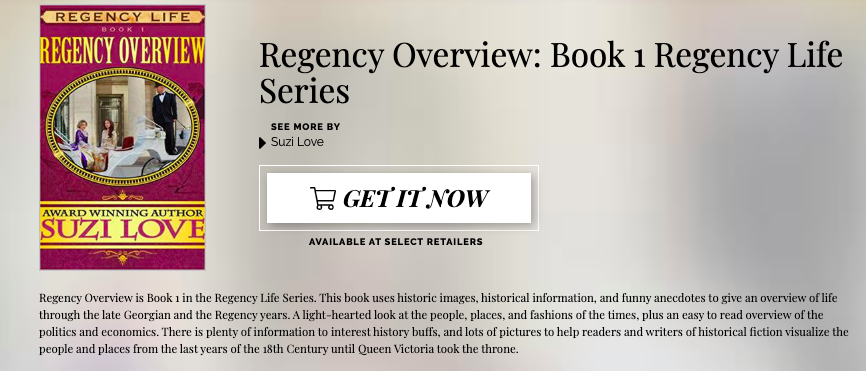
RL_1_D2D_Regency Overview RetailerLinks
https://books2read.com/suziloveROver
RL_1_D2D_Regency Overview RetailerLinks https://books2read.com/suziloveROver
Posted in 1800s, England, History, household, Jane Austen, London, money, Regency Era, Suzi Love Images | Tagged British history, British Museum, England, Jane Austen, money, Suzi Love Images

Christmas: Crackers And Their Fascinating History #Christmas #Customs #BritishHistory #Holidays

Suzi Love Posted on December 18, 2024 by Suzi LoveDecember 17, 2024

Christmas Crackers And Their Fascinating History

First made in 1850 by a London sweet maker called Tom Smith who decided it would a fun idea if his sweets and toys opened with a crack when their fancy wrappers were pulled in half. In early 1830, Tom Smith started work in a bakers and ornamental confectioners shop in London, selling sweets such as fondants, pralines and gum pastilles. He worked hard and took particular interest in the wedding cake ornaments and decorations, experimenting and creating new, more exciting and less crude designs in his spare time. Before long he was successful enough to leave and start up his own business in Goswell Road, Clerkenwell, East London. On a trip to Paris in 1840, he discovered the ‘bon bon’, a sugared almond wrapped in a twist of tissue paper.  He brought the ‘bon bon’ to London and they sold extremely well, but in January demand virtually ceased and once again he was reliant on sales of cake and table decorations and ornaments.

Anxious to stimulate sales, Tom placed a small love motto in the tissue paper and encouraged his regular customers to take supplies. Tom took a risk and concentrated on developing it further, while still running the wedding cake ornament and confectionery business. The majority of ‘bon bons’ were sold at Christmas so Tom thought up ways to capitalize on this short, but very profitable, season. It was the crackle of a log as he threw it on his fire that gave him the flash of inspiration which eventually led to the crackers we know today. A ‘ crackle’ added excitement to his novelty ‘bon bon’ so he experimented to find a compound which gave a satisfactory bang. He perfected his chemical explosion to create a ‘pop’ caused by friction when the wrapping was broken and the trade jumped at Tom Smith’s latest novelty.

He quickly refined his product by dropping the sweet and the ‘bon bon’ name, calling his new crackers Cosaques, but he kept the motto and added a surprise gift. Delighted at his overnight success, Tom took his cracker abroad but an Eastern manufacturer copied his idea and delivered crackers to Britain just before Christmas. So Tom designed 8 different kinds of cracker, working his staff day and night and distributing stocks in time for Christmas. He lived to see the new branch of his firm grow to swamp the original premises in Goswell Road and the company moved to Finsbury Square in the City of London where it remained until 1953. When he died he left the business to his three sons, Tom Henry and Walter. A few years later, a drinking fountain was erected in Finsbury Square by Walter Smith in memory of his mother, Mary, and to commemorate the life of the man who invented the great British Cracker.

His three sons developed the cracker designs, contents and mottoes. Walter Smith, the youngest son, introduced a topical note to the mottoes which had previously been love verses. Special writers were commissioned to compose snappy and relevant maxims with references to every important event or craze at the time from greyhounds to Jazz, Frothblowers to Tutankhamen, Persian Art to The Riviera. The original early Victorian mottoes were mainly love verses. Eventually these were replaced by more complicated puzzles and cartoons, and finally by the corny jokes and riddles which characterise our crackers today. 

Walter also introduced the paper hats, many of which were elaborate and made of best tissue and decorative paper on proper hatmakers stands and he toured the world to find new, relevant and unusual ideas for the surprise gifts, such as bracelets from Bohemia, tiny wooden barrels from America, and scarf pins from Saxony. Some were assembled in the factory, like the thousands of tiny pill boxes filled with rouge complete with powder puff.

A six foot cracker decorated Euston Station in London, and in 1927 a gentleman wrote to the Company enclosing a diamond engagement ring and 10 shilling note as payment for the ring to be put in a special cracker for his fiancee. Unfortunately he did not enclose an address and never contacted the Company again; the ring, letter and 10 shilling note are still in the safe today. In the early days, there was a large variety of specialist boxes, including Wedgwood Art Crackers from original designs by permission of Josiah Wedgwood and Sons, and designs such as Japanese Menagerie crackers containing the latest novelties from Japan, including animals, birds, reptiles and mottoes in Japanese.  

Crackers were created for the War Heroes, Charlie Chaplin, The Wireless, Motoring, The Coronation and even the Channel Tunnel in 1914.  Exclusive crackers were also made for members of the Royal Family and still are to this day. During the Second World War restrictions were placed on the production of cracker snaps.

The Ministry of Defence commissioned Tom Smith to fold and tie bundles of three to six snaps together with special string and regulation knots. These bundles were then used by soldiers in training as, when the string was pulled, they mimicked the noise of machine gun fire. After the war, vast quantities of these surplus cracker snaps were released back into the cracker trade. As the demand for crackers increased, Tom Smith merged with Caley Crackers in 1953 taking over their headquarters and factory in Norwich, East Anglia.

Tom Smith Group Limited currently hold a royal warrant from: HM QUEEN ELIZABETH II Ê 1906: Tom Smith were granted their first Royal Warrant by the then Prince of Wales which entitled them in 1909 to become members of the Royal Warrant Holders Association. 1910: In December, the reigning monarch, King George V granted Tom Smith his warrant as suppliers of Christmas Crackers. Tom Smith still holds the honour of producing special crackers each year for the Royal Household.

In the countries that now use them, a cracker is set next to each plate on the Christmas dinner table and a colourful party hat, a toy or gift and a festive joke falls out when the cracker is pulled in half with a loud bang! The party hats look like crowns, supposedly to symbolise the crowns worn by the Wise Men.

Another British company strongly associated with the cracker business was Batger and Co. Like Tom Smith, they sold a wide variety of crackers in highly decorated boxes and once again many were themed or in commemoration of a special event. Batger’s Gretna Green Crackers for the famous place for eloping lovers where couples in the Regency period ran off in a carriage to Scotland to be married at the blacksmiths forge at Gretna Green.

Crackers were an incredibly expensive luxury at the time costing from 14 shillings to 30 shillings a box. Others were Peerless Crackers and Mead and Field Crackers. Cabaret Girl from the Peerless series of Christmas crackers, from 1933, which promises that each cracker contains ‘both a juvenile costume and fancy hat or cap, amusing joke or riddle, a good snap.’

Xmas_Christmas Crackers
Christmas: Crackers And Their Fascinating History #Christmas #Customs #BritishHistory #Holidays https://books2read.com/suziloveHOCP Share on X

Posted in 1800s, Australia, Canada, Christmas, Customs & Manners, Edwardian Era, England, Europe, History, household, London, Suzi Love Images, U.S.A, Victorian Era | Tagged British history, Christmas, Customs and Traditions, England, europe, household, Suzi Love Images

Christmas: Games and Snap Dragon played at a Bridgerton and Jane Austen Christmas. #Christmas #Holidays #JaneAusten #Bridgerton #RegencyEra

Suzi Love Posted on December 18, 2024 by Suzi LoveDecember 16, 2024

Games

At Christmas time, households had guests to stay and games were played to either fill in the time inside when the weather was too bad to venture out with sleds or skates, or to keep tradition. Blind man’s bluff, forfeits, and snap dragon were all played.

A list of some entertainments for Christmas…From The book Of Christmas by Thomas kibble Hervey. “jugglers, and jack-puddings, scrambling for nuts and apples, dancing the hobby-horse, hunting owls and squirrels, the fool-plough, hot-cockles, a stick moving on a pivot, with an apple at one end and a candle at the other, so that he who missed his bite burned his nose, blindman’s buffs, forfeits, interludes and mock plays :” — also of ” thread my needle, Nan,” ” he can do little that can’t do this,” feed the dove, hunt the slipper, shoeing the wild mare, post and pair, snap dragon, the gathering of omens….

Snap Dragon A favorite game was Snap Dragon, often played on Christmas Eve. Raisins were put into a large, shallow bowl and brandy was poured over them and then ignited.  Lights were extinguished to increase the eerie effect of the blue flames playing across the liquor. The object of the game was to reach through the blue flames and grab as many raisins as possible from the flaming brandy and pop them into your mouth. The risk of burning yourself increased the excitement.

Samuel Johnson’s Dictionary of the English Language in 1755 describes the. game as “a play in which they catch raisins out of burning brandy and, extinguishing them by closing the mouth, eat them”. According to an eighteenth-century article in Richard Steele’s Tatler magazine, “the wantonness of the thing was to see each other look like a demon, as we burnt ourselves, and snatched out the fruit.”

Snap-dragon was played in England, Canada, U/S.A, and probably other countries with British backgrounds. The words snap-dragon and flap-dragon can refer to the game, the raisins used in the game, or the bowl with brandy and raisins.

The first reference to Snap-dragon as a game is in Francis Grose’s Dictionary of the Vulgar Tongue  in 1811. “Christmas gambol: raisins and almonds being put into a bowl of brandy, and the candles extinguished, the spirit is set on fire, and the company scramble for the raisins.” Snap-dragon as a Christmas parlour game was mentioned in 1836 in Charles Dickens’ The Pickwick Papers and in 1861, in Anthony Trollope’s novel Orley Farm.  Lewis Carroll, in Through the Looking-Glass, and What Alice Found There in 1871 describes “A snap-dragon-fly. Its body is made of plum pudding, its wings of holly-leaves, and its head is a raisin burning in brandy.”

Agatha Christie’s book Hallowe’en Party describes a children’s party during which a child’s murder causes Hercule Poirot to be brought in to solve the case and at which Snap-dragon is played at the end of the evening.

A song went with the game….

“Here he comes with flaming bowl,

Don’t be mean to take his toll.

Snip! Snap! Dragon!

Take care you don’t take too much

Be not greedy in your clutch.

Snip! Snap! Dragon!

With his blue and lapping tongue

Many of you will be stung.

Snip! Snap! Dragon!

For he snaps at all that comes

Snatching at his feast of plums.

Snip! Snap! Dragon!

But Old Christmas makes him come

Though he looks so fee! Fa! Fum!

Snip! Snap! Dragon!

Don’t `ee fear him, be but bold.

Out he goes, his flames are cold.

Snip! Snap! Dragon!

Christmas: Games and Snap Dragon played at a Bridgerton and Jane Austen Christmas. #
Christmas: Games and Snap Dragon played at a Bridgerton and Jane Austen Christmas. #Christmas #Holidays #JaneAusten #Bridgerton #RegencyEra https://books2read.com/suziloveHOCP Share on X
Posted in Christmas, Customs & Manners, England, Europe, History, household, Pastimes, Suzi Love Images, U.S.A | Tagged Christmas, Customs and Traditions, games, History Of Christmases Past, household, pastimes, Suzi Love Images, Suzi Love Research

Post navigation

← Previous Post
Next Post→

SUBSCRIBE TO SUZI LOVE'S NEWSLETTER.

Recent Posts

  • 17th Century Late – 18th Century Early. Silk and Metal Purse, French. #GeorgianEra #France #History
  • 19th Century Early Textured Cotton Trousers As Worn By Men In Bridgerton and Jane Austen’s family. #RegencyFashion #Bridgerton #JaneAusten #Pants
  • 1800s Pascalie Hosten, Comtess d’Arjuzon, Playing Guitar. Possibly by Achille-Louis Martinet (1806 – 1877). #Music #Art #RegencyEra
  • 19th Century Food For The Upper Classes In Bridgerton and Jane Austen Times. #Bridgerton #JaneAusten #RegencyEra #HistoricalFood
  • 1784-1826 ca. Bridgerton and Jane Austen Style White High-Waisted Underdress With Drawstrings, American. #Bridgerton #JaneAusten #GeorgianFashion #RegencyFashion #Underclothing

Recent Comments

  1. Suzi Love on Book Hook: “Mama, why doesn’t that man like me?” Daniel asked. Love After Waterloo. #RegencyRomance #ReadARegency #Militaryromance #Waterloo
  2. Amber Daulton on Book Hook: “Mama, why doesn’t that man like me?” Daniel asked. Love After Waterloo. #RegencyRomance #ReadARegency #Militaryromance #Waterloo
  3. Suzi Love on Book Hook: “Mama, why doesn’t that man like me?” Daniel asked. Love After Waterloo. #RegencyRomance #ReadARegency #Militaryromance #Waterloo
  4. Anna Taylor Sweringen on Book Hook: “Mama, why doesn’t that man like me?” Daniel asked. Love After Waterloo. #RegencyRomance #ReadARegency #Militaryromance #Waterloo
  5. Suzi Love on Book Hook: “Mama, why doesn’t that man like me?” Daniel asked. Love After Waterloo. #RegencyRomance #ReadARegency #Militaryromance #Waterloo

Login

  • Log in

Archives

  • November 2025
  • October 2025
  • September 2025
  • August 2025
  • July 2025
  • June 2025
  • May 2025
  • April 2025
  • March 2025
  • February 2025
  • January 2025
  • December 2024
  • November 2024
  • October 2024
  • September 2024
  • August 2024
  • July 2024
  • June 2024
  • May 2024
  • April 2024
  • March 2024
  • February 2024
  • January 2024
  • December 2023
  • November 2023
  • October 2023
  • September 2023
  • August 2023
  • July 2023
  • June 2023
  • May 2023
  • April 2023
  • March 2023
  • February 2023
  • June 2022
  • April 2022
  • March 2022

Categories

  • 1700s
  • 1700s Mens fashion
  • 1700s Womens Fashion
  • 1800s
  • 1800s Mens Fashions
  • 1800s women's fashion
  • 1900s
  • art
  • Australia
  • Bath
  • bedroom fashion
  • Book Hooks
  • Box Or Container
  • Bridgerton
  • Bus Trips
  • Canada
  • Carriage
  • cartoon
  • Chatelaine
  • children
  • Children
  • Christmas
  • Coat or Pelisse Or Redingote
  • Contemporary
  • Corset
  • Couple
  • Customs & Manners
  • dancing
  • December Scandal
  • Decorative Item
  • Dress Or Robe
  • Easter
  • Edwardian Era
  • Embracing Scandal
  • England
  • Europe
  • Events
  • Fashion
  • fashion accessories
  • Food and Drink
  • Four Times A Virgin
  • France
  • furniture
  • Georgian Era
  • Georgian Fashion
  • Google Books
  • Grand Tour
  • hats
  • History
  • History Notes
  • History Of Christmases Past
  • household
  • Irresistible Aristocrats
  • Jane Austen
  • Keanu Reeves
  • Legal
  • London
  • Love After Waterloo
  • Loving Lady Katharine
  • medical
  • military
  • money
  • mourning
  • Music
  • pants
  • Pastimes
  • peerage
  • People
  • Places
  • Pleasure House Ball
  • postal
  • Queensland
  • Quotations
  • Regency Era
  • Regency Fashion
  • Regency Life Series
  • Reticule or Bag
  • riding
  • Romantic Era
  • Royalty
  • Russia
  • Scandalous Siblings Series
  • Scenting Scandal
  • Self Publishing
  • sewing
  • shoes
  • South Pacific
  • Spencer
  • sports
  • Suit
  • Sunday Snippet
  • Suzi Love
  • Suzi Love Books
  • Suzi Love Images
  • Suzi Love Writing
  • Swain Cove
  • THe Viscount's Pleasure House
  • travel
  • U.S.A
  • underclothing
  • Vest or Waistcoat
  • Victorian Era
  • weapons
  • weddings
  • Writing Tools

1800s men fashion 1800s women's fashion antiques Bridgerton British history Cartoons Corset cravat Dress Or Gown England europe fashion accessories Fashion Plate France Georgian era Georgian Fashion gloves google books Hats And Hair historical romance History Notes household Jane Austen jewelry Journal des Dames et des Modes La Belle Assemblee London Metropolitan Museum NYC pants Redingote Or Pelisse Or Coat Regency Era Regency Fashion Regency London reticule or bag riding Romantic Era sewing shawls Shoes Suzi Love Books Suzi Love Images Tailcoat The Repository Of Arts underclothing Vest or Waistcoat

©2025 - Suzi Love - Weaver Xtreme Theme Privacy Policy
↑