1863 Traveler’s Chest, French. Sewing Tools, Ruby Perfume, Aide de Memoire or Notebook, etc. Inside lid with theatre curtains. via Ruby Lane Antiques. rubylane.com



1863 Traveler’s Chest, French. Sewing Tools, Ruby Perfume, Aide de Memoire or Notebook, etc. Inside lid with theatre curtains. via Ruby Lane Antiques. rubylane.com
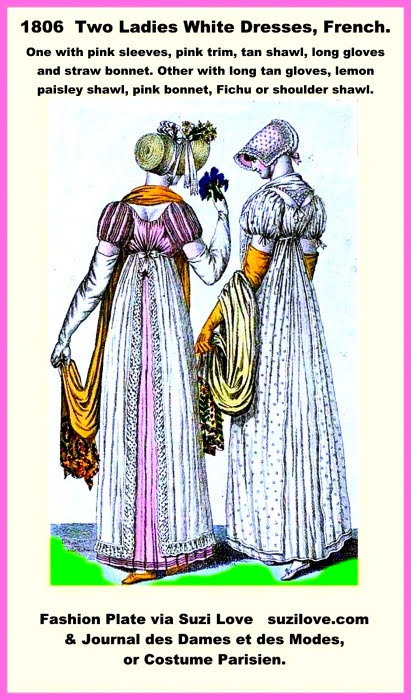
1806 Two Ladies In White Dresses, French. One with pink sleeves, pink trim, tan shawl, long gloves and straw bonnet. Other with long tan gloves, lemon paisley shawl, pink bonnet, Fichu or shoulder shawl. Fashion Plate via Journal des Dames et des Modes, or Costume Parisien. These fashionable ensembles with a variety of fashionable and practical accessories would have been worn by Jane Austen and her family and friends during the day when out walking in the park or visiting village shops. Hats were a necessity to protect fair skin from the sun and scarfs and shawls added color and warmth to an outfit.
Definition Fichu: Draped scarf or shawl worn about shoulders and tied in knot at breast, with ends hanging down loosely. Word, meaning negligee or careless, first used to describe breaking away from stiff collar of the past.

1750 Hyde Park Corner, London, U.K. From Mr. Crace’s Collection from Old and New London By E. Walford, 1878.

1750 Hyde Park Corner, London, U.K. #London #BritishHistory #Art
Tweet
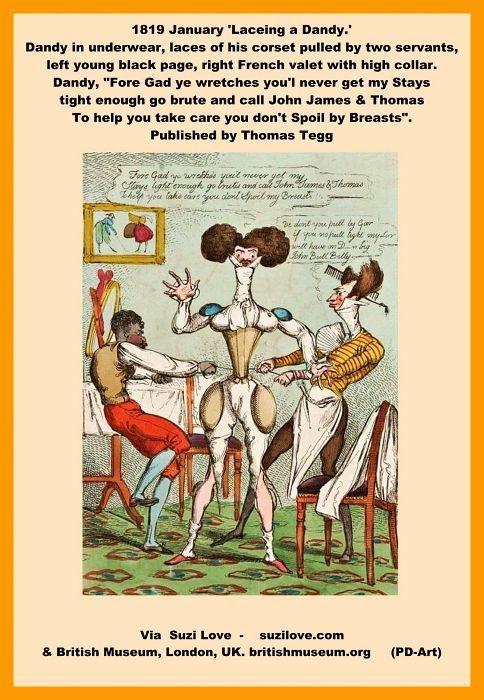
1819 January ‘Laceing a Dandy.’ Dandy in underwear, laces of his corset pulled by two servants, left young black page, right French valet with high collar. Dandy, “Fore Gad ye wretches you’ll never get my Stays tight enough go brute and call John James & Thomas, To help you take care you don’t Spoil by Breasts”. Published by: Thomas Tegg. Hand colored etching. Via British Museum, London, UK. britishmuseum.org (PD-Art)

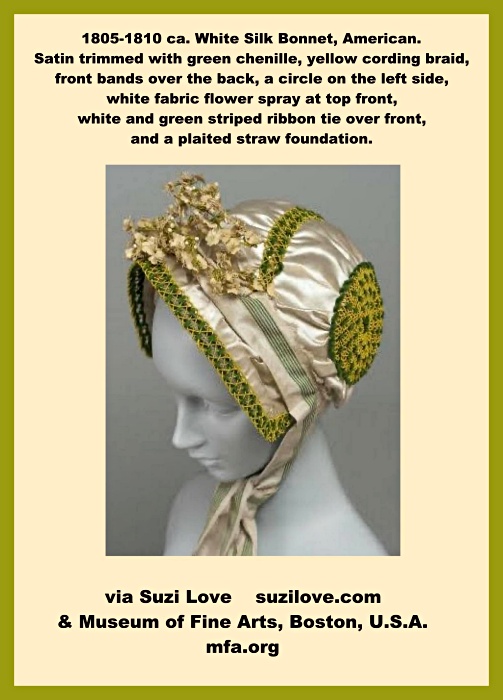
1805-1810 ca. White Silk Bonnet, American. Satin trimmed with green chenille, yellow cording braid,
front bands over the back, a circle on the left side, white fabric flower spray at top front,
white and green striped ribbon tie over front, and a plaited straw foundation.
via Museum of Fine Arts, Boston, U.S.A. mfa.org
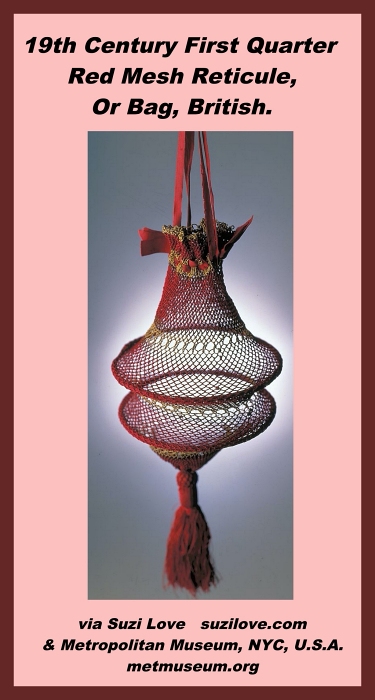
19th Century First Quarter Red Mesh Reticule, British. Small mesh bags known as reticules were the must-have “it bags” of 1800-1825. Too small for carrying much more than a few coins, reticules were often shown in satirical prints as a fashionable foible of women’s attire. Knit into an elegant lantern-like shape, this example survives with its original ribbon trim making it a particularly lovely and rare example of a short-lived fashion trend. via Metropolitan Museum, N.Y.C., U.S.A. metmuseum.org
Definition Reticule: Bag or purse, often with a drawstring to pull closed and usually made of cloth or covered cardboard and often decorated with beading or embroidery. A reticule, or purse, or handbag, was usually carried by a woman during the Regency period to carry all their daily necessities. Earlier, women used pockets that tied at the waistline and were hidden in the folds of their skirts. Empire style, or early 1800s, high-waisted dresses made it impossible to either sewn in a pocket or to tie on a pocket. So women began carrying small, decorated bags called Reticules, or ridicules, which generally pulled close at the top with a drawstring.

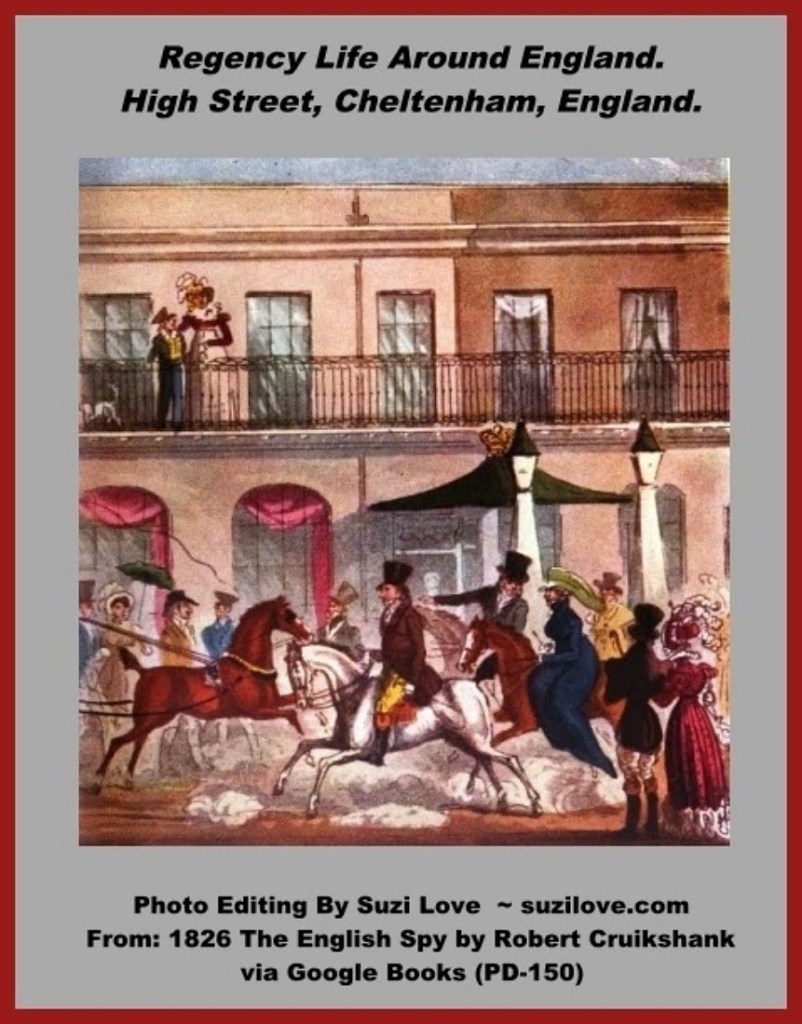
1826 Cheltenham Spa, England. From Regency Life Around England In Jane Austen’s Times. From The English Spy By Robert Cruikshank. via Google Books (PD-180)




1805-1810 ca. Red Shoes With Laces. via Museum of Fine Arts, Boston. mfa.org
In Jane Austen’s years, she and her contemporaries spent a lot of time walking outdoors. People were encouraged to partake in outdoor pursuits to maintain good health. Fragile slippers were worn for balls and evening events but for walking sturdier shoes were needed, In the early 1800s, these were typically made of leather, had a very small heel, slightly rounded toes and were laced up on the top.

1800-1810 ca. Yellow Kid Women’s Slippers, British. The sort of shoes Jane Austen and her female friends and family would have worn. Kid shoes bound in kid over white linen, very pointed toes, fronts trimmed with yellow silk tassel fixed by small steel buckle, back of shoe faced with yellow kid
printed with pattern in black, heel of kid and leather. via Manchester Galleries ~ manchestergalleries.org
Shoes in the early 1800s were flat or low heeled and occasionally decorated with a bow or floral embellishments and it wasn’t until the 1820s that square, rather than rounded or pointed toes became fashionable. Made of soft kid or cloth, these delicate shoes were flimsy and wore out quickly. There was often no difference between a left or right shoe, so when one slipper had a hole it was easily replaced. Slippers were often bought in multiples at a time so there were spares.

1826 The Dinner Party. Social Life. From 1826 The English Spy By Robert Cruikshank. via Google Books (PD-180). https://books2read.com/suziloveOLD