1800 North Side Of Cavendish Square, London, U.K. By Thomas Malton (1748-1804) British. Aquatint of the north side of the square. (PD-Art)



1800 North Side Of Cavendish Square, London, U.K. By Thomas Malton (1748-1804) British. Aquatint of the north side of the square. (PD-Art)
1750-1770 ca. Back Lacing Linen Corset, European. Made of linen, lining of natural linen, chamois leather to strengthen, straps of linen, stiffening of whalebone. Corset: deep point, hip flaps, lacing at the back, Netherlands.

Description: Quilted linen corset with vertical tunnels and with ribs. Whalebone stiffening, point on front, hip flaps, front shoulder straps of fabric plus long narrow linen strips to tie. Lined and has chamois leather at armpits, front point and waist. Linen corset with a deep thickened point at the front, hip flaps, and lacing at the back. Fully quilted with vertical tunnels, with ribs. Thickened tip at the front is slightly triangular. Above for round shape due to wide horizontal rib. Flares from the waist into hip phlangers, or fingers. Lacing eyelets and criss-crossed lacing at the back.
Front shoulder straps are of the fabric with very long linen straps with narrower linen strap, total 110 cm, and two horizontal linen loops on top of the backs. There is a narrow linen strip on all seams and along all edges. Armpits and the front point are reinforced with chamois leather and chamois leather is at the waist with straps attached. Via Mode Museum Province of Antwerp

Corsets 1700-1790 History Notes Book 15 This book shows how body wraps, stomachers and stays were worn during the 1700s. They created a variety of fashionable silhouettes to suit the elaborate fashions worn for court and daily life during the 18th Century. Wearing the correct underclothing was essential for keeping garments in place and giving the best fashion display.

1801 November 9th Playing Cards. Men and women play cards at round table. Supreme Bon Ton Plate 2. Published by S W Fores. Men and women play cards at round table. Man and woman talk to players. Woman sleeps in upright chair, two others, one with parasol and other fan, walk off arm-in-arm.Men: High-waisted coats, high collars, huge neck-cloths, with pumps or Hessian boots. Women: High-waisted dresses, short sleeves, long trains, very low necklines, short ringlets, two in caps. Via British Museum, London, UK. britishmuseum.org (PD-Art)
In Jane Austen’s times, cartoons posted in the windows of shops were one of the main ways people found news. Common people couldn’t afford newspapers so cartoonists ridiculed the people and the places with cartoons of the daily events happening in London and other cities. The ridiculous fashion trends of the late 1700s and early 1800s were easy targets for satirical cartoons as was the addiction to gambling by women and men alike.

1815 May. Walking Dress, or Pelisse, or Redingote, English. Purple walking dress with wide collar, high white lace neck frill, and white trim down the vertical opening, white reticule, and a high white plumed hat. Fashion Plate via Rudolph Ackermann’s ‘The Repository of Arts’. Google Books (PD-180) suzilove.com Fashion Plate via Rudolph Ackermann’s ‘The Repository of Arts’.
Definition: Walking Dress Or Pelisse Or Redingote Woman’s long, fitted coat often worn open in front to show off the dress underneath. Walking Dress Or Pelisse are the terms used in English fashion plates, while Redingote is seen in European fashion plates, especially the French one, Journal des Dames et des Modes, or Costume Parisien.


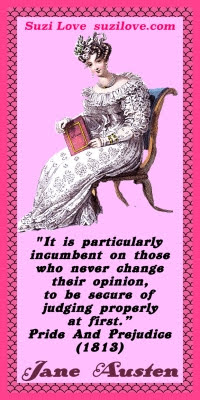
“It is particularly incumbent on those who never change their opinion, to be secure of judging properly at first.” Jane Austen Pride and Prejudice (1813) .#JaneAusten #Regency #Quote

1775-1825 ca. Bridgerton and Jane Austen Style Black Silk Breeches, American or European. #Bridgerton #JaneAusten #GeorgianEra #RegencyFashion books2read.com/SuziLoveFashionMen1800-1819
Continue reading →1798 Two ladies in Jane Austen style white walking dresses. Left: Dress has gold trim, white bonnet, green Parasol. Right: Stand up collar, short puffed sleeves, brown shawl and coiled head dresses, both with necklaces. via Rijks Museum, Amsterdam, Netherlands. rijksmuseum.nl


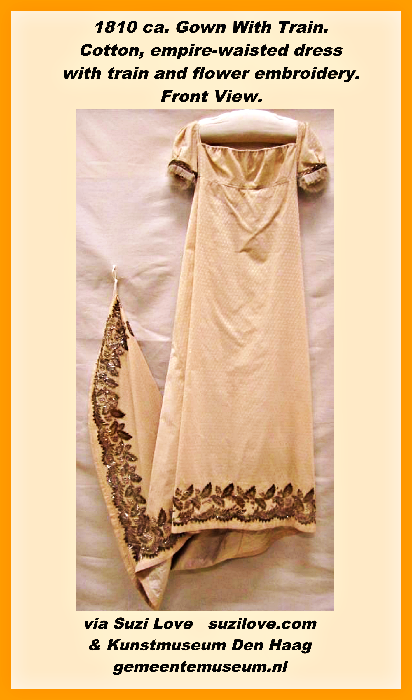
1810 Fawn Cotton Gown, with a train decorated with embroidered flowers. Regency fashion at its prettiest. The style of Empire style, or high-waisted, dress worn by Jane Austen and her contemporaries. via Gemeenteneun Museum Den Haag. Dutch Museum, the Netherlands. http://www.gemeentemuseum.nl

1800s Different Degrees Of Nobility In Great Britain and Ireland. FIVE LEVELS.

BENEATH THESE COME THE BARONS: The rank and precedence of Baronets is immediately after the younger sons of Barons, and before all Knights, whether of the Order or Knights. When the Order of Baronets was first instigated, its numbers were limited to 200. Members were carefully selected from the most wealthy and distinguished families of landed gentry. In the reign of the first Charles, it was the stimulus and reward for devoted loyalty. Later, it was often bestowed as an honorary recompense for sufferings and attachment when royalty was unable or unwilling to give solid remuneration. FROM: 1835 Debrett’s Baronetage of England
PRINCES of the BLOOD ROYAL: The Sovereign’s sons, brothers, and uncles are styled Princes of the Blood Royal, and have precedency of all other dukes, with the title of Royal Highness, which title was also, by special warrant, in 1816, conferred on the duke of Gloucester, deceased, and, 6th April 1818, on Prince Leopold of Saxe Cobourg (King of the Belgians). FROM: 1840 Debrett’s Peerage of the UK
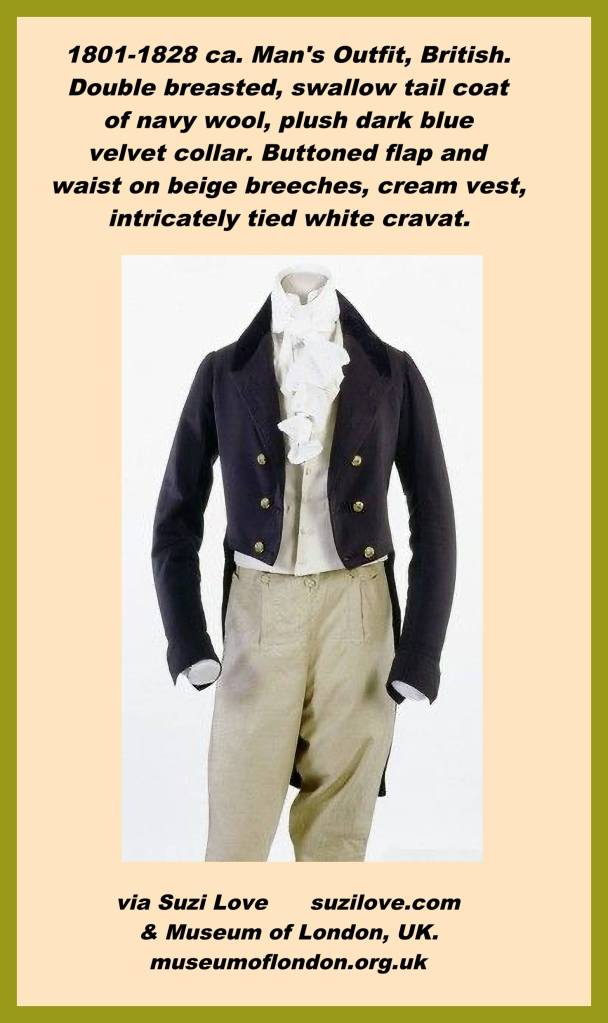
1801-1828 ca. Man’s Outfit, British. Double breasted, swallow tailcoat of navy wool, plush dark blue velvet collar. Buttoned flap and waist beige breeches, cream vest, intricately tied white cravat. via museumoflondon.com
In the early 1800s, men no longer wore complicated styles and extravagant fabrics. Men’s fashion simplified and became more conservative. A well cut tailcoat, vest, pantaloons and an immaculate cravat of beautiful white linen in the style of George Bryan, or Beau, Brummell. Clothes were a status symbol and indicated a man’s social position. These clothing items were the sort worn by Jane Austen’s male family and friends.
From the finish of the 18th century until 1820, men’s fashions in European and European-influenced countries moved away from the formal wear of brocades, lace, wigs and powder to more informal and relaxed styles. Focus was on undress rather than formal dress. Typical menswear in the early 1800s included a tailcoat, a vest or waistcoat, either breeches, pants, or the newer trousers, stockings, shoes or boots, all worn with an overcoat and hat. This basic ensemble was accessorized with some form of neckcloth or cravat, gloves, walking stick, cane or riding crop, handkerchief, fobs, watch and perhaps a quizzing glass or eye glass.
Skirted coats were replaced with short-fronted, or cutaway, tailcoats worn over fitted waistcoats and plain, white linen shirts. Knee breeches were gradually replaced by tight-fitting pantaloons and later trousers, decorative shoes with buckles were replaced with a variety of boot styles, and fussy and ruffled neckwear gave way to intricately tied, white linen neck cloths. A Regency Era, or early 1800s, gentleman was outfitted in more practical fabrics, such as wool, cotton and buckskin rather than the fussy brocades and silks of the late 1700s.
