
1830-1850 Halted Mail Coach #travel #regencyera #victorianera
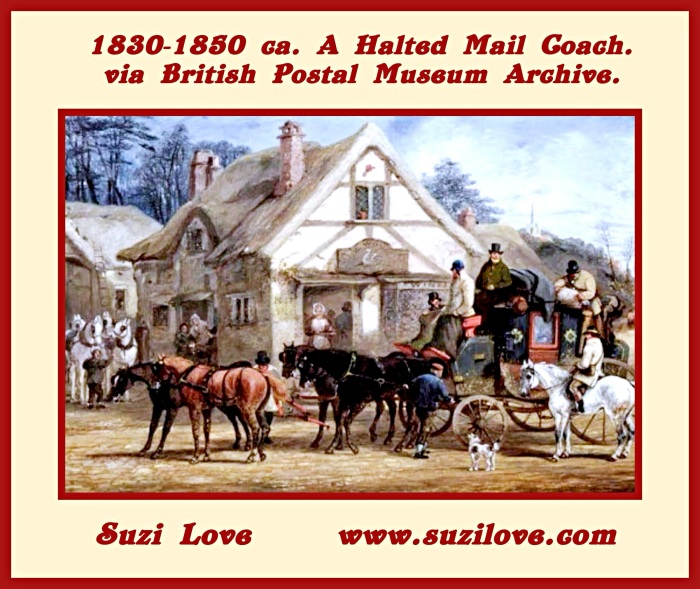
1830-1850 A Halted Mail Coach via British Postal Museum.
For many years in England, mounted carriers rode between posts and carried letters to and from local postmasters who delivered them to people in his area. The system was inefficient and post riders often robbed. John Palmer, a theatre owner, transported actors and materials and wanted to improve mail delivery so the Chancellor of the Exchequer, William Pitt, let Palmer try. He beat the old delivery time by 22 hours and brought the mail from Bristol to London in 16 hours. A year later, in 1785, the mail coach, sometimes called a post coach, was delivering mail from London to Norwich, Liverpool, Leeds, Dover, Portsmouth, Poole, Exeter, Gloucester, Worcester, Holyhead and Carlisle.
Palmer’s mail service improved after turnpike roads were introduced in the late 1780s, allowing faster travel and encouraged business between the proprietors of stage coaches.” The first mail coaches were supplied by contractors who received on average “one penny-halfpenny per mile.”, despite these contracted coaches being poorly built.. By the 1800s, the Post Office owned their own fleets of coaches with black and scarlet livery.
Mail coaches were usually drawn by four horses and took four passengers inside and three outside. The mail box was locked and secured at the rear of the coach and guarded by an armed Royal mail post office guard who followed strict rules.
Travel and Luggage By Suzi Love History Notes Book 10. How did people travel in Jane Austen’s times. In past centuries? What did they take with them to make their long journeys easier? Travel by road, ship, canal, or railway all took a long time and had dangers so people learned to prepare. And then, in the nineteenth century, road improvements, inventions, and scientific developments made travel more pleasurable. books2read.com/SuziLoveTravel
