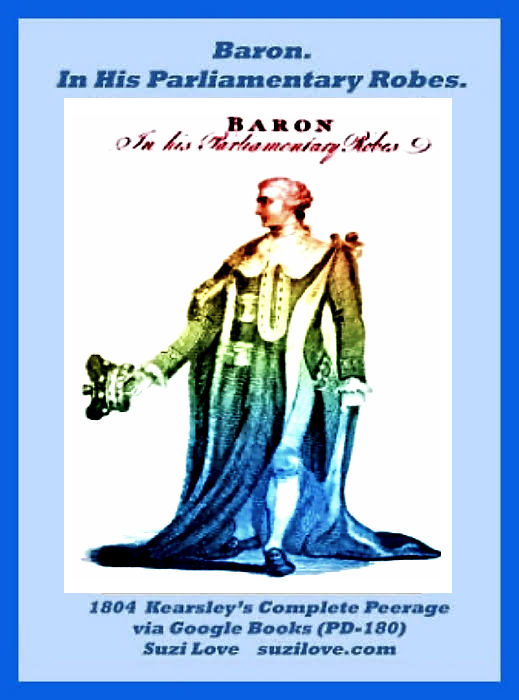
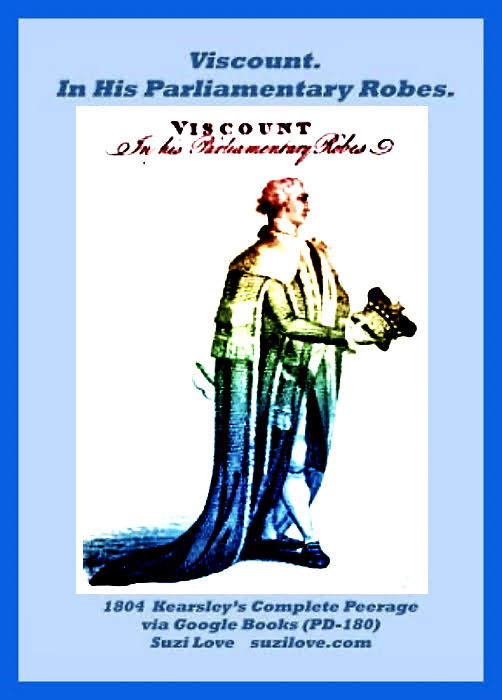
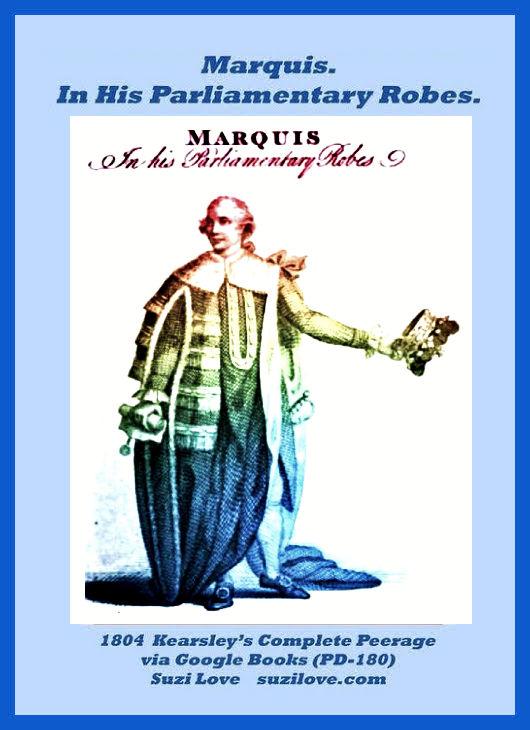
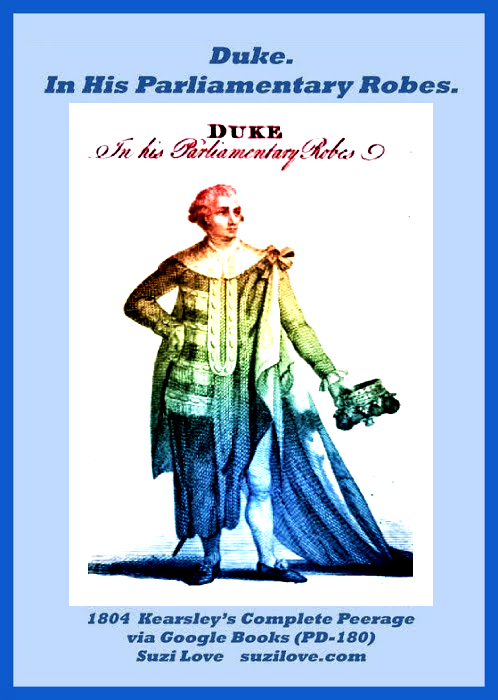
An Overview of Regency London From 1820 The English Metropolis by John Corry via Google Books (PD-180)


Regency Era Overview: Images, information, funny anecdotes give overview of Jane Austen’s and Bridgerton’s times. #Bridgerton #RegencyEra #JaneAusten #BritishHistory https://books2read.com/suziloveROver
Continue reading →An Overview of Regency London From 1820 The English Metropolis by John Corry via Google Books (PD-180)


1826 Locked up in a sponging house on Carey Street, London, because they are unable to pay their bill. From A Regency Gentleman’s Life. From: 1826 The English Spy By Robert Cruikshank. via Google Books (PD-180)
Definition Sponging House: Place of temporary confinement for debtors. Creditors would lay a complaint with the sheriff, the sheriff sent his bailiffs, and the debtor was taken to the local sponging-house. This was not a debtors’ prison but a private house, often the bailiff’s own home. The debtor was held there temporarily in the hope that they could make some arrangement with the creditors.
Light-hearted look at a young man’s day in the early 1800s. Depicts the ups and downs of a young gentleman’s day in the Regency Era, or Jane Austen’s years. Through historic images, historical information, and funny anecdotes, it shows how a young man about town fills his day, where he goes, and who he spends time with. This light-hearted look at the longer Regency years is an easy to read overview of what people did and wore, and where they worked and played. There is plenty of information to interest history buffs, and lots of pictures to help readers and writers of historical fiction visualize the people and places from the last years of the 18th Century until Queen Victoria took the throne. Regency Life Series Book 3 Young Gentleman’s Day.com/suziloveYGD


1826 The Cyprian’s Ball At the Argyll Rooms. A Regency Gentleman’s Life. From The English Spy By Robert Cruikshank.
Cyprians: High-class prostitutes who dressed well and were interesting and entertaining. They were often under the protection of a wealthy gentleman for a time and were gifted clothing, jewelry and temporary housing. Called a multitude of names, none of which were flattering. Ladybird, lady of easy virtue, impure, fashionable impure, soiled doves, Covent Garden nun, Drury Lane vestal, left-handed wife, short-heeled wench, three-penny upright, woman of pleasure.


Covent Garden is within the London boroughs of Westminster and Camden, and the parliamentary constituencies of Cities of London and Westminster and Holborn and St Pancras. The district is divided by the main thoroughfare of Long Acre, north of which is given over to independent shops centred on Neal’s Yard and Seven Dials, while the south contains the central square with its street performers and most of the elegant buildings, theatres and entertainment facilities, including the Theatre Royal, Drury Lane, and the London Transport Museum.
In 1552, the land was seized by Henry VIII and granted to the Earls of Bedford. The 4th Earl commissioned Inigo Jones to build fine houses to attract wealthy tenants. It was the first modern square in London, with Italian arcades and a flat, open space or piazza with low railings. This layout was copied in other new estates in London.


In 1654, an open-air fruit and vegetable market grew on the south side of the fashionable square but over time the market and the surrounding area fell into disrepute. Taverns, theatres, coffee-houses and brothels opened up, the gentry moved away, and rakes, wits and playwrights moved in.
By the 18th century Covent Garden had become a well-known red-light district, attracting notable prostitutes such as Betty Careless and Jane Douglas. Descriptions of the prostitutes and where to find them were provided by Harris’s List of Covent Garden Ladies, the “essential guide and accessory for any serious gentleman of pleasure”.
Covent Garden’s market was always disorderly, the buildings in bad shape, and overcrowded with stalls, donkeys, carts, and peddlers. The small number of passageways into the piazza were small and with bottle necks of carts moving goods and market sellers fighting for right of way. The markets supplied fruits and vegetables, mostly homegrown but with imported goods increasing. Many sellers missed paying tolls for selling in the piazza or refused to pay them so the owner, the Earl of Bedford, took many people to court for not paying tolls. He realized the markets were in such poor condition that he couldn’t charge sellers until he improved them. In 1830, a new market hall was built with sections dividing the kind of goods sold which did improve things, but the markets remained chaotic. By 1890, people were again complaining about the narrow streets and congestion.
Covent Garden’s flower girls attracted attention by shouting:
“Two bundles a penny, primroses!”
“Sweet violets, penny a bunch!”
In 1851, Henry Mayhew wrote London Labour and the London Poor describing two types of flower girl. The young girls, or waifs, sold flowers to feed the family. The other type of flower girl stayed out late, doubled as prostitutes, and had bad reputations.
In 1913, Herbrand Russell, 11th Duke of Bedford agreed to sell the Covent Garden Estate for £2 million to the MP and land speculator Harry Mallaby-Deeley, who sold his option in 1918 to the Beecham family for £250,000.


In 1830, Charles Fowler’s neo-classical building was erected to cover the market and as the market grew, the prostitutes moved on. The Floral Hall and Charter Market were added and the Jubilee Market in 1904.


In 1913,Herbrand Russell, 11th Duke of Bedford agreed to sell the Covent Garden Estate for £2 million to the MP and land speculator Harry Mallaby-Deeley, who sold his option in 1918 to the Beecham family for £250,000. By the end of the 1960s, traffic had become congested until in 1974 the market relocated to the New Covent Garden Market about three miles (5 km) south-west at Nine Elms. In 1980, the central building re-opened as a shopping centre and then became a tourist location with cafes, pubs, small shops, a craft market called the Apple Market, and another market in the Jubilee Hall.

1811-1820 Regency Era Overview. The British Regency was the period from 1811-1820. King George III was deemed mad and unfit to rule so his son became his proxy, the Prince Regent, or Prinny to his close friends. The Prince Regent was often a figure of ridicule in Jane Austen’s times and featured regularly in caricatures, or cartoons, as a fat man who overindulged in everything and spent an exorbitant amount of money.
As a period in Britain’s official history, the Regency lasted less than ten years, although scholars apply the term Regency to a much longer period. It began in 1811, when George Ill was declared mad and the Prince of Wales was appointed Regent. It ended in 1820 when the King finally died and the Regent was crowned George IV. However, the Regency was a period in Britain’s history that had an effect on the social and cultural life for four decades, from the start of the French Revolution in 1789 to the passing of Britain’s Great Reform Act in 1832.
The decision to make George IV the Regent took a lot of political debate. After nearly two and a half months of political wrangling, the British government agreed to grant the title of Prince Regent on George. The Act of Parliament was finally passed by a commission in the House of Lords on February 5th 1811 and the Prince was formally sworn in as Regent at Carlton House the next day. He continued to rule as Regent until 1820 when, on his father’s death, he assumed the title George IV and reigned until his own death in 1830.
During the Regency, royalty and upper class ladies and lords, or the Beau Monde, lived elegant and extravagant lives that also allowed excesses and depravity. Britain was united behind exceptional heroes in long wars against France, but internally divided by class distinction and political agitation. The foundations of a modem industrial nation were laid by engineers, inventors and scientists. while Romantic poets and visionary artists dreamt of escape to earlier times and more ideal worlds. From: Queen’s Gallery, London, U.K. For more on this, take a look at my book Regency Overview. https://books2read.com/suziloveROver


Historic images, historical information, and funny anecdotes give an overview of life in the early 1800s. Information for history readers and writers of the Regency Years, for Jane Austen fans and all history buffs. Pictures help visualize the people and places of the long Regency period. https://books2read.com/suziloveROver Regency Overview Regency Life Series Book 1 by Suzi Love.
The Regency Life Series By Suzi Love depicts the ups and downs of life in the early 1800’s, or Jane Austen’s years, or the Regency Era. Fun pictures, historical information, and funny anecdotes show how people fill their days, where they go and with whom they spend their time. These light-hearted looks at the longer Regency years are an easy to read overview of what people did and wore, and where they worked and played. Plenty of information for history buffs and lots of pictures help readers and writers of historical fiction visualize the last years of the 18th Century until Queen Victoria took the throne.


Leaning in, Lord Mallory whispered in Lady Lillian’s ear. “Well, well. I certainly didn’t expect to find you in attendance at a scandalous ball.”
1820 Blackstone House, Twenty miles south of London. Brenton, Earl Mallory, secreted himself behind a life-sized statue of a naked man. Hiding from the two hundred guests spilling through the rooms Lord Browning had opened for the Pleasure House Ball. Clearly he’d suffered a moment of insanity when he’d yielded to his friend’s pleas to accompany him to this ball. ‘For God’s sake, Michael, why are we wasting our time here? I’ve no intention of engaging a mistress and….’
Brent shook his head. ‘Must be imagining things. I know only one person who wears that perfume and she mixes it herself. That woman is a lady and a duke’s daughter and certainly wouldn’t be attending a courtesan’s ball.’
‘Good God! You don’t mean−’
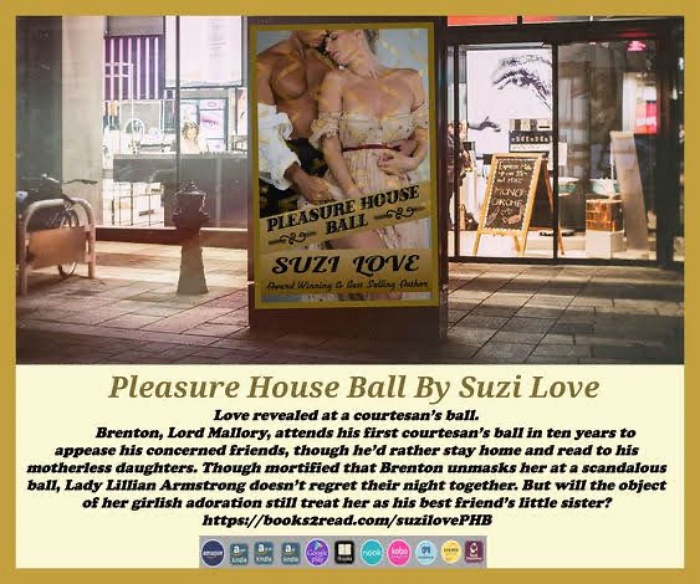
Pleasure House ball Book 3 Irresistible Aristocrats books2read.com/suzilovePHB. Lord Mallory, attends his first courtesan’s ball in ten years to appease his concerned friends, though he’d rather stay home and read to his motherless daughters.


Leaning in, Lord Mallory whispered in Lady Lillian’s ear. “Well, well. I certainly didn’t expect to find you in attendance at a scandalous ball.”
1820 Blackstone House, Twenty miles south of London. Brenton, Earl Mallory, secreted himself behind a life-sized statue of a naked man. Hiding from the two hundred guests spilling through the rooms Lord Browning had opened for the Pleasure House Ball. Clearly he’d suffered a moment of insanity when he’d yielded to his friend’s pleas to accompany him to this ball. ‘For God’s sake, Michael, why are we wasting our time here? I’ve no intention of engaging a mistress and….’
Brent shook his head. ‘Must be imagining things. I know only one person who wears that perfume and she mixes it herself. That woman is a lady and a duke’s daughter and certainly wouldn’t be attending a courtesan’s ball.’
‘Good God! You don’t mean−’
Pleasure House ball Book 3 Irresistible Aristocrats books2read.com/suzilovePHB. Lord Mallory, attends his first courtesan’s ball in ten years to appease his concerned friends, though he’d rather stay home and read to his motherless daughters.


1818 November 6th A Dandy Cock in stays or- A new thing for the ladies.By Isaac Robert Cruikshank A dandy, much burlesqued, stands full-face, his head, which has a bird-like profile, turned to the left; his hair is brushed up at the back behind his hat to resemble the tail-feathers of a cock. He wears puffed-out breeches and top-boots with enormous spurs, and holds an umbrella. Via British Museum, London, UK. britishmuseum.org (PD-Art)