In Jane Austen’s times craftsmen created boxes and containers of precious metals, leather, silks, and decorated them with jewels. Boxes, Cases, Etui, Necessaire and everything else that was used to carry essential items for travel, sewing, medicine, writing, and toiletries. Containers were engraved to make exquisite and expensive items as well as practical carrying cases. books2read.com/suziloveBoxesCases
19th Century Early Woman’s Plain Weave Linen Chemise, Or Shift, American. Shift with scoop neck with drawstring, three-quarter length sleeves with drawstrings and lighter-weight linen ruffles. Lexington, Massachusetts, United States. Probably worn by Abigail Robbins (1759-1850) and Inherited by Ellen A. Stone; Gift to MFA, 1899. via Museum of Fine Arts, Boston, U.S.A. Type worn By the Bridgerton Ladies and Jane Austen.
Chemise Or Shift: Sleeveless, mid-calf length garment of white cotton or muslin was worn next to the skin under stays or corset. Called ‘Shift’ from early Georgian (1700-1750) until Late Georgian (1750-1790) to replace ‘Smock’. By 1800, name replaced by ‘Chemise’.
19th Century Early Type of Linen Chemise, or Shift, Worn By the Bridgerton Ladies and Jane Austen. #Bridgerton #Underclothing #JaneAusten #RegencyFashion https://books2read.com/SuziLoveFashionWomen1815-1819
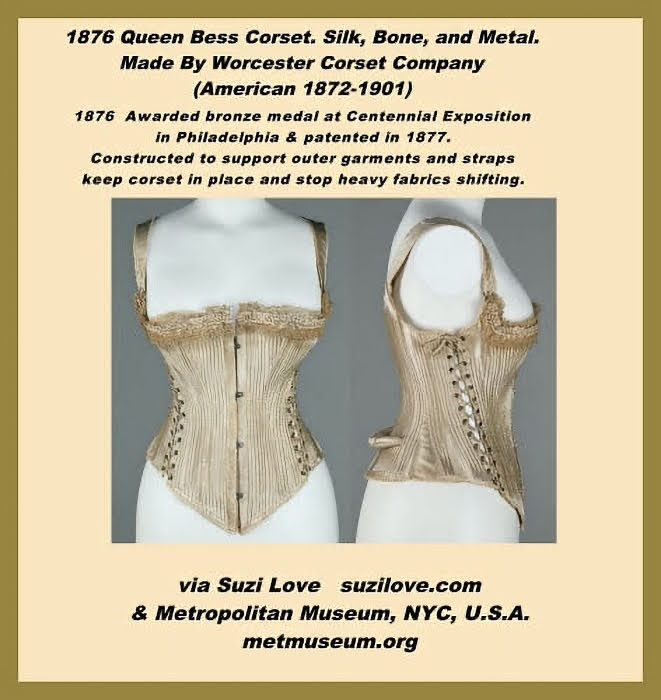
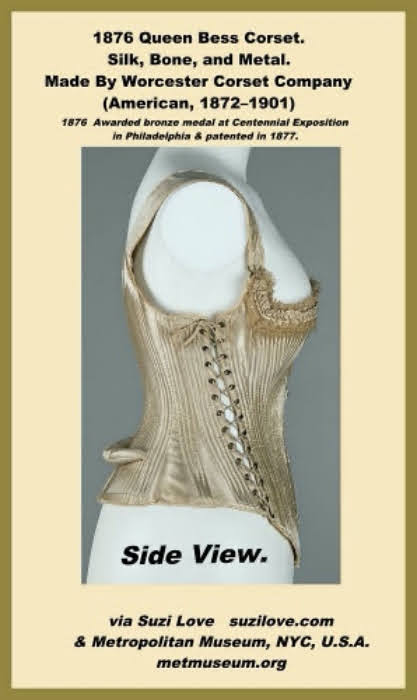
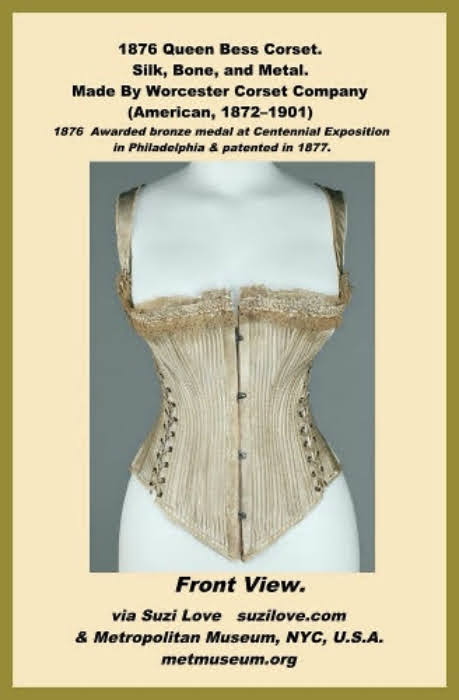
1876 ‘Queen Bess’ Corset By Worcester Company, American. Made of silk, bone, and metal. Named ‘Queen Bess’, this corset was awarded the bronze medal at the Centennial Exposition in Philadelphia in 1876 and was patented in 1877. A well documented piece, it is unique in its design, which has been carefully constructed to support the wearer’s outer garments. The straps would assist in keeping the corset in place and hinder any shifting due to the heavy fabrics, and the bustle roll at back would ease any strain the wearer might experience from the excessive weight of the skirt. Credit Line:Brooklyn Museum Costume Collection at The Metropolitan Museum of Art, Gift of the Brooklyn Museum, 2009; Gift of E. A. Meister, 1950 Accession Number:2009.300.3496a–e
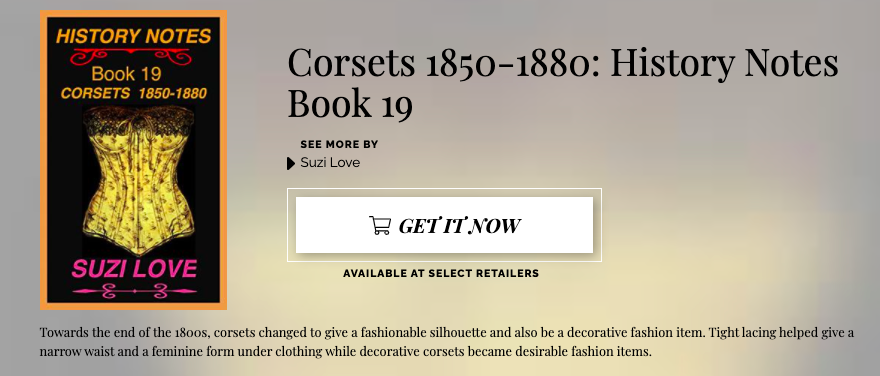
Corsets 1850-1880 History Notes Book 19 Towards the end of the 1800s, corsets changed to give a fashionable silhouette and be a decorative fashion item. Tight lacing helped give a narrow waist and a feminine form under clothing while decorative corsets became desirable fashion items. Victorian corsets for small waists and fashionable silhouettes. Corsets during the Victorian Era, or late 1800s, tightened to give tiny waists and fashionable silhouettes.
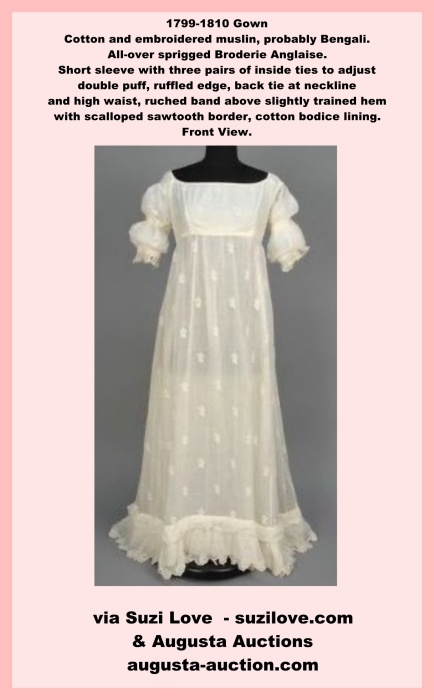
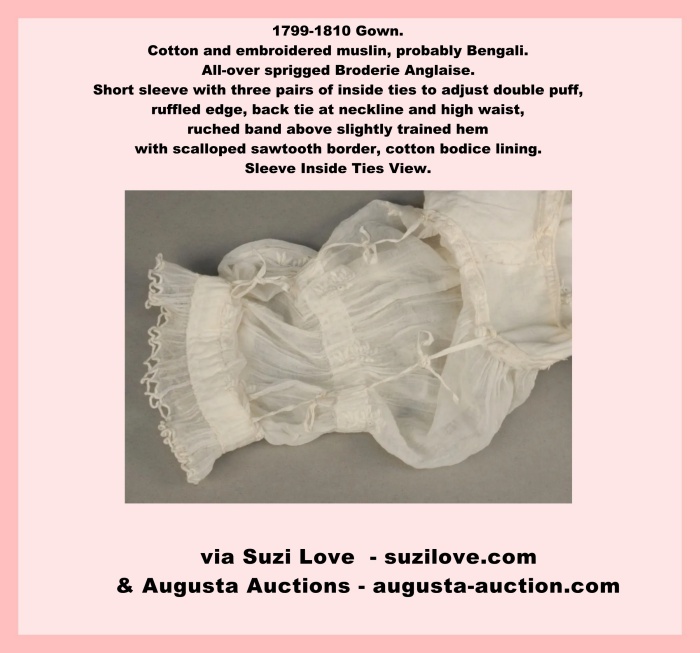
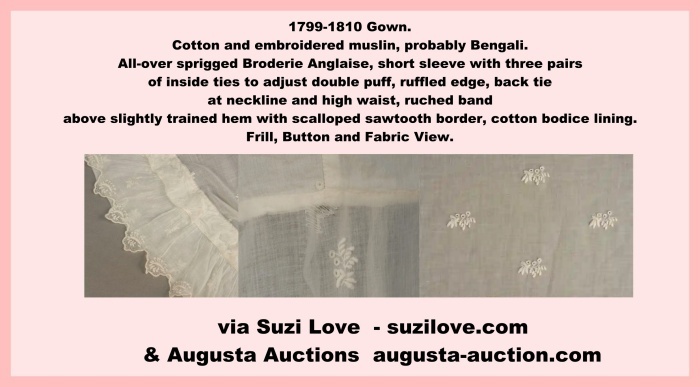
1799-1810 ca. Cotton Muslin Gown, Probably American. White cotton embroidered muslin, probably Bengal, all over sprigged broderie anglaise decoration,short sleeve with three pairs of inside ties to adjust the double-puff, ruffled edge, back tie at neckline and waist, ruched band above the slightly trained hem with scalloped sawtooth border and with cotton bodice lining. via whitakerauction.smugmug.com
These lightweight white cotton dresses were fashionable in Jane Austen’s times, but they were certainly not warm when a lady was out walking or when riding in a carriage. Numerous outer layers could be added for warmth and to brighten and personalize an outfit. These might be an overdress, pelisse or redingote, hat, shawl, gloves, or large fur muff.
The Empire dress which evolved in the late 1790s began as a chemise shift gathered under the breasts and at the neck. Named after the First Empire in France, by 1800 Empire dresses had a very low décolleté, or neckline and a short narrow backed bodice attached to a separate skirt. Skirts started directly under the bust and flowed into the classical relaxed wide styles of Greece and Rome. This style of dress is associated with Jane Austen and her contemporaries as a simple cotton high-waisted dress was worn most days and accessorized according to the importance of the occasion.
1799-1810 ca. Jane Austen Style White Cotton Muslin Dress With Sprigged Broderie Anglaise. #RegencyFashion #JaneAusten #GeorgianFashion books2read.com/SuziLoveFashionWomen1800
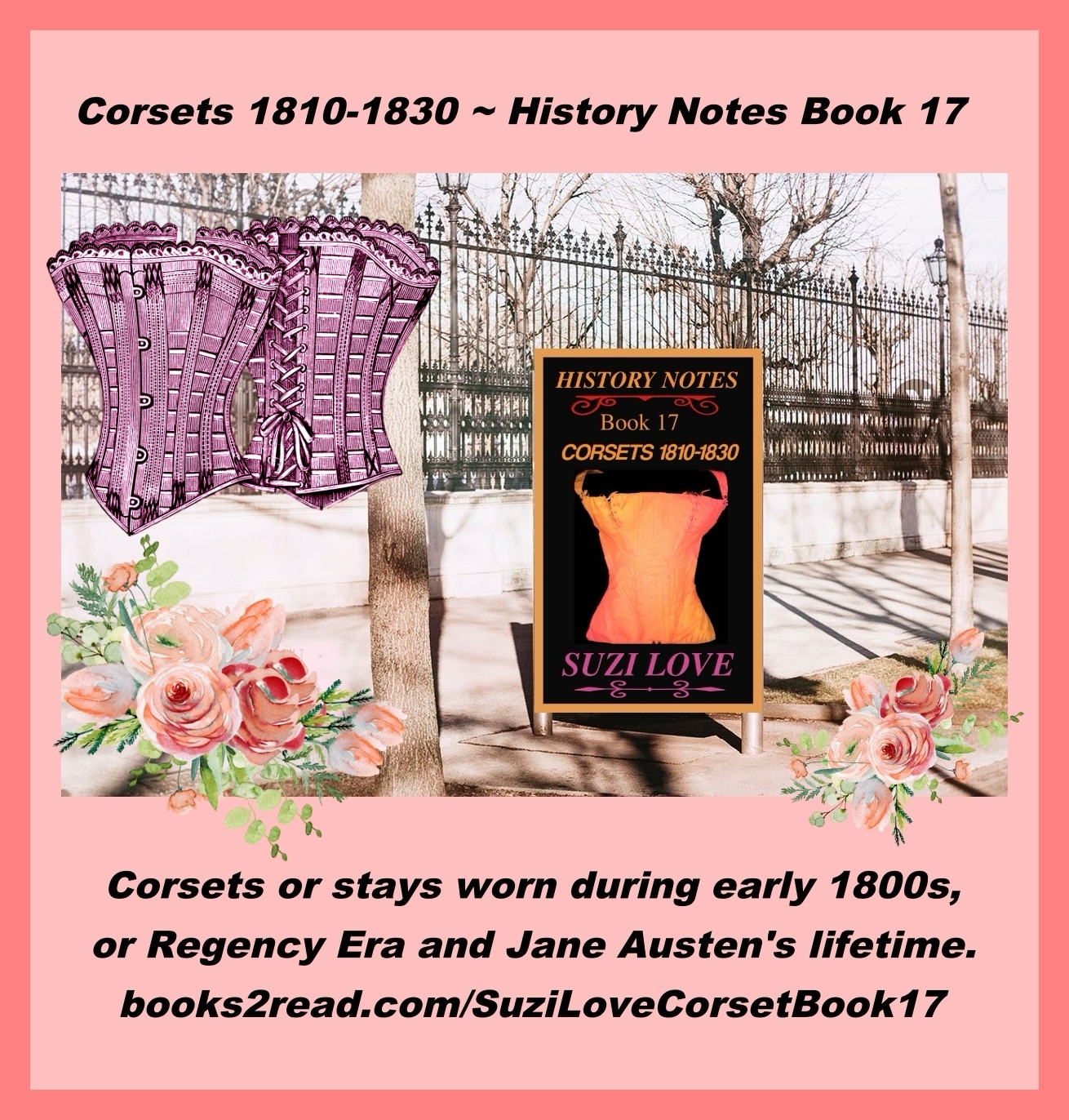
This book shows how corsets changed to fit well under clothing, give maximum support and comfort. Corsets pushed up breasts and showed off the bust line beneath a square-cut and low-cut neckline as in the early 1800s, or Regency years. Jane Austen and her female and friends wore these corsets. Corsets or stays worn during the early 1800s, or Jane Austen’s lifetime. https://books2read.com/SuziLoveCorsetBook17
Are you a Reader or Writer of Regency Era Fashions? Jane Austen and Bridgerton corsets. #corsets #historicalfashion #RegencyFashion #JaneAusten #Bridgerton https://books2read.com/SuziLoveCorsetBook17
What shoes did the Bridgertons and Jane Austen wear? Gray Slippers, American, with long ankle ties.
Typical Regency Era women’s footwear as worn by Jane Austen and her contemporaries and by the Bridgerton family were shoes that had low heels, slightly rounded toes, embellished with a bow and with ribbon ties for the ankles. Shoe styles and shapes were generally very plain but then shoes began to be made in bright colors to match the colorful Empire style, or high-waisted, gowns. Plus, as gowns were lighter and floatier, glimpses could be had of these new pretty shoes. Ribbons, rosettes and other decorative. embellishments allowed ladies to personalize shoes.
shoes_19th Century Early. Flat Slippers, American. Gray silk with long ankle ties. via Metropolitan Museum New York City, U.S.A.shoes_19th Century Early. Flat Slippers, American. Gray silk with long ankle ties. via Metropolitan Museum New York City, U.S.A.shoes_19th Century Early. Flat Slippers, American. Gray silk with long ankle ties. via Metropolitan Museum New York City, U.S.A.HN_25_D2D_fashwomen1801-1804 https://books2read.com/SuziLoveFashionWomen1801-1804
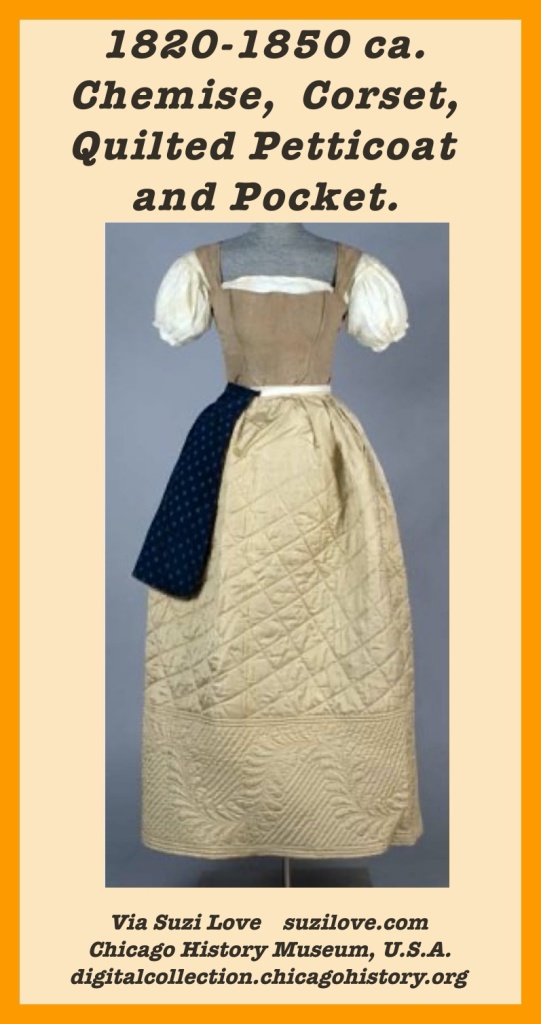
1820-1850 ca. Chemise, Corset, Quilted Petticoat and Pocket. Gift of Mary S. Belden. Corset About 1820-1830 ca. CHS Collection. Pocket About 1820-1840 ca. Chemise About 1839-1850 ca. via Chicago History Museum, U.S.A.
Chemise Or Shift: Sleeveless, mid-calf length garment of white cotton or muslin was worn next to the skin under stays or corset. Called ‘Shift’ from early Georgian (1700-1750) until Late Georgian (1750-1790) to replace ‘Smock’. By 1800, name shift was replaced by ‘Chemise’.
Corset: French term for stays. Structured bust supporting or body shaping foundation garment. Tightened by laces and often with reinforcing e.g. boning, cording and flossing.
From the Curator Victoria and Albert Museum, London: Quilting was a popular form of decoration for a variety of garments including pockets. However, hand-quilting was a time-consuming method of decoration. The increased demand for quilted petticoats, waistcoats and pockets led to the invention of woven quilting.
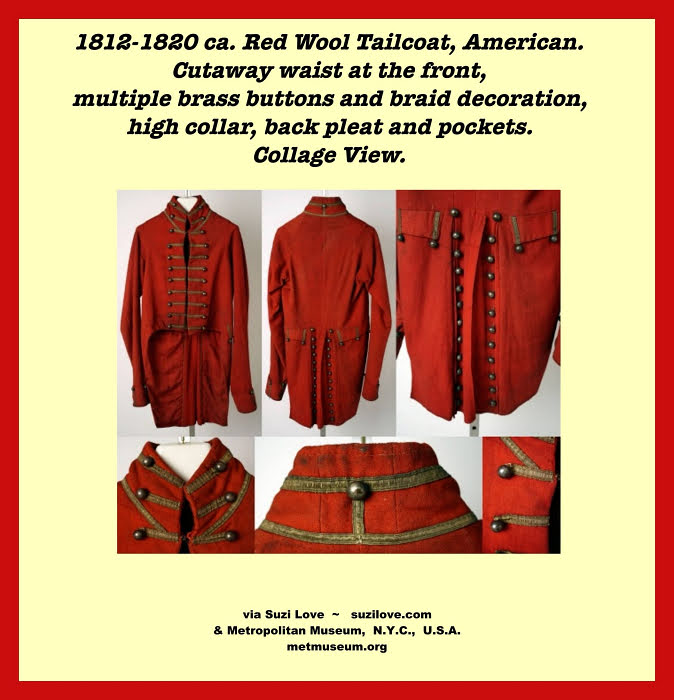
1812-1820 ca. Red Wool Tailcoat, American. Brass buttons everywhere, including on the tails and pockets. via Metropolitan Museum New York City, U.S.A. metmuseum.org
1812-1820 ca. Red Wool Tailcoat, American. Brass buttons everywhere, including on the tails and pockets. via Metropolitan Museum New York City, U.S.A. metmuseum.org1812-1820 ca. Red Wool Tailcoat, American. Brass buttons everywhere, including on the tails and pockets. via Metropolitan Museum New York City, U.S.A. metmuseum.org1812-1820 ca. Red Wool Tailcoat, American. Brass buttons everywhere, including on the tails and pockets. via Metropolitan Museum New York City, U.S.A. metmuseum.org1812-1820 ca. Red Wool Tailcoat, American. Brass buttons everywhere, including on the tails and pockets. via Metropolitan Museum New York City, U.S.A. metmuseum.org1812-1820 ca. Red Wool Tailcoat, American. Brass buttons everywhere, including on the tails and pockets. via Metropolitan Museum New York City, U.S.A. metmuseum.org1812-1820 ca. Red Wool Tailcoat, American. Brass buttons everywhere, including on the tails and pockets. via Metropolitan Museum New York City, U.S.A. metmuseum.org1812-1820 ca. Red Wool Tailcoat, American. Brass buttons everywhere, including on the tails and pockets. via Metropolitan Museum New York City, U.S.A. metmuseum.org https://books2read.com/SuziLoveFashionMen1800-1819