19th Century Mahogany Domestic Medicine Chest as would have been used in Regency England in the lifetime of Jane Austen and the Bridgerton family. via Christie’s Auction Rooms. christies.com
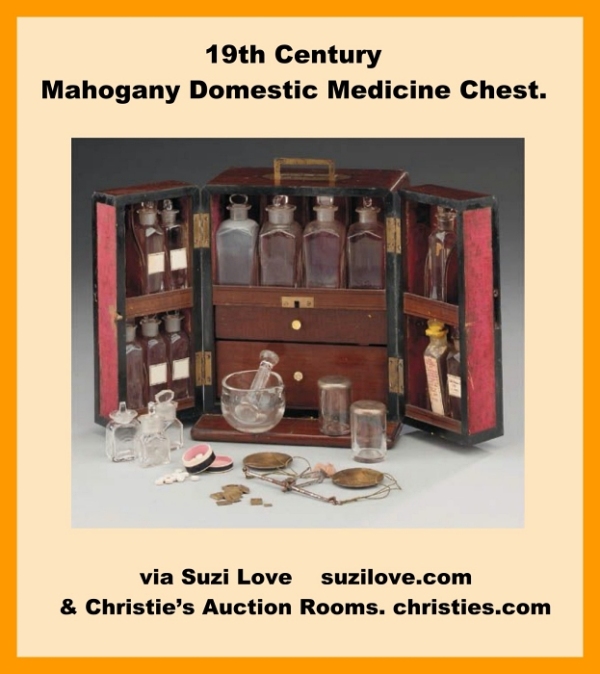


19th Century Mahogany Domestic Medicine Chest as would have been used in Regency England in the lifetime of Jane Austen and the Bridgerton family. via Christie’s Auction Rooms. christies.com
19th Century Silver Chatelaine. Thimble holder, vinaigrette as a trumpet, watch case, scissors and a notebook. via auction.fr
Definition
What did a chatelaine do?
What were chatelaines used for?


19th Century Early Women’s Cotton Caps. Worn as morning caps, night caps, or under other hats. With lappets, hanging ties, or tails, which were also called ‘follow me lads’, or ‘flirtation ribbons’. via Museum of Fine Arts, Boston, U.S.A. mfa.org. via Museum of Fine Arts, Boston, U.S.A. mfa.org
Definition Caps: Worn as morning caps, night caps, or under other hats. Jane Austen and her family and female friends would have worn caps like these, sometimes during the morning at home, to bed to keep their long hair from becoming knotted, or under a bonnet to hold a hairstyle in place.
Caps sometimes had hanging ties, or tails, were also called ‘follow me lads’, or ‘flirtation ribbons’.
Definition Lappets: Two long strips of material, often lace, hanging from top of head down back or over shoulders. Sometimes extensions of a headdress and a requirement for court dress.


19th Century First Half Woman’s Embroidered Cap, French. In the 19th Century, women wore some sort of headwear during the day and the evening. Finely decorated cotton caps were worn during the morning with informal or At-Home, dress and at night with nightwear. These caps had fine embroidery, ruffles, lace edgings on the streamers, embroidered, pointed edges of the ruffles, ties, and streamers, known as ‘follow me lads’ or ‘flirtation ribbons’.
19th Century First Half Woman’s Embroidered Cap, French. Cotton mull with cotton embroidery, linen bobbin lace insertion, silk ribbon, round gathered crown with spoked wheel design in center surrounded by long leafed wreath, outside this a wreath of carnations, same carnations around forehead band and neck band, design embroidered with white linen thread, white taffeta ribbon run through the embroidered net casing and tied in center back. via Museum of Fine Arts, Boston, U.S.A. mfa.org

1810–1850 ca. Corset, American or European. Front lacing, extra wide straps for under a
square neckline dress. via Metropolitan Museum, N.Y.C., U.S.A. metmuseum.org

Surviving stays, or corsets as they became to be called in the nineteenth century, show that both longline and shorter corsets were worn and that they were made of cotton, silk and sateen. A lot of these corsets were front fastening, plus many were laced at both the front and the back so our aristocratic fictional heroines could indeed dress and undress themselves without the assistance of a maid.
Corsets 1810-1830 History Notes Book 17 This book shows how corsets changed to fit well under clothing, give maximum support and comfort. Corsets pushed up breasts and showed off the bust line beneath a square-cut and low-cut neckline as in the early 1800s, or Regency years. Jane Austen and her female and friends wore these corsets. https://books2read.com/SuziLoveCorsetBook17
1810-1850 ca. Bridgerton or Jane Austen Style Front Lacing Corset With Extra Wide Straps, American Or European. #Bridgertons #JaneAusten #RegencyFashion #Corset #RomanticEra https://books2read.com/SuziLoveCorsetBook17 Share on X
1814 Couple In Walking Ensembles, French. Gentleman in a brown tailcoat with a notched collar and back pockets, vest, white breeches tied under his knees, red fob at the waist, white stockings, high white shirt collar, white cravat, top hat and cane. Lady in adorable pink Redingote with capes.


1818-1823 ca. Turban, London, U.K. Silk, silk thread, paper, cotton, wire,and hand-sewn. Cap is gathered and full to mimic the shape of a turban which became popular evening wear around 1820 when ‘exotic’ was fashionable.

Silk, silk thread, paper, cotton, wire and hand-sewn. A full cap of white satin gathered into a headband in imitation of a turban. The crown is inset with white net embroidered in circles with white silk thread. The headband is of white satin with three horizontal tucks and edged with white silk plush. Trimmed on one side with artificial flowers made of wired green paper leaves and white muslin rosebuds. via Victoria and Albert Museum, London, U.K.
Early 19th-century etiquette required a lady’s head to be covered at all times, even with evening dress. A cap such as this one, gathered and full to suggest the shape of a turban, was popular for evening wear about 1820. The Romantic movement created an interest in the dress of non-European countries, particularly North Africa and the Middle East. Decorative motifs and accessories were borrowed to make current fashions more ‘exotic’. Although knowledge of the proper proportions and construction of a turban was not available to British milliners, the overall shape was approximated for the most fashionable headwear.
1818-1823 ca. Silk Turban As Worn In Jane austen and Bridgerton Times. #Bridgerton #JaneAusten #RegencyEra #HistoricalFashion #Hats https://books2read.com/SuziLoveFashionWomen1815-1819 Share on X1810-1820 ca. Pantaloons, Probably Military, British. The type of pants worn by men in Jane Austen’s times when wars were being fought all over the world, especially in Europe. Machine-knitted white cotton decorated with cream silk braid on sides and fronts as seen on Hussar uniforms. Cut to fit the leg and button bottom at waist with three buttons. Front fall buttons over five buttoned fly, two horizontal pockets at front below waistband and fob pocket in waistband. Four metal buttons for braces, two front and two back. Cotton ‘puff’ centre back waist and two linen tapes for waist adjustment. via Victoria and Albert Museum, London, UK. collections.vam.ac.uk.
Pair of men’s pantaloon trousers made of machine-knitted white cotton and decorated with cream silk braid applied down the sides and on the fronts. This imitates the hussar uniforms of the period and appeared on fashionable men’s dress. The pantaloons are cut to fit the leg and button at the bottom with three buttons. The pantaloons fasten at the front with front falls buttoning over a five buttoned fly. There are two horizontal pockets at the front below the waistband and a fob pocket in the waistband. There are four metal buttons for braces, two at the front and two at the back. These probably are original. There is a cotton ‘puff’ at the centre back waist and two linen tapes for waist adjustment.
Pantaloons also brought the glamour of military uniform into men’s fashionable dress, especially when teamed with Hessian boots. Uniforms worn by the various armies during the Napoleonic Wars (1793-1815) were often very colourful and lavishly adorned with braid and tassels. It is hardly surprising that some of these attractive trimmings should have infiltrated fashion, particularly when nationalistic feelings ran high. Civilian pantaloons were often ornamented with military-style braid that was applied in a vertical band of topside Russia braiding. They were not, however, generally decorated on the front, which suggests that this pair was for military use. The silk braid is applied in the form of an Austrian knot, which was a popular motif on pantaloons of the light cavalry such as the hussars and light dragoons.


1800-1820 ca. Small Pieces Of Drawing Room Furniture as would have been used in houses where Jane Austen lived. Side tables, book tables, chest and foot stool. Collage by Suzi Love.

1815 May. Walking Dress, or Pelisse, or Redingote, English. Purple walking dress with wide collar, high white lace neck frill, and white trim down the vertical opening, white reticule, and a high white plumed hat. Fashion Plate via Rudolph Ackermann’s ‘The Repository of Arts’. Google Books (PD-180) suzilove.com Fashion Plate via Rudolph Ackermann’s ‘The Repository of Arts’.
Definition: Walking Dress Or Pelisse Or Redingote Woman’s long, fitted coat often worn open in front to show off the dress underneath. Walking Dress Or Pelisse are the terms used in English fashion plates, while Redingote is seen in European fashion plates, especially the French one, Journal des Dames et des Modes, or Costume Parisien.
