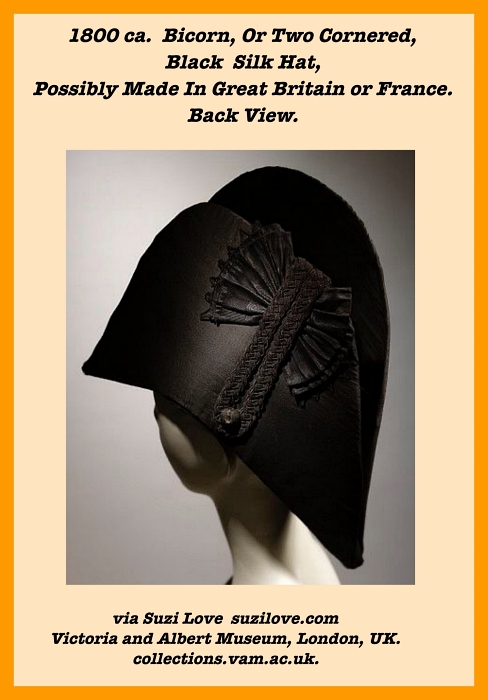
1800 ca. Bicorn, Or Two Cornered, Black Silk Hat, Possibly Made In Great Britain or France. via Victoria and Albert Museum, London, UK. collections.vam.ac.uk. The type of hats worn by the men in Jane Austen’s family around the turn of the century.
Definition: Bicorn Or Bicorne: Two cornered, or pointed, hats often worn by military men because the rain would drain off either side of the hat and away from the body. They could also be easily flattened to carry under arm.
1800 ca. Bicorn, Or Two Cornered, Black Silk Hat, Possibly Made In Great Britain or France. via Victoria and Albert Museum, London, UK. collections.vam.ac.uk.1800 ca. Bicorn, Or Two Cornered, Black Silk Hat, Possibly Made In Great Britain or France. via Victoria and Albert Museum, London, UK. collections.vam.ac.uk.23_d2d_fashionmen1800-1819 https://books2read.com/SuziLoveFashionMen1800-1819
1810 ca. Muslin, or Cotton, Bodiced Petticoat With Sleeves, British.The sort of petticoat Jane Austen wore beneath her dresses, for both modesty and warmth. via Killerton House. National Trust, U.K. nationaltrustcollections.org.uk
In Jane Austen’s years of the early nineteenth century, women often wore light-weight dresses under which was worn a range of underclothing to stop gowns appearing transparent and sticking to a lady’s body. To preserve modesty, underclothing included a chemise next to the skin, then a corset, and then petticoats to give shape to a dress and to keep it away from her body.
The Viscount’s Pleasure House. Irresistible Aristocrats Book 1 By Suzi Love. Three naive country ladies coerce their way into London’s most infamous brothel and the last Sultan’s gala. Disenchanted Viscount tutoring three Regency Ladies. What could go wrong?
The Viscount’s Pleasure House allows Justin, the most notorious Viscount in London, to fund his search for his missing mother and sisters. But after three years catering to the sordid whims of the perpetually bored Upper Ten Thousand in early Victorian times, the Virile Viscount announces his retirement.
Justin plans to sell his exotically themed brothel and cease all Arabian Nights held on his estate, a desperate attempt to cleanse his blackened soul and perhaps revive his deadened sexual interest. So when Lady Chrissie Wellsby begs Justin to tutor her two friends in the amorous arts in exchange for information about his family, Justin is torn. For though he’ll do anything to discover the whereabouts of his family, including teaching three naive ladies how to act like well-schooled courtesans, he loathes being forced into this last performance as a sex God served by his harem.
Having Chrissie willingly act as his sex slave stirs the world-weary viscount into the wildest performance ever given at the Sultan’s tent, but does little to convince Chrissie that he has fallen head over heels in love with her and put his rakish ways behind him. Justin enjoys a wonderful reunion with his family but feels cheated of his chance at love until Chrissie’s friends encourage her to trust the newly reformed viscount.
Chrissie organizes one final gala at the Pleasure House, an erotic night of lovemaking for two to prove her love for Justin and show him she longs to be his wife. https://books2read.com/suziloveTVPH The Viscount’s Pleasure House. Irresistible Aristocrats Book 1 By Suzi Love.
Want a HOT historical romance? Disenchanted Viscount tutoring three naive ladies in seduction. What could go wrong? #RegencyRomance #EroticRomance #HistoricalMystery https://books2read.com/suziloveTVPH
In Jane Austen’s times craftsmen created boxes and containers of precious metals, leather, silks, and decorated them with jewels. Boxes, Cases, Etui, Necessaire and everything else that was used to carry essential items for travel, sewing, medicine, writing, and toiletries. Containers were engraved to make exquisite and expensive items as well as practical carrying cases. books2read.com/suziloveBoxesCases
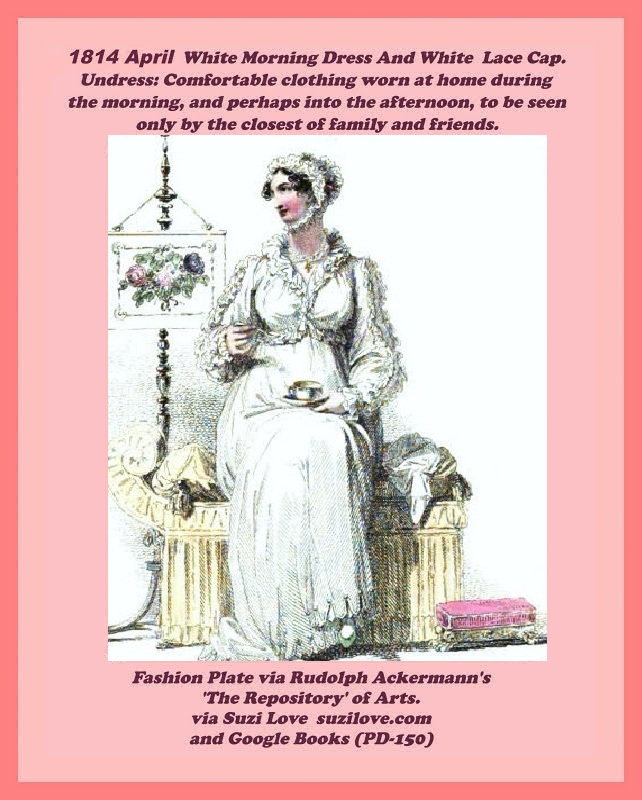
1814 April Morning Dress and Lace Cap. ‘”A petticoat and bodice of fine jaconet muslin, finished round the bottom in vandykes and small buttons. The Rochelle spencer composed of the same material, appliqued with footing lace down the sleeve, and trimmed at each edge with a narrow but full border of muslin. Double fan frill of muslin round the neck, very full, continuing round the bottom of the waist, where it is gathered on a beading of needle-work. Bourdeaux mob cap, composed of lace, with treble full borders, narrowed under the chin. A small flower placed backward, on the left side. Hair much divided in front, and in full waved curls on each side. Necklace of twisted gold and pearl, with pendant cross in the center. Spring Green kid slippers and gloves of the same.” “This dress is from Mrs. Gill, of Cork-street, to whose taste and invention this work as well as the world of fashion, are under continued obligations.” Fashion Plate via Rudolph Ackermann’s ‘The Repository of Arts’. https://books2read.com/SuziLoveFashion1810-1814
Definition Van Dyke Points: V-shaped lace and trims named after a 17th Century Flemish painter, Sir Anthony Van Dyck, known for painting V-shaped lace collars and scalloped edges on sitters.
Definition Jaconet: Cotton fabric of medium thickness made in England, lighter than shirting and heavier than mull.
Definition Muslin: Thin fabric said to take its name from Mosul or Moosul, a large town in Turkish Asia where it was first made.
1814 April Morning Dress and Lace Cap. Petticoat and bodice of fine lace jaconet muslin finished with vandykes and small buttons. Fashion Plate via Rudolph Ackermann’s ‘The Repository of Arts’.HN_27_D2D_fashwomen1810-1814
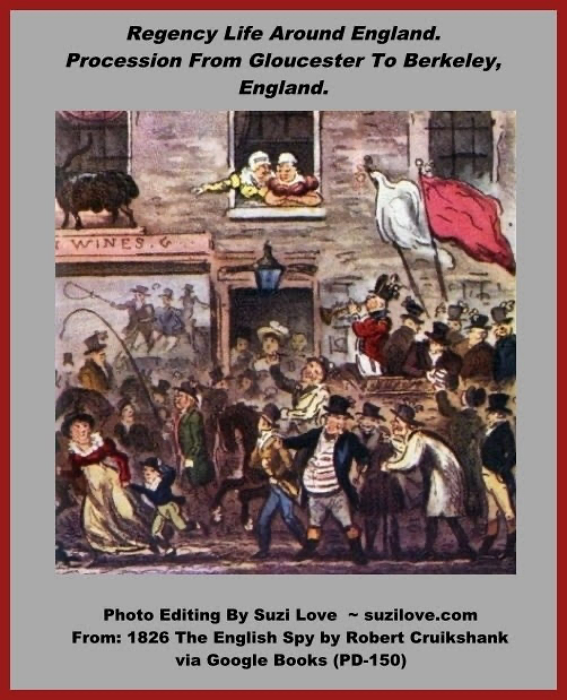
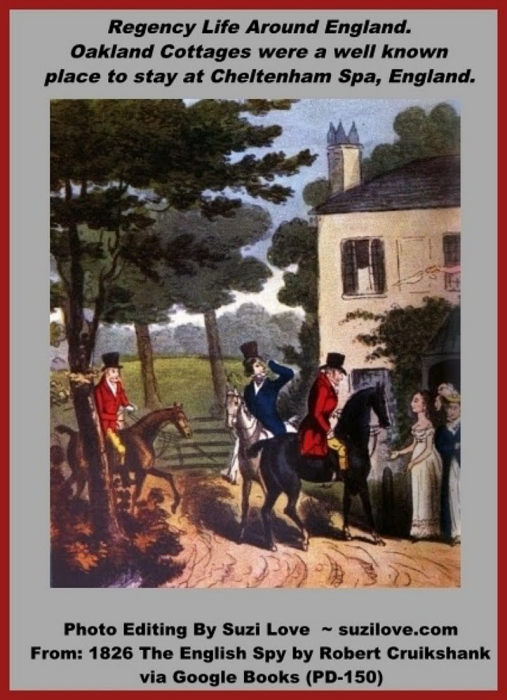
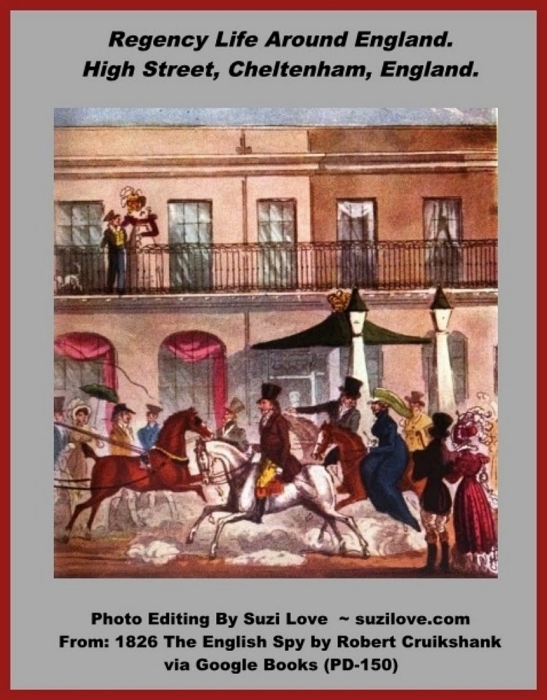
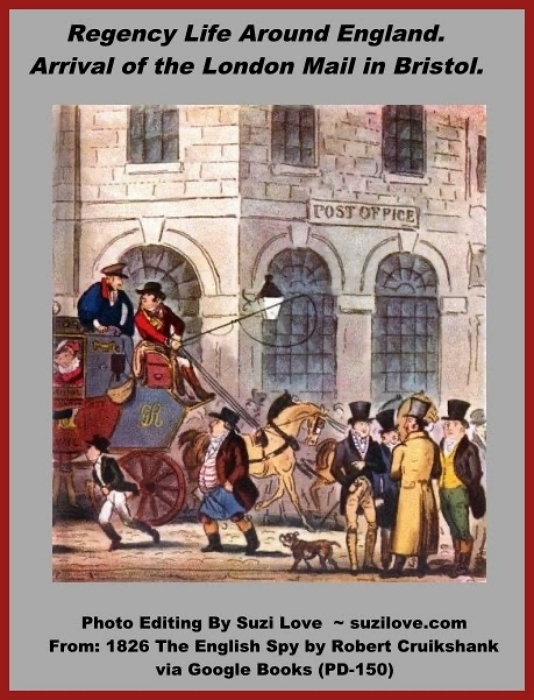
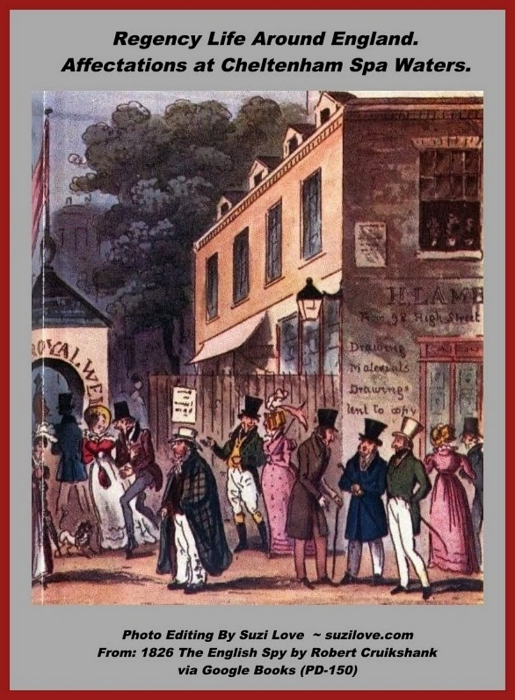
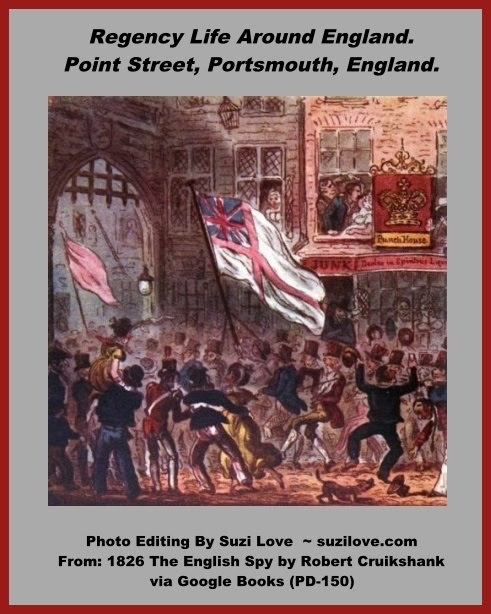
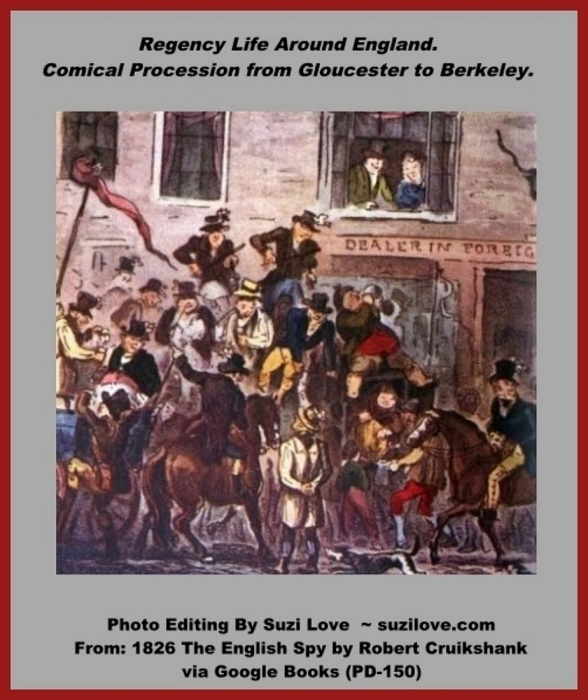
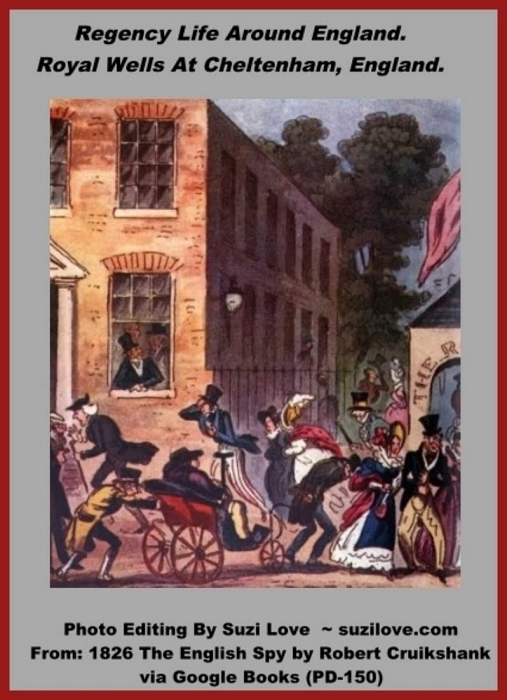
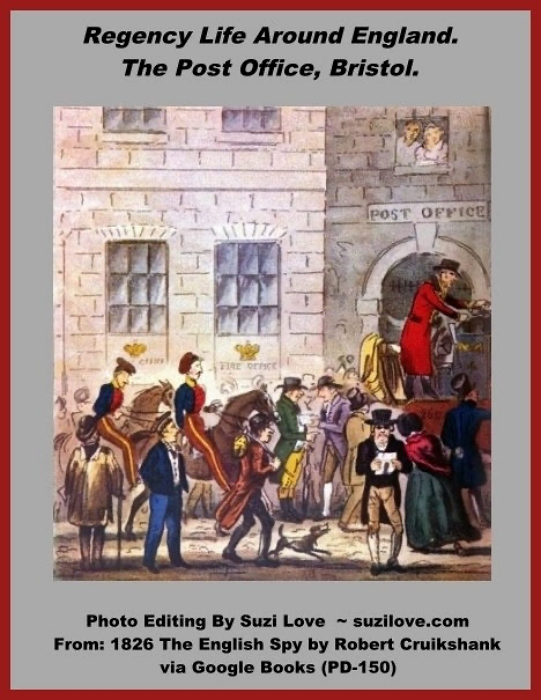
1826 Sights the Bridgertons and Jane Austen Saw Around Regency England. The sights that the families and friends would have seen around while traveling around England. via 1826 The English Spy By Robert Cruikshank via Google Books (PD-150)
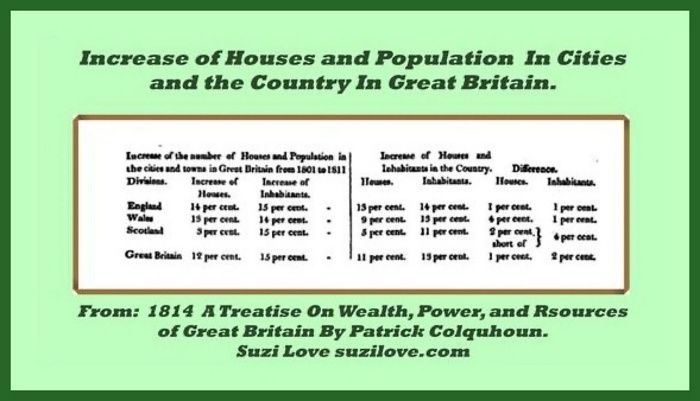
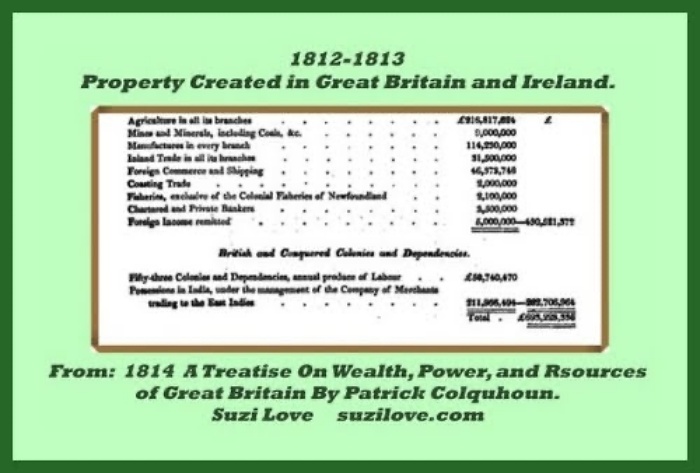
1814 Statistics On Classes, Properties and Population In Great Britain. From: 1814 A Treatise On Wealth and Power. By Patrick Colquhoun. These are the statistics for England in Jane Austen’s time, or the early 1800s, or Regency Era.
1814 Statistics On Classes, Properties, Population In Jane Austen’s Great Britain. #JaneAusten #BritishHistory #RegencyEra #Statistics books2read.com/suziloveROver
1802 ‘The Cow Pock or The Wonderful Effects Of The New Inoculation’. By James Gillray. Caricature depicting the early controversy surrounding Dr. Edward Jenner’s cowpox vaccination program begun in 1796 in England. Recipients of the vaccine developing cow-like appendages. Via British Museum, London, UK. britishmuseum.org (PD-Art)
Cartoon: 1802 ‘The Cow Pock or The Wonderful Effects Of The New Inoculation’ By James Gillray. #Cartoon #RegencyEra #medical https://books2read.com/suziloveROver
Michael Brandon travels to introduce the woman he loves to family but is shocked when his missing brother, presumed dead for years, arrives at the country estate of the Duke Of Sherwyn where several people are stranded due to a severe snow storm. https://books2read.com/suziloveDS December Scandal, Book 3, Scandalous Siblings.
1844 Martin House, England.
Michael Brandon strolled after Cayle St. Martin, the Duke of Sherwyn, when the duke strode to the hallway to greet the latest group of travelers. They’d be, like him, grateful to accept the duke’s hospitality because they’d all become stranded after heavy snowfalls had led to rapidly rising water levels and an impassable local bridge.
Michael and his party had been the first to beg assistance from Sherwyn this afternoon, as he’d known that Sherwyn had left London a week earlier and would already be in residence at his country home. There had been a flurry of social events in London over the past two weeks before the Ton left the city and retreated to their country estates to wait out the colder months. Though this extreme weather had caught everyone by surprise.
Michael would feel guilty for landing, unannounced, on the St. Martin’s doorstep, with Melissa and her daughter and their retinue in tow, except that he knew he was providing Becca and her sisters with the drama and excitement that they thrived on. The Jamisons had proved their resourcefulness when Becca and her siblings, with help from Cayle and Richard St. Martin, had tracked down a stock-investing madman or, as it had turned out to be, a madwoman, and handed her over to Scotland Yard. Becca, and the other ladies, appeared delighted to have new people and conversations to keep them entertained while snowstorms kept them all housebound.
Love family saga’s in Historical Romance? Michael’s missing brother appears at Duke of Sherwyn’s home during snowstorm. #HistoricalRomance #FamilySaga #Mystery https://books2read.com/suziloveDS
Fashion Women 1805-1809 History Notes Book 26 What did Jane Austen and friends wear? https://books2read.com/SuziLoveFashionWomen1805-1809
1808 Fashionable English Couple, Dressed As In Jane Austen’s times. Lady in a white dress with pointed hem decorations, fitted white hat tied under her chin with yellow ribbon, yellow shawl and pink slippers. Gentleman in formal dress of blue tailcoat, black knee breeches, white stockings, black shoes, black bicorn hat, curly hair style and sideburns and a sword. Interestingly, this is English style fashions from a French magazine. Fashion Plate via Journal des Dames et des Modes, or Costume Parisien.
Fashion Women 1805-1809 History Notes Book 26 What did Jane Austen and friends wear? https://books2read.com/SuziLoveFashionWomen1805-1809