I'm an Australian author of contemporary and historical romances, plus history non-fiction.
My books range from sexy to erotic, late 1700s to the mid 1800s, and with a dash of Australia thrown into the mix. My heroes and heroines challenge tradition and my stories often expose the seamier levels of life.
I now live in a sunny part of Australia after spending many years in developing countries in the South Pacific. My greatest loves are traveling, anywhere and everywhere, meeting crazy characters, and visiting the Australian outback.
I hope my books bring history alive and you have fun adventuring with my roguish heroes and feisty heroines.
Christmas: 24th December Or Christmas Eve. The evening leading up to Christmas Day is filled with excitement, last-minute preparations, and religious services. In many cultures, especially European countries, gifts are exchanged on Christmas Eve, while in other places, this happens on Christmas morning. http://books2read.com/suziloveHOCP.
The Star of Bethlehem, or Christmas Star appears in nativity story of Gospel of Matthew where wise men from the East, or Magi, follow the star and travel to Jerusalem. The Three Wise Men brought gold, frankincense and myrrh to the newborn king. Myrrh being commonly used as an anointing oil, frankincense as a perfume, and gold as a valuable.
Three Kings came riding from far away,
Melchior and Gaspar and Baltasar;
Three Wise Men out of the East were they,
And they travelled by night and they slept by day,
For their guide was a beautiful, wonderful star.
The Three Kings by Henry Wadsworth Longfellow
Gold, Frankincense and Myrrh were the three presents brought by the Wise Men to the Infant Christ, lying in the manger stall, at Bethlehem. Gold to Christ means that all the affluence of the world surrendered to Him and Gold paid the way for Joseph and Mary and the divine fugitive into Egypt. The gold for Christ, the silver for Christ, the jewels for Christ. The bright, round, beautiful jewel of a world set like a solitaire on the bosom of Christ. The wise men shook myrrh out of their sacks and the cattle snuffed at it but didn’t eat it because it was bitter. This pungent gum resin of Abyssinia was brought to the feet of Christ to show bitter betrayal, persecution, days of suffering and bitter nights. Myrrh was put into His cup when He was dying and put under His head in the wilderness and Myrrh was used on His from the cattle-pen in Bethlehem to the mausoleum. Frankincense means worship and was brought to temples, sprinkled over the living coals, and when they were ready to worship, the cover was lifted and perfumed smoke arose and filled the places of worship and altars.
In modern times, gifts are given on December 25th, or Christmas Day, in most countries but in others it is December 6th, or Saint Nicholas Day, and January 6th, or Epiphany. European countries generally follow the custom of giving each other presents on Christmas Eve.
Leaning in, Lord Mallory whispered in Lady Lillian’s ear. “Well, well. I certainly didn’t expect to find you in attendance at a scandalous ball.”
1820 Blackstone House, Twenty miles south of London. Brenton, Earl Mallory, secreted himself behind a life-sized statue of a naked man. Hiding from the two hundred guests spilling through the rooms Lord Browning had opened for the Pleasure House Ball. Clearly he’d suffered a moment of insanity when he’d yielded to his friend’s pleas to accompany him to this ball. ‘For God’s sake, Michael, why are we wasting our time here? I’ve no intention of engaging a mistress and….’
Brent shook his head. ‘Must be imagining things. I know only one person who wears that perfume and she mixes it herself. That woman is a lady and a duke’s daughter and certainly wouldn’t be attending a courtesan’s ball.’
‘Good God! You don’t mean−’
Pleasure House ball Book 3 Irresistible Aristocrats books2read.com/suzilovePHB. Lord Mallory, attends his first courtesan’s ball in ten years to appease his concerned friends, though he’d rather stay home and read to his motherless daughters.
Music history from the 17th, 18th, and 19th Centuries. Pianos, pianofortes, harps, viols, violins played during Jane Austen’s times. Musical Instruments were so important in most of the more affluent households in history that large industries grew all around the world to manufacture instruments, musical accessories, and to print sheet music. Musical instruction and encouragement could be found everywhere and both young ladies and gentlemen were encouraged to have musical appreciation. And of course, playing music was on the list of social requirements for all young ladies desirous of becoming a wife and homemaker.
London became Europe’s leading centre for the manufacture of scientific instruments and this led to the manufacture of more musical instruments as well as factories developed and rail transport helped the faster distribution of goods to regional areas. One of the first places that music was used to tell stories and to share enjoyment was in Christmas music. Because music was such an integral part of households, music was always a feature in Magazines. There were advertisements everywhere for musical instruments for sale, for sheet music, and for music lessons. And of course, of most interest to the ladies were the hundreds of fashion plates included in magazines where people were depicted with their musical instruments.
In 1853, English hymn writer John Mason Neale wrote the “Wenceslas” lyric, in collaboration with his music editor Thomas Helmore, and the carol first appeared in Carols for Christmas-Tide, published by Novello & Co.
Good King Wenceslas is a popular Christmas carol that tells a story of a King braving harsh winter weather to give alms to a poor peasant on the Feast of Stephen on December 26th. His page nearly gave up the struggle against the cold weather but continued by following the king’s footprints through the deep snow. The legend is based on the life of the historical Saint Wenceslaus I, Duke of Bohemia (907-935).
In 1853, English hymn writer John Mason Neale wrote the “Wenceslas” lyric, in collaboration with his music editor Thomas Helmore, and the carol first appeared in Carols for Christmas-Tide, published by Novello & Co.
Looking for a gift for a fan of the Bridgertons and Jane Austen? What did men wear in the early 1800s? Suits, hats, shoes, underclothing, military and bedroom fashions. #christmas #holidays #Bridgerton #RegencyFashion #JaneAusten #BritishHistory
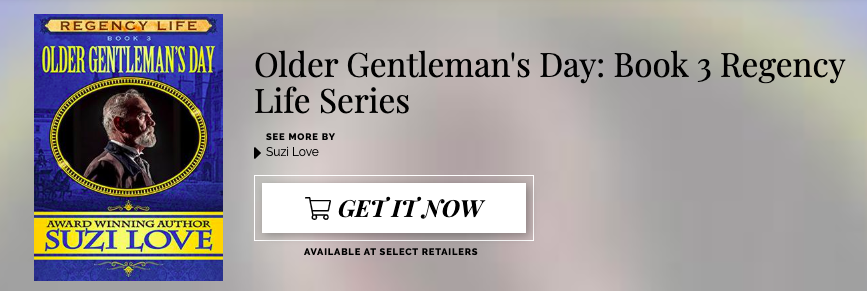
Writing Regency Era Fiction Or Nonfiction? Need more information on Older Gentleman’s Day in early 1800s, or Bridgerton’s and Jane Austen’s Regency Era. A lighthearted overview of an older gentleman’s clothing, social life, and responsibilities in the early 1800s. Take a look at where an older man went, what he wore, and how he managed the family’s finances and his estates. Older Gentleman’s Day Regency Life Series Book 3 books2read.com/suziloveOGD
The origin of Santa Claus begins in the 3rd or 4th century with Saint Nicholas, Bishop of Myra, an area in present day Turkey. By all accounts St. Nicholas was a generous man, particularly devoted to children.Thousands of churches across Europe were dedicated to him and some time around the 12th century an official church holiday was created in his honor. The Feast of St. Nicholas was celebrated December 6 and the day was marked by gift-giving and charity.
After the Reformation, European followers of St. Nicholas dwindled, but the legend was kept alive in Holland where the Dutch spelling of his name Sint Nikolaas was eventually transformed to Sinterklaas, and then Santa Claus. After his death around 340 A.D., he was buried in Myra, but in 1087 Italian sailors purportedly stole his remains and removed them to Bari, Italy, greatly increasing St. Nicholas’ popularity throughout Europe. His kindness and reputation for generosity gave rise to claims he that he could perform miracles and devotion to him increased. St. Nicholas became the patron saint of Russia, where he was known by his red cape, flowing white beard, and bishop’s mitre.
In Greece, he is the patron saint of sailors. In France, the patron of lawyers. In Belgium, the patron of children and travelers. Thousands of churches across Europe were dedicated to him and some time around the 12th century an official church holiday was created in his honor. The Feast of St. Nicholas was celebrated December 6 and the day was marked by gift-giving and charity.
After the Reformation, European followers of St. Nicholas dwindled, but the legend was kept alive in Holland where the Dutch spelling of his name Sint Nikolaas was eventually transformed to Sinterklaas, and then Santa Claus. Dutch children would leave their wooden shoes by the fireplace, and Sinterklaas would reward good children. hence Santa Claus bringing gifts to children who have been good.
Santa Claus The origin of Santa Claus begins in the 4th century with Saint Nicholas, Bishop of Myra, an area in present day Turkey. By all accounts St. Nicholas was a generous man, particularly devoted to children. In the Western world, where Christmas is characterized by the exchange of gifts among friends and family members, some of the gifts are attributed to a character called Santa Claus. He is also known as Father Christmas, Saint Nicholas, St. Nikolaus, Sinterklaas, Kris Kringle, Joulupukki, Weihnachtsmann, Saint Basil and Father Frost.
In the 4th century, Saint Nicholas, Bishop of Myra, Turkey, was a kind and generous man who was particularly devoted to children. His kindness and reputation for generosity gave rise to claims he that he could perform miracles and devotion to him increased. Thousands of churches across Europe were dedicated to him and some time around the 12th century an official church holiday was created in his honor. The Feast of St. Nicholas was celebrated December 6 and the day was marked by gift-giving and charity.
Father Christmas, who predates Santa Claus, was first recorded in the 15th century and then associated with holiday merrymaking and drunkenness. In Victorian Britain, his image was remade to match that of Santa and France’s Père Noël (Papa Noël) evolved the same way and eventually began using the same Santa image.
Today’s version of Santa Claus was created by the German-American cartoonist Thomas Nast (1840-1902), who drew a new image of the character annually, beginning in 1863. By the 1880s, Nast’s Santa had become the one now know and in the 1920s, this image was used in most advertising. But it was the early to mid Coca Cola advertising that cemented the idea of Santa Claus as a jolly man with a white beard and wearing a red suit. He was portrayed as drinking a coke and smiling happily. Many famous artists started doing yearly illustrations of Santa Claus that were used for magazine covers and Christmas postcards.
The word ‘carol’ comes from the old French ‘carole’ for a song written and played as a courtly dancing song. Carols then took on a more popular form, telling stories and celebrating religious themes for all seasons until the late 19th century when they became associated with Christmas.
Carols took the place of Psalms in all churches on Christmas Day and, as the whole congregation could join in, were greeted with huge approval. Carols were passed on orally from place to place, often with different words or tunes. The published carols included songs still popular today, including The First Noël, I Saw Three Ships, and God Rest Ye Merry Gentlemen. This collection was followed by compilations of carols from other scholars such as William Sandy’s works in 1833 and 1852.