I'm an Australian author of contemporary and historical romances, plus history non-fiction.
My books range from sexy to erotic, late 1700s to the mid 1800s, and with a dash of Australia thrown into the mix. My heroes and heroines challenge tradition and my stories often expose the seamier levels of life.
I now live in a sunny part of Australia after spending many years in developing countries in the South Pacific. My greatest loves are traveling, anywhere and everywhere, meeting crazy characters, and visiting the Australian outback.
I hope my books bring history alive and you have fun adventuring with my roguish heroes and feisty heroines.
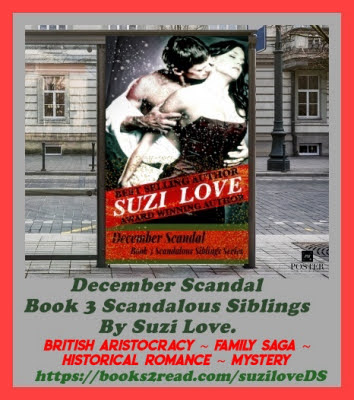
Michael Brandon travels to introduce the woman he loves to family but is shocked when his missing brother arrives. Four years ago, Melissa called herself a widow to protect her daughter. When her past lover returns from the dead, she’s forced to reveals the truth to him, and to her new love. Will the brothers forgive her deceit? https://books2read.com/suziloveDS
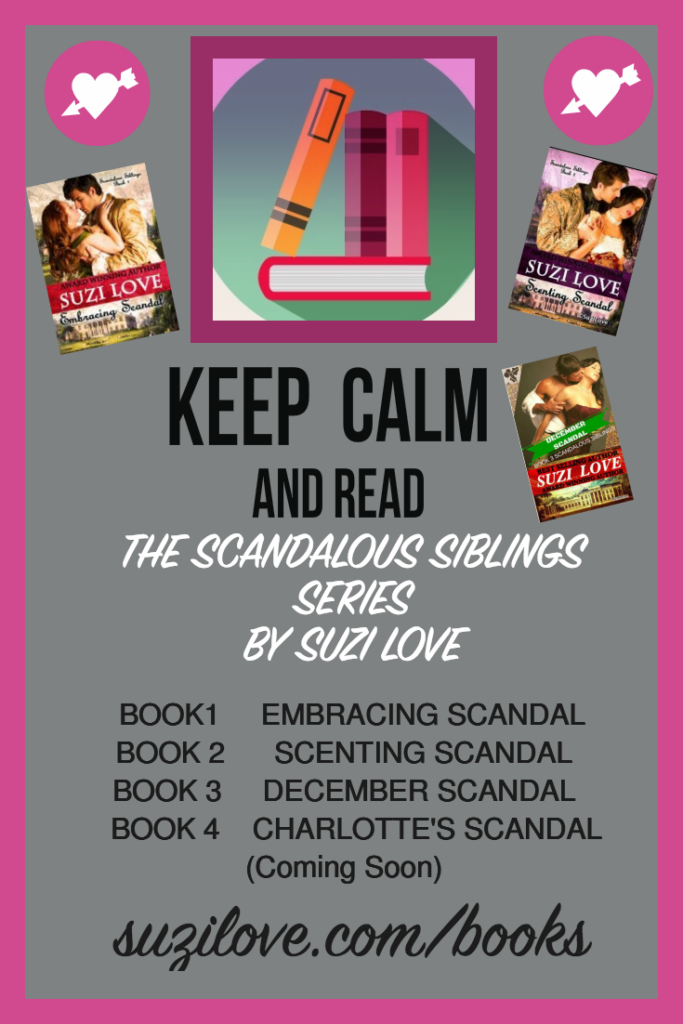
Keep Calm and Read my Scandalous Siblings Series Books 1-3. The scientifically gifted Jamison siblings beg assistance from the St. Martin clan to battle a greedy railway investment syndicate. https://books2read.com/suziloveES
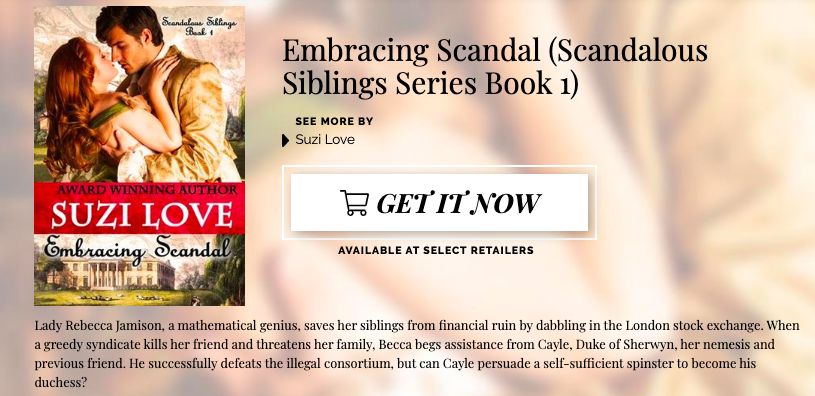
Embracing Scandal By Suzi Love Book 1 Scandalous Siblings. Lady Rebecca Jamison saves her family from financial ruin by investing in railways, but when a greedy syndicate murders her friend, Becca is forced to beg assistance from Cayle St. Martin, the new Duke of Sherwyn. https://books2read.com/suziloveES
Scenting Scandal Book 2 Scandalous Siblings Series. Lady Laura Jamison uses her extraordinary olfactory senses to sniff out her perfect match, but after she evades an assassin’s bullets, twice, she is forced to accept the protection of their family friend, and her nemesis, Richard St. Martin, the Earl of Winchester. https://books2read.com/suziloveSS
The Jamisons join the St. Martins at the duke’s country estate but a December snowstorm doubles guest numbers. #Holidays #FamilySaga #HistoricalRomance https://books2read.com/suziloveDS
ES_ Embracing Scandal Book 1 Scandalous Siblings Series D2D_ES_ https://books2read.com/suziloveES
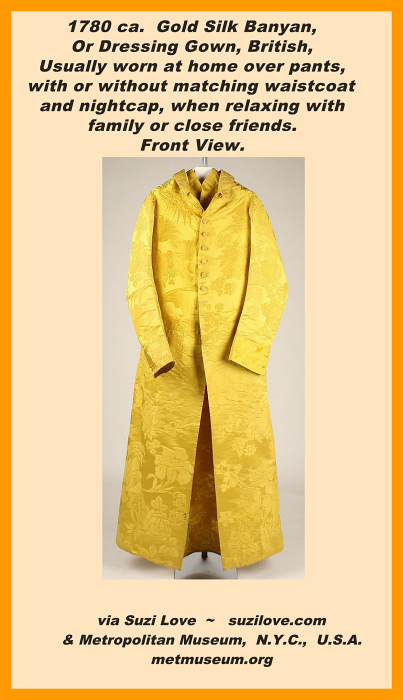
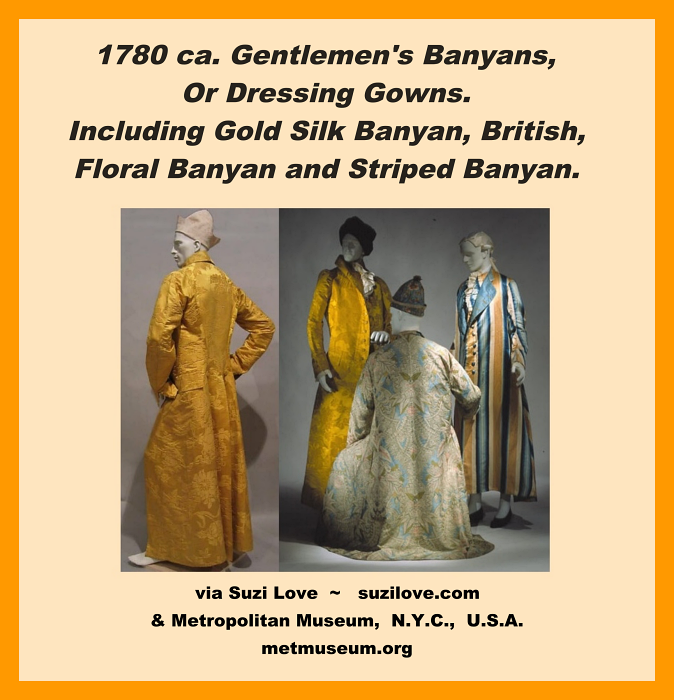
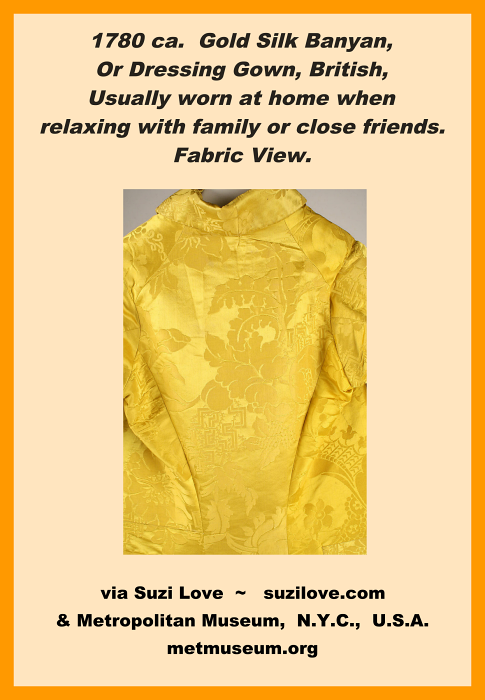
1780 ca. Gold Silk Banyan, British. For at-home wear, a gentleman had a dressing gown, often with a matching waistcoat, and an undress cap or turban. “This yellow damask banyan with its bold Chinese Chippendale – inspired pattern would have been an imposing sight on the streets or in the drawing rooms of London.” via Metropolitan Museum New York City, U.S.A. metmuseum.org Credit: Catharine Breyer Van Bomel Foundation Fund, 1978 Accession Number:1978.135.1
From the Curator: ‘For at-home wear, a gentleman had a dressing gown, often with a matching waistcoat, and an undress cap or turban.As for breeches, they were not designed especially for this casual ensemble, but rather borrowed from other suits.The dressing gown was cut like a man’s loose coat and usually hung to the floor, though there were also versions that stopped below the knees. Since there were no fastenings, the wearer overlapped the dressing gown in front when he walked so that the sides did not billow out behind him.The sleeves were originally rolled back to form cuffs, but later dressing gowns display the fashionable cuff of their period.In England these dressing gowns were called “banyans” or “Indian nightgowns” because of their kimono-like form and Eastern origin. Banyans were made in a variety of fabrics, including silk brocades, damasks, and printed cottons. By the 1780s, gentlemen ventured out of doors in this comfortable and stylish costume. According to Town and Country Magazine in 1785: “Banyans are worn in every part of the town from Wapping to Westminster, and if a sword is occasionally put on it sticks out of the middle of the slit behind. This however is the fashion, the ton, and what can a man do? He must wear a banyan.”This yellow damask banyan with its bold Chinese Chippendale – inspired pattern would have been an imposing sight on the streets or in the drawing rooms of London.’ via Metropolitan Museum New York City, U.S.A. metmuseum.org
1780 ca. Front View. 1780 ca. Back View.1780 ca. Back View. 1780 ca. Fabric View. RL_2_D2D_RetailerBuyLink_RL_2
https://books2read.com/suziloveYGD
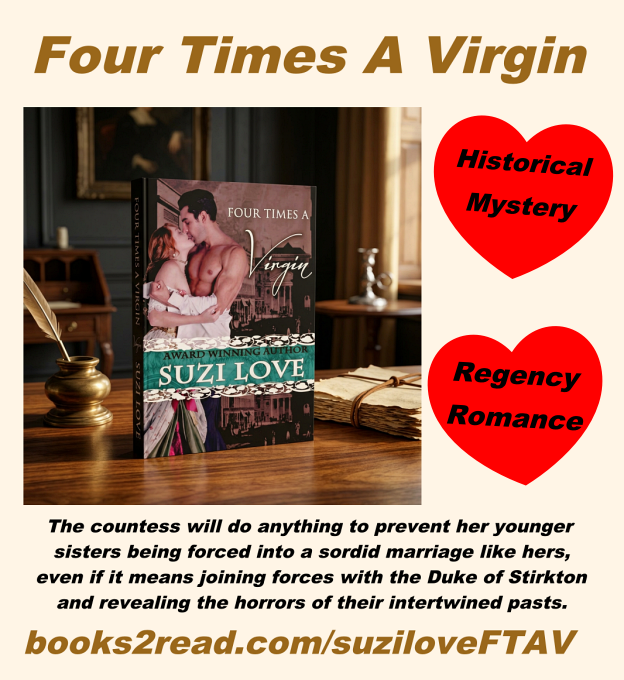
As the Duke of Stirkton, Max was well accustomed to being watched. Young pups copied his dress style. Toad-eaters mimicked his behavior in futile attempts to ingratiate themselves into his life. Conservative groups applauded his somber public behavior, while cartoonists ridiculed his straight-laced demeanor and suggested he take a mistress. Or two.
Whichever way people viewed him, no one had dared ridicule him to his face. Until this evening. The Countess had side-stepped his butler and marched into his drawing room as if an unannounced call upon an unmarried duke was something she did regularly. Max had informed her, in great detail, of the extensive search he and his cousin had undertaken to locate her and the other women. She’d huffed and rolled her eyes.
Normally, his month-about- mistresses gleefully accepted his proposal because sharing a duke’s bed for a month would set them up for the rest of their lives. Apart from the financial benefits, he was a generous lover. One benefit of his abnormal upbringing had been an early and full education into what women wanted in a bed partner. Until the Countess had laughed at him, he’d never had reason to doubt his sexual prowess. In the brief time she’d been in his house, she’d challenged several of his beliefs.
“It’s the ideal solution.” And something he needed. “I will help you search my grandfather’s boxes by day and, in exchange, you’ll make yourself available to me in the evenings.” Max waited, unsure what to expect. An odd situation for a man who prided himself on reading adversaries as easily as he tallied the accounts. books2read.com/suziloveFTAV
1826 The Cyprian’s Ball At the Argyll Rooms. A Regency Gentleman’s Life. From The English Spy By Robert Cruikshank.
1826 The Cyprian’s Ball At the Argyll Rooms. A Regency Gentleman’s Life. From The English Spy By Robert Cruikshank. RL_2_D2D_RetailerBuyLink_RL_2
https://books2read.com/suziloveYGD
What Sort Of Pianoforte or Piano Was Played By Jane Austen and Contemporaries? Pianos, pianofortes and more. History Notes Book 7 Music Pianos books2read.com/suziloveMusicPiano
Definition Pianoforte or Piano: ‘Stringed keyboard instrument with a hammer action, as opposed to the jack and quill action of the harpsichord. Capable of gradations of soft and loud, the piano became the central instrument of music pedagogy and amateur study. By the end of the nineteenth century, no middle-class household of any stature in Europe or North America was without one.’ Definition via the Metropolitan Museum, NYC.
Around 1700, the Pianoforte, or Piano, was invented in Italy by Bartolomeo Cristofori, who created a hammer action keyboard instrument on which a musician could make changes in loudness by changing the force with which the keys were struck. He called his instrument “gravicembalo col piano e forte”, or, (harpsichord with soft and loud). Cristofori’s long name was later shortened to fortepiano or pianoforte, and finally just piano.
Musical Instruments were so important in most of the more affluent households in history that large industries grew all around the world to manufacture instruments, musical accessories, and to print sheet music. Pianos, pianofortes, harpsichords, and organs were found everywhere and were often the focus of a family gathering. By the end of the 18th Century, the pianoforte, or piano, was the leading instrument of Western music.
D2D_RetailerBuyLink_HN_7 Piano
books2read.com/suziloveMusicPiano
19th Century Early Chemise or Shift, American. White linen and embroidery. via Metropolitan Museum New York City, U.S.A. metmuseum.org
Chemise Or Shift: Sleeveless, mid-calf length garment of white cotton or muslin was worn next to the skin under stays or corset. Called ‘Shift’ from early Georgian (1700-1750) until Late Georgian (1750-1790) to replace ‘Smock’. By 1800, name replaced by ‘Chemise’. The sort of undergarment that Jane Austen would have worn next to her skin and under her stays, or corset.
1810-1815 ca. Salmon Pink Empire Style Dress, Norway. Typical Regency high-waisted dress. Long sleeves with puckered sleeve cap. Deep neckline with short shirred bodice. Long full skirt. via Digital Museum, Norway. digitalmuseum.no Regency fashion at its prettiest. The style of Empire style, or high-waisted, dress worn by Jane Austen and her contemporaries and the ladies in the Bridgerton family.
The Empire waist gown defined women’s fashion during the Regency Era. ‘Empire’ is the name given in France to the period when Napoleon built his French Empire. High-waisted, loose gowns were adopted by the aristocracy as a symbol of turning away from the fussy, elaborate and expensive clothing worn in the 1700s. Jean-Jaques Rousseau advocated copying peasants and returning to a simpler life and more natural fashions. Unrestricting clothing was part of the new Democracy in France and these simpler and flowing fashions were adopted all over Europe, including Britain and despite the continual wars being fought against France during the early 1800s. Not even war stopped fashions from being copied everywhere.
This book looks at what was fashionable for women in Jane Austen’s or the Bridgerton family’s times, or the early 1800s, or the Regency Era in Britain. Wars were being fought around the globe so women’s fashion adopted a military look in support of soldiers. Fashions, like the lifestyle, became progressively more extravagant and accessories went from colorful to over-the-top.
1803 Jane Austen Style Dress Bodice and Five Trimmed Hats. Low cut bodice, puffed sleeves, scarf, four variations of trimmed hats. Fashion Plate via Journal des Dames et des Modes, or Costume Parisien. https://books2read.com/SuziLoveFashionWomen1801-1804
Hats: Early 1800s: Lightweight caps or muslin, linen, lace or net were worn as morning caps, night caps, or under other hats. Jane Austen and her family and female friends would have worn caps like these, sometimes during the morning at home, to bed to keep their long hair from becoming knotted, or under a bonnet to hold a hairstyle in place. But for outdoor ventures, hats were more substantial and for the evening a lot more individual and elaborate. The ties of a bonnet that were secured under the chin vary from the very simple to the quite fanciful.