1813 October White Empire style, or high-waisted, Carriage Dress, English. Brown shawl, brown boots, and a lace cap tied under the chin. Typical of the carriage fashions that would have been worn by Jane Austen and her contemporaries. Fashion Plate via The Lady’s Magazine Or Entertaining Companion for the Fair Sex.
Definition Empire Style Dress: High-waisted white gown defined women’s fashion during the Regency Era. ‘Empire’ is the name given to the period when Napoleon Bonaparte built his French Empire. High-waisted, loose gowns were adopted by the aristocracy as a symbol of turning away from the fussy, elaborate and expensive clothing worn in the 1700s. https://books2read.com/SuziLoveFashion1810-1814
1826 The Cyprian’s Ball At the Argyll Rooms. A Regency Gentleman’s Life. From The English Spy By Robert Cruikshank.
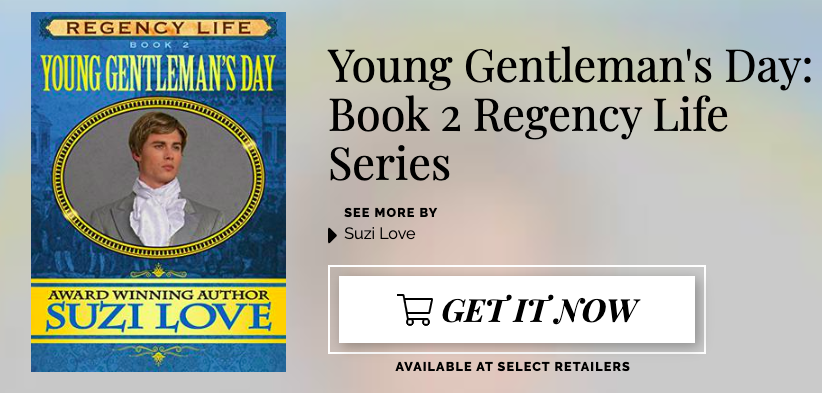
1826 The Cyprian’s Ball At the Argyll Rooms. A Regency Gentleman’s Life. From The English Spy By Robert Cruikshank. RL_2_D2D_RetailerBuyLink_RL_2
https://books2read.com/suziloveYGD
A portrait from 1810-1814 of Rudolph Ackermann, shop owner and founder of ‘The Repository Of Arts’ magazine, The Strand, London. via National Portrait Gallery, London. Plus, an image of Ackermann’s premises in 1809. His ‘Repository of Arts, Literature, Fashion, Manufactures, etc.’ was published from 1809 to 1829 with images of Regency London, Regency furnishings and grand homes as well as beautiful fashion prints and descriptions every month. Ackermann originally supplied artists, amateur and professional, with supplies for watercolor painting. In 1799, he began manufacturing and selling his own watercolor paint blocks which were supplied by other colourmen, although at least three colors were his own mixture – Ackermann’s Green, White and Yellow. From 1817, his eldest son Rudolph Ackermann junior was responsible for the watercolor manufacturing. Ackermann also trained as a carriage designer. He began publishing prints and colour-plate books like ‘The Microcosm of London’ and ‘Doctor Syntax’ in the early 1800s.
The Repository of Arts was one the most popular magazines in Jane Austen’s time as it displayed everything ladies wanted to learn e.g. history, important country seats and houses in England, music, current events such as theatre plays, plus fashion plates and embroidery patterns. Ackermann’s shop in The Strand, London, was one of the fashionable places to shop during the Regency Era. The Repository also included poetry, travel reports, society reports and upcoming lectures. It also included serious subjects e.g. politics, legal matters, medicine and agriculture, a meteorological journal and details of the London markets. In 1817, the price of the magazine was 4 Shillings, so quite expensive for the time.
In the first issue, published for January 1809, Ackermann included an ‘introduction to the history of the useful and polite arts’ which said: “It is universally admitted, that to cultivate a taste for the arts, and an acquaintance with the sciences, is a pleasure of the most refined nature; but to do this without regard to its influence upon the passions and affections, is to ‘tear a tree for its blossoms, which is capable of yielding the richest and most valuable fruit.’ The cultivation of this taste may and ought to be subservient to higher and more important purposes: it should dignify and exalt our affections, and elevate them to the admiration and love of that Being who is the author of every thing that is fair, sublime, and good in nature.”
1810-1814 Portrait of Rudolph Ackermann, shop owner and founder of The Repository Of Arts magazine. via National Portrait Gallery, London.
1809 January Ackermann’s Repository of Arts, 101 Strand, London, U.K. Drawn by Augustus Pugin and Thomas Rowlandson. Published By Rudolph Ackermann. Etching and aquatint with hand coloring.
Music history from the 17th, 18th, and 19th Centuries. Pianos, pianofortes, harps, viols, violins played during Jane Austen’s times. Musical Instruments were so important in most of the more affluent households in history that large industries grew all around the world to manufacture instruments, musical accessories, and to print sheet music. Musical instruction and encouragement could be found everywhere and both young ladies and gentlemen were encouraged to have musical appreciation. And of course, playing music was on the list of social requirements for all young ladies desirous of becoming a wife and homemaker.
London became Europe’s leading centre for the manufacture of scientific instruments and this led to the manufacture of more musical instruments as well as factories developed and rail transport helped the faster distribution of goods to regional areas. One of the first places that music was used to tell stories and to share enjoyment was in Christmas music. Because music was such an integral part of households, music was always a feature in Magazines. There were advertisements everywhere for musical instruments for sale, for sheet music, and for music lessons. And of course, of most interest to the ladies were the hundreds of fashion plates included in magazines where people were depicted with their musical instruments.
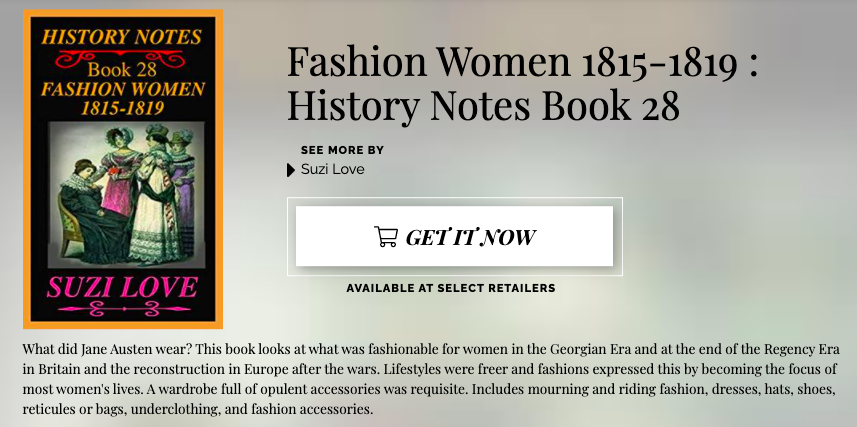
Love the Bridgerton family and Jane Austen? Reader Or Writer of Regency Era stories? Mourning and riding fashion, dresses, hats, shoes, reticules or bags, underclothing and fashion accessories. books2read.com/SuziLoveFashionWomen1815-1819
History Notes 28 Fashion Women 1815-1819: This book looks at what was fashionable for women in the Georgian Era and at the end of the Regency Era in Britain and the reconstruction in Europe after the wars. Lifestyles were freer and fashions expressed this by becoming the focus of most women’s lives. A wardrobe full of opulent accessories was requisite. Includes mourning and riding fashion, dresses, hats, shoes, reticules or bags, underclothing, and fashion accessories.
Ladies clothing in the early 1800’s featured a high waist line called an Empire Line, or Empire style dress, with a waist line just under the natural bust line and much higher than the natural waist. High-waisted Empire Line styles dominated fashions for at least three decades from the 1790s until the 1820s. The high-waisted, or short-bodied, Regency styles shifted focus away from the natural waist and so left the natural waist unconstricted, in direct contrast to previous and future styles.
Britain took these simple European styles and progressively made them more elaborate by adding more and more complicated embroidery onto white fabrics to create the white on white look popular for many years. The empire look of fine muslin dresses left women more exposed than in the Georgian Era when fabrics had been thicker and styles bulkier. Women, especially in England, preserved their modesty by adding lace, frills, flounces, ruches, and fabric plaits to dresses to adequately cover any parts that might inadvertently be exposed. Outer layers, such as Spencers, coats and shawls, were also added.
1780 ca. English Guitar, Lisbon Made by Jaco Vieira da Silva. Pine back, sides and soundboards, with pine and wood purfling or bordering, brass openwork rose, framed with mother-of-pearl. The English guitar was a fashionable instrument from about 1750, considered easy to play and tuned in C major, although the player would use a capo, much like a modern folk-guitarist, in order to change the key. The tuning pegs were often small metallic pins that could be turned with a watch-key, to keep the strings in tune longer. This instrument was made in Portugal, a country with strong trading links with England, and its peg box is decorated with a paper ‘cameo’ in imitation of a jasper ware medallion, a motif made popular by Josiah Wedgwood (1730-1795) from about 1770. Victoria and Albert Museum, London, U.K. History Notes Book 6 Music General https://www.suzilove.com/wp-admin/books2read.com/suziloveMusicGeneral \
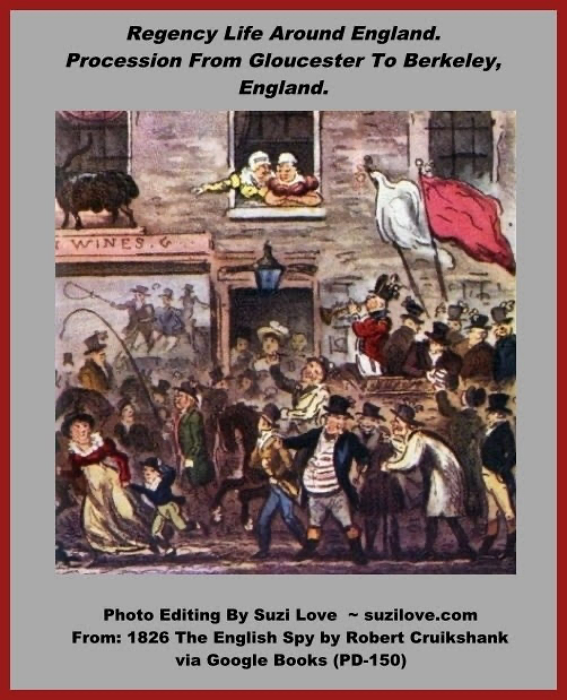
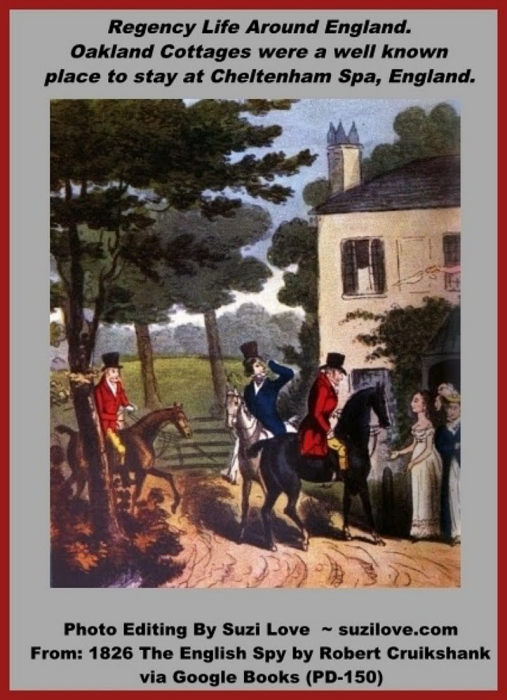
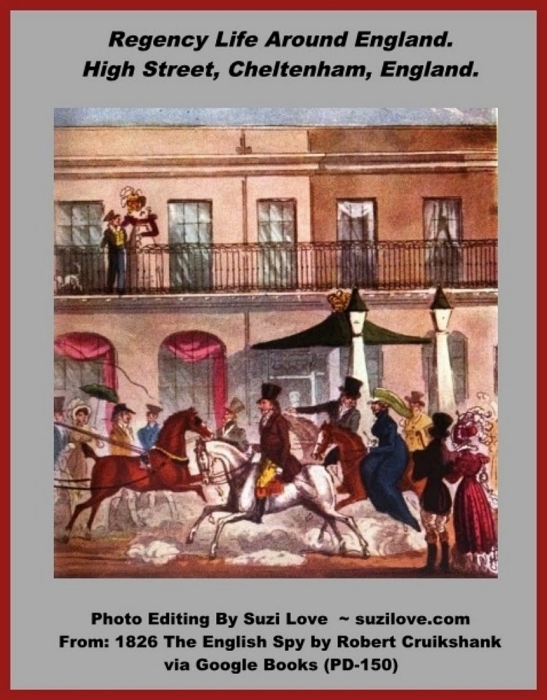
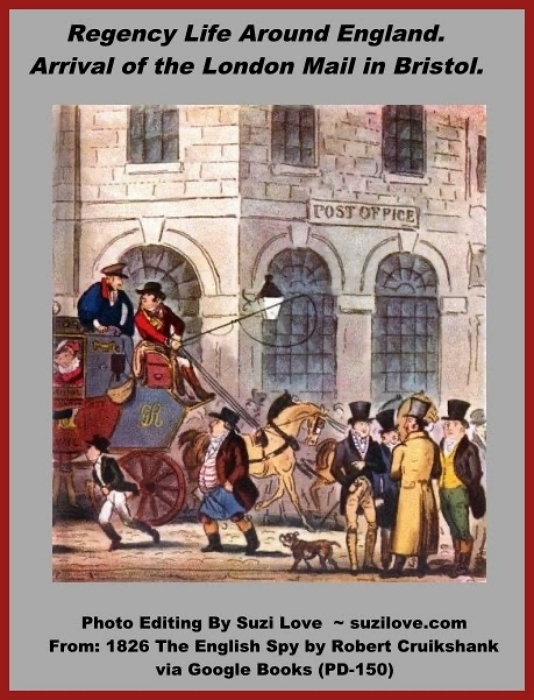
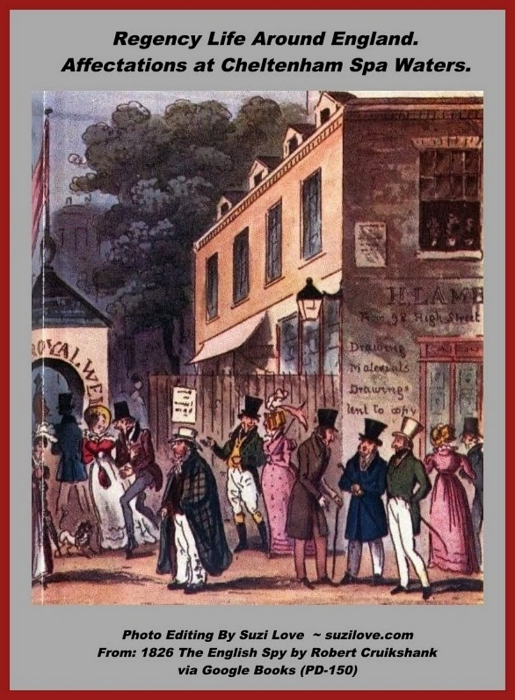
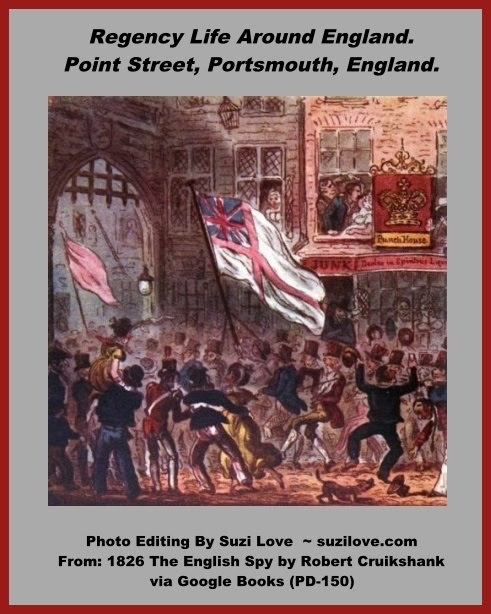
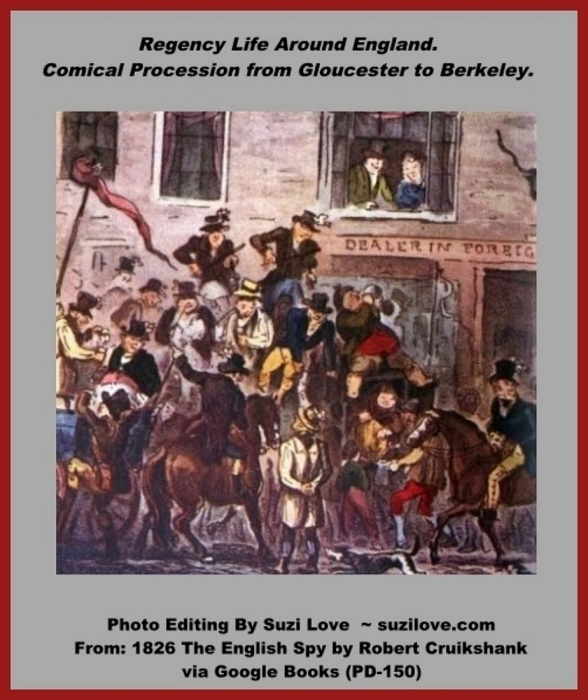
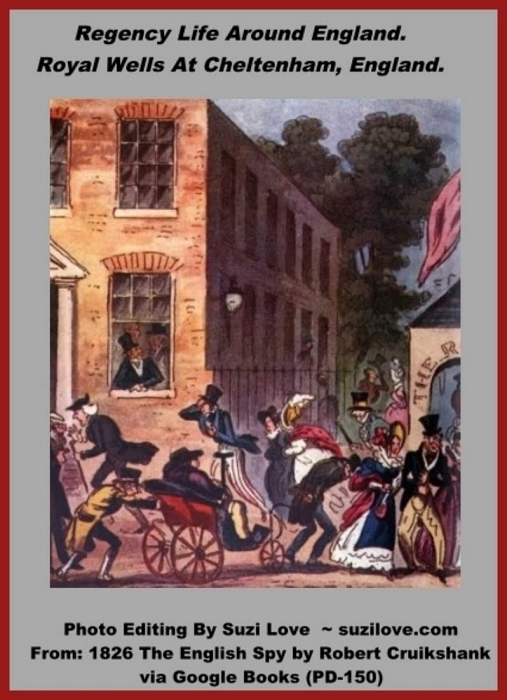
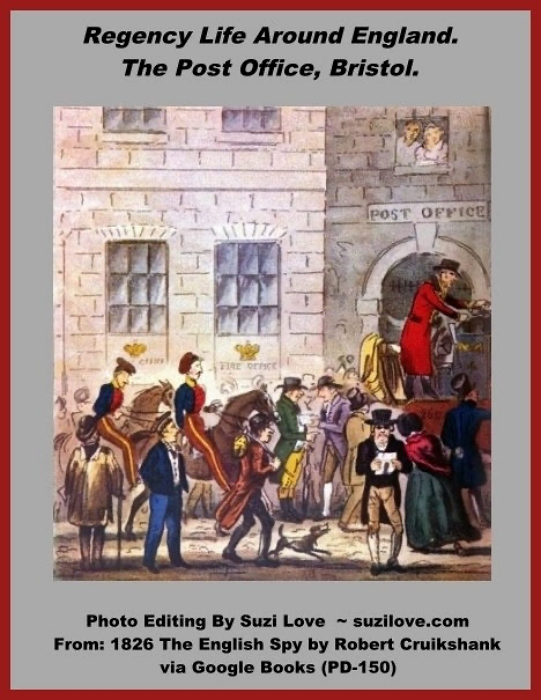
1826 Sights the Bridgertons and Jane Austen Saw Around Regency England. The sights that the families and friends would have seen around while traveling around England. via 1826 The English Spy By Robert Cruikshank via Google Books (PD-150)
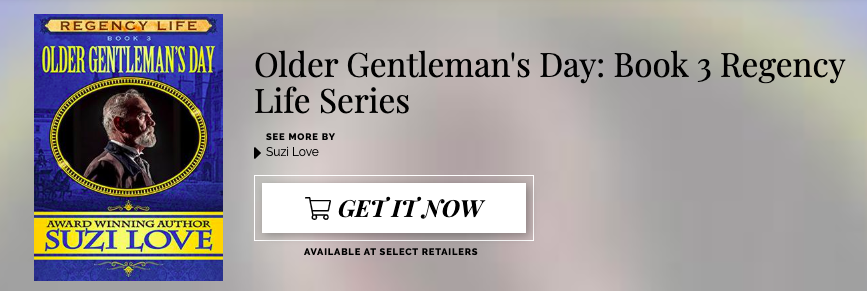
Writing Regency Era Fiction Or Nonfiction? Need more information on Older Gentleman’s Day in early 1800s, or Bridgerton’s and Jane Austen’s Regency Era. A lighthearted overview of an older gentleman’s clothing, social life, and responsibilities in the early 1800s. Take a look at where an older man went, what he wore, and how he managed the family’s finances and his estates. Older Gentleman’s Day Regency Life Series Book 3 books2read.com/suziloveOGD
What Did An Older Gentleman Do In Early 1800s, or Jane Austen’s Regency Era? An overview of an older gentleman’s clothing, social life, and responsibilities in the early 1800s. Take a look at where he went, what he wore, and how he managed the family’s finances. Older Gentleman’s Day Regency Life Series Book 3 books2read.com/suziloveOGD
Strictly speaking, the REGENCY ERA refers to the years between 1811 and 1820 when George IV acted as Prince Regent when his father was unable to remain in power due to his illness, or rather his madness. For convenience, the term REGENCY YEARS is used to describe the longer period from the last two years of the Georgian Era (1809-1810), plus the ten years under the Prince Regent (1811-1820), and up until 1837 when Queen Victoria came to the throne.
RL_3_OGD_Older Man’s Day Regency Life Series Book 3 by Suzi Love #Regency #History books2read.com_suziloveOGD
What Did An Older Gentleman Do In the Bridgerton’s or Jane Austen’s Regency Era? #Bridgerton #RegencyEra #JaneAusten #BritishHistory http://books2read.com/suziloveOGD
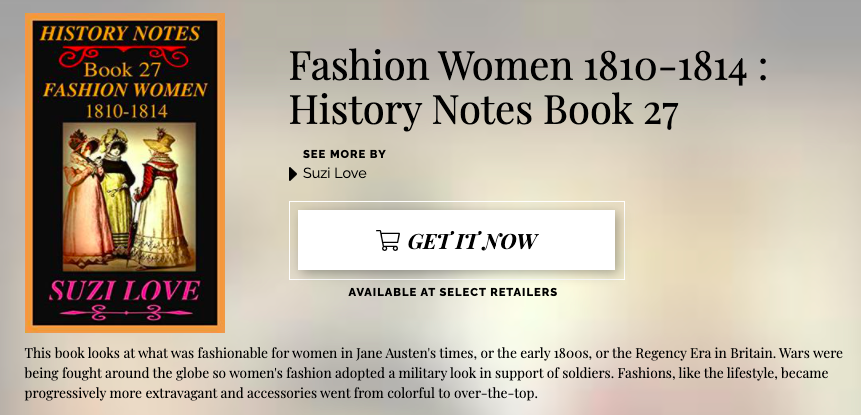
What was fashionable for women in Jane Austen’s times? Mourning, riding, daytime, evening clothing, plus underclothing, corsets and accessories. Fashion Women 1810-1814 History Notes Book 27 This book looks at what was fashionable for women in Jane Austen’s times, or the early 1800s, or the Regency Era in Britain. Wars were being fought around the globe so women’s fashion adopted a military look in support of soldiers. Fashions, like the lifestyle, became progressively more extravagant and accessories went from colorful to over-the-top. https://books2read.com/SuziLoveFashion1810-1814
The Lady’s Magazine said of the basis of women’s fashion that was popular for the first twenty years of the 1800s, ‘White is still the prevailing color for robes. For morning dresses, linen gowns, in large diamonds or squares, are fashionable. Indian muslins, plain or embroidered, are preferred to Florence and satins. The designs of embroidery for shawls are of infinite variety. Long gloves, which reach above the elbow, are not yet laid aside. Medallions are hung around the neck from crossed chains and some of these medallions are shaped like the bags, called ridicules. These reticules are of the lozenge or hexagon shape, with a small tassel at each angle. Reticules, or ridicules, are in lozenge or hexagon shapes with a small tassel at each angle. In capotes, or hats, and ribbands, the violet and dark green prevail over jonquil. Bracelets in hair, pear-shaped ear-rings, medallions on square plates, saltiers of colored stones, are still in fashion.’
These are the types of outfits worn by Jane Austen and contemporaries in English magazines, where French fashions were obsessively copied despite the two countries being at war for many years. In Jane Austen’s years, she and her contemporaries spent a lot of time walking outdoors. People were encouraged to partake in outdoor pursuits to maintain good health. Fragile slippers were worn for balls and evening events but for walking sturdier shoes were needed, In the early 1800s, these were typically made of leather, had a very small heel, slightly rounded toes and were laced up on the top.
What was fashionable in Bridgerton and Jane Austen’s times? Mourning, riding, daytime, evening fashion plus underclothing. #Bridgerton #JaneAusten #RegencyFashion https://books2read.com/SuziLoveFashion1810-1814
Young Lady’s Day is Book 4 in the Regency Life Series. This book depicts the often-frivolous life and fashions of a young lady in the early 1800’s, but also gives a glimpse into the more serious occupations a young lady may undertake. Through historic images, historical information, and funny anecdotes, it shows how a young lady fills her day, where she is permitted to go, and who she is allowed spend time with. These light-hearted looks at the longer Regency years are an easy to read overview of what people did and wore, and where they worked and played. There is plenty of information to interest history buffs, and lots of pictures to help readers and writers of historical fiction visualize the people and places from the last years of the 18th Century until Queen Victoria took the throne.
Love the Bridgertons? Jane Austen fan? Early 1800’s glimpse into frivolous and serious occupations filling a young lady’s day. #Bridgerton #JaneAusten #RegencyEra #Nonfiction #AmWriting https://books2read.com/suziloveYLD