1826 Silk and Linen Riding Habit, American. via Metropolitan Museum, N.Y.C., U.S.A. metmuseum.org
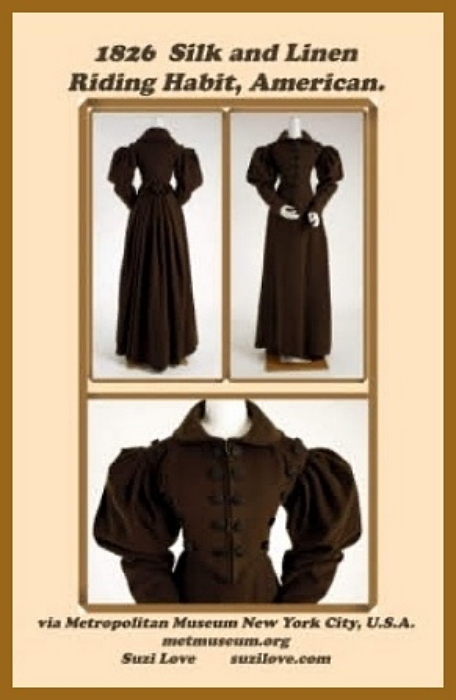


1826 Silk and Linen Riding Habit, American. via Metropolitan Museum, N.Y.C., U.S.A. metmuseum.org

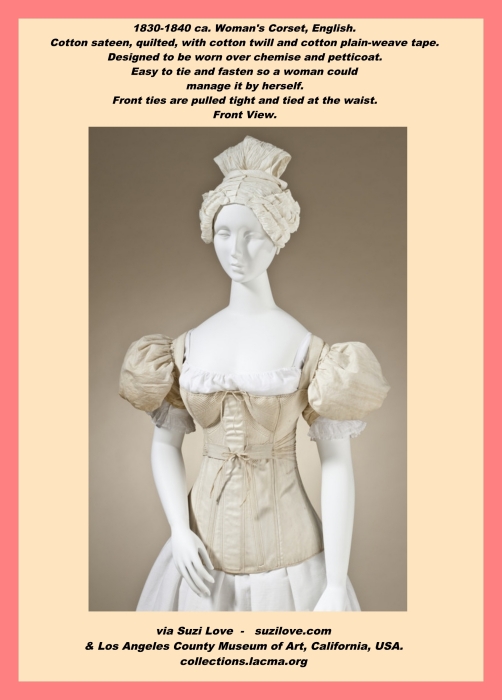
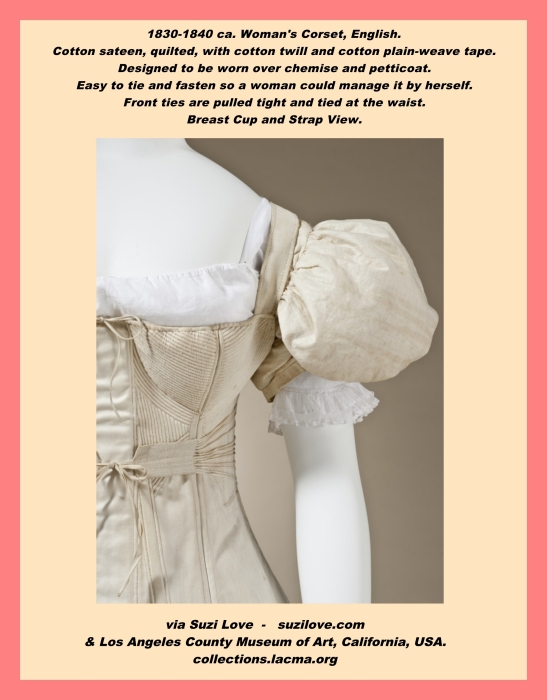
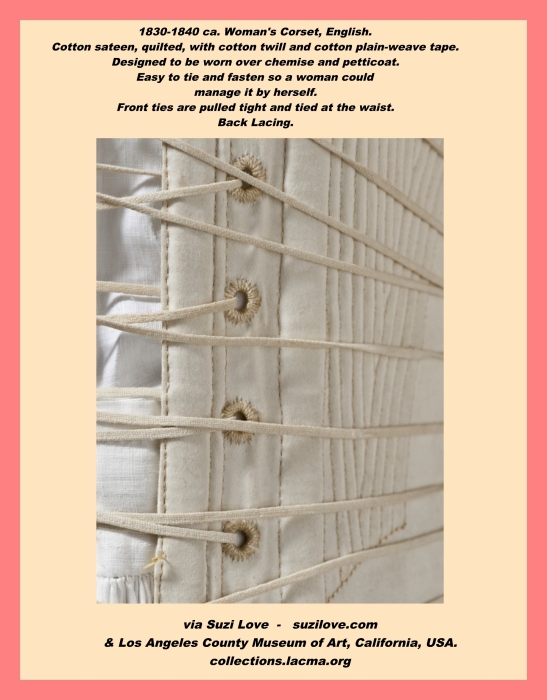
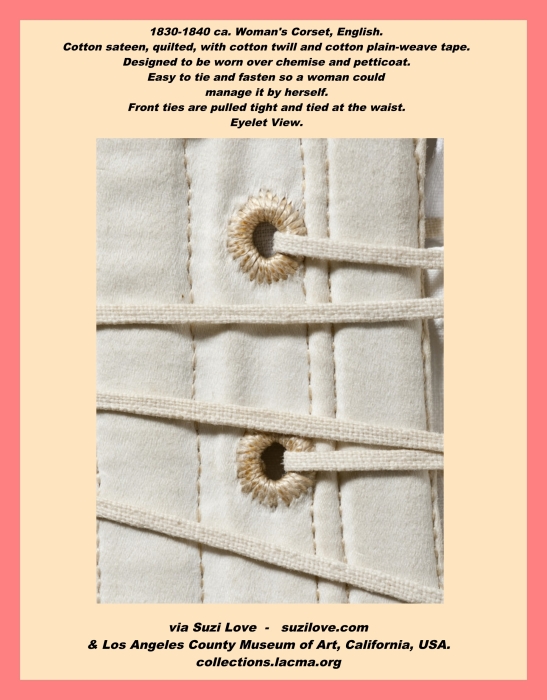
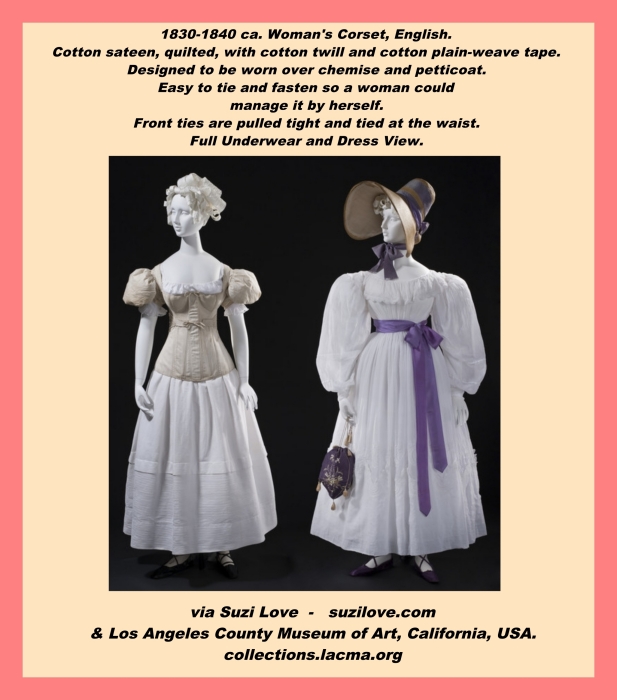
1830-1840 ca. Woman’s Corset, English. Cotton sateen, quilted, with cotton twill and cotton plain-weave tape. Designed to be worn over a chemise and petticoat. This corset is designed to be easy to tie and fasten so a woman could manage it by herself. The front ties are pulled tight and tied at the waist. Center back length: 15 7/8 in. (40.32 cm) via Los Angeles County Museum of Art, California, USA. via Los Angeles County Museum of Art. via Los Angeles County Museum of Art, California, USA.






1730-1735 ca. London pinchbeck chatelaine incorporating scissors case, needle case, two thimble cases, England. #RegencyEra #GeorgianEra #VictorianEra #chatelaine https://www.books2read.com/SuziLoveChatelaines
Continue reading →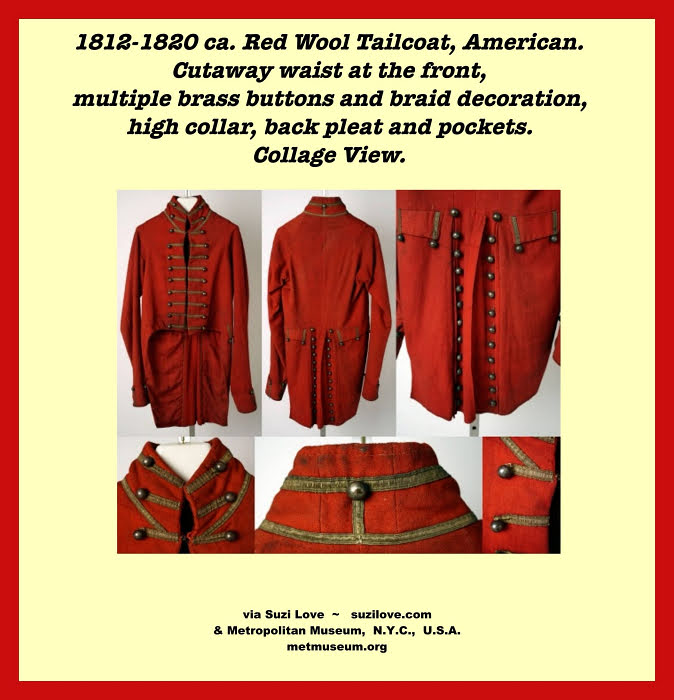
1812-1820 ca. Red Wool Tailcoat, American. Brass buttons everywhere, including on the tails and pockets. via Metropolitan Museum New York City, U.S.A. metmuseum.org


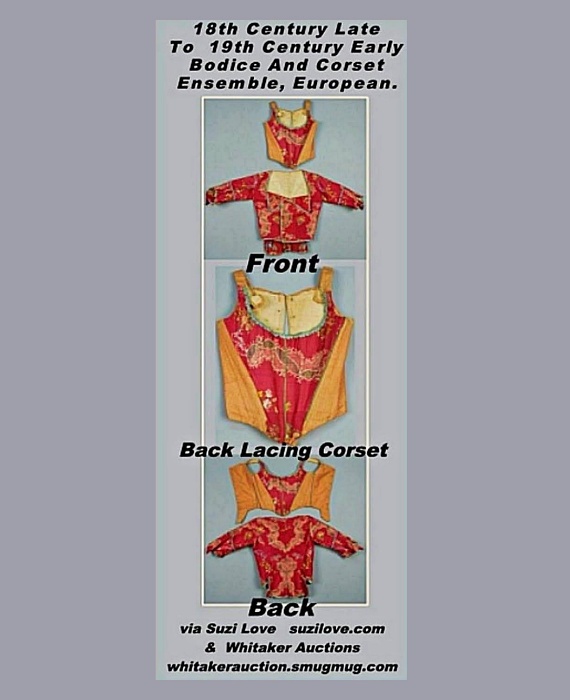
18th Century Late – 19th Century Early Bodice and Corset Ensemble, European. Cranberry silk faille with polychrome floral brocade, the square-neck bodice having folded front collar, narrow double breast and short sleeve with pleated and pointed cuff, peplum back. Corset front pieced with cranberry brocade and a tan dotted sawtooth stripe, the back in a similar dotted stripe. Both pieces trimmed in aqua ribbon and lined in linen. via Whitaker Auctions. whitakerauction.smugmug.com

1813 April Carriage Dress, English. Green coat over white Empire style dress of jaconet or cambric muslin, plaited bodice, long sleeve, deep frill, with a vandyke of needle-work. Russian mantle is made of Pomona or spring green sasnet, lined with white satin, trimmed with a rich frog fringe and closed with a cord or tassel. Close-fitting cottage slouch bonnet of the same material and edged with scalloped lace, tied on the left under the chin with ribbon, and decorated with a small cluster of spring flowers. Reticule, or bag, of the sam fabric, slippers of green kid, and gloves of primrose kid. Fashion Plate via Rudolph Ackermann’s ‘The Repository of Arts’.


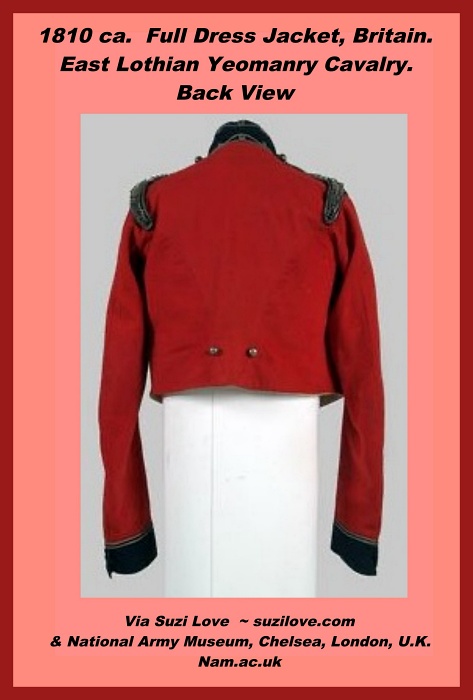
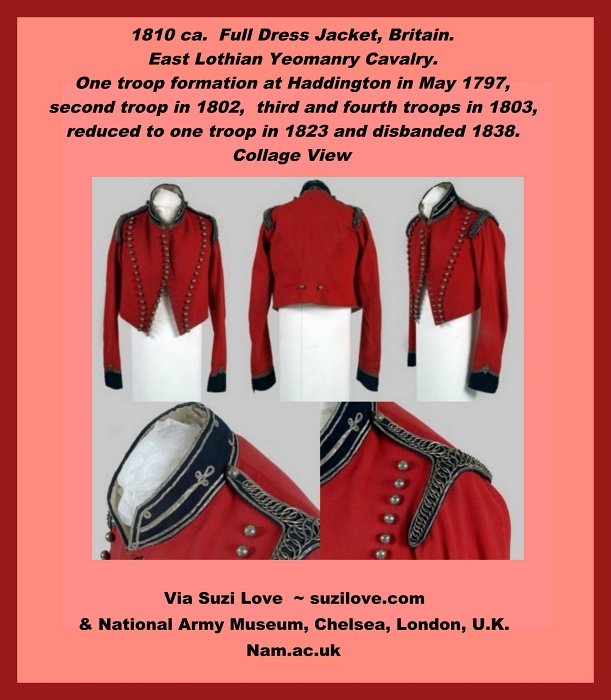
1810 ca. Full Dress Jacket, Lothian Yeomanry Cavalry, Britain. The East Lothian Yeomanry Cavalry was raised as a one troop formation at Haddington in May 1797. Five years later a second troop was raised and in 1803 a third and fourth troop. The regiment was reduced to one troop in 1823 and disbanded 15 years later. National Army Museum, London, UK. https://books2read.com/SuziLoveFashionMen1800-1819 In Jane Austen’s time, or the early 1800s, gentlemen were seen in military coats like this often because many Englishmen were involved in the long lasting wars against Napoleon. .



1810 Cotton Waistcoat. Blue black and white woven plaid, narrow double breast with self buttons, buttons create optional lapels, stand collar, hemline pockets, white cotton back with ties and cotton lining. via Whitaker Auction whitakerauction.smugmug.com
Typical of a gentleman’s waistcoat, or vest, worn during the early 1800s, or Regency Era, or Jane Austen’s times with a fancy collar, straight cut, and straight buttoned front.

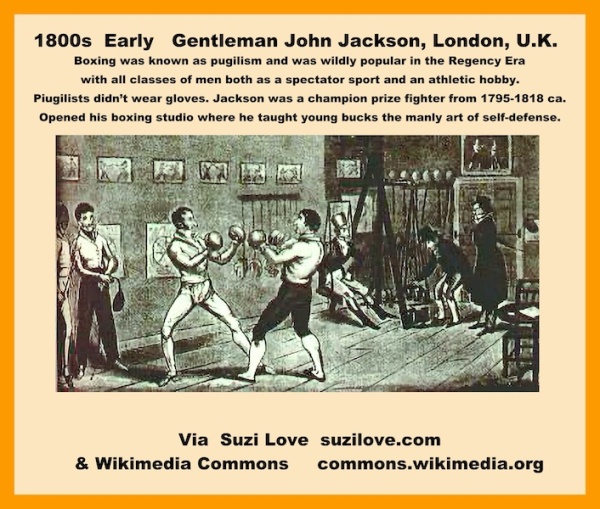
1800s Early Gentleman John Jackson, London, U.K. #Regency Boxing was known as pugilism and was wildly popular in the Regency Era with all classes of men both as a spectator sport and an athletic hobby. Pugilists didn’t wear gloves. Jackson was a champion prize fighter from 1795-1818 ca. Opened his boxing studio where he taught young bucks the manly art of self-defense. via Wikimedia Commons.

1860–1870 ca. Pink Silk Bag, Or Reticule, Italian. Two layers of contrasting pink silk with tassels and a drawstring. via Metropolitan Museum New York City, U.S.A. metmuseum.org
Definition Ridicule, Reticule, Indispensable, or Handbag: From the late 1700s, pockets could no longer be sewn into gowns, as skirts fell from just under the bust and were full and flowing. Instead, women began carrying small bags, known at first as ridicules and later as reticules, to keep necessary items on their person e.g. handkerchiefs, coins, vinaigrettes, calling cards, glasses etc. http://books2read.com/suziloveReticules
The term ‘ridicule’ derived from the Latin ‘ridiculum’ and first used in France during the 17th century and meant subjecting something or someone to mockery. As women’s tiny bags were mocked, or ridiculed, for being a useless fashion accessory carried outside when they were first used in the late 1700s, it’s likely this is how the name ‘ridicule’ started. The later term ‘reticule’ derived from the Latin reticulum, meaning ‘netted bag’ and was applied when bags became larger and often made from netting. In the late 1700s and early 1800s, they were also known as indispensables as they carried all the personal items a lady needed upon her person every day. They were easily made by ladies, easy to carry and became an indispensable fashion accessory.
In the early nineteenth century, reticules started to look like future handbags as they were often made from rigid card or molded mâché or card into a variety of shapes. Early bags were circular and with a drawstring but as women wanted their reticules to look individual they could be made with two halves and a hinged metal closure or with concertina sides. Materials varied from silk, cotton and string and shapes were round, hexagonal or lozenge shapes with shell shaped bags becoming very popular during the Regency and Romantic Eras.
1800s magazines were written for well bred women who could read, so they gave plenty of ideas for how ladies could make and embellish reticules for their own use and as pretty gifts. Needlework was highly encouraged as a pastime for a lady so bags were frequently embroidered or decorated with beading. By the 1820s, reticules became more like our modern handbags using soft leather gathered at the top or hard leather with a rigid fastener and metal chain for carrying.

