1807 Gentleman’s Everyday Outfit, French. Brown coat, high collared shirt, and vest simply tied, wit a cravat and a black hat and a cane. Brutus style hair cut of curled hair. Fashion Plate via Journal des Dames et des Modes, or Costume Parisien.
French fashions and Georgian and Regency Era fashions from Great Britain were copied around the world. This is what men wore in the times of Jane Austen for city and country life.
1818 Blue Levantine Redingote, French. High-waisted walking coat, high white neck frill, bonnet of blue Gros de Naples with pink flowers, short puffed sleeves over long straight sleeves, white gloves and blue shoes. Fashion Plate via Journal des Dames et des Modes, or Costume Parisien. The type of outfit young Regency Era ladies would have worn if they were out shopping on Bond Street, walking in a park, or taking a carriage ride through Hyde Park.
Definition Redingote Or Pelisse Or Walking Dress Or Coat: French word developed from English words, riding coat. Long fitted outdoor coat worn over other garments for warmth. Often left open at the front to show off the dress underneath. Sometimes cut away in front. Originally made with several capes and trimmed with large buttons. French fashion plates call these coats Redingotes and they are designed for women, men and children. English fashion plates call them a Pelisse, a walking dress, Promenade dress, or Carriage dress.
1818 Blue Levantine Redingote, French. High-waisted walking coat, high white neck frill, bonnet of blue Gros de Naples with pink flowers, short puffed sleeves over long straight sleeves, white gloves and blue shoes. Fashion Plate via Journal des Dames et des Modes, or Costume Parisien.
1745-1750 ca. Necessaire, or small decorative box, with watch, probably German. Fitted with sewing and writing implements as well as a watch, this unmarked nécessaire shows delightful chinoiserie decoration in the Rococo style, echoing the work of the influential Munich designer François Cuvilliés (1695–1768). via Metropolitan Museum New York City, U.S.A. metmuseum.org
Small toiletry, writing, or sewing containers were called Necessaire or Etui: Tiny boxes or containers were carried in large castles or sprawling manor houses so a lady or gentleman had their essentials with them all day. They were also important when traveling by coach, trains, or ships where space was always limited. A necessaire or Etui was easily carried in a bag, reticule, or pocket so essentials were on hand for personal grooming, to repair a ripped hem, replace a button, to embroider, or to write a note or letter.
1745-1750 ca. Necessaire With Watch. Probably German. via Suzi Love suzilove.com and Metropolitan Museum New York City, U.S.A. metmuseum.orgHN_13_D2D_Writing Tools books2read.com/SuziLoveWritingTools
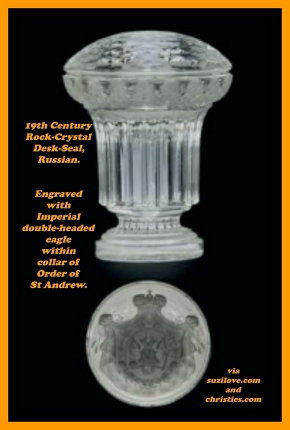
19th Century Rock-Crystal Desk-Seal, Russian. Fluted handle with domed top carved with oak leaves, matrix engraved with Imperial double-headed eagle within collar of Order of St Andrew, on ermine mantle and surmounted by the Imperial crown. via Christie’s Auction Rooms. christies.com. The type of seals that would have been on desks in Jane Austen’s times for sealing and identifying letters.
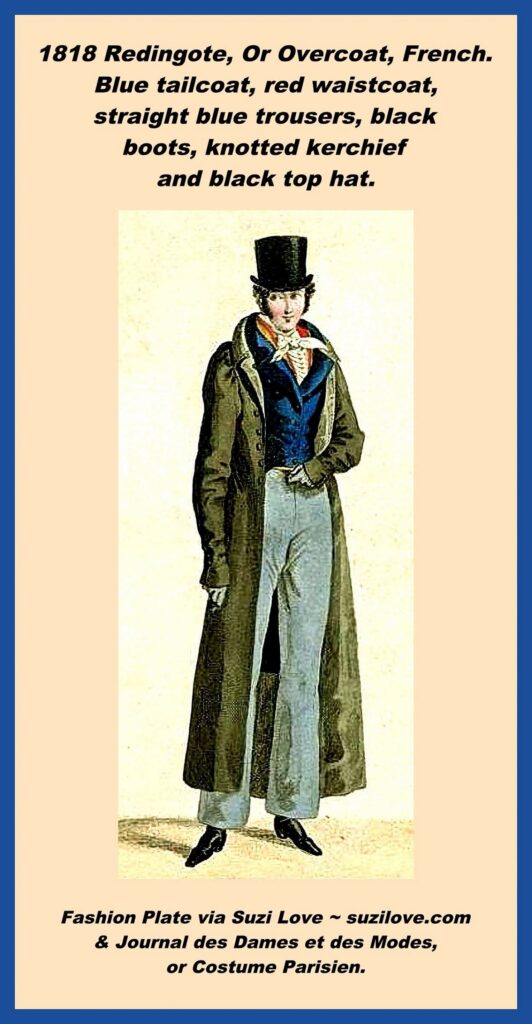
1818 Redingote, Or Overcoat, French. Blue tailcoat, red waistcoat, straight blue trousers, black boots, knotted kerchief and black top hat. Fashion Plate via Journal des Dames et des Modes, or Costume Parisien.
Top Hat Styles Chart during the 1800s, from the Regency Era through to the Victorian years. Most popular style was cone shaped and tall in height. Originally made of beaver and very short but later from silk and taller. Tall crown, widens at top, narrow brim turns up slightly at sides. https://books2read.com/SuziLoveFashionMen1800-1819
1808 Two Ladies, French. Apricot Evening Dress Or Moire Brochee, French. Patterned dress with very low cut bodice, short sleeves, long white gloves, and holding a Lorgnette, or looking glass, and a handkerchief. Grey Redingote with high waist and holding a red shawl. Fashion Plate via Journal des Dames et des Modes, or Costume Parisien.
The French magazine, Journal des Dames et des Modes, frequently made fashion plates with a single woman, two women or a woman with a man where they wear the same outfit. The two variations show innovative ideas for decorating plain white muslin dresses with a range of colorful accessories, and the early 1800s were definitely the years when accessories were the fashion highlight. Add a pair of colorful long gloves, a draped shawl or scarf, a reticule, handkerchief, fan or looking glass and the typical white dress is given individuality and personality.
Here is the companion to the above fashion plate with the single lady in her apricot dress. The lady in a grey Redingote is added.
1808 Two Ladies, French. Apricot Evening Dress Or Moire Brochee, French. Patterned dress with very low cut bodice, short sleeves, long white gloves, and holding a Lorgnette, or looking glass, and a handkerchief. Grey Redingote with high waist and holding a red shawl. Fashion Plate via Journal des Dames et des Modes, or Costume Parisien. Fashion Women 1805-1809 History Notes Book 26 What did Jane Austen and friends wear? https://books2read.com/SuziLoveFashionWomen1805-1809
1818 Blue Spencer Of Levantine, French. White cotton print dress with ruffled hem, high plumed bonnet and a neck scarf.
Definition Levantine: Stout silk cloth in twill weave. First made in the Levant, a large area in the Eastern Mediterranean region of Western Asia.
Definition Spencer: Short jacket, cropped at the waist, worn over a dress, or gown. These close-fitting, tight sleeved, waist length jackets were modeled on a gentleman’s riding coat, but without tails. Delicate and regency dresses provided so little protection from the cold, so over garments were essential for warmth, modesty and good health.
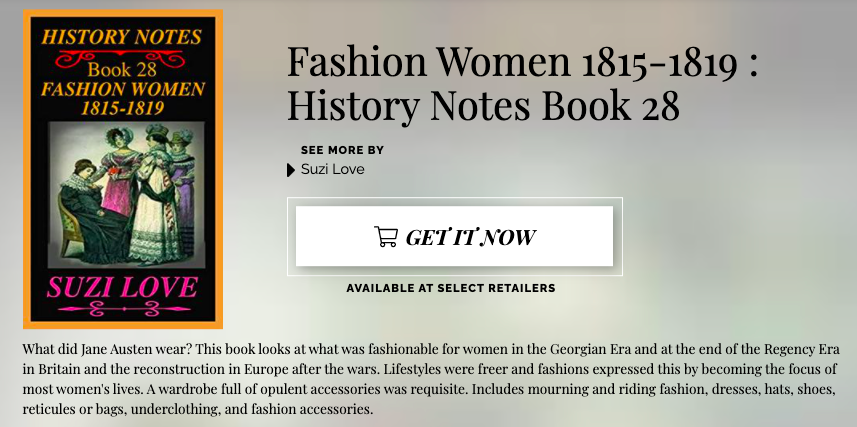
Fashion Women 1815-1819 History Notes Book 28 https://books2read.com/SuziLoveFashionWomen1815-1819
1800s Silver and Carved Mother of Pearl Writing and Desk Set, French. Wax Seal, Dip Pen and Letter Opener in the style that Jane Austen would have used to write her novels and her letters. via Ruby Lane Antiques. rubylane.com
HN_13_D2D_WritingTools Book 13 What did the lady of the house use to pen notes? What sat on the desk of the man of the house when managing his accounts? #History #Nonfiction #travel books2read.com/SuziLoveWritingTools
1750 ca. Spanish colonial ‘escritorio’, or writing desk, Columbia. Bone and mother of pearl inlay, hand etched sgraffito and original hand forged iron hinges. Interior has checkerboard drop front and ten compartments, each with original 18th century drawer pulls. Facade over-layed in mother of pearl with hand etched city-scapes, cathedrals, geometric patterns and foliate motifs. Interior has hand carved and gilt wood columns. Via Live Auctions ~ liveauctioneers.com