1808 Hats, Capotes, Caps as worn by Jane Austen and contemporaries. #Regencyfashion #JaneAusten #Hats Velvet, Satin and Crepe. Fashion Plate via Journal des Dames et des Modes, or Costume Parisien.
French fashions like this were copied by English magazines so these styles of hats would have been worn by Jane Austen and her contemporaries.
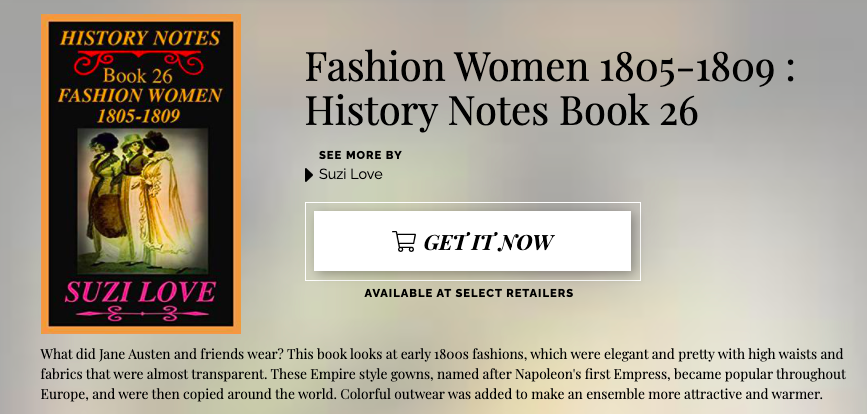
1808 Hats, Capotes, Caps. Velvet, Satin and Crepe. Fashion Plate via Journal des Dames et des Modes, or Costume Parisien. HN_26_D2D_FsshionWomen1805-1809
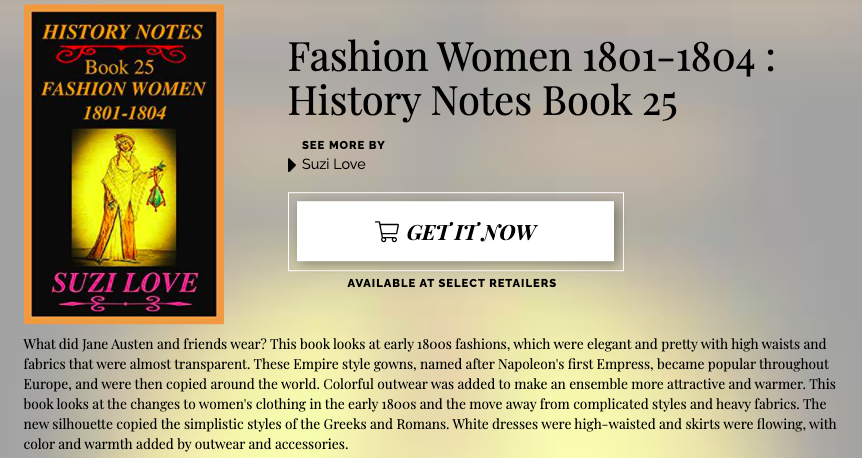
1802 Jane Austen Style Riding Habit, French. Blue riding habit made of castor, worn with a Fichu of white lace to cover her chest and preserve her modesty and carrying a long riding whip. Fashion Plate via Journal des Dames et des Modes, Costume Parisien.
Riding Habit: Early 1800s riding habits still copied men’s riding fashion and usually made by male tailors. They were often a close-fitting jacket worn over a shirt, or with a fichu covering the neck. A skirt with train had either a waistband or straps over the shoulders to keep it in place. Sometimes, habits were made in one piece with the skirt and bodice joined.
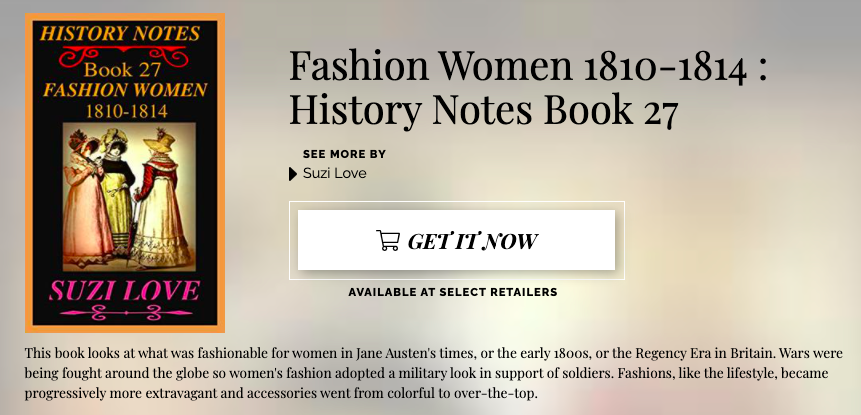
Are you a reader or writer of Regency Romance? Love Jane Austen’s books? Want to know more about the mourning, riding, underclothing and other Regency Era women’s fashions in Regency romances? What was fashionable for women in Jane Austen’s times? Mourning, riding, daytime, evening clothing, plus underclothing, corsets and accessories. This book looks at what was fashionable for women in Jane Austen’s times, or the early 1800s, or the Regency Era in Britain. Wars were being fought around the globe so women’s fashion adopted a military look in support of soldiers. Fashions, like the lifestyle, became progressively more extravagant and accessories went from colorful to over-the-top. https://books2read.com/SuziLoveFashion1810-1814
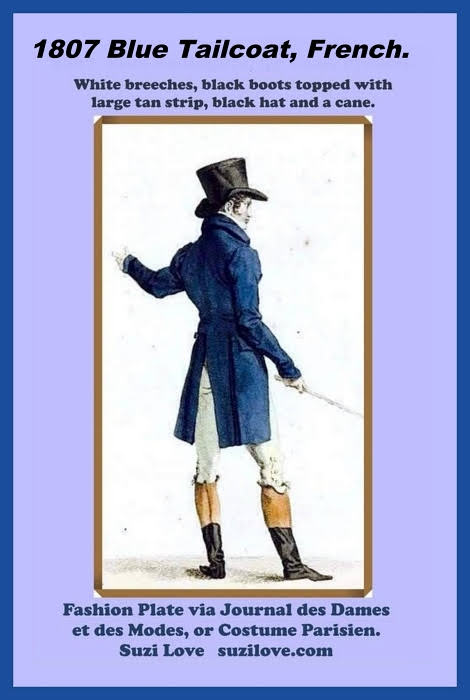
1807 Gentleman’s Blue Tailcoat, French. White breeches, black boots topped with large tan strip, black hat and a cane. Plate via Journal des Dames et des Modes, or Costume Parisien.
French fashions and Georgian and Regency Era fashions from Great Britain were copied around the world. This is what men wore in the times of Jane Austen for city and country life.
1815 Long Blue Overcoat with brown fur trim, white trousers, scarf, top hat and a cane. Fashion Plate via Journal des Dames et des Modes, or Costume Parisien. I can picture Jane Austen’s male friends and family and the Bridgerton men wearing this gorgeous coat when out walking or driving in the park.
1815 Long Blue Overcoat with brown fur trim, white trousers, scarf, top hat and a cane. Fashion Plate via Journal des Dames et des Modes, or Costume Parisien. https://books2read.com/SuziLoveFashionMen1800-1819
1800-1815 ca. Vest, Or Waistcoat, French. Embroidery with spangles and a standing collar. Vests gave a layer of protection from the elements and a fashion arena, as early 1800s coats were either cutaway or designed to be left open in the front. Typical Style of Early 1800s Vest: Standing collar, straight cut, front pockets, heavily embroidered and with tiny spangles to accentuate. via Metropolitan Museum, N.Y.C., U.S.A. metmuseum.org
Typical of a gentleman’s waistcoat, or vest, worn during the early 1800s, or Regency Era, or Jane Austen’s times with a standing collar, straight cut, front pockets, and heavily embroidered with tiny spangles to accentuate.
What sort of carriages were used in the early 1800s, or Regency Era, or during Jane Austen’s lifetime?
Carriage Line Drawing. Photo Editing by Suzi Love ~ suzilove.com via Pearson Scott Foresman donation to Wikimedia Commons.RL_1_D2D_Regency Overview RetailerLinks
https://books2read.com/suziloveROver
1795-1805 ca. Green Silk and Metal Vest, Or Waistcoat, Probably French. The style of waistcoat worn by men in Jane Austen’s times. Interesting cross-over front and tasteful embroidery, standing collar, back has ties to adjust the fit. via Metropolitan Museum, N.Y.C., U.S.A. metmuseum.org
By 1700’s, a metal jeweled ornament hung from pockets, attached to belts, or by hooks into skirt waistbands
During 1800’s, women wore large collections of tools hung from chains
Young girls sewed and did needlework and needed to carry sewing notions eg scissors, thimbles
Worn by women of all classes, from workers to nobility
Varied depending on class and finances.
Made of silver, brass, steel, leather, or fabric
During 19th century, fashionable dresses often had no waist and nowhere to hang chatelaines
Chatelaines became decorative brooches
Often given as a wedding present from a husband to bride
Later became fashion accessories
1840 ca. Silver sewing chatelaine, Russian. D2D_RetailerBuyLink_HN_9. Chatelaines and Chains History Notes Book 9 By Suzi Love. #regency Women in charge of houses wore long chains holding important household items around their waist e.g. keys, pen, notebook, sewing. books2read.com/SuziLoveChatelaines
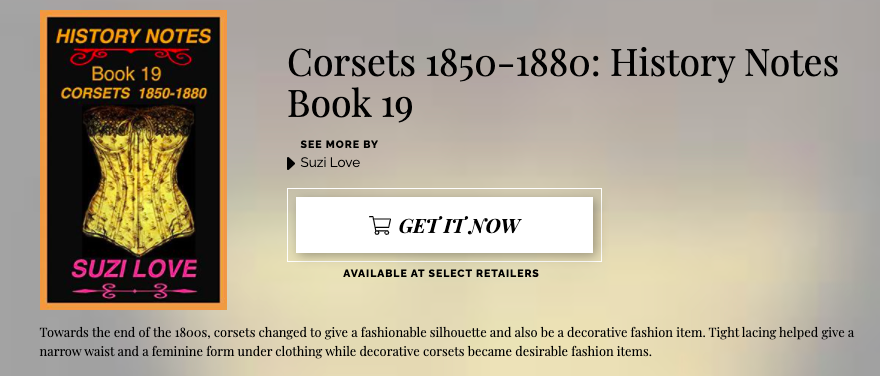
1850–1859 ca. Silk Whalebone and Steel Corset, French. Pale green watered silk corset with black flossing and contrast stitching. via Fine Arts Museums Of San Francisco https://art.famsf.org