19th Century Early Brown Trousers, American. Button waist, drop down front flap, or fall, and extra fabric in the back for easy movement. via Metropolitan Museum New York City, U.S.A. metmuseum.org https://books2read.com/SuziLoveFashionMen1800-1819



19th Century Early Brown Trousers, American. Button waist, drop down front flap, or fall, and extra fabric in the back for easy movement. via Metropolitan Museum New York City, U.S.A. metmuseum.org https://books2read.com/SuziLoveFashionMen1800-1819
1785–1800 ca. Cotton Breeches, American or European. Man’s cotton breeches, drop down, or fall, front opening, button fastening at the waist, extra material in the back allows more movement for riding etc., and buttons secure the leg openings so they can be fitted to wear with boots for riding. via Metropolitan Museum, NYC, U.S.A. These are the sort of pants that the men Jane Austen knew would have worn for riding or in the country.

1800 ca. Tan Corduroy Breeches. Drop down front flap, or ‘fall’, with two buttons, three silver metal buttons at the waistband, watch pocket, corner pockets with buttons, pieced back with waist tie, saggy back with extra fabric to allow for easier movement when riding or sitting, four buttons and silk ties at knee. via Whitaker Auction whitakerauction.smugmug.com. https://books2read.com/SuziLoveFashionMen1800-1819.
Typical of a gentleman’s breeches worn during the early 1800s, or the Regency Era, or Jane Austen’s times. They have a front flap, or fall, which unbuttons and drops down and a back waist tie to adjust the waist size and there are buttons and ties to secure the breeches below the knee.


1805 Regency Group of Ladies and Gentlemen dressed as Jan Austen and her family and friends would have dressed. Ladies in dresses, bonnets, shawls, gloves, and carrying a reticule, or bag, and a parasol. Gentlemen in tailcoats, overcoats, trousers, vests, cravats, hats, boots and shoes and carrying walking sticks. via Men And Women In Costumes, 1804-1829.
The Miriam and Ira D. Wallach Division, The New York Public Library, U.S.A.

1800s Silver and Carved Mother of Pearl Writing and Desk Set, French. Wax Seal, Dip Pen and Letter Opener in the style that Jane Austen would have used to write her novels and her letters. via Ruby Lane Antiques. rubylane.com. books2read.com/SuziLoveWritingTools


What was fashionable for women in the late 1700s? Extravagant colors and fabrics and outrageous styles were all seen in these flamboyant fashions. #Georgian #nonfiction #amwriting books2read.com/suziloveFashWomen1700s


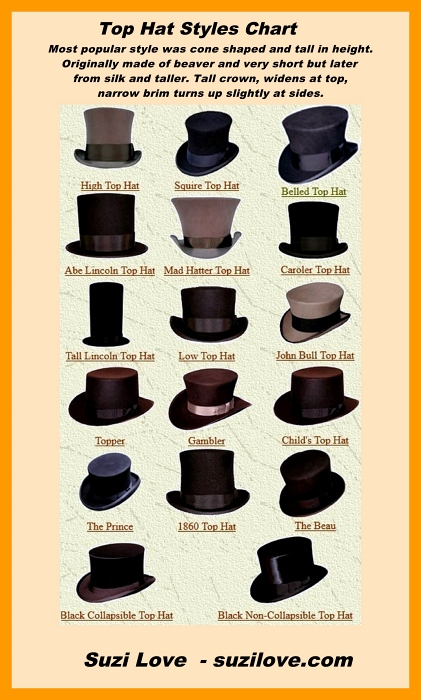
What did Jane Austen and friends wear? Early 1800s fashions were elegant and pretty with high waists and fabrics that were almost transparent. These Empire style gowns, named after Napoleon’s first Empress, became popular throughout Europe, and were then copied around the world. Colorful outwear was added to make an ensemble more attractive and warmer. History Notes Book 26 Fashion Women 1805-1809.
https://books2read.com/SuziLoveFashionWomen1805-1809
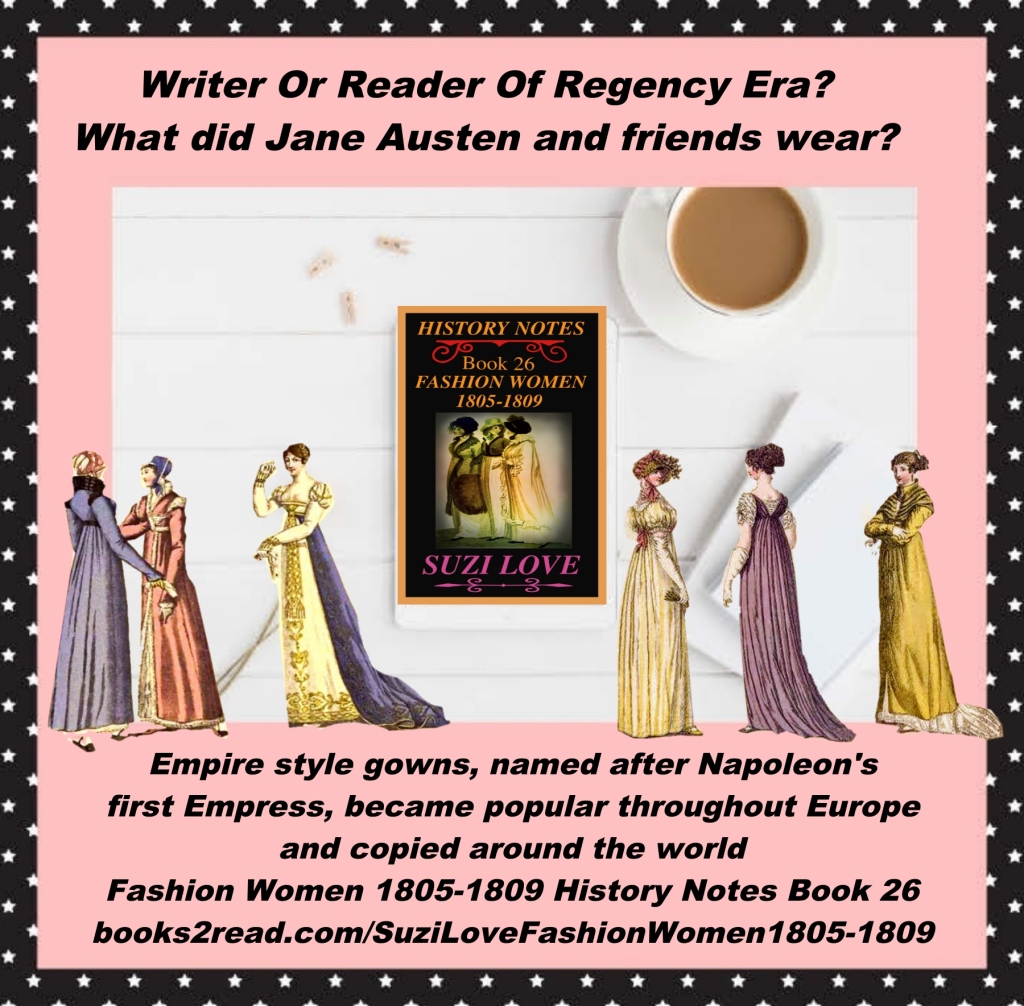

Top Hat Styles Chart. Most popular style was cone shaped and tall in height. Originally made of beaver and very short but later from silk and taller. Tall crown, widens at top, narrow brim turns up slightly at sides.
1805 Typical Regency Era, or Early 1800s, Muslin Dress. Long sleeves, square neckline, and decorated with Palm Tree embroidery. via Whitaker Auction whitakerauction.smugmug.com Typical of the Empire dresses worn by Jane Austen and her contemporaries. Square necklines, long sleeves, and skirts that started directly under the bust and flowed into the classical relaxed wide styles of Greece and Rome. These high-waisted dresses were worn most days and cotton, silk or taffeta were the popular fabrics.


What Sort Of Pianoforte or Piano Was Played By Jane Austen and Contemporaries? Pianos, pianofortes and more. History Notes Book 7 Music Pianos books2read.com/suziloveMusicPiano
Definition Pianoforte or Piano: ‘Stringed keyboard instrument with a hammer action, as opposed to the jack and quill action of the harpsichord. Capable of gradations of soft and loud, the piano became the central instrument of music pedagogy and amateur study. By the end of the nineteenth century, no middle-class household of any stature in Europe or North America was without one.’ Definition via the Metropolitan Museum, NYC.
Around 1700, the Pianoforte, or Piano, was invented in Italy by Bartolomeo Cristofori, who created a hammer action keyboard instrument on which a musician could make changes in loudness by changing the force with which the keys were struck. He called his instrument “gravicembalo col piano e forte”, or, (harpsichord with soft and loud). Cristofori’s long name was later shortened to fortepiano or pianoforte, and finally just piano.
Musical Instruments were so important in most of the more affluent households in history that large industries grew all around the world to manufacture instruments, musical accessories, and to print sheet music. Pianos, pianofortes, harpsichords, and organs were found everywhere and were often the focus of a family gathering. By the end of the 18th Century, the pianoforte, or piano, was the leading instrument of Western music.