↓
 

Suzi Love

Making history fun, one year at a time.

Header_
  • Home
  • Newsletter
  • Pre order form
  • Shop
    • Cart
    • Checkout
    • My account
    • Refund and Returns Policy
  • Blog
  • BOOKS
    • History Events
    • Kelly’s Justice
    • Outback Arrival
    • Irresistible Aristocrats
    • History Notes
    • Scandalous Siblings
    • Love After Waterloo
    • Regency Life Series
  • Privacy Policy
  • EVENTS
Home » Canada » Page 11 << 1 2 … 9 10 11

Category Archives: Canada

Post navigation

Next Post→

1876 ‘Queen Bess’ Silk Corset By Worcester Company, American. #VictorianFashion #VictorianEra #Corset #Worcester

Suzi Love Posted on September 10, 2023 by Suzi LoveAugust 11, 2023

1876 ‘Queen Bess’ Corset By Worcester Company, American. Made of silk, bone, and metal. Named ‘Queen Bess’, this corset was awarded the bronze medal at the Centennial Exposition in Philadelphia in 1876 and was patented in 1877. A well documented piece, it is unique in its design, which has been carefully constructed to support the wearer’s outer garments. The straps would assist in keeping the corset in place and hinder any shifting due to the heavy fabrics, and the bustle roll at back would ease any strain the wearer might experience from the excessive weight of the skirt. Credit Line:Brooklyn Museum Costume Collection at The Metropolitan Museum of Art, Gift of the Brooklyn Museum, 2009; Gift of E. A. Meister, 1950 Accession Number:2009.300.3496a–e

corset_1876 ‘Queen Bess’ Corset By Worcester Company, American. Made of silk, bone, and metal.
1876 ‘Queen Bess’ Corset By Worcester Company, American. Made of silk, bone, and metal.via Metropolitan Museum New York City, U.S.A. metmuseum.org

Corsets 1850-1880 History Notes Book 19 Towards the end of the 1800s, corsets changed to give a fashionable silhouette and be a decorative fashion item. Tight lacing helped give a narrow waist and a feminine form under clothing while decorative corsets became desirable fashion items. Victorian corsets for small waists and fashionable silhouettes. Corsets during the Victorian Era, or late 1800s, tightened to give tiny waists and fashionable silhouettes.

HN_19_D2D_Corsets 1850-1880
https://books2read.com/SuziLoveCorsetBook19
HN_19_D2D_Corsets 1850-1880
Posted in 1800s, 1800s women's fashion, Australia, Canada, Corset, England, Europe, South Pacific, Suzi Love Images, U.S.A, underclothing, Victorian Era | Tagged 1800s women's fashion, Corset, Metropolitan Museum NYC, underclothing, USA, Victorian Era, Victorian fashion

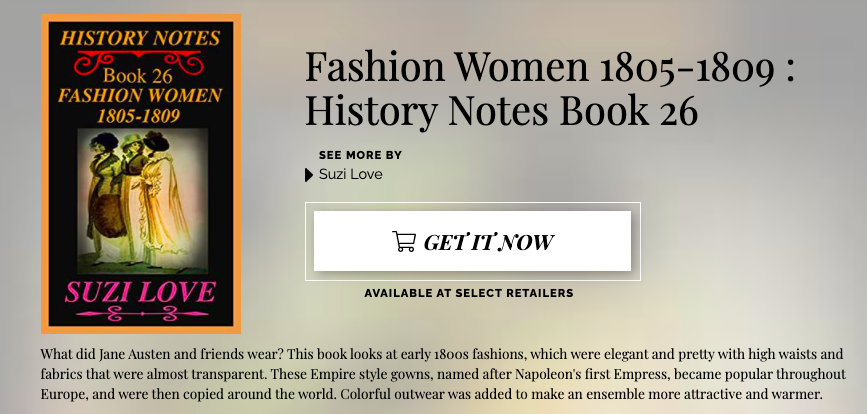
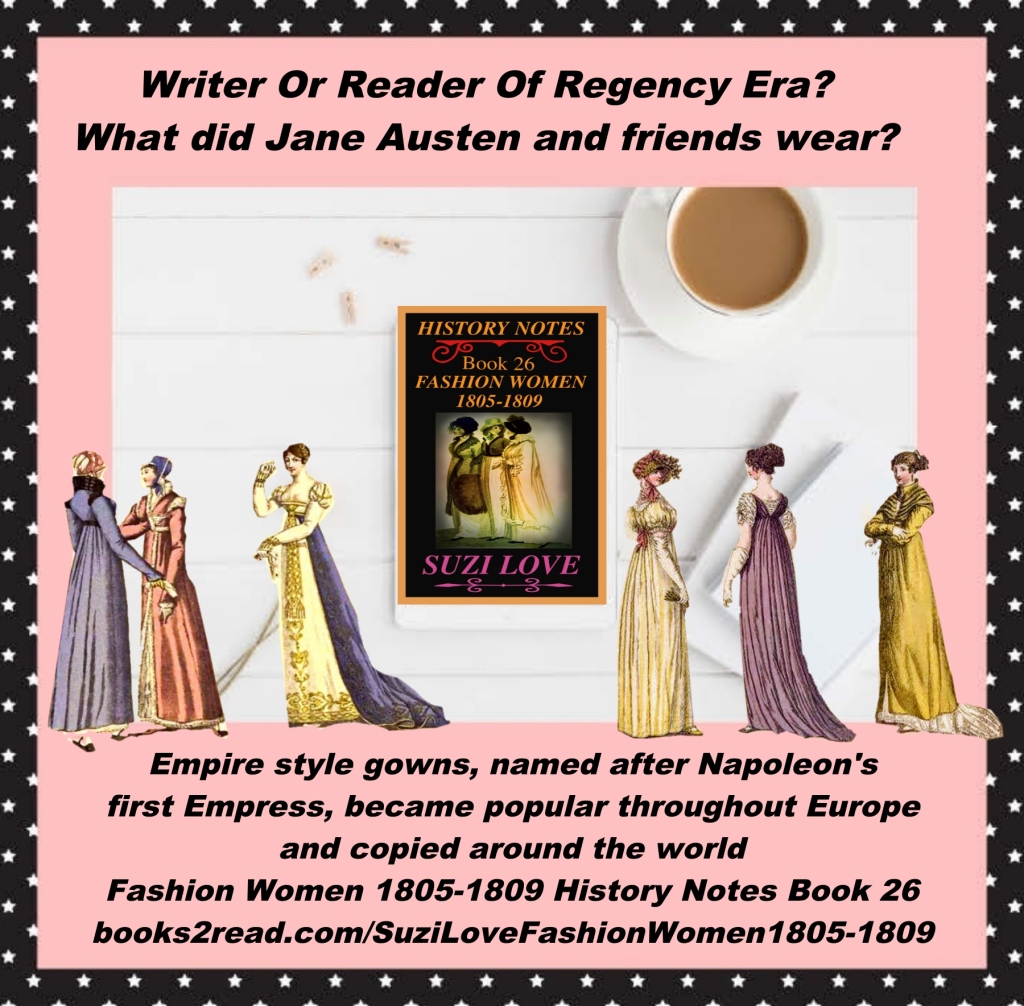
What was fashionable in Jane Austen’s times? Mourning, riding, daytime, evening fashions plus underclothing. #RegencyEra #JaneAusten #Fashion

Suzi Love Posted on September 6, 2023 by Suzi LoveAugust 11, 2023

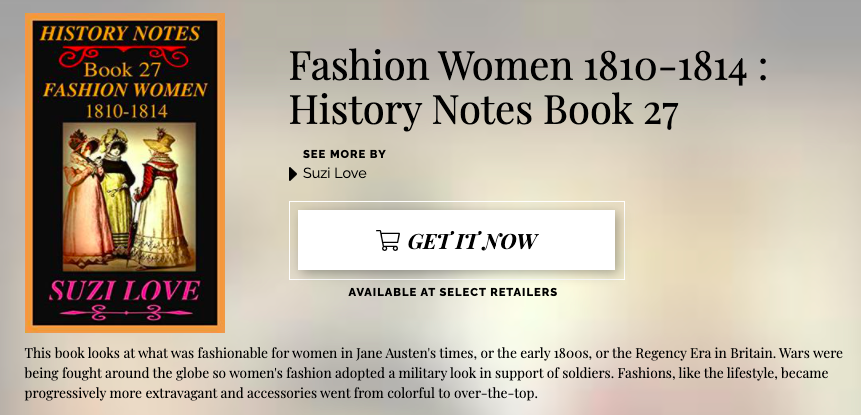
What was fashionable for women in Jane Austen’s times? Mourning, riding, daytime, evening clothing, plus underclothing, corsets and accessories. Fashion Women 1810-1814 History Notes Book 27 This book looks at what was fashionable for women in Jane Austen’s times, or the early 1800s, or the Regency Era in Britain. Wars were being fought around the globe so women’s fashion adopted a military look in support of soldiers. Fashions, like the lifestyle, became progressively more extravagant and accessories went from colorful to over-the-top. https://books2read.com/SuziLoveFashion1810-1814

The Lady’s Magazine said of the basis of women’s fashion that was popular for the first twenty years of the 1800s, ‘White is still the prevailing color for robes. For morning dresses, linen gowns, in large diamonds or squares, are fashionable. Indian muslins, plain or embroidered, are preferred to Florence and satins. The designs of embroidery for shawls are of infinite variety. Long gloves, which reach above the elbow, are not yet laid aside. Medallions are hung around the neck from crossed chains and some of these medallions are shaped like the bags, called ridicules. These reticules are of the lozenge or hexagon shape, with a small tassel at each angle. Reticules, or ridicules, are in lozenge or hexagon shapes with a small tassel at each angle. In capotes, or hats, and ribbands, the violet and dark green prevail over jonquil. Bracelets in hair, pear-shaped ear-rings, medallions on square plates, saltiers of colored stones, are still in fashion.’

HN_27_History Notes book 27 What was fashionable for women in Jane Austen's times? Mourning, riding, daytime, evening clothing, plus underclothing, corsets and accessories. Wars were being fought so women adopted military looks in support of soldiers. https://books2read.com/SuziLoveFashion1810-1814
History Notes book 27 What was fashionable for women in Jane Austen’s times? Mourning, riding, daytime, evening clothing, plus underclothing, corsets and accessories. Wars were being fought so women adopted military looks in support of soldiers. https://books2read.com/SuziLoveFashion1810-1814
HN_27_D2D_FashWomen1810-1814

https://books2read.com/SuziLoveFashion1810-1814
27_D2D_FashWomen1810-1814
Posted in 1800s, 1800s women's fashion, Australia, bedroom fashion, Canada, cartoon, Coat or Pelisse Or Redingote, Corset, dancing, Decorative Item, Dress Or Robe, England, Europe, fashion accessories, France, Google Books, hats, History, History Notes, Jane Austen, London, Regency Era, Regency Fashion, Reticule or Bag, riding, Russia, sewing, shoes, Spencer, Suzi Love Books, Suzi Love Images, U.S.A, underclothing, weddings | Tagged 1800s women's fashion, Book 28, Corset, Dress Or Gown, fans, fashion accessories, Fashion Plate, Fashions Of London and Paris, gloves, google books, Hats And Hair, History Notes, Jane Austen, jewelry, Journal des Dames et des Modes, La Belle Assemblee, mourning, parasol, Regency Fashion, reticule or bag, riding, shawls, Shoes, stockings, Suzi Love Books, The Lady's Magazine, The Lady's Monthly Museum, The Repository Of Arts, underclothing

1880s-1890s Bust improvers added extra padding. #VictorianFashion #VictorianEra #Corset

Suzi Love Posted on August 29, 2023 by Suzi LoveAugust 11, 2023

1880s-1890s Bust improvers.In the late Victorian years, the emphasis was on the silhouette so sometimes ‘bust-improvers’ were used to provide extra padding to the bust shape.

1880s-1890s Bust improvers.
HN _20_D2D_Corsets 1880-1900

https://books2read.com/SuziLoveCorsetBook20
Posted in 1800s, 1800s women's fashion, Australia, Canada, Corset, England, Europe, History Notes, South Pacific, Suzi Love Books, Suzi Love Images, U.S.A, Victorian Era | Tagged 1800s Or 19th Century, 1800s women's fashion, Corset, underclothing, Victorian fashion

Fashion Must Haves In Jane Austen’s Times: Reticules, Spencers, Redingotes. History Notes Series Books 3, 4, and 5. #Regency #JaneAusten #Georgian #Victorian

Suzi Love Posted on August 27, 2023 by Suzi LoveAugust 27, 2023
  • Fashion Must Haves In Jane Austen’s times: Reticules, Spencers, Redingotes. History Notes Books 3, 4, and 5 By Suzi Love.
  • books2read.com/suziloveReticules
  • books2read.com/suziloveSpencers
  • books2read.com/suzilovePelisse
Fashion Accessories: Reticules, Spencers, Redingotes. History Notes Books 3, 4, and 5 By Suzi Love. #Regency #Fashion #History books2read.com/suziloveReticules books2read.com/suziloveSpencers books2read.com/suzilovePelisse
Fashion Must Haves In Jane Austen’s Times: Reticules, Spencers, Redingotes. History Notes Series Books 3, 4, and 5.
  • Reticule Or Bag: Purse, often with a drawstring to pull closed and usually made of cloth or covered cardboard and often decorated with beading or embroidery. Carried by a woman during the Regency period to carry all their daily necessities. in the place of pockets.
  • Spencer: Short jacket, cropped at the waist, worn over a dress, or gown. Delicate and regency dresses provided so little protection from the cold, so over garments were essential for warmth, modesty and good health.
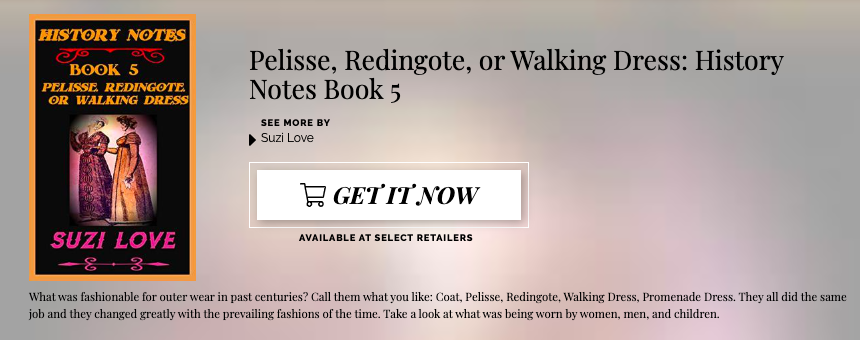
  • Pelisse Or redingote Or Walking Dress: Coat worn over clothing of both sexes for warmth and protection from the elements.
History Notes Book 5 books2read.com/suzilovePelisse
D2D_RetailerBuyLink_HN_5_books2read.com/suzilovePelisse
Posted in 1700s, 1700s Womens Fashion, 1800s, 1800s Mens Fashions, 1800s women's fashion, 1900s, Australia, Canada, Coat or Pelisse Or Redingote, Dress Or Robe, Edwardian Era, England, Europe, fashion accessories, Georgian Era, Georgian Fashion, hats, History Notes, Regency Era, Regency Fashion, Reticule or Bag, Romantic Era, Spencer, Suzi Love Books, Suzi Love Images, U.S.A, Victorian Era | Tagged 1700s Women's Fashion, 1800s women's fashion, Book 3, Book 4, Book 5, Edwardian Era, fashion accessories, Fashion Plate, Georgian Fashion, History Notes, Jane Austen, Redingote Or Pelisse Or Coat, Regency Fashion, reticule or bag, Spencer, Suzi Love Books, Victorian fashion
1812 ca. Collage View. Man's Caped Coat, Or Carrick Coat, European. Wool, linen, and cotton. via Metropolitan Museum New York City, U.S.A. metmuseum.org

1812 Man’s Wool, Linen, and Cotton Coat With Four Shoulder Capes, European. #RegencyEra #Fashion #Coat #MetMuseum

Suzi Love Posted on August 15, 2023 by Suzi LoveAugust 6, 2023

1812 Man’s wool, linen, and cotton long coat with four shoulder capes, European. Also called a Carrick Coat, a Driving Coat, or a Redingote in France. via Metropolitan Museum, NYC, USA. ~ metmuseum.org Credit Line: Purchase, Irene Lewisohn Bequest, 1988. Accession Number: 1988.300

A Regency Era, or early 1800s, gentleman was outfitted in more practical fabrics, such as wool, cotton and buckskin rather than the fussy brocades and silks of the late 1700s. The men in Jane Austen’s life would have worn this sort of warm and practical coat like this when riding his horse in inclement weather or when driving his carriage.

1812 ca. Back View. Man's Caped Coat, Or Carrick Coat, European. Wool, linen, and cotton. via Metropolitan Museum New York City, U.S.A. metmuseum.org
1812 ca. Back View. Man’s Caped Coat, Or Carrick Coat, European. Wool, linen, and cotton. via Metropolitan Museum New York City, U.S.A. metmuseum.org
1812 ca. Front View. Man's Caped Coat, Or Carrick Coat, European. Wool, linen, and cotton. via Metropolitan Museum New York City, U.S.A. metmuseum.org
1812 ca. Front View. Man’s Caped Coat, Or Carrick Coat, European. Wool, linen, and cotton. via Metropolitan Museum New York City, U.S.A. metmuseum.org
1812 ca. Back View Black and White. Man's Caped Coat, Or Carrick Coat, European. Wool, linen, and cotton. via Metropolitan Museum New York City, U.S.A. metmuseum.org
1812 ca. Back View Black and White. Man’s Caped Coat, Or Carrick Coat, European. Wool, linen, and cotton. via Metropolitan Museum New York City, U.S.A. metmuseum.org
1812 ca. Front View Black and White. Man's Caped Coat, Or Carrick Coat, European. Wool, linen, and cotton. via Metropolitan Museum New York City, U.S.A. metmuseum.org
1812 ca. Front View Black and White. Man’s Caped Coat, Or Carrick Coat, European. Wool, linen, and cotton. via Metropolitan Museum New York City, U.S.A. metmuseum.org
1812 ca. Front View Black and White With Umbrella. Man's Caped Coat, Or Carrick Coat, European. Wool, linen, and cotton. via Metropolitan Museum New York City, U.S.A. metmuseum.org
https://books2read.com/SuziLoveFashionMen1800-1819
1812 ca. Front View Black and White With Umbrella. Man’s Caped Coat, Or Carrick Coat, European. Wool, linen, and cotton. via Metropolitan Museum New York City, U.S.A. metmuseum.org

From the finish of the 18th century until 1820, men’s fashions in European and European-influenced countries moved away from the formal wear of brocades, lace, wigs and powder to more informal and relaxed styles. Focus was on undress rather than formal dress. Typical menswear in the early 1800s included a tailcoat, a vest or waistcoat, either breeches, pants, or the newer trousers, stockings, shoes or boots, all worn with an overcoat and hat. This basic ensemble was accessorized with some form of neckcloth or cravat, gloves, walking stick, cane or riding crop, handkerchief, fobs, watch and perhaps a quizzing glass or eye glass. 

Skirted coats were replaced with short-fronted, or cutaway, tailcoats worn over fitted waistcoats and plain, white linen shirts. Knee breeches were gradually replaced by tight-fitting pantaloons and later trousers, decorative shoes with buckles were replaced with a variety of boot styles, and fussy and ruffled neckwear gave way to intricately tied, white linen neck cloths. A Regency Era, or early 1800s, gentleman was outfitted in more practical fabrics, such as wool, cotton and buckskin rather than the fussy brocades and silks of the late 1700s. 

HN_23_D2D_Fashion Men 1800-1819
Posted in 1800s, 1800s Mens Fashions, Australia, Canada, Carriage, Coat or Pelisse Or Redingote, England, Europe, France, Jane Austen, London, Regency Era, Regency Fashion, riding, Russia, sports, travel, U.S.A | Tagged 1800s men fashion, 1800s Or 19th Century, Jane Austen, Metropolitan Museum NYC, Redingote Or Pelisse Or Coat, Regency Fashion

Wedding ring customs that originated in long ago history. #weddings #Customs #history

Suzi Love Posted on June 2, 2022 by Suzi LoveMay 15, 2022

Wedding ring customs that originated in long ago history.

The first wedding rings can be traced back to the Ancient Egyptians when they exchanged rings made from braided reeds and hemp. The tradition of exchanging rings dates back 3,000 years. The first diamond wedding ring was recorded in the will of a widow who died in 1417. The ancient Egyptians believed in the vena amoris, literally the “vein of love” that runs directly from the heart to the fourth finger on the left hand. For the Ancient Greeks, the engagement ring was symbolized with a plain gold band worn on the left hand and at the marriage the same band was shifted to the right hand.

An engagement ring is given at a proposal or when a couple decides to get married whereas a wedding ring is exchanged at the wedding ceremony and represents the official bond of marriage and the binding pledge between spouses. Wedding rings symbolise eternal love and commitment within a relationship and are worn to show the world they are married. During the wedding service, the couple will say their vows to each other while exchanging rings.

Is a wedding ring biblical? : The use of wedding ring is not commanded in the Bible, and there is no indication that it was ever practised in the New Testament. The use of finger ring in the Bible was as a symbol of authority.

Betrothal ring: An old Roman custom confirming that the marriage contract would be carried out. It was the first part of a dowry given, and meant the woman was no longer for sale as the first part of the monetary settlement had been paid. The first betrothal, or engagement, rings were given because there was often a long time between betrothals and weddings. These were usually simple bands of gold, silver, or iron as on royalty or very wealthy people could afford gemstones and diamonds. In 1477, Archduke Maximillian of Austria commissioned the very first diamond engagement ring for his betrothed, Mary of Burgundy, and many of the European aristocracy and nobility followed his lead.

Wedding ring: Many primitive peoples who believed in magic used a rope around the waist or the hand and feet, and later  a ring, to symbolise that the bride was captured and spoken for, and also to ward off any evil spirits hovering around the bride and ensure marital bliss.

The ring hand: A symbol of the humiliating tradition of the man as the master – the right hand of the family –  and the woman being the slave .  The right hand stood for power and authority while the left hand expressed submission and serfdom.

The ring finger : Ancient Greek and Roman anatomists  believed a vein, the vena amoris or the “vein of love”, or a nerve led from the heart to the third finger, the healing finger , so they romantically linked this finger to the heart. Now we know that this is not true and there is no vein that runs from our ring fingers to our hearts. There are also some more practical reasons the third finger continues to be used. It’s the most prominent for displaying a ring and it cannot be extended to its full length on its own and usually remains slightly bent, preventing the ring slipping off.

The Wedding Ring: Also goes on the left ring finger because it is the only finger with a vein that connects to the heart although some countries, such as India, Germany, Spain, Norway, and Russia traditionally wear their wedding rings on their right hand.

Viking Wedding Rings: These were mostly made of silver and bronze and rarely of gold with the designs inspired by Norse Gods, geometric shapes, runes, and animal totems

Gimmel Rings: In the 16th and 17th centuries, European husbands gave their bride a gimmel ring with two interlocking bands. The bride and groom both wore one after their engagement and during the wedding ceremony the rings were joined and the wife wore the ring.

World Wars: During the first World War, many men on the front began wearing wedding rings as a remembrance of their wives and families at home. That custom carried through to World War Two so in the 1950s wedding rings for men became common practice.

Tri-Gold Rings: Gold is the traditional ring metal but some people prefer a mix of colors. Yellow gold represents fidelity, rose gold romantic love, and white gold friendship, so a tri-gold ring symbolizes your shared past, present, and future path. ding ring to symbolize all three, as well as your shared past, present, and future path.

Black Wedding Rings: Some couples choose black wedding bands because they represent everlasting commitment and the color can also mean power, strength and sophistication.

Anniversary or Push Ring: Given on the birth of a first child or an anniversary, usually an important one such as the first, five-year or 10-year anniversary.

Posted in 1700s, 1800s, 1900s, Australia, Canada, Customs & Manners, Decorative Item, Edwardian Era, England, Europe, Georgian Era, Regency Era, Romantic Era, South Pacific, Suzi Love Images, U.S.A, Victorian Era, weddings | Tagged British history, Customs and Traditions, Georgian era, Regency Era, Regency Life, Romantic Era, Suzi Love Research, Victorian Era, weddings | Leave a reply

Post navigation

Next Post→

SUBSCRIBE TO SUZI LOVE'S NEWSLETTER.

Recent Posts

  • Claridge’s Hotel, Mayfair, London, during Bridgerton and Jane Austen years. #Bridgerton #janeausten #London #BritishHistory #ClaridgesHotel #travel
  • Book Hooks: Brent was past caring if he was seen at a courtesan’s ball. #RegencyRomance #HistRom #ReadARegency #EroticRomance
  • Do you read or write Historical Romance? Want a glimpse under dresses worn during the Bridgerton and Jane Austen years? Overview of corsets. #Bridgerton #JaneAusten #GeorgianFashion #RegencyFashion #Corset
  • 1811 Woman Carrying Cloth and a Package. Sewing a dress? #JaneAusten #Regencyfashion #historicalFashion #Sewing
  • 1840-1880 ca. Burgundy and White Silk Jacket, Russian. #RomanticEra #Fashion #Russia

Recent Comments

  1. Suzi Love on Book Hooks: Brent looked at Lillian. ‘Is she correct? You’ve been lonely.’#RegencyRomance #HistRom #ReadARegency #EroticRomance
  2. Lisa Demers on Book Hooks: Brent looked at Lillian. ‘Is she correct? You’ve been lonely.’#RegencyRomance #HistRom #ReadARegency #EroticRomance
  3. Jana Richards on Book Hooks: Brent looked at Lillian. ‘Is she correct? You’ve been lonely.’#RegencyRomance #HistRom #ReadARegency #EroticRomance
  4. Lisabet Sarai on Book Hooks: Brent looked at Lillian. ‘Is she correct? You’ve been lonely.’#RegencyRomance #HistRom #ReadARegency #EroticRomance
  5. James DiBenedetto on Book Hooks: Brent looked at Lillian. ‘Is she correct? You’ve been lonely.’#RegencyRomance #HistRom #ReadARegency #EroticRomance

Login

  • Log in

Archives

  • July 2026
  • June 2026
  • May 2026
  • April 2026
  • March 2026
  • February 2026
  • January 2026
  • December 2025
  • November 2025
  • October 2025
  • September 2025
  • August 2025
  • July 2025
  • June 2025
  • May 2025
  • April 2025
  • March 2025
  • February 2025
  • January 2025
  • December 2024
  • November 2024
  • October 2024
  • September 2024
  • August 2024
  • July 2024
  • June 2024
  • May 2024
  • April 2024
  • March 2024
  • February 2024
  • January 2024
  • November 2023
  • October 2023
  • September 2023
  • August 2023
  • July 2023
  • April 2023
  • March 2023
  • February 2023
  • June 2022
  • April 2022

Categories

  • 1700s
  • 1700s Mens fashion
  • 1700s Womens Fashion
  • 1800s
  • 1800s Mens Fashions
  • 1800s women's fashion
  • 1900s
  • art
  • Australia
  • Bath
  • bedroom fashion
  • Book Hooks
  • Box Or Container
  • Bridgerton
  • Bus Trips
  • Canada
  • Carriage
  • cartoon
  • Celebrity
  • Chatelaine
  • children
  • Children
  • Christmas
  • Coat or Pelisse Or Redingote
  • Contemporary
  • Corset
  • Couple
  • Customs & Manners
  • dancing
  • December Scandal
  • Decorative Item
  • Dress Or Robe
  • Easter
  • Edwardian Era
  • Embracing Scandal
  • England
  • Ester In Images
  • Europe
  • Events
  • Fashion
  • fashion accessories
  • Food and Drink
  • Four Times A Virgin
  • France
  • furniture
  • Georgian Era
  • Georgian Fashion
  • Google Books
  • Grand Tour
  • Group
  • hats
  • History
  • History Events
  • History Notes
  • History Of Christmases Past
  • household
  • Hygiene
  • Irresistible Aristocrats
  • Jane Austen
  • Keanu Reeves
  • Kellys Justice
  • Legal
  • London
  • Love After Waterloo
  • Loving Lady Katharine
  • medical
  • military
  • money
  • mourning
  • Music
  • Outback Arrival
  • pants
  • Pastimes
  • peerage
  • People
  • Petunia and Pearl Diver
  • Places
  • Pleasure House Ball
  • postal
  • Queensland
  • Quotations
  • Regency Era
  • Regency Fashion
  • Regency Life Series
  • Reticule or Bag
  • riding
  • Romantic Era
  • Royalty
  • Russia
  • Scandalous Siblings Series
  • Scenting Scandal
  • Self Publishing
  • sewing
  • Shirt
  • shoes
  • Shopping
  • South Pacific
  • Spencer
  • sports
  • Suit
  • Sunday Snippet
  • Suzi Love
  • Suzi Love Books
  • Suzi Love Images
  • Suzi Love Writing
  • Swain Cove
  • THe Viscount's Pleasure House
  • travel
  • U.S.A
  • underclothing
  • Vest or Waistcoat
  • Victorian Era
  • Victorian Fashion
  • weapons
  • weddings
  • Writing Tools

1800s men fashion 1800s women's fashion antiques Bridgerton British history Cartoons Corset cravat decorative Dress Or Gown England europe fashion accessories Fashion Plate France Georgian era Georgian Fashion gloves google books Hats And Hair historical romance History Notes household Jane Austen jewelry Journal des Dames et des Modes London Metropolitan Museum NYC pants Redingote Or Pelisse Or Coat Regency Era Regency Fashion Regency London reticule or bag riding sewing shawls Shoes Suzi Love Books Suzi Love Images Tailcoat The Repository Of Arts underclothing Vest or Waistcoat Writing Tools

©2026 - Suzi Love - Weaver Xtreme Theme Privacy Policy
↑