1830 ca. Rosewood and Inlaid Brass Inkstand, England. Each side has cut-glass inkwells with brass inlaid tops and pen trays, so ideal for a partners desk. via 1st Dibs Auctions 1stdibs.com



1830 ca. Rosewood and Inlaid Brass Inkstand, England. Each side has cut-glass inkwells with brass inlaid tops and pen trays, so ideal for a partners desk. via 1st Dibs Auctions 1stdibs.com
What Sort Of Pianoforte or Piano Was Played By Jane Austen and Contemporaries? Pianos, pianofortes and more. History Notes Book 7 Music Pianos books2read.com/suziloveMusicPiano
Definition Pianoforte or Piano: ‘Stringed keyboard instrument with a hammer action, as opposed to the jack and quill action of the harpsichord. Capable of gradations of soft and loud, the piano became the central instrument of music pedagogy and amateur study. By the end of the nineteenth century, no middle-class household of any stature in Europe or North America was without one.’ Definition via the Metropolitan Museum, NYC.
Around 1700, the Pianoforte, or Piano, was invented in Italy by Bartolomeo Cristofori, who created a hammer action keyboard instrument on which a musician could make changes in loudness by changing the force with which the keys were struck. He called his instrument “gravicembalo col piano e forte”, or, (harpsichord with soft and loud). Cristofori’s long name was later shortened to fortepiano or pianoforte, and finally just piano.
Musical Instruments were so important in most of the more affluent households in history that large industries grew all around the world to manufacture instruments, musical accessories, and to print sheet music. Pianos, pianofortes, harpsichords, and organs were found everywhere and were often the focus of a family gathering. By the end of the 18th Century, the pianoforte, or piano, was the leading instrument of Western music.


A portrait from 1810-1814 of Rudolph Ackermann, shop owner and founder of ‘The Repository Of Arts’ magazine, The Strand, London. via National Portrait Gallery, London. Plus, an image of Ackermann’s premises in 1809. His ‘Repository of Arts, Literature, Fashion, Manufactures, etc.’ was published from 1809 to 1829 with images of Regency London, Regency furnishings and grand homes as well as beautiful fashion prints and descriptions every month. Ackermann originally supplied artists, amateur and professional, with supplies for watercolor painting. In 1799, he began manufacturing and selling his own watercolor paint blocks which were supplied by other colourmen, although at least three colors were his own mixture – Ackermann’s Green, White and Yellow. From 1817, his eldest son Rudolph Ackermann junior was responsible for the watercolor manufacturing. Ackermann also trained as a carriage designer. He began publishing prints and colour-plate books like ‘The Microcosm of London’ and ‘Doctor Syntax’ in the early 1800s.
The Repository of Arts was one the most popular magazines in Jane Austen’s time as it displayed everything ladies wanted to learn e.g. history, important country seats and houses in England, music, current events such as theatre plays, plus fashion plates and embroidery patterns. Ackermann’s shop in The Strand, London, was one of the fashionable places to shop during the Regency Era. The Repository also included poetry, travel reports, society reports and upcoming lectures. It also included serious subjects e.g. politics, legal matters, medicine and agriculture, a meteorological journal and details of the London markets. In 1817, the price of the magazine was 4 Shillings, so quite expensive for the time.
In the first issue, published for January 1809, Ackermann included an ‘introduction to the history of the useful and polite arts’ which said: “It is universally admitted, that to cultivate a taste for the arts, and an acquaintance with the sciences, is a pleasure of the most refined nature; but to do this without regard to its influence upon the passions and affections, is to ‘tear a tree for its blossoms, which is capable of yielding the richest and most valuable fruit.’ The cultivation of this taste may and ought to be subservient to higher and more important purposes: it should dignify and exalt our affections, and elevate them to the admiration and love of that Being who is the author of every thing that is fair, sublime, and good in nature.”



1816 Inside a dining room by Martin Drolling. Via Wikimedia Commons commons.wikimedia.org (PD-ART) This is typical of the inside of a gentleman’s household in Jane Austen’s times.


19th Century Early. Gilt and Patinated Bronze Inkstand , or Encrier, or a little reservoir of ink. Rectangular base mounted with a round lidded ink pot with a porcelain container and a sand pot, each raised on winged lion feet, centered by a palm decorated columnar carrying handle, with two pen holes. via 1st Dibs Auctions 1stdibs.com
The type of inkstand that households woulds have in Bridgerton and Jane Austen households for writing letters and keeping track of estate matters.

1800’s Flat men’s shoes, presumably part of the livrée-like Römer servant’s uniform of the type worn until 1866. via historisches-museum.frankfurt.de



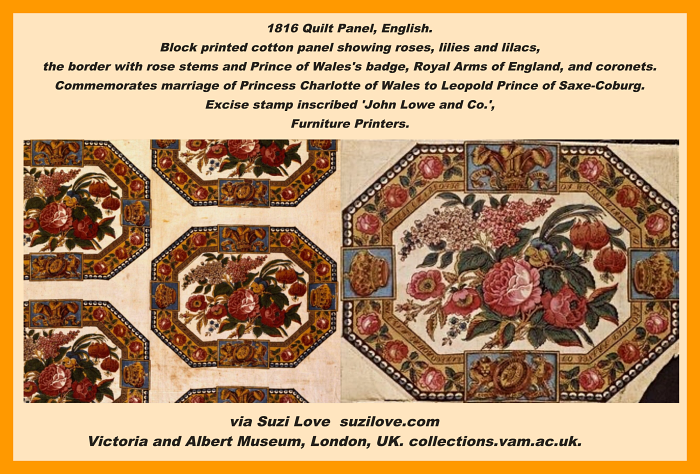
Textile of block-printed white cotton in madder colours with pencilled blue. The cotton is printed with 9.5 octagonal panels intended to be cut out and applied to patchwork quilts. Each panels contains a bunch of flowers. Around the inner border is an inscription of Princess Charlotte of Wales married to Leopold Prince of Saxe-Coburg May 2, 1816. In the borders are three Prince of Wales feathers, the Royal Arms, and a crown on each side. At the end of the textile is printed a rectangular panel containing the manufacturers name and in a corner is the name ‘G. Swindels’.
This quilt has an excise stamp for 1816 and is inscribed ‘John Lowe and Co. Furniture Printers, Shepley Hall’, providing the name of the only identifiable manufacturer of these panels, although there are likely to have been others. John Lowe was a well-known firm of calico printers with large cotton factories and extensive bleaching grounds close to the River Tame near Ashton-under-Lyne in Lancashire.
Hand-quilting is done on a frame using needles called ‘betweens’. The stitches are executed with one hand; the other hand is kept underneath the quilt to feel for the needle. Small, uniform stitches (usually a ‘running stitch’) are taken through the three layers to form a decorative design. In ‘piecing’ or ‘patchwork’, small pieces of fabric are sewn together to produce a decorative design. The most enduring method in Britain is done by hand, and is known as ‘piecing over paper’. The pattern is first drawn onto paper and then accurately cut. Small pieces of fabric are tacked round each of the shapes, and then joined together from the back using overstitch. Most of the quilt top visible here has been pieced over paper, but in some areas the fabrics have been applied directly on to the earlier quilt that forms the wadding.
Victoria and Albert Museum, London, England.



19th Century Set of Damascened Calligrapher’s Tools, Turkey. via Sotheby’s Auctions. sothebys.com
books2read.com/SuziLoveWritingTools


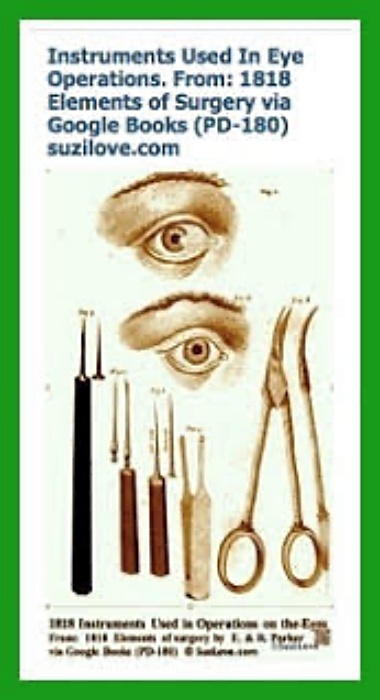
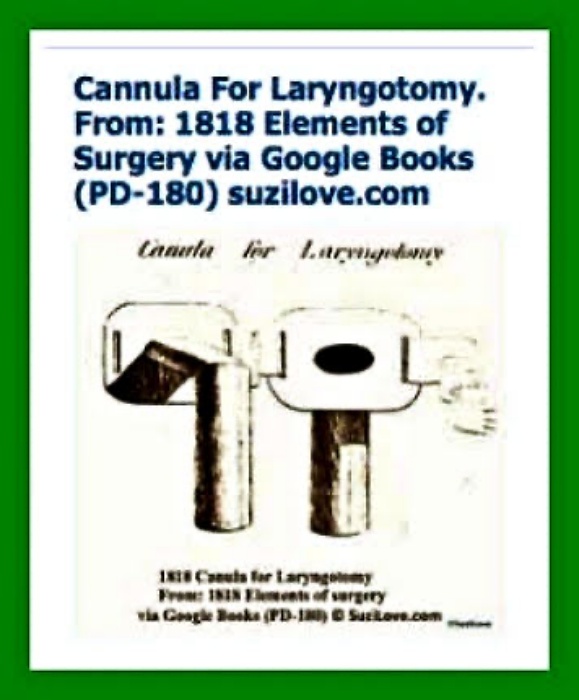
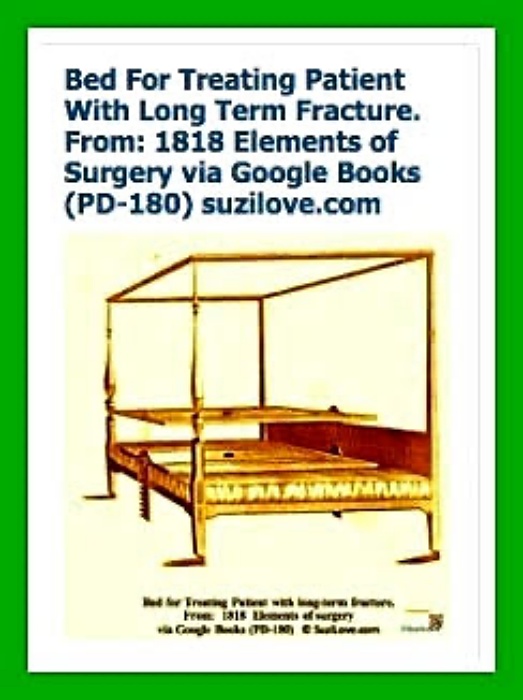
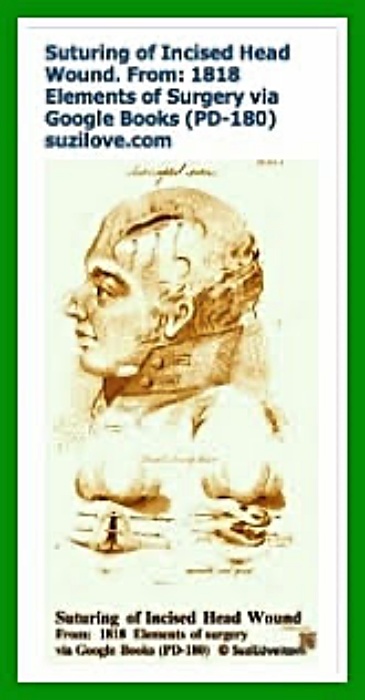
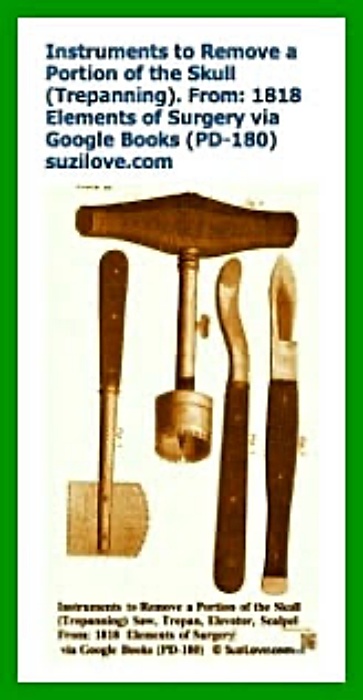
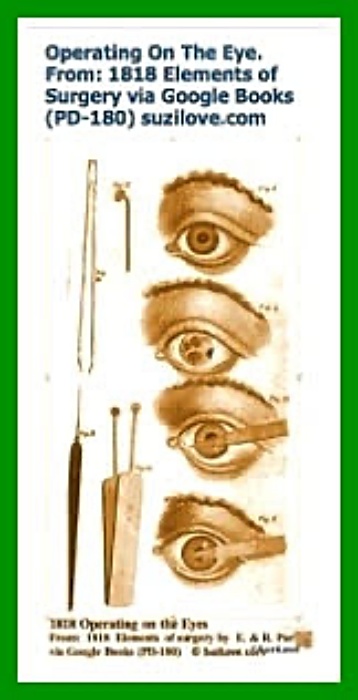
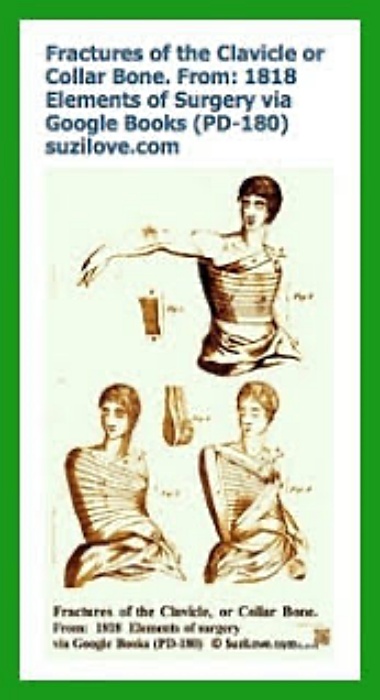
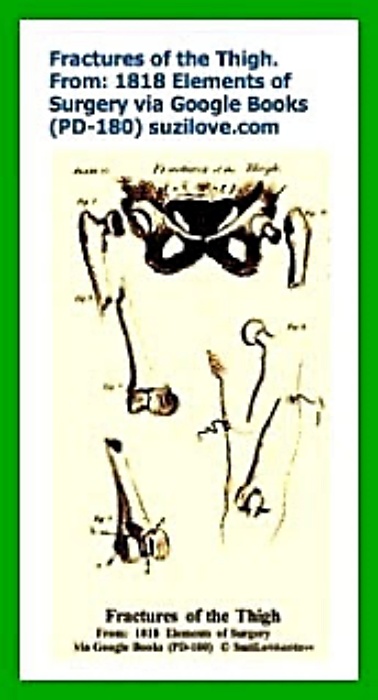
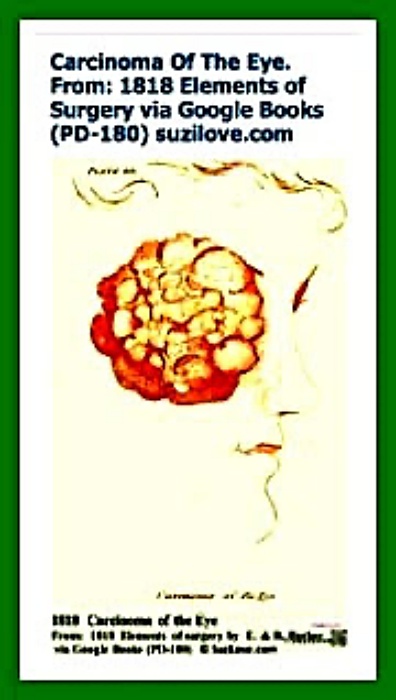
Medical History. Images from historical surgery and hospital treatments after surgery. 1818 Elements of Surgery. Via Google Books (PD-200) All these images can be found on my Pinterest board for History – Medical. In Jane Austen’s times, medical problems were mainly dealt with in the home. A surgeon or apothecary might be called but the care of the patient and administering medications and treatments was the family’s responsibility, possibly with the help of servants.