↓
 

Suzi Love

Making history fun, one year at a time.

Header_
  • Home
  • Newsletter
  • Pre order form
  • Shop
    • Cart
    • Checkout
    • My account
    • Refund and Returns Policy
  • Blog
  • BOOKS
    • History Events
    • Kelly’s Justice
    • Outback Arrival
    • Irresistible Aristocrats
    • History Notes
    • Scandalous Siblings
    • Love After Waterloo
    • Regency Life Series
  • Privacy Policy
  • EVENTS
Home » History » Customs & Manners » Page 13 << 1 2 … 11 12 13

Category Archives: Customs & Manners

Post navigation

Next Post→

What was fashionable in Bridgerton and Jane Austen times? Mourning, riding, daytime, evening fashions plus corsets and underclothing. #Bridgerton #RegencyFashion #JaneAusten

Suzi Love Posted on August 24, 2024 by Suzi LoveAugust 23, 2024

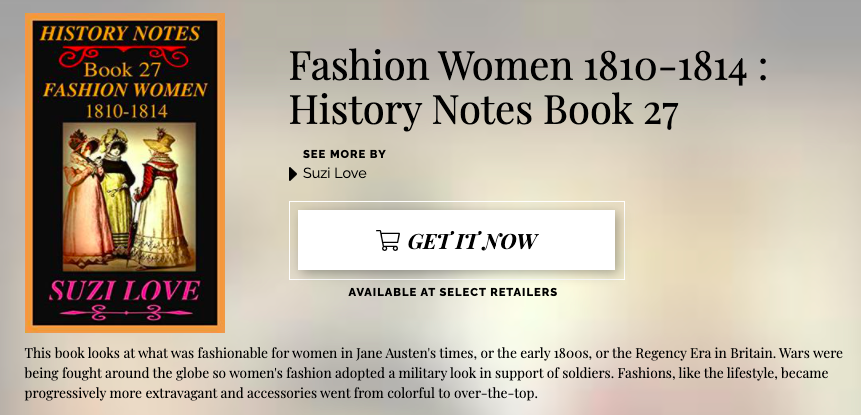
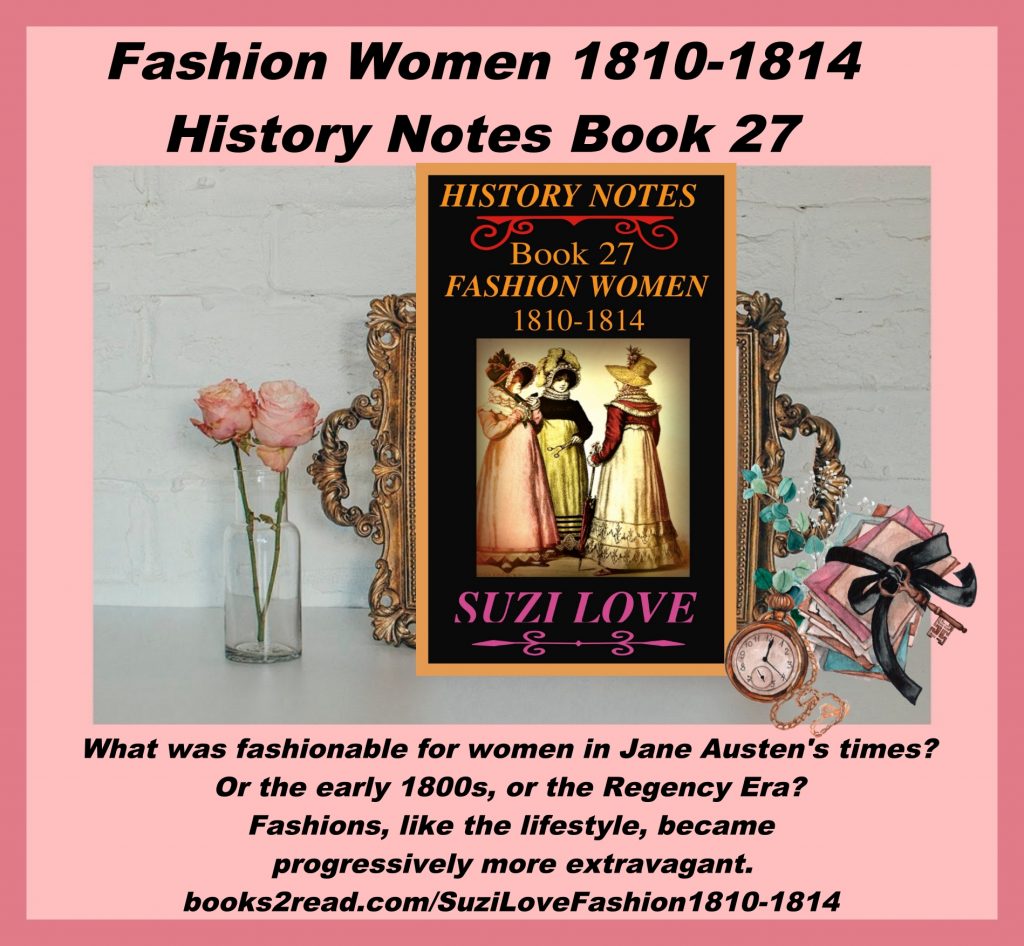
What was fashionable for women in Jane Austen’s times? Mourning, riding, daytime, evening clothing, plus underclothing, corsets and accessories. Fashion Women 1810-1814 History Notes Book 27 This book looks at what was fashionable for women in Jane Austen’s times, or the early 1800s, or the Regency Era in Britain. Wars were being fought around the globe so women’s fashion adopted a military look in support of soldiers. Fashions, like the lifestyle, became progressively more extravagant and accessories went from colorful to over-the-top. https://books2read.com/SuziLoveFashion1810-1814

The Lady’s Magazine said of the basis of women’s fashion that was popular for the first twenty years of the 1800s, ‘White is still the prevailing color for robes. For morning dresses, linen gowns, in large diamonds or squares, are fashionable. Indian muslins, plain or embroidered, are preferred to Florence and satins. The designs of embroidery for shawls are of infinite variety. Long gloves, which reach above the elbow, are not yet laid aside. Medallions are hung around the neck from crossed chains and some of these medallions are shaped like the bags, called ridicules. These reticules are of the lozenge or hexagon shape, with a small tassel at each angle. Reticules, or ridicules, are in lozenge or hexagon shapes with a small tassel at each angle. In capotes, or hats, and ribbands, the violet and dark green prevail over jonquil. Bracelets in hair, pear-shaped ear-rings, medallions on square plates, saltiers of colored stones, are still in fashion.’

HN_27_History Notes book 27 What was fashionable for women in Jane Austen's times? Mourning, riding, daytime, evening clothing, plus underclothing, corsets and accessories. Wars were being fought so women adopted military looks in support of soldiers. https://books2read.com/SuziLoveFashion1810-1814

https://books2read.com/SuziLoveFashion1810-1814
HN_27_D2D_FashWomen1810-1814

https://books2read.com/SuziLoveFashion1810-1814
27_D2D_FashWomen1810-1814
Posted in 1800s, 1800s women's fashion, art, Australia, bedroom fashion, Canada, cartoon, Coat or Pelisse Or Redingote, Corset, Customs & Manners, dancing, Decorative Item, Dress Or Robe, England, Europe, fashion accessories, France, hats, History, History Notes, Jane Austen, London, Music, Pastimes, peerage, Regency Era, Regency Fashion, Reticule or Bag, riding, Russia, sewing, shoes, Spencer, Suzi Love Books, Suzi Love Images, travel, U.S.A, underclothing, weddings | Tagged 1800s women's fashion, Book 28, Corset, Dress Or Gown, fans, fashion accessories, Fashion Plate, Fashions Of London and Paris, gloves, google books, Hats And Hair, History Notes, Jane Austen, jewelry, Journal des Dames et des Modes, La Belle Assemblee, mourning, parasol, Regency Fashion, reticule or bag, riding, shawls, Shoes, stockings, Suzi Love Books, The Lady's Magazine, The Lady's Monthly Museum, The Repository Of Arts, underclothing

What did Jane Austen wear? Her family and friends wore elegant and pretty fashions in the early 1800s. #RegencyEra #JaneAusten #HistoricalFashion

Suzi Love Posted on August 17, 2024 by Suzi LoveAugust 17, 2024

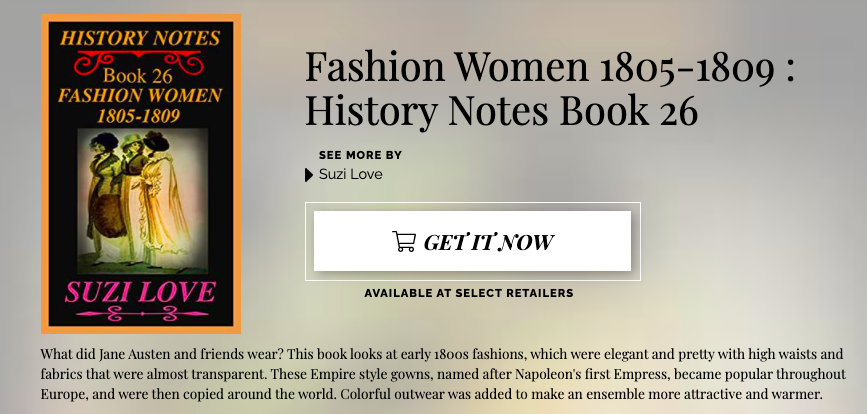
What did Jane Austen and friends wear? Early 1800s fashions were elegant and pretty with high waists and fabrics that were almost transparent. These Empire style gowns, named after Napoleon’s first Empress, became popular throughout Europe, and were then copied around the world. Colorful outwear was added to make an ensemble more attractive and warmer. History Notes Book 26 Fashion Women 1805-1809.
https://books2read.com/SuziLoveFashionWomen1805-1809

The Empire waist gown defined women’s fashion during the Regency Era. ‘Empire’ is the name given in France to the period when Napoleon built his French Empire. High-waisted, loose gowns were adopted by the aristocracy as a symbol of turning away from the fussy, elaborate and expensive clothing worn in the 1700s. Jean-Jaques Rousseau advocated copying peasants and returning to a simpler life and more natural fashions. Unrestricting clothing was part of the new Democracy in France and these simpler and flowing fashions were adopted all over Europe, including Britain and despite the continual wars being fought against France during the early 1800s. Not even war stopped fashions from being copied everywhere.

HN-26_Fashion Women 1805-1809 History Notes Book 26 What did Jane Austen and friends wear? This book looks at early 1800s fashions, which were elegant and pretty with high waists and fabrics that were almost transparent. These Empire style gowns, named after Napoleon's first Empress, became popular throughout Europe, and were then copied around the world. Colorful outwear was added to make an ensemble more attractive and warmer. https://books2read.com/SuziLoveFashionWomen1805-1809
HN_26_D2D_FsshionWomen1805-1809 
https://books2read.com/SuziLoveFashionWomen1805-1809
HN_26_D2D_FsshionWomen1805-1809
Posted in 1800s, 1800s women's fashion, art, Australia, bedroom fashion, Canada, cartoon, Coat or Pelisse Or Redingote, Corset, Customs & Manners, dancing, Dress Or Robe, England, Europe, fashion accessories, France, hats, History, History Notes, Jane Austen, London, mourning, Regency Era, Regency Fashion, Reticule or Bag, riding, Russia, shoes, Spencer, Suzi Love Books, Suzi Love Images, U.S.A, underclothing | Tagged 1800s women's fashion, Book 26, Corset, Dress Or Gown, fashion accessories, Fashion Plate, Fashions Of London and Paris, google books, Hats And Hair, History Notes, Jane Austen, jewelry, Journal des Dames et des Modes, La Belle Assemblee, mourning, Napoleon Bonaparte, Regency Fashion, riding, shawls, Shoes, Spencer, Suzi Love Books, The Lady's Monthly Museum, The Repository Of Arts, underclothing, weddings

18th Century Taking Snuff and Pretty Snuff Boxes. #Georgian #Antiques #BritishHistory

Suzi Love Posted on June 6, 2024 by Suzi LoveJune 4, 2024

18th Century Snuff Boxes. Not only were boxes made to serve a purpose, but decorative boxes of all types were prized, especially in the 18th Century when everything decorative and extravagant was in vogue and taking a pinch of snuff was fashionable. Snuff is made from ground or pulverized tobacco leaves and is sniffed from a pinch of snuff placed on the back of the hand. Flavorings were added to the tobacco to give a fast hit of nicotine and a lasting scent. Snuff began in the Americas and was used in Europe by the 17th Century.

Snuff became popular from the mid 1600s to the mid 1800s and was more popular than smoking. Inhaling snuff, or snuffing, was first seen by a European missionary in 1493 in Christopher Columbus’s new world within Haiti’s indigenous Taino. Until then, tobacco had been unknown to Europeans, but its use spread quickly throughout Europe during the 1500s.  By the second half of the 17th century, ornate boxes started being produced to keep the precious powder dry and an entire industry making accessories blossomed around the fashion of taking snuff.  Noblemen, and some women, carried extravagantly decorated snuff boxes with them at all times and would offer a pinch of their own particular blend to friends and family. Therefore, these boxes were always on display and so it became a competition to see who could have the most bejeweled or expensive box possible. books2read.com/suziloveFashMen1700

1770-1771 ca. Gold and Enamel Snuffbox With Three Putti Playing cards. By Nicholas Prevost, Paris, France. via suzilove.com Victoria and Albert Museum, London, UK. collections.vam.ac.uk.
1770-1771 ca. Gold and Enamel Snuffbox
18th Century ca. Gold and Enamel Snuff Box, Europe. Cartouche-form, cover with courtship scene in stylized rococo setting, ground later enameled in translucent colors. via suzilove.com and Christie’s Auction Rooms. christies.com
18th Century ca. Gold and Enamel Snuff Box, Europe.
1759 Gold Snuff Box, English. By John Barbe, London, UK. Jason and the Gold Fleece to King Pelias on lid, sides with picturesque ruins and flowers in rococo scrollwork. via suzilove.com and Sotheby's Auctions. sothebys.com
1759 Gold Snuff Box, English.
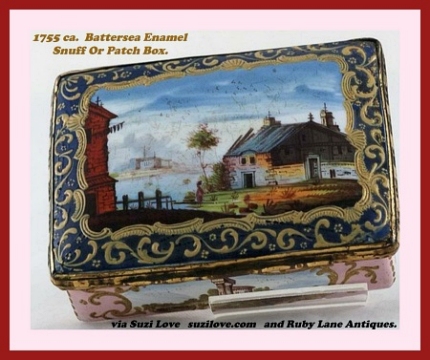
1755 Battersea Enamel Snuff Or Patch Box. via suzilove.com and Ruby Lane Antiques. rubylane.com
1755 Battersea Enamel Snuff Or Patch Box.
1754-1755 ca. Gold Snuffbox, French. Engine-turned overall with undulating ribbons, for two types of powdered tobacco, By Jean Ducrollay, 1754-1755, Paris, France. via suzilove.com Victoria and Albert Museum, London, UK. collections.vam.ac.uk.
1754-1755 ca. Gold Snuffbox, French.
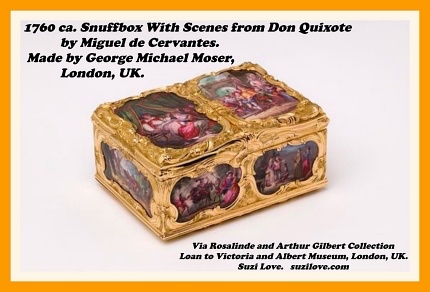
1760 ca. Snuffbox With Scenes from Don Quixote by Miguel de Cervantes, George Michael Moser, London via suzilove.com Victoria and Albert Museum, London, UK. collections.vam.ac.uk.
1760 ca. Snuffbox With Scenes from Don Quixote
1760 ca. Gold Mounted Lapis Lazuli Snuff Box with Shell Inlays, probably Dresden, Germany. By Heinrich Taddel. museum no. Loan-Gilbert.404-2008 suzilove.com
1760 ca. Gold Mounted Lapis Lazuli Snuff Box
1700s Portrait Miniature Snuff Box of Gold and Tortoiseshell, French. via suzilove.com and 1st Dibs Auctions 1stdibs.com
1700s Portrait Miniature Snuff Box of Gold and Tortoiseshell
1750 ca. Carved Agate Snuffbox, Germany. via suzilove.com Victoria and Albert Museum, London, UK. collections.vam.ac.uk.
1750 ca. Carved Agate Snuffbox, Germany.
1749-1750 ca. Double Snuff Box, French. By Jean Ducrollay (French, born 1709, master 1734, recorded 1760) Paris. via suzilove.com and Metropolitan Museum New York City, U.S.A. metmuseum.org
1749-1750 ca. Double Snuff Box, French.
1728-1729 ca. Snuffbox With Dolphin and Ship, Paris, France. via suzilove.com Victoria and Albert Museum, London, UK. collections.vam.ac.uk.
1728-1729 ca. Snuffbox With Dolphin and Ship,
RL_2_D2D_RetailerBuyLink_RL_2
RL_2_D2D_RetailerBuyLink_RL_2 https://books2read.com/suziloveYGD
Posted in 1700s, art, Box Or Container, Customs & Manners, Decorative Item, England, Europe, Georgian Era, History, Suzi Love Images, U.S.A | Tagged 1700s Or Georgian Era, antiques, art, Box Or Container, decorative, Georgian era, snuff, Suzi Love Images, Suzi Love Research

1800 ca. Pair of Flintlock Duelling Pistols Owned by Captain William Waller (active 1794-1807) #Regency #Weapon #JaneAusten #duel

Suzi Love Posted on March 28, 2024 by Suzi LoveMarch 27, 2025

1800 ca. Pair of Flintlock Duelling Pistols. Owned by Captain William Waller (active 1794-1807). Walnut stock, chequered grips, rounded butts, fitted with two silver pipes containing ramrods. Silver trigger guards engraved and end in pineapple shaped finials, each with flintlock containing flints. Lock plates engraved with leaf design, octagonal barrels browned with narrow gold bands near lock. via Royal Museums Greenwich collections.rmg.co.uk

During the Regency Era and Jane Austen’s writing years, dueling was illegal, although secret duels still happened. Courts were made up of peers and they rarely charged another peer for anything illegal. Honor and gentlemanly behavior were the most important things to men so if there was an offense committed, a dawn duel was arranged with seconds to check the weapons used and a doctor in case of injuries.

1800 ca. Pair of Flintlock Duelling Pistols. Owned by Captain William Waller (active 1794-1807). Walnut stock, chequered grips, rounded butts, fitted with two silver pipes containing ramrods. Silver trigger guards engraved and end in pineapple shaped finials, each with flintlock containing flints. Lock plates engraved with leaf design, octagonal barrels browned with narrow gold bands near lock. via Royal Museums Greenwich collections.rmg.co.uk
RL_2_D2D_RetailerBuyLink_RL_2
RL_2_D2D_RetailerBuyLink_RL_2 https://books2read.com/suziloveYGD
RL_1_D2D_Regency Overview RetailerLinks
https://books2read.com/suziloveROver
RL_1_D2D_Regency Overview RetailerLinks https://books2read.com/suziloveROver
Posted in 1800s, Customs & Manners, England, History, Jane Austen, Pastimes, Regency Era, Suzi Love Images, weapons | Tagged duelling, Jane Austen, London, Pistols, Regency Life, Regency Men, Royal Museums Greenwich, Suzi Love Images, Suzi Love Research, weapons
1797-1897 Modes Of Paris Collage. From Illustrations by François Courboin from Octave Uzanne's Les Modes de Paris.

1800 Un Salon, Or Public Room, At Frascati, Paris. #Regency #Paris #Art

Suzi Love Posted on February 5, 2024 by Suzi LoveFebruary 4, 2024

1800 Un salon, or public Room, at Frascati, Paris. This plate depicts a group of people at Frascati’s. The man in the foreground is plainly dressed in dark colors while pastels are favored by the women. From: Illustrations by Francois Courboin from Octave Uzanne’s Les Modes de Paris.  (PD-Art) Although this is in Paris, there were similar places in England where Jane Austen and her contemporaries would meet to eat, drink and play games.

Frascati’s was a cafe in Paris, described by the text as “‘A stream of human beauty’, as the expression of the period has it, was still to be seen flowing through the galleries of Greek and Roman antiquities, spreading through the porticos, into the saloons, and smaller chambers, pouring and winding along the garden alleys, and disappearing at last into the kiosks where it was lost to sight. The great mirror at the end of the garden reflected, as in a wonderful prismatic vision, the surging crowd of veiled or turbaned heads of ever-changing couples, each whispering and fondly clasped. While farther off seated at tables in the open air, thirsty nymphs called for creams and tutti frutti and all the various iced compounds then so eagerly consumed.”

1800 Un Salon, or Public Room, at Frascati, Paris. Frascati's was a popular cafe in Paris where people walked through the galleries of Greek and Roman antiquities, past the porticos, into saloons and smaller chambers, winding along the garden alleys and disappearing into kiosks. The man wears darker clothing while the women are in colorful dresses. via Suzi Love ~ suzilove.com & Illustrations by François Courboin, French librarian (1865-1926)  From Octave Uzanne's 'Les Modes de Paris, or Fashion in Paris,' the various phases of feminine taste and aesthetics from 1797 to 1897.  (PD-Art) via Brown University Library, U.S.A. https://books2read.com/SuziLoveFashionMen1800-1819
1800 Un Salon, or Public Room, at Frascati, Paris. Frascati’s was a popular cafe in Paris where people walked through the galleries of Greek and Roman antiquities, past the porticos, into saloons and smaller chambers, winding along the garden alleys and disappearing into kiosks. The man wears darker clothing while the women are in colorful dresses. via Suzi Love ~ suzilove.com & Illustrations by François Courboin, French librarian (1865-1926) From Octave Uzanne’s ‘Les Modes de Paris, or Fashion in Paris,’ the various phases of feminine taste and aesthetics from 1797 to 1897. (PD-Art) via Brown University Library, U.S.A.

From the finish of the 18th century until 1820, men’s fashions in European and European-influenced countries moved away from the formal wear of brocades, lace, wigs and powder to more informal and relaxed styles. Focus was on undress rather than formal dress. Typical menswear in the early 1800s included a tailcoat, a vest or waistcoat, either breeches, pants, or the newer trousers, stockings, shoes or boots, all worn with an overcoat and hat. This basic ensemble was accessorized with some form of neckcloth or cravat, gloves, walking stick, cane or riding crop, handkerchief, fobs, watch and perhaps a quizzing glass or eye glass. 

Skirted coats were replaced with short-fronted, or cutaway, tailcoats worn over fitted waistcoats and plain, white linen shirts. Knee breeches were gradually replaced by tight-fitting pantaloons and later trousers, decorative shoes with buckles were replaced with a variety of boot styles, and fussy and ruffled neckwear gave way to intricately tied, white linen neck cloths. A Regency Era, or early 1800s, gentleman was outfitted in more practical fabrics, such as wool, cotton and buckskin rather than the fussy brocades and silks of the late 1700s. 

HN_23_D2D_Fashion Men 1800-1819
Posted in 1800s, 1800s Mens Fashions, art, cartoon, Coat or Pelisse Or Redingote, Customs & Manners, Europe, fashion accessories, France, hats, Jane Austen, pants, Regency Era, Regency Fashion, shoes, Suit, Suzi Love Images | Tagged 1800s men fashion, boots, Cartoons, fashion accessories, Food, France, Hats And Hair, Jane Austen, Modes de Paris, pants, pastimes, Redingote Or Pelisse Or Coat, Regency Fashion, Shoes

1826 Regency Gentleman’s Sporting Life By Robert Cruikshank. #Cartoon #RegencyEra #GoogleBooks  

Suzi Love Posted on October 28, 2023 by Suzi LoveAugust 20, 2023

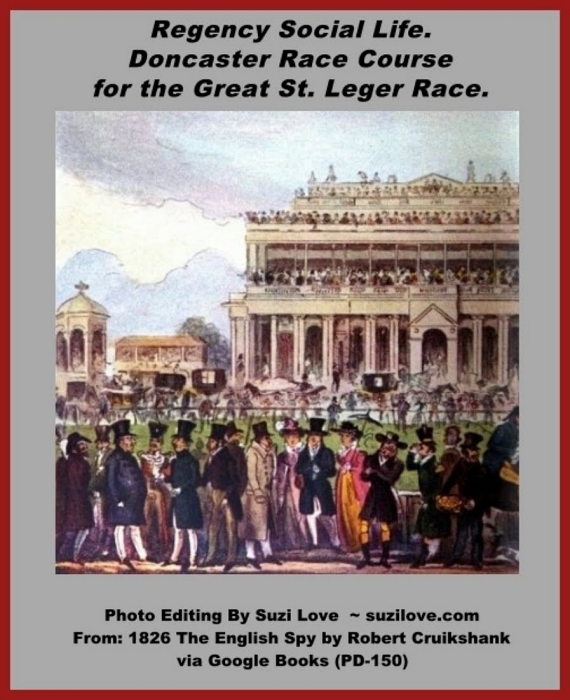
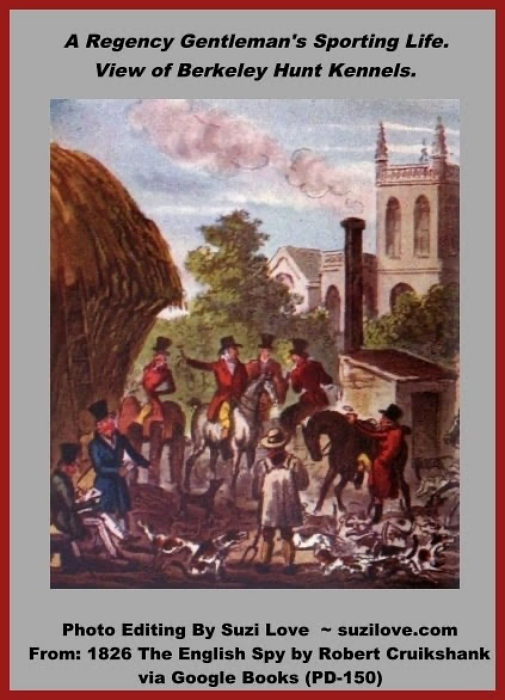
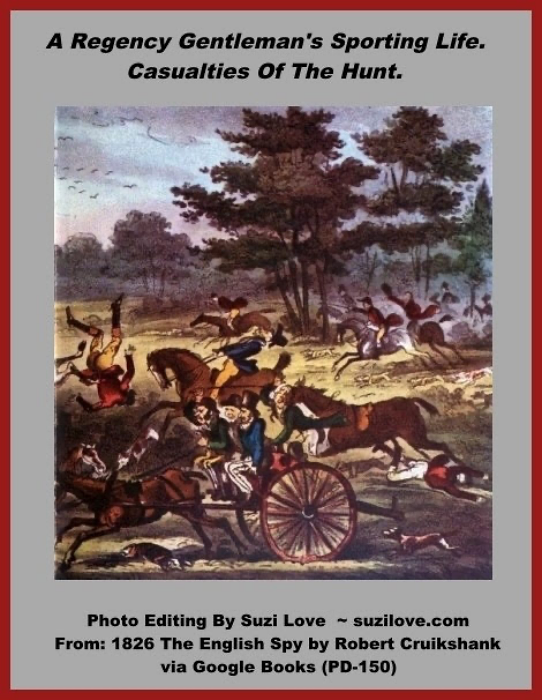
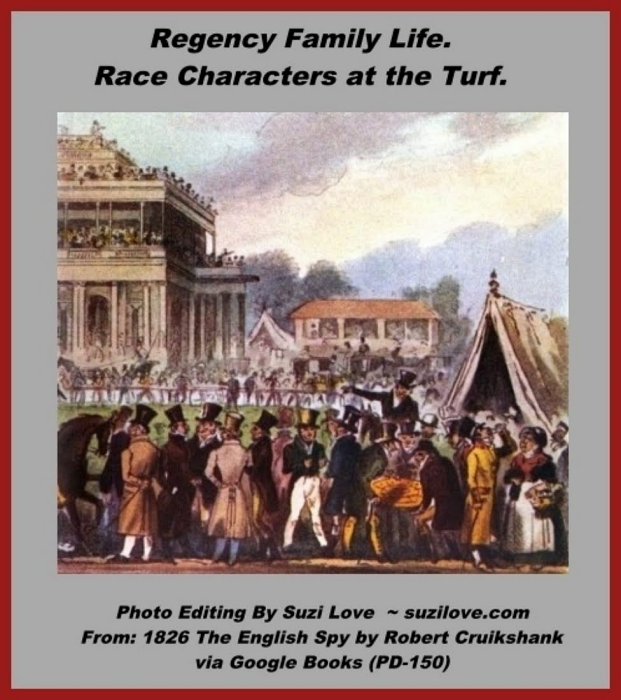
Regency Gentleman’s Sporting Life in the times of Jane Austen. By Robert Cruikshank  via Google Books Races, bowls, sailing, fox hunting… all the sports enjoyed by people in Regency Era. From: 1826 The English Spy by Robert Cruikshank via Google Books (PD150)

1826 Doncaster Race Course for the Great St. Leger Race. Regency Sporting Life. via 1826 The English Spy By English Cartoonist, Robert Cruikshank.
1826 Bowling Alley at Worcester, England. Regency Sporting Life. via 1826 The English Spy By English Cartoonist, Robert Cruikshank.
1826 View of Berkeley Hunt Kennel, England. Regency Sporting Life. via 1826 The English Spy By English Cartoonist, Robert Cruikshank.
1826 Casualties Of The Hunt.A Regency Gentleman's Sporting Life. Regency Sporting Life. via 1826 The English Spy By English Cartoonist, Robert Cruikshank.
1826 Casualties Of The Hunt.A Regency Gentleman’s Sporting Life. Regency Sporting Life. via 1826 The English Spy By English Cartoonist, Robert Cruikshank.
1826 Race characters at the turf, Regency Sporting Life. via 1826 The English Spy By English Cartoonist, Robert Cruikshank.
RL_2_D2D_RetailerBuyLink_RL_2
RL_2_D2D_RetailerBuyLink_RL_2 https://books2read.com/suziloveYGD
Posted in 1800s, 1800s Mens Fashions, cartoon, Coat or Pelisse Or Redingote, Customs & Manners, fashion accessories, Google Books, hats, Jane Austen, pants, Regency Era, Regency Fashion, riding, shoes, sports, Vest or Waistcoat | Tagged 1800s men fashion, Cartoons, fashion accessories, google books, Hats And Hair, Jane Austen, Regency Fashion, Regency Life, Regency Men, Shoes, sports

What did an older lady do and wear in Bridgerton and Jane Austen’s Times? #Bridgerton #JaneAusten #RegencyEra

Suzi Love Posted on August 29, 2023 by Suzi LoveAugust 4, 2023

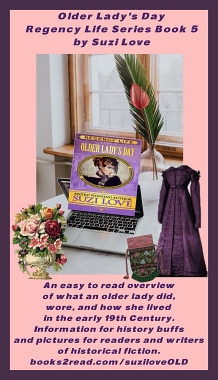
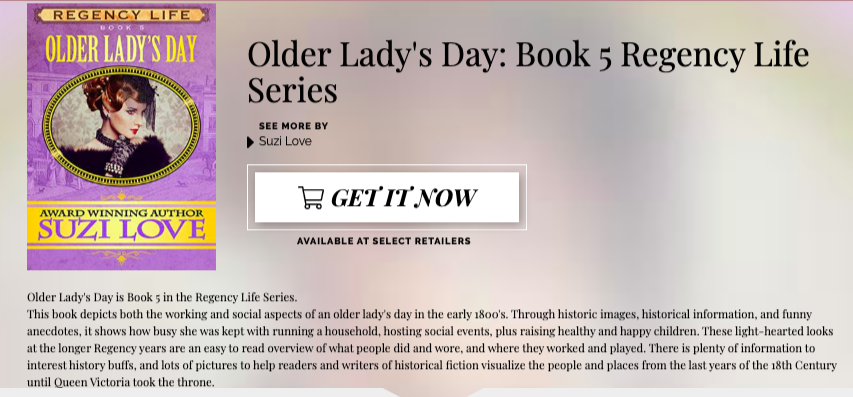
What did an older lady do and wear in the Regency Era? Information & pictures for readers and writers of early 1800s history, nonfiction and fiction. books2read.com/suziloveOLD The older lady’s day usually started with her toilette in her bedroom, where her maid helped her dress for the day and styled her hair. After that, she would join her family downstairs for breakfast unless she preferred a tray with either tea or hot chocolate in her bedroom as she prepared for her busy day. Her day would be made up of speaking with the housekeeper and the cook about the week’s menus, assuring that the servants were all available that day and no one was ill, and checking the list of foods needed.

What did an older lady do and wear in #RegencyEra? Information & pictures for readers and writers of #History #nonfiction #Regency books2read.com/suziloveOLD

She would also enquire if the laundry was up to date and that they had enough good linen to make up all the beds before extended family members and guests arrived. If she was in the country and hosting a weekend house party, she would assign rooms to the guests on her lists and query that all was in readiness for their arrival.

RL_5_D2D_RetailerBuyLink_RL_5_2
https://books2read.com/suziloveOLD
Posted in 1800s, 1800s women's fashion, bedroom fashion, Bridgerton, Coat or Pelisse Or Redingote, Corset, Customs & Manners, Dress Or Robe, England, Europe, fashion accessories, Food and Drink, Google Books, hats, History, Jane Austen, medical, Pastimes, Quotations, Regency Era, Regency Fashion, Regency Life Series, Reticule or Bag, shoes, Spencer, Suzi Love Books, Suzi Love Images, underclothing | Tagged 1800s women's fashion, Book 5, Dress Or Gown, fashion accessories, Fashion Plate, Food, Hats And Hair, household, Jane Austen, pastimes, Regency Era, Regency Fashion, Regency Life Series, Regency London, Shoes, Suzi Love Books

Wedding ring customs that originated in long ago history. #weddings #Customs #history

Suzi Love Posted on June 2, 2022 by Suzi LoveMay 15, 2022

Wedding ring customs that originated in long ago history.

The first wedding rings can be traced back to the Ancient Egyptians when they exchanged rings made from braided reeds and hemp. The tradition of exchanging rings dates back 3,000 years. The first diamond wedding ring was recorded in the will of a widow who died in 1417. The ancient Egyptians believed in the vena amoris, literally the “vein of love” that runs directly from the heart to the fourth finger on the left hand. For the Ancient Greeks, the engagement ring was symbolized with a plain gold band worn on the left hand and at the marriage the same band was shifted to the right hand.

An engagement ring is given at a proposal or when a couple decides to get married whereas a wedding ring is exchanged at the wedding ceremony and represents the official bond of marriage and the binding pledge between spouses. Wedding rings symbolise eternal love and commitment within a relationship and are worn to show the world they are married. During the wedding service, the couple will say their vows to each other while exchanging rings.

Is a wedding ring biblical? : The use of wedding ring is not commanded in the Bible, and there is no indication that it was ever practised in the New Testament. The use of finger ring in the Bible was as a symbol of authority.

Betrothal ring: An old Roman custom confirming that the marriage contract would be carried out. It was the first part of a dowry given, and meant the woman was no longer for sale as the first part of the monetary settlement had been paid. The first betrothal, or engagement, rings were given because there was often a long time between betrothals and weddings. These were usually simple bands of gold, silver, or iron as on royalty or very wealthy people could afford gemstones and diamonds. In 1477, Archduke Maximillian of Austria commissioned the very first diamond engagement ring for his betrothed, Mary of Burgundy, and many of the European aristocracy and nobility followed his lead.

Wedding ring: Many primitive peoples who believed in magic used a rope around the waist or the hand and feet, and later  a ring, to symbolise that the bride was captured and spoken for, and also to ward off any evil spirits hovering around the bride and ensure marital bliss.

The ring hand: A symbol of the humiliating tradition of the man as the master – the right hand of the family –  and the woman being the slave .  The right hand stood for power and authority while the left hand expressed submission and serfdom.

The ring finger : Ancient Greek and Roman anatomists  believed a vein, the vena amoris or the “vein of love”, or a nerve led from the heart to the third finger, the healing finger , so they romantically linked this finger to the heart. Now we know that this is not true and there is no vein that runs from our ring fingers to our hearts. There are also some more practical reasons the third finger continues to be used. It’s the most prominent for displaying a ring and it cannot be extended to its full length on its own and usually remains slightly bent, preventing the ring slipping off.

The Wedding Ring: Also goes on the left ring finger because it is the only finger with a vein that connects to the heart although some countries, such as India, Germany, Spain, Norway, and Russia traditionally wear their wedding rings on their right hand.

Viking Wedding Rings: These were mostly made of silver and bronze and rarely of gold with the designs inspired by Norse Gods, geometric shapes, runes, and animal totems

Gimmel Rings: In the 16th and 17th centuries, European husbands gave their bride a gimmel ring with two interlocking bands. The bride and groom both wore one after their engagement and during the wedding ceremony the rings were joined and the wife wore the ring.

World Wars: During the first World War, many men on the front began wearing wedding rings as a remembrance of their wives and families at home. That custom carried through to World War Two so in the 1950s wedding rings for men became common practice.

Tri-Gold Rings: Gold is the traditional ring metal but some people prefer a mix of colors. Yellow gold represents fidelity, rose gold romantic love, and white gold friendship, so a tri-gold ring symbolizes your shared past, present, and future path. ding ring to symbolize all three, as well as your shared past, present, and future path.

Black Wedding Rings: Some couples choose black wedding bands because they represent everlasting commitment and the color can also mean power, strength and sophistication.

Anniversary or Push Ring: Given on the birth of a first child or an anniversary, usually an important one such as the first, five-year or 10-year anniversary.

Posted in 1700s, 1800s, 1900s, Australia, Canada, Customs & Manners, Decorative Item, Edwardian Era, England, Europe, Georgian Era, Regency Era, Romantic Era, South Pacific, Suzi Love Images, U.S.A, Victorian Era, weddings | Tagged British history, Customs and Traditions, Georgian era, Regency Era, Regency Life, Romantic Era, Suzi Love Research, Victorian Era, weddings | Leave a reply

Post navigation

Next Post→

SUBSCRIBE TO SUZI LOVE'S NEWSLETTER.

Recent Posts

  • 19th Century Mid. Dance Card or Aide de Memoire With Timepiece. #RomanticEra #VictorianEra #Dance #writingtool #antique
  • 1812 High-waisted dress of Yellow Virginie and cashmere shawl in Jane Austen style. #RegencyFashion #JaneAusten #HistoricalFashion
  • Looking for an Historical Romantic Comedy? “For the sake of propriety,” Lady Jamison informed the Earl. “I was ensuring your garments were intact.” #HistoricalRomance #RomCom #RegencyRomance
  • 1799 November 24th ‘Parisian Ladies in Their Full Winter Dress for 1800’. Caricature By Isaac Cruikshank. #GeorgianEra #Cartoon #BritishHistory
  • 1825-1835 ca. Cotton Corset With Cording And Widely Spaced Straps. #RegencyFashion #Corset #RomanticEraFashion.

Recent Comments

  1. Suzi Love on Book Hooks: Petunia and the Pearl Diver. Petunia was too well spoken for a brothel worker. #Regencyromance #historicalromance #London #mfrw
  2. Bianca White on Book Hooks: Petunia and the Pearl Diver. Petunia was too well spoken for a brothel worker. #Regencyromance #historicalromance #London #mfrw
  3. Suzi Love on Book Hooks: Petunia and the Pearl Diver. Petunia was too well spoken for a brothel worker. #Regencyromance #historicalromance #London #mfrw
  4. Suzi Love on Book Hooks: Petunia and the Pearl Diver. Petunia was too well spoken for a brothel worker. #Regencyromance #historicalromance #London #mfrw
  5. Suzi Love on Book Hooks: Petunia and the Pearl Diver. Petunia was too well spoken for a brothel worker. #Regencyromance #historicalromance #London #mfrw

Login

  • Log in

Archives

  • October 2026
  • September 2026
  • August 2026
  • July 2026
  • June 2026
  • May 2026
  • April 2026
  • March 2026
  • February 2026
  • January 2026
  • December 2025
  • November 2025
  • October 2025
  • September 2025
  • August 2025
  • July 2025
  • June 2025
  • May 2025
  • April 2025
  • March 2025
  • February 2025
  • January 2025
  • December 2024
  • November 2024
  • October 2024
  • September 2024
  • August 2024
  • July 2024
  • June 2024
  • May 2024
  • April 2024
  • March 2024
  • February 2024
  • January 2024
  • November 2023
  • October 2023
  • September 2023
  • August 2023
  • April 2023
  • June 2022
  • April 2022

Categories

  • 1700s
  • 1700s Mens fashion
  • 1700s Womens Fashion
  • 1800s
  • 1800s Mens Fashions
  • 1800s women's fashion
  • 1900s
  • art
  • Australia
  • Bath
  • bedroom fashion
  • Book Hooks
  • Box Or Container
  • Bridgerton
  • Bus Trips
  • Canada
  • Carriage
  • cartoon
  • Celebrity
  • Chatelaine
  • children
  • Children
  • Christmas
  • Coat or Pelisse Or Redingote
  • Contemporary
  • Corset
  • Couple
  • Customs & Manners
  • dancing
  • December Scandal
  • Decorative Item
  • Dress Or Robe
  • Easter
  • Edwardian Era
  • Embracing Scandal
  • England
  • Ester In Images
  • Europe
  • Events
  • Fashion
  • fashion accessories
  • Food and Drink
  • Four Times A Virgin
  • France
  • furniture
  • Georgian Era
  • Georgian Fashion
  • Google Books
  • Grand Tour
  • Group
  • hats
  • History
  • History Events
  • History Notes
  • History Of Christmases Past
  • household
  • Hygiene
  • Irresistible Aristocrats
  • Jane Austen
  • Keanu Reeves
  • Kellys Justice
  • Legal
  • London
  • Love After Waterloo
  • Loving Lady Katharine
  • medical
  • military
  • money
  • mourning
  • Music
  • Outback Arrival
  • pants
  • Pastimes
  • peerage
  • People
  • Petunia and Pearl Diver
  • Places
  • Pleasure House Ball
  • postal
  • Queensland
  • Quotations
  • Regency Era
  • Regency Fashion
  • Regency Life Series
  • Reticule or Bag
  • riding
  • Romantic Era
  • Royalty
  • Russia
  • Scandalous Siblings Series
  • Scenting Scandal
  • Self Publishing
  • sewing
  • Shirt
  • shoes
  • Shopping
  • South Pacific
  • Spencer
  • sports
  • Suit
  • Sunday Snippet
  • Suzi Love
  • Suzi Love Books
  • Suzi Love Images
  • Suzi Love Writing
  • Swain Cove
  • THe Viscount's Pleasure House
  • travel
  • U.S.A
  • underclothing
  • Vest or Waistcoat
  • Victorian Era
  • Victorian Fashion
  • weapons
  • weddings
  • Writing Tools

1800s men fashion 1800s women's fashion antiques Bridgerton British history Cartoons Corset cravat decorative Dress Or Gown England europe fashion accessories Fashion Plate France Georgian era Georgian Fashion gloves google books Hats And Hair historical romance History Notes household Jane Austen jewelry Journal des Dames et des Modes London Metropolitan Museum NYC pants Redingote Or Pelisse Or Coat Regency Era Regency Fashion Regency London reticule or bag riding Romantic Era sewing shawls Shoes Suzi Love Books Suzi Love Images Tailcoat The Repository Of Arts underclothing Vest or Waistcoat

©2026 - Suzi Love - Weaver Xtreme Theme Privacy Policy
↑