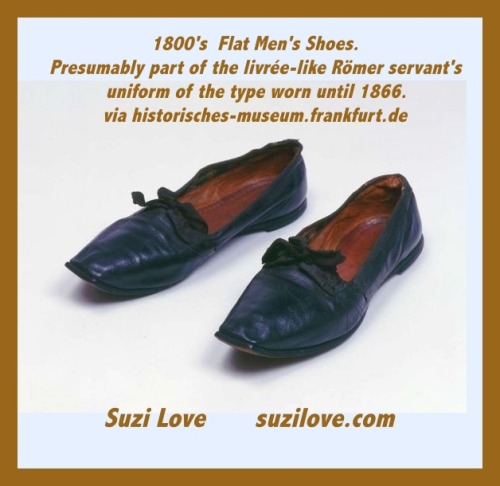
Hessian Boots: In the 1790s, British Army officers wore boots called Hessians, named after German mercenaries who fought alongside the British in wars, including in the Irish Rebellion of 1798. The soldiers from the German state of Hesse were called Hessians and their boots took their name from Hesse, where they were made. The Hessian boot was made from soft, highly polished calfskin, knee high, curved top and with a V cut at the front and often had a decorative tassel.
They were shaped like a stirrup so the rider could easily insert their feet into the stirrups and the feet were kept securely in place. But tassels on Hessian boots were designed for wearing with breeches and didn’t suit tight fitting and fashionable new trousers that dandies like Beau Brummell wore in 1800s and so were replaced by Wellington Boots.
In 1823, the New Monthly Magazine had a comical story about tight pantaloons and Hessian boots being a perfect pairing. ‘…. tight pantaloons without Hessian boots were as preposterous as a haunch of venison without currant-jelly, or a leg of pork without peas-pudding.’ https://books2read.com/SuziLoveFashionMen1800-1819
1810 ca. Pineapple Dress, French. High-waisted, Empire style dress with embroidered pineapple motifs, short wide neckline, puffed sleeves and long train. via Palais Galliera, Musée de la Mode de la Ville de Paris.
‘Omnibuses, under the name of carrosses a cinq sous, were started in Paris in 1662. Seven vehicles to carry eight passengers each, all inside, were built, and on March 18th, 1662, they began running. The first one was timed to start at seven o’clock in the morning, but an hour or two earlier a huge crowd had assembled to witness the inauguration ceremony, which was performed l)y two Commissaires of the Chatelet, attired in their official robes. Accompanying them were four guards of the Grand Prevot, twenty men of the City Archers, and a troop of cavalry. ‘
In 1828, George Shillibeer, a London coach builder, visited Paris where he was impressed by the efficiency of the new horse-drawn bus service. The following year, he started a single horse-drawn omnibus connecting Paddington and Regent’s Park to the City of London. Passengers were picked up and set down anywhere along the route and fares were paid on board, in contrast to short-stage coaches which had to be booked in advance.
This new omnibus was pulled by three horses and carried 22 passengers who sat inside and were protected from the weather. Fares were sixpence and one shilling, less than a hackney cab or short-stage coach, but still too expensive for the lower classes.
1829 July 4th George Shillibeer Omnibus, London, U.K. First Omnibus between Paddington and Bank of England via the New Road, now Marylebone Rd., Somers Town and City Rd. Via Wikimedia Commons.
In 1832, the London City monopoly of hackney carriages was removed, so horse buses expanded and within two years there were 620 licensed horse buses in London. By the Great Exhibition in 1851, London’s increase in visitors meant this number doubled and the number of routes increased to 150. By 1856, several bus operators were taken over by the new London General Omnibus Company until, with 600 omnibuses, they were the largest bus company in the world. In 1833, the first real steam omnibuses, the ‘Era’ and ‘Autopsy’ were invented by Walter Hancock, of Stratford, and started on the London roads. The ‘Era’ was the better omnibus of the two, and the most flattering things were said and predicted of it. Enthusiasts declared that omnibuses of this type would enable passengers to be carried at a cheaper rate and greater speed. The ‘Era’ ran from Paddington to the Bank, the same route as the horse-drawn omnibuses, and carried fourteen passengers, the fare being sixpence all the way. It travelled at the rate of ten miles an hour. Travel on these roads was also dangerous as highwaymen stopped and robbed anyone who came along. Male or female made no difference to highwaymen in Britain, nor to the bushrangers in Australia or the gangs on American roads, as they robbed indiscriminately and often with violence.
By the end of the 18th Century, however, travel as a pleasurable pursuit came into vogue and numerous guides were written for traveling all over the British Isles as well as on the continent. The 1812 ‘Tour Of Dr. Syntax’ was an ironic look at the new obsession of travel and travel guides. Before he set off for the Lake District, Dr. Syntax said to his wife, “You well know what my pen can do, and I’ll employ my pencil too: I’ll ride and write, and sketch and print and thus create a real mint: I’ll prose it here, I’ll verse it there and picturesque it everywhere. I’ll do what all have done before; I think I shall and somewhat more.” Georgian and Regency travelers were envious of aristocrats, even if they were of the nobility themselves, and loved to view all the British Great Houses.
A gentleman and his wife would even drive up to the front door of a mansion house and demand to be given a tour of the house. If they weren’t admitted, they would write in their journals of the inhospitable nature of the people on a particular estate. Thomas Pennant, William Mavor, and others, loved to write about these bad experiences and have them published. Paterson’s British Itinerary, a travel guide had 17 editions between 1785-1832 – it outlined the roads used by the stage and mail coaches, the tolls, the bridges, etc. This new touring craze created an industry of hospitality that encompassed more than simple mail coach trips from place to place, and more than a noble family traveling from their country seat to the Metropolis of London for parliamentary sittings. Inns had to improve the quality of the linens and meals if they wanted to attract the wealthier traveling class. Before that, many travelers carried their own linen, crockery, glasses, and utensils, as they didn’t trust the hygiene or standards of country inns.
Travel became something written about by poets with many sonnets written to the beauty of places like the Lake District in England, or the pyramids in Egypt. Inns became cleaner and more respectable so they could welcome travelers of the upper classes. This also meant that women could travel more as roads were slowly improved from rutted tracks that were only suitable for horse riding to roads that family coaches could travel along, though these roads were still narrow and subject to extremes of weather, such as flooding. The race was on to travel from places like London to Edinburgh in the fastest possible time.
HN_10_D2D_RetailerBuyLink_ History Notes Book 10 books2read.com/SuziLoveTravel
1799-1805 ca. Gold dress with small train and very small bodice.. via musee des tissus et des arts decoratifs de lyon. https://books2read.com/SuziLoveFashionWomen1801-1804
1800 ca. Bicorn, Or Two Cornered, Black Silk Hat, Possibly Made In Great Britain or France. via Victoria and Albert Museum, London, UK. collections.vam.ac.uk.
Definition: Bicorn Or Bicorne: Two cornered, or pointed, hats often worn by military men because the rain would drain off either side of the hat and away from the body. They could also be easily flattened to carry under arm. This sort of hat would have been worn by gentlemen around the turn of the century and during Jane Austen’s writing life.
1809 Women’s Fashions: Dresses, Shawls, Hats and Jewelry from various fashion magazines. Typical of the outfits worn by Jane Austen and her contemporaries for daytime and evening activities. An Empire style, or high-waisted white cotton dress worn under a Spencer or short jacket, a Redingote, or coat, for warmth and with pretty hats, shawls and shoes.
1809 White Dress with a Fichu
1809 White Dress, French.
1809 White Dress, French.
1809 White Ball Dress, French.
1809 March. Walking Dress, English.
1809 Red Coral Necklace. S
Fashion Women 1805-1809 History Notes Book 26 What did Jane Austen and friends wear? https://books2read.com/SuziLoveFashionWomen1805-1809