1815 Blue Dress Bodice, French. Layers of frills on dress back. Hairstyle and Various Bonnets as Jane Austen would have worn. Fashion Plate via Journal des Dames et des Modes, or Costume Parisien.



1815 Blue Dress Bodice, French. Layers of frills on dress back. Hairstyle and Various Bonnets as Jane Austen would have worn. Fashion Plate via Journal des Dames et des Modes, or Costume Parisien.
19th Century Silver Chatelaine. Thimble holder, vinaigrette as a trumpet, watch case, scissors and a notebook. via auction.fr
Definition
What did a chatelaine do?
What were chatelaines used for?


1801 Dress With Train, French. English style coat and Polonaise hat to match dress. Fashion Plate via Journal des Dames et des Modes, or Costume Parisien.

1813 Yellow Redingote Or Coat, French. Hooded coat with gorgeous white trim, yellow boots, yellow velvet bonnet with a white plume. Jane Austen and her female family and friends wore fashions like these. Fashion Plate via Journal des Dames et des Modes, or Costume Parisien.
Redingote, or Pelisse, or Walking Dress, or Promenade Dress: Going by many names, this is a coat copied from men’s overcoats but worn by both men and women. Generally, opens down the front, worn for warmth over a dress or coat and breeches, and has a military look with front vertical buttoning or decoration. Called a Redingote in French periodicals but English magazines called them by many other names: pelisse, carriage dress, walking dress, promenade costume.


1814 Couple In Walking Ensembles, French. Gentleman in a brown tailcoat with a notched collar and back pockets, vest, white breeches tied under his knees, red fob at the waist, white stockings, high white shirt collar, white cravat, top hat and cane. Lady in adorable pink Redingote with capes.

1845-1865 ca. Black Faille Evening Slippers, French. Designed By Melnotte for Department Store J. Petit.
Black slippers, which went with anything, were an essential for mid 1800s fashionable ladies. Generally made of satin so dull faille fabric is unusual so possibly for mourning. Label written largely in French of London shop, exclusive agent, plus other fashionable imported Parisian accessories. via Metropolitan Museum, NYC, U.S.A. metmuseum.org


1800-1810 ca. Flat Silk Slippers With Ankle Ties Worn By Empress Josephine Bonaparte and As Worn By Jane Austen And friends. #Regency #Shoes #JaneAusten #France
Shoes in the early 1800s were flat or low heeled and occasionally decorated with a bow or floral embellishments and it wasn’t until the 1820s that square, rather than rounded or pointed toes became fashionable. Made of soft kid or cloth, these delicate shoes were flimsy and wore out quickly. There was often no difference between a left or right shoe, so when one slipper had a hole it was easily replaced. Slippers were often bought in multiples at a time so there were spares.


19th Century Early Green Silk Stockings With Gold Embroidery, French. via Metropolitan Museum, N.Y.C., U.S.A. metmuseum.org
In Jane Austen’s times, women, men, and children wore silk stockings, often embroidered in silk. In the Eighteenth Century, clocks had fallen out of fashion, but they were still being worn by wealthy aristocrats during the early 1800s.
In 1815, Rudolph Ackermann’s Repository Of Arts had an advertisement for silk stockings. ‘The cheapest and by far the largest stock ever produced by any one house now on Sale at the Manufacturer’s Warehouse, 51, Cheapside. The patterns are of the richest and most elegant description, beginning at the extraordinary low price of 8 shillings, usually sold for 10 shillings and 6 pence, to the very best and finest quality at 12 shillings 6 pence, usually sold for 16 shillings.’


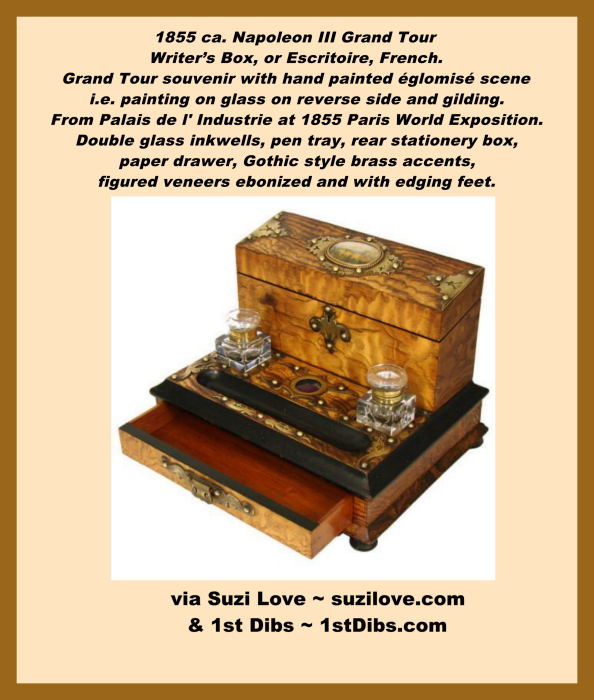
1855 ca. Napoleon III Grand Tour Influenced Travel Writer’s Box, Or Ecritoire, French. Double inkwell with rear stationery box, Gothic style brass accents and Grand Tour souvenir hand painted eglomise scene, the Palais de l’ Industrie from the 1855 Paris World Exposition! Figured veneers, ebonized edging, feet and pen tray and brass or bronze accents. via 1st Dibs 1stdibs.com

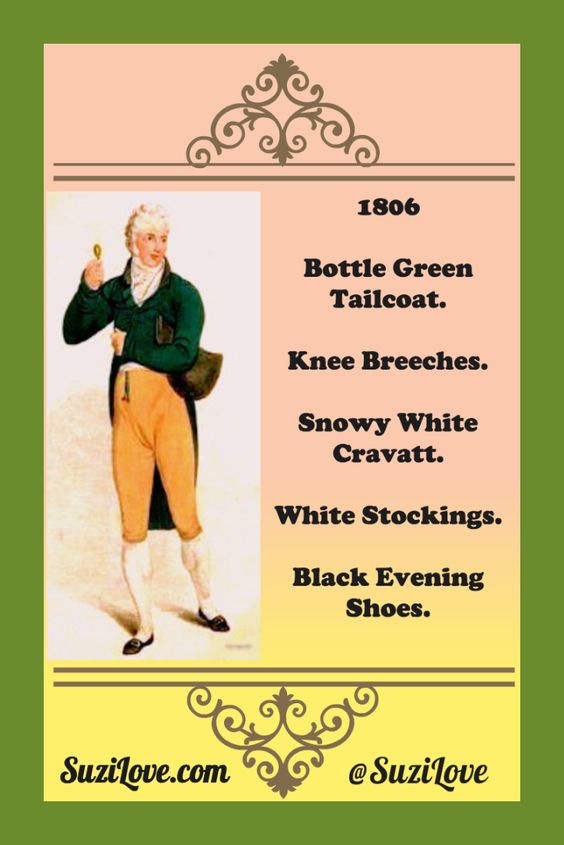
1806 Gentleman’s Daily Outfit, French. Bottle green tailcoat, knee breeches, snowy white cravat, white stockings, flat black shoes. Fashion Plate via Journal des Dames et des Modes, or Costume Parisien. French fashions and Georgian and Regency Era fashions from Great Britain were copied around the world. This is the normal daily outfit for a gentleman in the early 1800s, or in the times of Jane Austen, for daily city and country life. https://books2read.com/SuziLoveFashionMen1800-1819