I'm an Australian author of contemporary and historical romances, plus history non-fiction.
My books range from sexy to erotic, late 1700s to the mid 1800s, and with a dash of Australia thrown into the mix. My heroes and heroines challenge tradition and my stories often expose the seamier levels of life.
I now live in a sunny part of Australia after spending many years in developing countries in the South Pacific. My greatest loves are traveling, anywhere and everywhere, meeting crazy characters, and visiting the Australian outback.
I hope my books bring history alive and you have fun adventuring with my roguish heroes and feisty heroines.
1816 May Full Evening Dress, English. The type of evening dress the Bridgerton family and Jane Austen and her contemporaries would have worn to a formal evening event, such as a ball. A white satin slip, over which is a white lace dress, ornamented with three quillings of white lace on the skirt, intermixed with bows of white satin ribbon. The body and sleeve, both of which are richly ornamented with colored stones, are formed, as our readers will see by the print, in a very novel style. Head-dress, a cap composed of white satin, finished with a band edged with pearls, and a superb plume of white feathers. Necklace, ear-rings, and bracelets,’ colored stones intermixed with pearls. White satin slippers, and white kid gloves. We are indebted to the elegant invention Of Mrs. Gill, of Cork-street, Burlington-Gardens, for our dress this month. Fashion Plate via Rudolph Ackermann’s ‘The Repository of Arts’.
Definition Full Dress: Most formal of outfits, day or night, with all possible accessories added.
1816 May Full Evening Dress, English. A white satin slip, over which is a white lace dress, ornamented with three quillings of white lace on the skirt, intermixed with bows of white satin ribbon. Fashion Plate via Rudolph Ackermann’s ‘The Repository of Arts’. Fashion Women 1815-1819 History Notes Book 28 What did Jane Austen wear? . D2D_HN_28_https://books2read.com/SuziLoveFashionWomen1815-1819
1805-1808 ca. Man’s three-part court suit of coat, waistcoat, and breeches, French. Wool broadcloth embroidered with silk and metallic threads, spangles, and glass. Plum colored broadcloth embroidered with plum colored and white silk and chenille, silver thread, spangles and brilliants. Supposed to have been worn by the Hon. James Bowdoin, U.S. Minister to Spain, 1805-1808, at a ball given by Napoleon at the Tuileries. Worn with 01.110 and 01.111. Said to have been worn by the Hon. James Bowdoin, U.S. Minister to Spain from 1805-1808; to his grand-nephew, James Bowdoin Winthrop by inheritance; to James Bowdoin Winthrop’s nephew, Robert C. Winthrop, Jr. by inheritance; gift of Robert C. Winthrop, Jr. to MFA, February 1, 1901.
DIMENSIONS Coat: center back (collar to bottom of coat): 106 cm (41 3/4 in.) Waistcoat: center front: 55.2 cm (21.75 in.) Breeches: center front: 67.9 cm (26.75 in.)
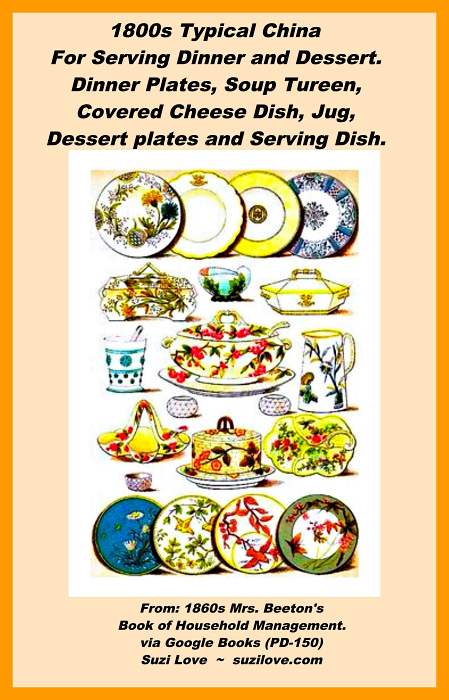
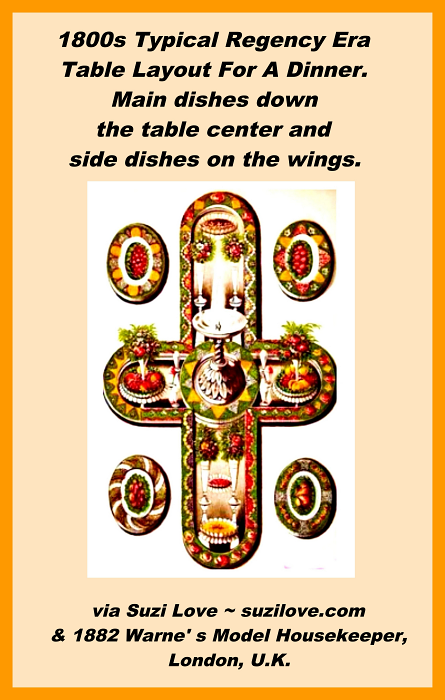
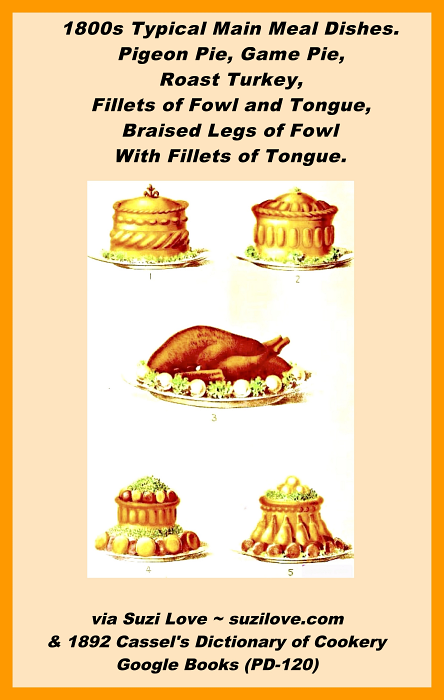
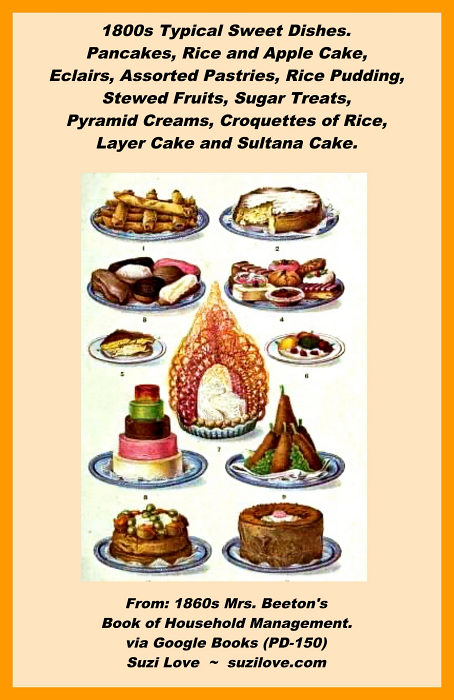
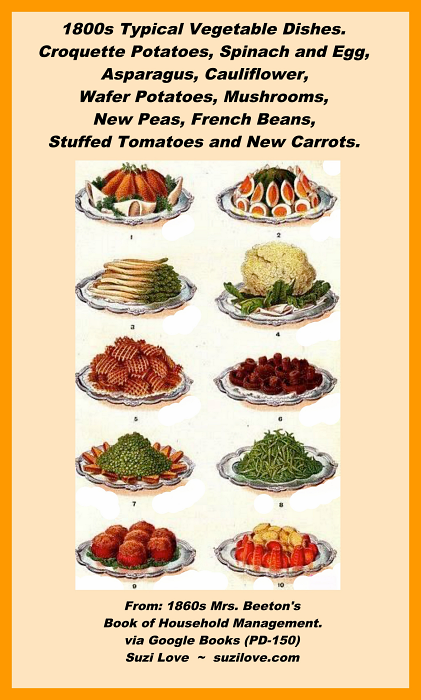
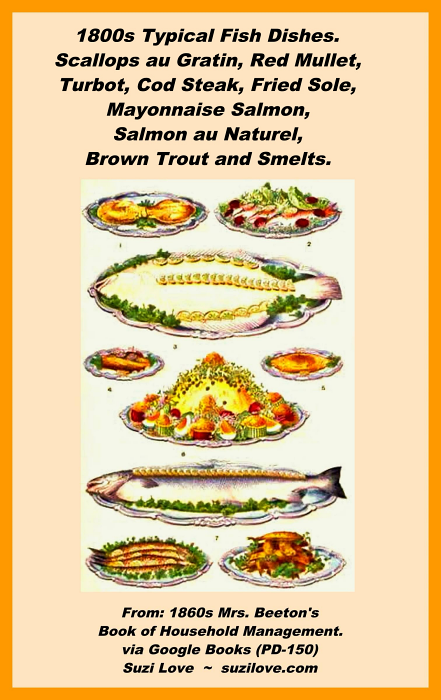
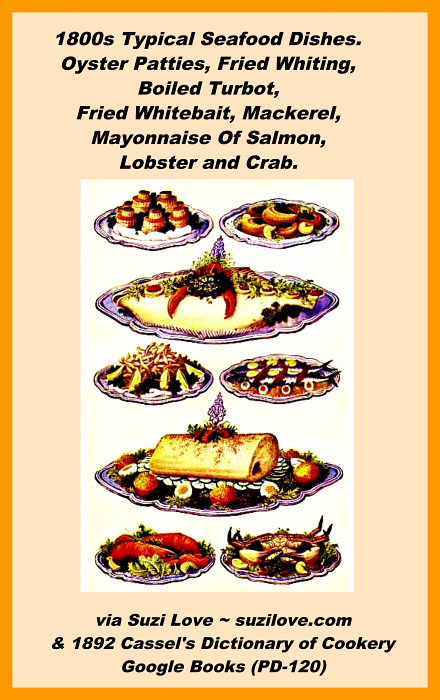
1800s Typical Food Served and Table Settings Used. Historic food from Mrs. Beeton’s Household Management, 1882 Warne’ s Model Housekeeper, London, U.K., 1892 Cassel’s Dictionary of Cookery.
1800s Typical China For Serving Dinner and Dessert. 1800s Typical Regency Era Table Layout For A Dinner.1800s Typical Joints Of Meat. 1800s Typical Fruits Served. 1800s Typical Main Meal Dishes. 1800s Typical Salad and Vegetable Dishes. 1800s Typical Soups. 1800s Typical Sweet Dishes. 1800s Typical Vegetable Dishes. 1800s Typical Fish Dishes. 1800s Typical Seafood Dishes.
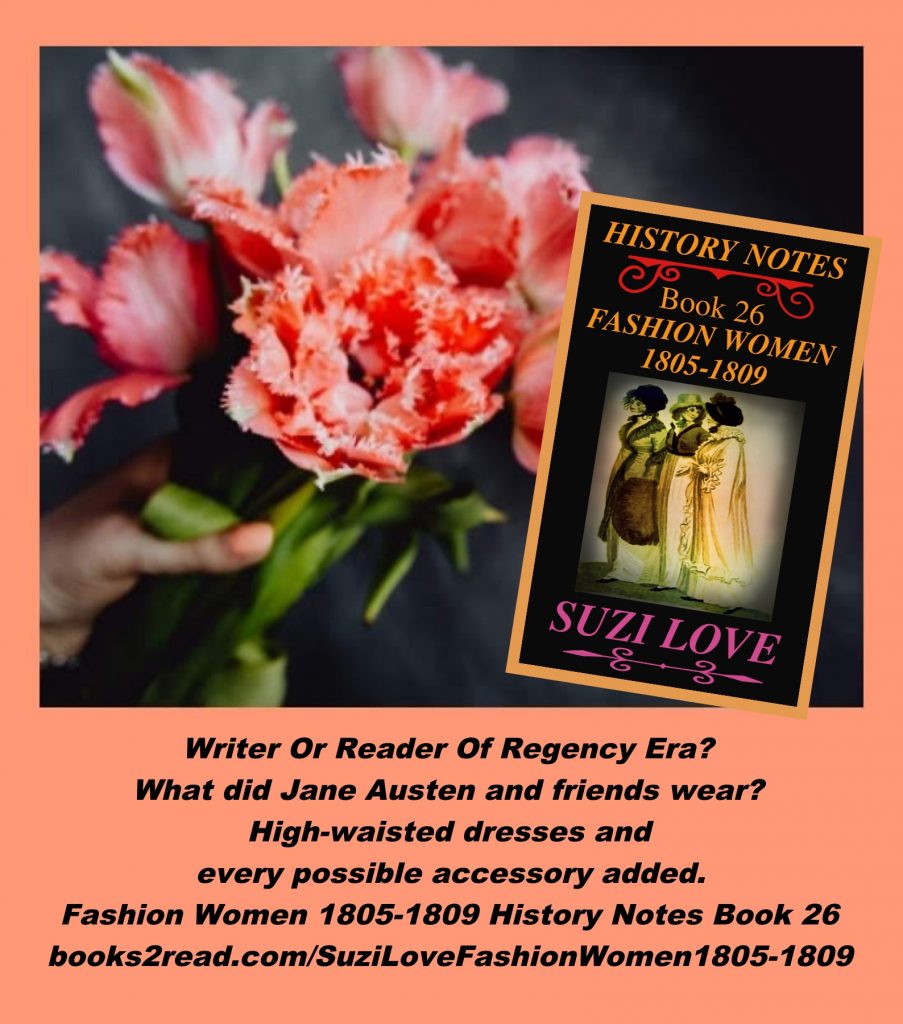
What did Jane Austen and friends wear? Early 1800s fashions were elegant and pretty with high waists and fabrics that were almost transparent. These Empire style gowns, named after Napoleon’s first Empress, became popular throughout Europe, and were then copied around the world. Colorful outwear was added to make an ensemble more attractive and warmer. History Notes Book 26 Fashion Women 1805-1809. https://books2read.com/SuziLoveFashionWomen1805-1809
The Empire waist gown defined women’s fashion during the Regency Era. ‘Empire’ is the name given in France to the period when Napoleon built his French Empire. High-waisted, loose gowns were adopted by the aristocracy as a symbol of turning away from the fussy, elaborate and expensive clothing worn in the 1700s. Jean-Jaques Rousseau advocated copying peasants and returning to a simpler life and more natural fashions. Unrestricting clothing was part of the new Democracy in France and these simpler and flowing fashions were adopted all over Europe, including Britain and despite the continual wars being fought against France during the early 1800s. Not even war stopped fashions from being copied everywhere.
Fashion Women 1805-1809 History Notes Book 26
What did Jane Austen and friends wear? This book looks at early 1800s fashions, which were elegant and pretty with high waists and fabrics that were almost transparent. These Empire style gowns, named after Napoleon’s first Empress, became popular throughout Europe, and were then copied around the world. Colorful outwear was added to make an ensemble more attractive and warmer.
https://books2read.com/SuziLoveFashionWomen1805-1809HN_26_D2D_FsshionWomen1805-1809
1812 Tailcoat of Blue Drap, French. White Nankin trousers with ankle openings, knotted white cravat, short hair with sideburns, black shoes, holding a black hat and walking stick. Fashion Plate via Journal des Dames et des Modes, Costume Parisien. By 1812, men no longer wore complicated styles and extravagant fabrics. Men’s fashion simplified and became more conservative. A well cut tailcoat, vest, pantaloons and a cravat, either elaborately tied or simply knotted. Clothes were a status symbol and indicated a man’s social position. These clothing items were the sort worn by Jane Austen’s male family and friends on a daily basis.
Definition Drap: French equivalent for the English word cloth or stuff and generally applied to fabrics of wool or silk.
Definition Nankeen Or Nankin: Durable, buff colored cloth, made of Chinese cotton which is naturally brownish yellow. Originally brought from Nanking.
HN_23_D2D_Fashion Men 1800-1819 History Notes Book 23
https://books2read.com/SuziLoveFashionMen1800-1819
1805-1815 ca. Bonnet. Olive brown stiffened, peaked brim, and lined with ivory satin to protect pale skin from sun in Bridgerton and Jane Austen style.
Regency bonnets were made in a wide variety of shapes and sizes, and with elaborate decorations. This was a practical way of offsetting the minimalism popular in Regency Era fashions. During the early 1800s, most young ladies, and some older ones, wore white dresses in the relaxed styles of ancient Greece. This neoclassical movement saw women wearing Empire style, or high-waisted, gowns that were either straight sheaths or flowed from under the bust. The stiffened brim shielded the lady’s face from harmful sun rays, because it was considered essential for an upper class lady to have a pale white skin. The crown of this bonnet is lined with stiffened ivory linen and the brim is lined with ivory satin. For more about this gorgeous bonnet, see Vintage Textile :- vintagetextile.com
Fashion Women 1805-1809 History Notes Book 26 What did Jane Austen and friends wear? https://books2read.com/SuziLoveFashionWomen1805-1809
1807 Women’s French Coats, or Redingotes, or Pelisses, or Walking Dresses, as worn in the early 1800s, or early Regency years, or in the times of Jane Austen. Fashion plates from the 1807 volumes from the French magazine, Journal des Dames et des Modes or Costume Parisien.
The Journal des dames et des modes was a French fashion magazine published between 1797 and 1839 and was the second oldest fashion magazine published in France, replacing the Cabinet des Modes (1785-1793).
The magazine was the main source for French fashions, both in France and internationally. Pierre de la Mesangere was editor and main journalist for most of the time the magazine was in existence and he published a magazine every five days, which is why there is an abundance of French fashion plates from these years. The magazine had eight pages of text, one or two colored fashionplates, plus poetry, theatre reviews, current social news and fiction. During the Napoleonic wars, everything to do with France was unpopular, especially in Britain, yet French fashions thrived and so did the Journal des Dames et des Modes, despite the numerous other fashion magazines that copied the magazine.
1807 Green Redingote or Pelisse or Walking Dress, British. Green velvet decorated with yellow satin military style yellow shoulder trim, green Capote, or hat, trimmed with yellow satin, and matched with yellow shoes. Fashion Plate via Journal des Dames et des Modes, or Costume Parisien.1807 Blue Redingote Or Pelisse Or Coat With Yellow Trim, French. Striped short sleeves over straight blue sleeves, yellow bonnet tied under the chin, white paisley shawl. Fashion Plate via Journal des Dames et des Modes, or Costume Parisien. 1807 Blue Redingote, French. Blue drap Redingote, or Pelisse, or Walking Dress, decorated with velvet, short pleated sleeves over long straight sleeves, yellow velvet and satin hat with blue contrast, and yellow shoes. Fashion Plate via Journal des Modes et des Dames, or Costume Parisienne. 1807 Blue Redingote, French. Back view of a pleated, blue Merino wool, redingote with a high-waist and gathered short back bodice, worn with a jaunty yellow hat with a matching blue feather. Fashion Plate via Journal des Dames et des Modes, or Costume Parisien.1807 Peach Redingote, Or Pelisse, Or Walking Dress, French. With white shawl collar and a close fitting hat to match. Fashion Plate via suzilove.com and Journal des Dames et des Modes, or Costume Parisien.1807 Golden Yellow Redingote Or Pelisse, French. High collar and frill around the entire hem, short puffed sleeves over long straight sleeves. Fashion Plate via Journal des Dames et des Modes, or Costume Parisien. Fashion Women 1805-1809 History Notes Book 26 What did Jane Austen and friends wear? https://books2read.com/SuziLoveFashionWomen1805-1809
1845 Woman’s Dress, Probably Made In England. Silk Taffeta and glazed linen plain weave. via Los Angeles County Museum of Art, California, USA. collections.lacma.org
1845 Woman’s Dress, Probably Made In England. Silk Taffeta and glazed linen plain weave. via Los Angeles County Museum of Art, California, USA. collections.lacma.org
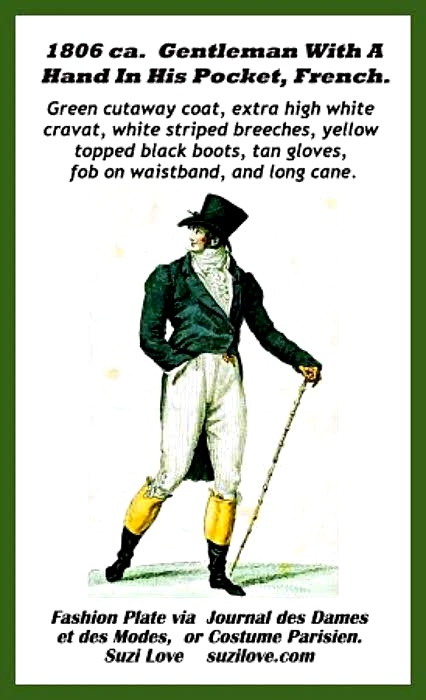
1806 Gentleman With A Hand In His Pocket, French. Green cutaway coat, extra high white cravat, white striped breeches, yellow topped black boots, tan gloves, fob on the waistband, and long cane. Typical Gentleman’s outfit as worn by men to daytime activities, such as escorting his female family members to the shops in Bond Street,London,or for walking in the park in Jane Austen’s times. Fashion Plate via Journal des Dames et des Modes, or Costume Parisien.
An overview of women’s fashions in the first twenty years of the 19th century. What was fashionable for women in Jane Austen’s times, or the early 1800s. Wars were being fought around the globe, so women’s fashion adopted a military look in support of soldiers. In Britain, the Prince Regent ruled instead of his father, King George III, so fashions, like the lifestyle, became more extravagant and accessories went from pretty to opulent. This set includes books 12, 25, 26, 27 and 28. https://books2read.com/SuziLoveFashionWomenBoxSet
Ladies clothing in the early 1800’s featured a high waist line called an Empire Line, or Empire style dress, with a waist line just under the natural bust line and much higher than the natural waist. The high-waisted, or short-bodied, Regency styles shifted focus away from the natural waist and so left the natural waist unconstricted, in direct contrast to previous and future styles. Britain took these simple European styles and progressively made them more elaborate by adding more and more complicated embroidery onto white fabrics to create the white on white look popular for many years.
The empire look of fine muslin dresses left women more exposed than in the Georgian Era when fabrics had been thicker and styles bulkier. Women, especially in England, preserved their modesty by adding lace, frills, flounces, ruches, and fabric plaits to dresses to adequately cover any parts that might inadvertently be exposed. Outer layers, such as Spencers, Redingotes or Pelisses or coats, and shawls, were also added for warmth and to brighten outfits.
This Empire fashion was totally dependent on a supply of fine, translucent cotton muslin – at first imported from India, then later, less exclusive imitations often woven and printed or embroidered in Britain. Fabrics were soft and lightweight and muslins and other cotton fabrics from India and other Asian countries were in high demand.
Fashion Women 1800-1819 Box Set History Notes Book 24
An overview of the first twenty years of the 19th century. These books look at what was fashionable for women in Jane Austen’s times, or the early 1800s. Wars were being fought around the globe so women’s fashion adopted a military look in support of soldiers. In Britain, the Prince Regent ruled instead of his father, King George III, so fashions, like the lifestyle, became more extravagant and accessories went from pretty to opulent. This set includes books 12, 25, 26, 27 and 28.
https://books2read.com/SuziLoveFashionWomenBoxSet