1815 ca. Tailcoat, Probably British. Black wool, silk cotton and wood. Double-breasted, cutaway at the front waist, notched collar, straight sleeves, pleat falling from the back waist. via Metropolitan Museum, N.Y.C., U.S.A. As Worn By the Men in the Families of Jane Austen and the Bridgertons. #Regency #JaneAusten #Fashion #BritishHistory
Tailcoat: A Regency Era, or early 1800s, gentleman was outfitted in more practical fabrics, such as wool, cotton and buckskin rather than the fussy brocades and silks of the late 1700s. The men in Jane Austen’s life would have worn a black tailcoat like this for everyday wear. https://books2read.com/SuziLoveFashionMen1800-1819
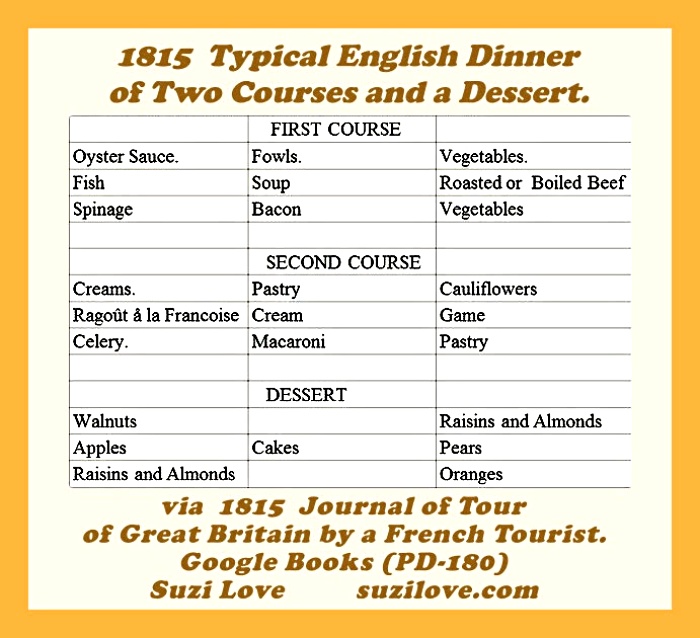
1815 Typical English Dinner In Jane Austen and Bridgerton Times. Two Courses and a Desert. From- 1815 Journal of Tour of Great Britain by a French Tourist via Google Books (PD-180)
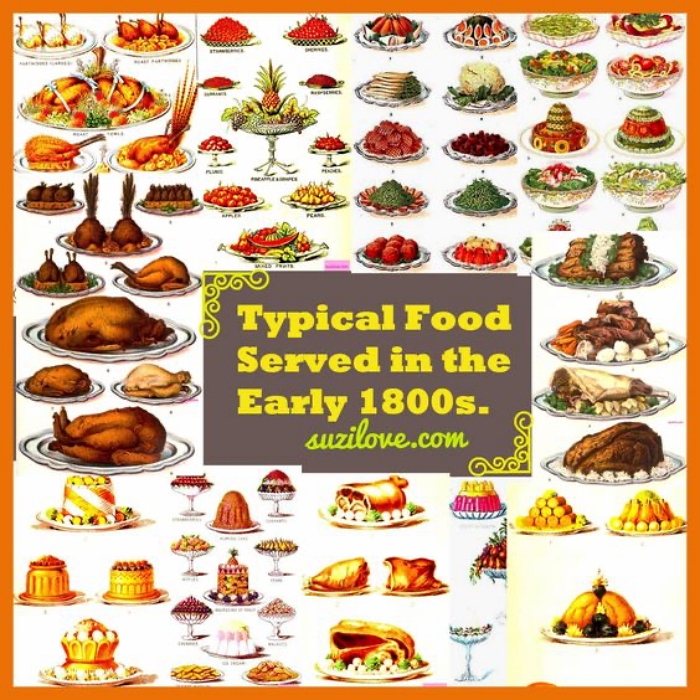
Typical food served during the early 1800s, or Regency Era. ‘Removes‘ were the dishes removed from the table during a meal, usually the soup and fish, and then replaced by other dishes. After all diners have had a chance to eat all the dishes on the table, the table is cleared and another set of dishes put on the table. This is the second course.
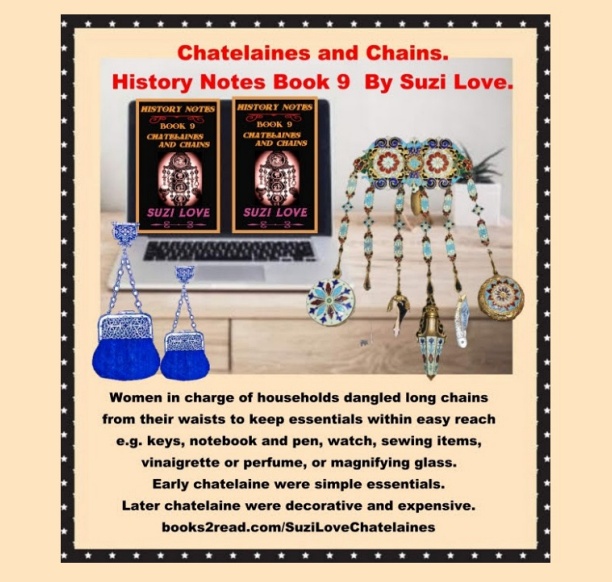
Jane Austen’s and the Bridgerton ladies personal necessities, keys, or chatelaines was a set of useful items hung from waist by decorative chain. Chatelaines and Chains. History Notes Book 9 By Suzi Love. Women in charge of households dangled long chains from their waists to keep essentials within easy reach e.g. keys, notebook and pen, watch, sewing items, vinaigrette or perfume, or magnifying glass. Early chatelaine were simple essentials. Later chatelaine were decorative and expensive. http://books2read.com/SuziLoveChatelaines
Definition Chatelaine: The word Chatelaine is French and means the keeper of the keys. Chatelaine” derives from the Latin word for castle. In Medieval times, the chatelaine was in charge of the day-to-day running of the castle. Women in charge of households dangled long chains from their waists to keep essentials within easy reach e.g. keys, notebook and pen, watch, sewing items, vinaigrette or perfume, or magnifying glass. Early chatelaine were simple essentials. Later chatelaine were decorative and expensive.books2read.com/SuziLoveChatelaines
What did a chatelaine do? Most important task was keeper of the keys. Also ordered supplies, did bookkeeping, supervised servants, taught castle children, and organized guests.
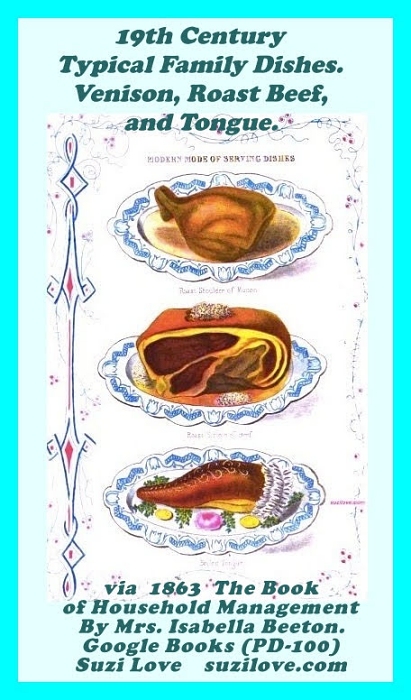
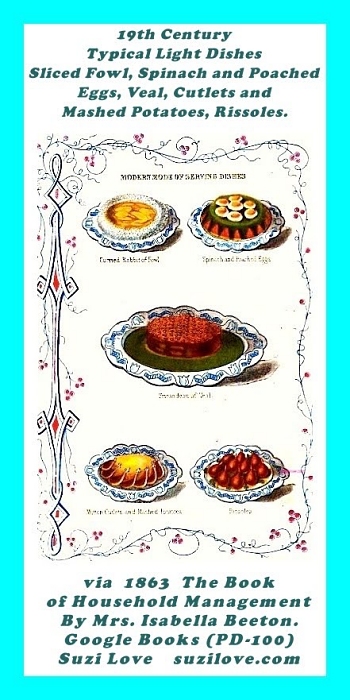
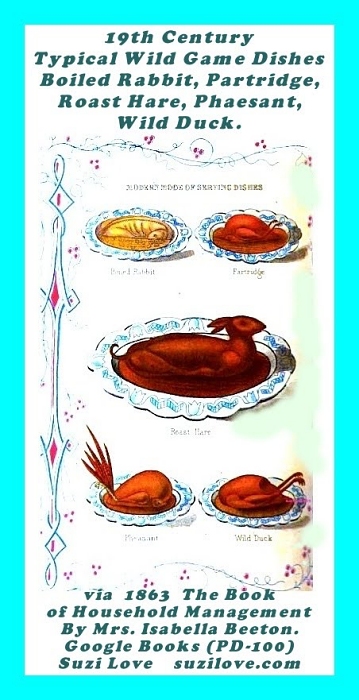
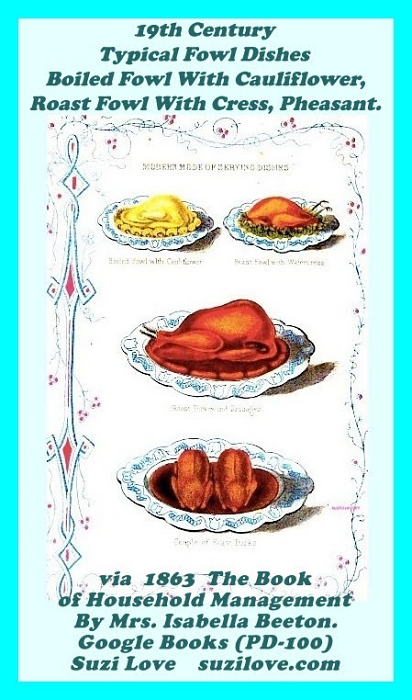
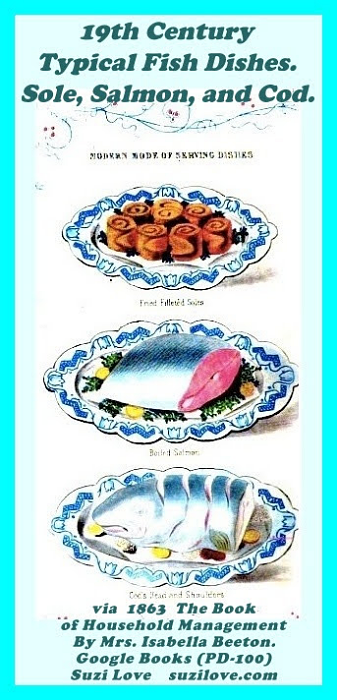
19th Century Food For The Upper Classes In Bridgerton and Jane Austen Times.
Typical Meals Served for the upper classes in the Georgian and Regency Eras. For the Upper classes in the 18th and through to the end of the 19th century, meals were elaborate affairs. and served by well-trained staff anticipated their every need. Women prided themselves on hosting dinners for 50-60 people which often consisted of numerous courses, and all served with the best wines and followed, for the men at least, by expensive port.
An older lady usually controlled the servants and the serving of meals. For more about this, take a look at Older Lady’s Day Regency Life Series Book 5 by Suzi Love. Overview of what an older lady did, wore, and how she lived in the early 19th Century. Information for history buffs and pictures for readers and writers of historical fiction. books2read.com/suziloveOLD
1790-1820 ca. Fichus, Or Shoulder Shawls. Short and Long. Embroidered Cream Net Fichus as worn by ladies in the times of Jane Austen. via Whitaker Auction whitakerauction.smugmug.com
Definition Fichu: Triangular piece of lace, muslin, or other cloth worn about the neck and cleavage to fill in a low bodice or neckline and preserve a lady’s modesty. From the French ‘thrown over’. The Bridgerton family and Jane Austen and her female family and friends would have worn a Fichu over a light muslin dress for both warmth and modesty.
18th Century Late – 19th Century Early Gloves as worn by women in Jane Austen’s and Bridgerton’s years, French. Silk embroidered with silk. via Museum of Fine Arts, Boston. mfa.org
What shoes did the Bridgertons and Jane Austen wear? Gray Slippers, American, with long ankle ties.
Typical Regency Era women’s footwear as worn by Jane Austen and her contemporaries and by the Bridgerton family were shoes that had low heels, slightly rounded toes, embellished with a bow and with ribbon ties for the ankles. Shoe styles and shapes were generally very plain but then shoes began to be made in bright colors to match the colorful Empire style, or high-waisted, gowns. Plus, as gowns were lighter and floatier, glimpses could be had of these new pretty shoes. Ribbons, rosettes and other decorative. embellishments allowed ladies to personalize shoes.
shoes_19th Century Early. Flat Slippers, American. Gray silk with long ankle ties. via Metropolitan Museum New York City, U.S.A.shoes_19th Century Early. Flat Slippers, American. Gray silk with long ankle ties. via Metropolitan Museum New York City, U.S.A.shoes_19th Century Early. Flat Slippers, American. Gray silk with long ankle ties. via Metropolitan Museum New York City, U.S.A.HN_25_D2D_fashwomen1801-1804 https://books2read.com/SuziLoveFashionWomen1801-1804
1813 April Carriage Dress, English. Green coat over white Empire style dress of jaconet or cambric muslin, plaited bodice, long sleeve, deep frill, with a vandyke of needle-work. Russian mantle is made of Pomona or spring green sasnet, lined with white satin, trimmed with a rich frog fringe and closed with a cord or tassel. Close-fitting cottage slouch bonnet of the same material and edged with scalloped lace, tied on the left under the chin with ribbon, and decorated with a small cluster of spring flowers. Reticule, or bag, of the sam fabric, slippers of green kid, and gloves of primrose kid. Fashion Plate via Rudolph Ackermann’s ‘The Repository of Arts’.
The Assembly Rooms in Bath, UK. One of my favorite places to visit.
Bath had two assembly rooms in the lower part of the town but they weren’t large enough for the rapidly increasing population so on the 30th September, 1771, New Rooms were opened on the north east of the Circus, between Bennett and Alfred Streets. These Upper Rooms were designed by the architect, John Wood, and were in a better part of town so they became much more fashionable. They were called the New, or Upper Rooms, to distinguish them from the older Assembly Rooms in the lower part of the town.
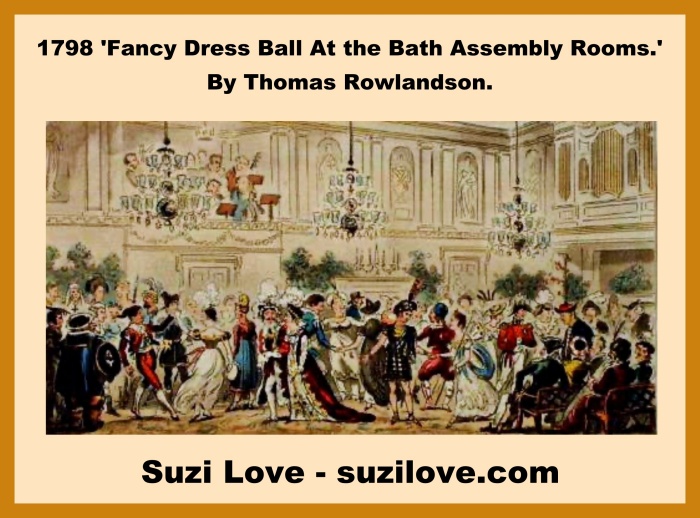
They were a set of public rooms purpose-built for the 18th century form of entertainment called an ‘assembly‘, where a large number of people came together to dance, drink tea, play cards, listen to music, or parade around the rooms and talk and flirt. The four rooms are the Ball Room, the Tea Room or Concert Room, the Octagon Room, and a Card Room. The Upper Rooms held two balls a week, a dress ball on Monday evenings and a fancy ball on Thursdays during the Bath season which was from October to early June. These balls were so popular they attracted between 800 and 1,200 guests at a time.
John Wood raised the money for the New Rooms by a “tontine” subscription, which was like a lottery. By April 1769, £14,000 was raised amongst 53 people. When a subscriber died, their shares were added to the holdings of the other subscribers, which meant that the last surviving subscriber inherited everything.
The exterior of the Upper Assembly Room looks typically Georgian, but the interior is very grand and the high ceilings gave good ventilation on crowded ball nights and windows set at a high level prevented outsiders from looking in. Two long rectangular rooms flank the entrance hall and are linked by an octagonal room at the far end to form a U-shape.
1798 Fancy Dress Ball at the Bath Assembly Rooms.’
By Thomas Rowlandson.Interior of Assembly Rooms, Bath.Entrance to Assembly Rooms,
Now Fashion Museum.
Bath, U.K.Entrance to Assembly Rooms,
Now Fashion Museum.
Bath, U.K.1805 Interior of Concert Room, Bath. By John Claude Nattes
‘Bath Illustrated by a Series of Views.’
Via Suzi Love – suzilove.com
& Wikimedia Commons commons.wikimedia.org1799 Richard Nash Esq. Master of Ceremonies, Assembly Rooms, Bath From- 1799 The New Bath Guide Printed by R. Cruttwell.1771 The New Assembly Rooms Opened,
Between Bennet and Alfred streets,
Bath, U.K.
via Suzi Love – suzilove.com
& 1835 The Historical and Local New Bath Guide
Published By C. Duffield.
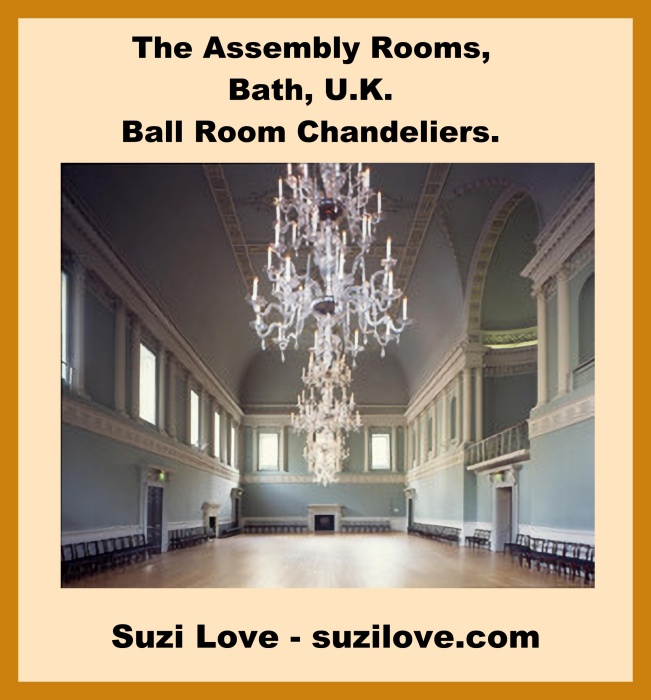
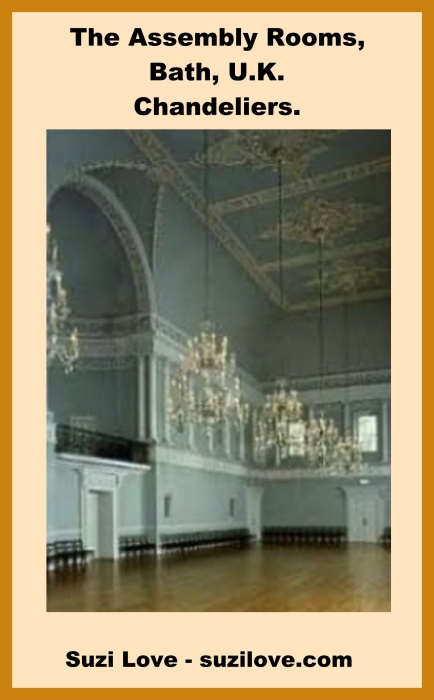
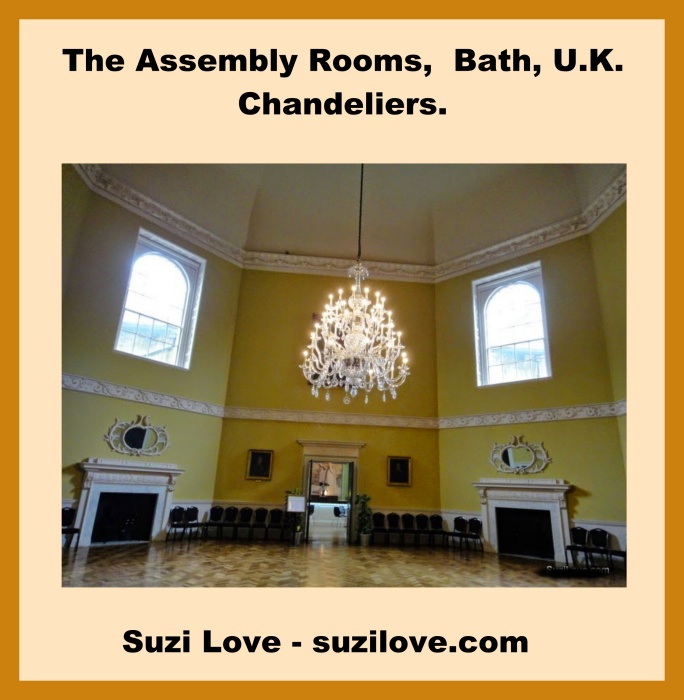
The Assembly Rooms are lit by a set of nine chandeliers, made for the building in 1771. Jonathan Collett of London originally provided a set of five chandeliers for the Ball Room when it opened in September 1771. Shortly afterwards the arm of one of the chandeliers fell off – narrowly missing the artist, Thomas Gainsborough, who lived nearby at the time. The Ball Room chandeliers were taken down and a new set was ordered from William Parker of London. Parker had already supplied three chandeliers for the Tea Room. It was agreed that Jonathan Collett should salvage the rejected set of Ball Room chandeliers and make one large chandelier to hang in the Octagon Room. The chandeliers in the three rooms had an average height of eight feet and they were made of Whitefriars crystal from the Whitefriars Glassworks in London and were originally lit by candles. The Ball Room and Tea Room chandeliers each had 40 lights and the Octagon chandelier had 48 lights.
During the 19th century, they were fitted for gas and were later converted to electric light. At the start of the Second World War, the chandeliers were put into storage and escaped destruction when the Assembly Rooms were bombed in 1942. During the extensive refurbishment of the building in 1988-1991, the chandeliers were restored by R. Wilkinson & Sons of London. The Bath Season ran from October to June. As the Season spanned the winter months and many activities took place in the evening it was essential to provide good artificial lighting.
The ball room is the largest of the three main rooms and is over 105 feet long and 42 feet wide and 42 feet high. It runs the whole length of the north side of the building and covers two storeys. The paint is called Ballroom Blue and was first created by David Mlinaric in the 1970s from an original colour swatch. “It is a stroke of luck that the colour sample of blue paint is still attached to the 1770s minute book of the Assembly Rooms Furnishing Committee.” said Lucy Powell, Assistant Archivist at Bath Record Office, “The building was bombed in 1942 so traces of the paint would never have survived otherwise.” From: Fashion Museum, Bath.
On the other side, the tea room is 70 feet long and 27 feet wide and all the rooms had huge chandeliers to give light. In 1777, a card room was added to the Octagonal Room. Before the Card Room was added, the Octagon Room became famous for card playing, the favorite leisure activity from the Georgian Era through to the Regency, as the Upper Rooms were open for card games every day except Sunday. The Octagon Room is dominated by Gainsborough’s portrait of the first Master of Ceremonies at the Upper Rooms, Captain William Wade. Bath’s most famous Master of Ceremonies, Richard “Beau” Nash, never knew this building as he died in 1761.
Bath_Octagon Room, The Assembly Rooms, Bath, U.K. Chandeliers. The Assembly Rooms,
Bath, U.K.
Ball Room Chandeliers. The Assembly Rooms,
Bath, U.K.
Chandeliers. The Assembly Rooms,
Bath, U.K.
Chandeliers. The Assembly Rooms,
Bath, U.K.
Chandeliers. The Assembly Rooms,
Bath, U.K.
Chandeliers. The Assembly Rooms,
Bath, U.K.
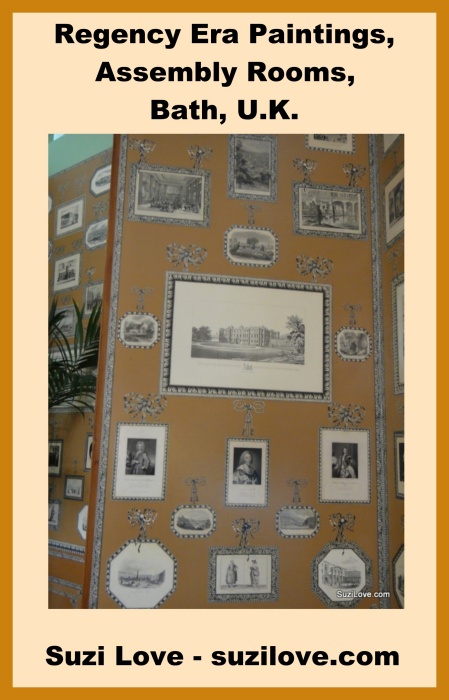
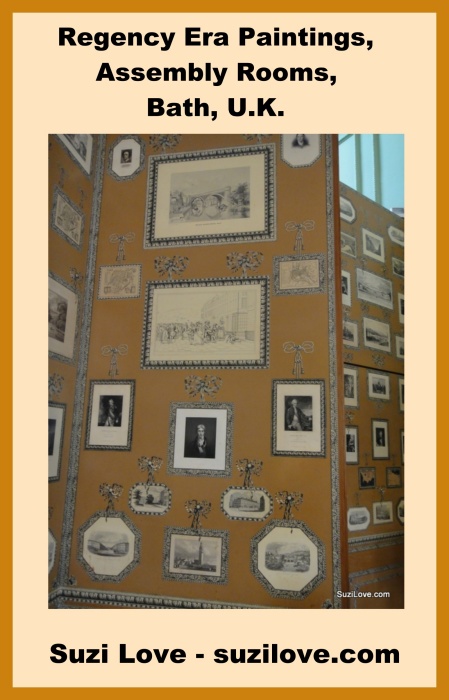
Chandeliers. Regency Era Paintings,
Assembly Rooms,
Bath, U.K.Regency Era Paintings,
Assembly Rooms,
Bath, U.K.Regency Era Paintings,
Assembly Rooms,
Bath, U.K.Regency Era Paintings,
Assembly Rooms,
Bath, U.K.
The tea room was used for refreshments, with tea generally served weak and black or perhaps with arrack and lemon, and on Wednesday nights during the Season concerts were held there. Fashionable visitors to Bath could also hold breakfasts there for their friends.
Many famous people visited the Assembly Rooms in the 18th and 19th centuries. Jane Austen and Charles Dickens both mention the Assembly Rooms in their novels and the diarist, Francis Kilvert, described a reception there in 1873. Subscription concerts were popular and many well-known musicians also visited, the most distinguished being Joseph Haydn, Johann Strauss the Elder, and Franz Liszt.
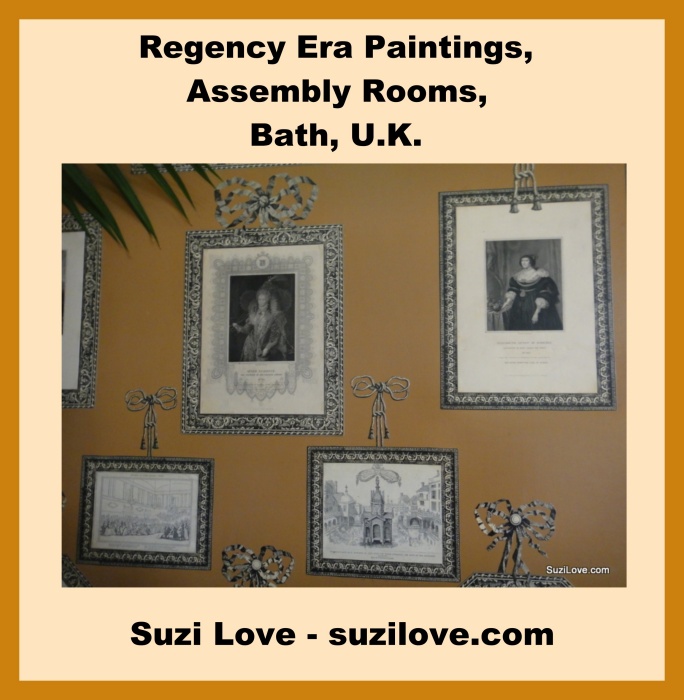
Today, the Octagon Room, the Tea Room, and the Cloak room Landings all showcase beautiful paintings and prints as the Upper Rooms were given to the National Trust in 1931. You can see paintings by Thomas Gainsborough and John Simmons as well as an Original ticket to the Thirteenth Dress Ball at the Assembly Rooms, 24 January 1803.
Since 1963, the Upper Assembly Rooms have also housed the amazing Fashion Museum. The building is owned by the National Trust and is leased by Bath & North East Somerset Council.
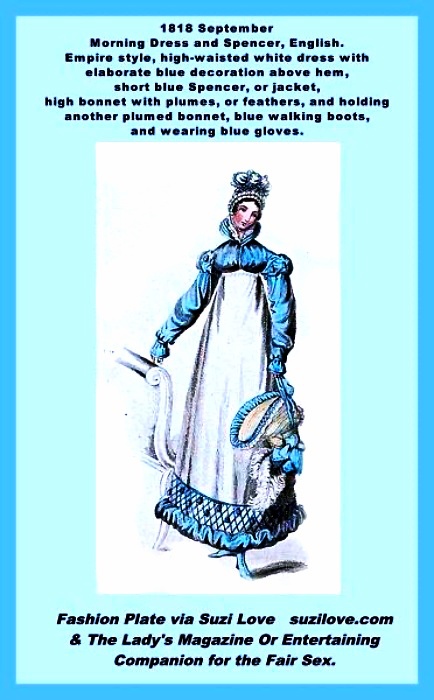
1818 September Morning Dress and Spencer, English. Empire style, high-waisted white dress with elaborate blue decoration above hem, short blue Spencer, or jacket, with puffs at the shoulders and straight sleeves, cap with plumes, or feathers, tied under her chin and holding another plumed bonnet, blue walking boots, and wearing blue gloves. Fashion Plate via Ladies Magazine.
Definition Empire Style Dress: High-waisted white gown defined women’s fashion during the Regency Era. ‘Empire’ is the name given to the period when Napoleon Bonaparte built his French Empire. High-waisted, loose gowns were adopted by the aristocracy as a symbol of turning away from the fussy, elaborate and expensive clothing worn in the 1700s.
Definition Spencer: Short jacket, cropped at the waist, worn over a dress, or gown. These close-fitting, tight sleeved, waist length jackets were modeled on a gentleman’s riding coat, but without tails. Delicate and regency dresses provided so little protection from the cold, so over garments were essential for warmth, modesty and good health.
Fashion Women 1815-1819 History Notes Book 28 https://books2read.com/SuziLoveFashionWomen1815-1819