Pagans burned a great log and a mammoth candle on the 21st of December, the shortest day in the year, because it was seen as the turning-point in the conflict between the contending forces of winter and spring.
From Harpers Bazaaar “The Yule-block, or Christmas-log, with its warm welcome, extending even to the poor and the stranger as they gathered around the hospitable board is being gradually supplanted by the Christmas-tree.”
Formerly the Yule-log, a huge section of the birch, was cut from a tree selected on Candlemas-day, which so late as the time of Queen Elizabeth was the last day of the Christmas holidays. On the following Christmas-eve it was dragged in and placed upon the hearth with great ceremony, the merry-makers pulling with a will, and singing the while the modernized Christmas carol commencing,
“Come, bring with a noise,
My merrie, merrie boys,
The Christmas-log to the firing.”
It was then kindled with a brand from last year’s Christmas fire, which, if it was not thus kept continually burning, still linked the merrymaking of one Christmas-time to that of another.
In Ramsgate, Kent, and the Isle of Thanet, the custom styled “hodening” is still in vogue. The “hoden,” which appears to be a cross between the “white horse” and the Klapperbock of the Germans, is accompanied by a number of youths in fantastic dress, who go round from door to door ringing bells and singing Christmas carols.
The Star of Bethlehem, or Christmas Star appears in nativity story of Gospel of Matthew where wise men from the East, or Magi, follow the star and travel to Jerusalem. The Three Wise Men brought gold, frankincense and myrrh to the newborn king. Myrrh being commonly used as an anointing oil, frankincense as a perfume, and gold as a valuable.
Three Kings came riding from far away,
Melchior and Gaspar and Baltasar;
Three Wise Men out of the East were they,
And they travelled by night and they slept by day,
For their guide was a beautiful, wonderful star.
The Three Kings by Henry Wadsworth Longfellow
Gold, Frankincense and Myrrh were the three presents brought by the Wise Men to the Infant Christ, lying in the manger stall, at Bethlehem. Gold to Christ means that all the affluence of the world surrendered to Him and Gold paid the way for Joseph and Mary and the divine fugitive into Egypt. The gold for Christ, the silver for Christ, the jewels for Christ. The bright, round, beautiful jewel of a world set like a solitaire on the bosom of Christ. The wise men shook myrrh out of their sacks and the cattle snuffed at it but didn’t eat it because it was bitter. This pungent gum resin of Abyssinia was brought to the feet of Christ to show bitter betrayal, persecution, days of suffering and bitter nights. Myrrh was put into His cup when He was dying and put under His head in the wilderness and Myrrh was used on His from the cattle-pen in Bethlehem to the mausoleum. Frankincense means worship and was brought to temples, sprinkled over the living coals, and when they were ready to worship, the cover was lifted and perfumed smoke arose and filled the places of worship and altars.
In modern times, gifts are given on December 25th, or Christmas Day, in most countries but in others it is December 6th, or Saint Nicholas Day, and January 6th, or Epiphany. European countries generally follow the custom of giving each other presents on Christmas Eve.
Leaning in, Lord Mallory whispered in Lady Lillian’s ear. “Well, well. I certainly didn’t expect to find you in attendance at a scandalous ball.”
1820 Blackstone House, Twenty miles south of London. Brenton, Earl Mallory, secreted himself behind a life-sized statue of a naked man. Hiding from the two hundred guests spilling through the rooms Lord Browning had opened for the Pleasure House Ball. Clearly he’d suffered a moment of insanity when he’d yielded to his friend’s pleas to accompany him to this ball. ‘For God’s sake, Michael, why are we wasting our time here? I’ve no intention of engaging a mistress and….’
Brent shook his head. ‘Must be imagining things. I know only one person who wears that perfume and she mixes it herself. That woman is a lady and a duke’s daughter and certainly wouldn’t be attending a courtesan’s ball.’
‘Good God! You don’t mean−’
Pleasure House ball Book 3 Irresistible Aristocrats books2read.com/suzilovePHB. Lord Mallory, attends his first courtesan’s ball in ten years to appease his concerned friends, though he’d rather stay home and read to his motherless daughters.
The Lord of Misrule was generally a peasant, or sub-deacon, and the revelries followed the Pagan tradition of Saturnalia and was a time of drunkenness and wild partying. The Church’s festival with a Boy Bishop, the leader of children’s festivities in choir schools, was similar, but was abolished by Henry VIII in 1541, restored by the Catholic Queen Mary, but again abolished by Protestant Elizabeth I. On the Continent, the Council of Basle suppressed it in 1431 but the custom was revived in some places from time to time, even as late as the eighteenth century. After the death of Edward VI in 1553, the English court stopped appointing a Lord of Misrule.
From A Survey of London by John Stow: Reprinted from the text of 1603.
‘…in the feaste of Christmas, there was in the kings house, wheresoeuer he was lodged, a Lord of Misrule, or Maister of merry disports, and the like had yee in the house of euery noble man, of honor, or good worshippe, were he spirituall or temporall.’
During the late medieval and early Tudor periods in England, Lord of Misrule, also called Abbot Of Misrule, or King Of Misrule, was appointed to manage the Christmas festivities held at court, in the houses of great noblemen, in the law schools of the Inns of Court, and in many of the colleges at the universities of Cambridge and Oxford.
His reign lasted anywhere from 12 days to 3 months and his role was to direct the masques, processions, plays, and feasts. Although this was mostly a British custom, in ancient Rome from the 17th to 23rd of December, a Lord of Misrule took on the guise of Saturn for the feast of Saturnalia and the ordinary rules were changed so that masters became slaves and the offices of state were held by slaves. The Lord of Misrule presided and could command anyone to do anything. Our contemporary Christmas holidays seem to have originated from this idea of festive holidays.
The custom began in December 1551 when the Duke of Somerset, Edward VI’s uncle Edward Seymour, was in the Tower of London awaiting execution. He sent a note to the Master of Revels to appoint George Ferrers as Lord of Misrule. Ferrers was a courtier and poet who later contributed to A Mirror for Magistrates, described by Scott Lucas as a “compendium of tragic monologues” by a series of historical personages.
Scotland had the Abbot of Unreason (suppressed in 1555) as their equivalent to the Lord of Misrule and scholars believe both ideas came from the “king” or “bishop” who presided over the earlier Feast of Fools.
Another Christmas Tradition is kisisng under the Mistletoe. So have fun this Christmas and find someone to kiss. The problem in hotter climates is to find the Mistletoe, of course. Darn!
Mistletoe was used by Druid priests 200 years before the birth of Christ in their winter celebrations. They revered the plant since it had no roots yet remained green during the cold months of winter. The ancient Celtics believed mistletoe to have magical healing powers and used it as an antidote for poison, infertility, and to ward of evil spirits. The plant was also seen as a symbol of peace, and it is said that among Romans, enemies who met under mistletoe would lay down their weapons and embrace.
Scandanavians associated the plant with Frigga, their goddess of love, and it may be from this that we derive the custom of kissing under the mistletoe. Those who kissed under the mistletoe had the promise of happiness and good luck in the following year. Mistletoe was associated with Christmas as both a decoration under which lovers kiss, as well as a protection from witches and demons. Sounds romantic, although mistletoe is actually a parasitic plant that grows on other trees or plants and comes in many varieties.
In Britain, mistletoe was mainly found in the western and southwestern parts, so the custom wasn’t even followed in all parts of England. But where the mistletoe custom was followed, it was hung in doorways and the greenery was watched by young gentlemen in hopes of catching a pretty girl to kiss, usually on the cheek.
Traditionally, a man was allowed to kiss a woman who was standing underneath mistletoe and bad luck would befall any woman who refused. In some places, it was the custom to pick a berry for each kiss and when all the berries were gone, no more kisses could be taken.
The Viscount’s Pleasure House. Irresistible Aristocrats Book 1 By Suzi Love. Three naive country ladies coerce their way into London’s most infamous brothel and the last Sultan’s gala. Disenchanted Viscount tutoring three Regency Ladies. What could go wrong?
The Viscount’s Pleasure House allows Justin, the most notorious Viscount in London, to fund his search for his missing mother and sisters. But after three years catering to the sordid whims of the perpetually bored Upper Ten Thousand in early Victorian times, the Virile Viscount announces his retirement.
Justin plans to sell his exotically themed brothel and cease all Arabian Nights held on his estate, a desperate attempt to cleanse his blackened soul and perhaps revive his deadened sexual interest. So when Lady Chrissie Wellsby begs Justin to tutor her two friends in the amorous arts in exchange for information about his family, Justin is torn. For though he’ll do anything to discover the whereabouts of his family, including teaching three naive ladies how to act like well-schooled courtesans, he loathes being forced into this last performance as a sex God served by his harem.
Having Chrissie willingly act as his sex slave stirs the world-weary viscount into the wildest performance ever given at the Sultan’s tent, but does little to convince Chrissie that he has fallen head over heels in love with her and put his rakish ways behind him. Justin enjoys a wonderful reunion with his family but feels cheated of his chance at love until Chrissie’s friends encourage her to trust the newly reformed viscount.
Chrissie organizes one final gala at the Pleasure House, an erotic night of lovemaking for two to prove her love for Justin and show him she longs to be his wife. https://books2read.com/suziloveTVPH The Viscount’s Pleasure House. Irresistible Aristocrats Book 1 By Suzi Love.
Want a HOT historical romance for the holidays? Disenchanted Viscount tutoring three naive ladies in seduction. What could go wrong? #christmas #holidays #RegencyRomance #EroticRomance #HistoricalMystery https://books2read.com/suziloveTVPH
“Bells are musics laughter.” By Thomas Hood (1799-1845), British poet and humorist.
Bells hold a long time association with Christmas. In Victorian times, carol singers used small handbells to play the tune of the carol. Sometimes there were bells without singing – Church bells are rung after sunset to signal the start of the Christmas Eve service, the first of Christmas. In England, the bellman goes round at midnight ringing his bell, and rattling off a stanza or two, for the gratuity which he confidently anticipates; while watchmen, firemen, rate-collectors, postmen, chimney-sweeps, street scavengers, the errand-boys of your baker, butcher, poultry merchant, and green-grocer, even to the hired singers in the churches all expect their Christmas-box. In Victorian times, carol singers used small hand bells to play the tune of the carol and sometimes there were bells without singing. Church bells are rung after sunset to signal the start of the Christmas Eve service, the first of Christmas.
The Bellman
The Bellman stands full face, shouting with wide-open mouth and ringing his hand-bell.
In his left hand he holds out his verses headed by a little figure of Napoleon wearing a huge tricorne and holding a gigantic sword:
‘This little Boney-says he’ll come At merry Christmas time,
But that I say is all a hum Or I no more will rhyme
Some say in Wooden house he’ll glide, Some say in air Balloon,
E’en those who airy schemes deride. Agree his coming soon.
Now honest people list to me, Though Income is but small, I’ll bet my Wig, to one Penney, He does not come at all.’ Hand-colored etching and aquatint.
Legend has it that during the 17th century, craftsmen created straight white sticks of candy in the shape of shepherds’ crooks at the suggestion of the choirmaster at the Cologne Cathedral in Germany. The treats were given to children to keep them quiet during ceremonies at the living creche, or Nativity scene, and the custom of passing out the crooks at such ceremonies soon spread throughout Europe.
‘The legends of the candy cane are many, including that the cane was shaped like a “J” for Jesus, the three red stripes symbolized the Holy Trinity, the hardness of the candy represented the Church’s foundation on solid rock and the peppermint flavor reflects the use of hyssop, an herb referred to in the Old Testament.’ via Encyclopedia Britannica
In celebrations of Saint Nicholas Day, candy canes are given to children as they are also said to represent the crosier of the Christian bishop, Saint Nicholas; crosiers themselves allude to the Good Shepherd, a title associated with Jesus. Some people explain the symbolism of a striped cane as white representing Christ’s purity, red the blood he shed, and the three red stripes the Holy Trinity.
In the mid 1600s, sugar roses were added but weren’t popular so plain white canes remained until red stripes were added around 1890. In 1847, a German immigrant living in Wooster, Ohio, U.S.A. looped candy canes that he brought with him from Europe over the boughs of his Christmas tree.
In 1919, Bob McCormack of Albany, Georgia, made candy canes for family, friends and local shopkeepers. The canes were bent by hand as they came off the assembly line into the ‘J’ shape of a shepherd’s crook, so breakage was often over 20 percent. In the 1920s, a cherubic child in a red-and-white hat sold peppermint candy cane to Albany natives in an advertisement for Bob’s candy company. McCormack was the first manufacturer to wrap his candy in cellophane. Bobs moved to a larger facility in the 1930s so that it could expand its product lines and was one of the few candy companies to remain solvent during the Great Depression.
As the economy improved, people bought more sweet treats, but Bobs Candy was then leveled by a tornado and, as the company had no tornado insurance, they had to rebuild on their own. By August 1940 the company was back in business and employed McCormack’s three children.
During World War II (1941-45), when sugar was rationed, coconuts were in short supply, and pecans were expensive, Bobs took advantage of a plentiful local product—the peanut—and sold peanut-butter crackers and vacuum-packed peanuts. During the 1950s, Bobs began making money with such innovations as break-proof packaging, moisture-proof candy wrappers.
In 1952, Bob McCormack’s brother-in-law, Catholic priest Gregory Keller, invented the Keller Machine which automated the process of twisting soft candy into spiral striping and then cutting them into precise lengths as candy canes.
Harding Keller invented the Keller Machine around 1950 for his brother-in-law Bob McCormack. The machine twisted and cut stick candy, allowing for the mass production of the company’s signature candy canes and other items. – Courtesy of Farley’s and Sathers Candy Company, Inc.
First, candy sticks cut to the desired length enter the machine. Each stick is bent individually, but the machine has a system of multiple grippers and rollers to continually bend the sticks, one after the other. As each stick enters the machine, it is positioned in a gripper which holds the straight portion of the cane with the part to be bent protruding out. Each gripper has on one side a curved die which the protruding end will be bent over. The candy stick is first bent to a right angle as it is moved past and put into contact with an inclined face. The patent application describes two potential versions of the mechanism which complete the bending process.
The first version of the mechanism has a chain around two sprockets on which are mounted bending rollers. Each bending roller is attached to a cam which rides along another inclined face to move the roller along the protruding surface of the cane to complete bending it around the die. In the second version, the chain and sprockets are replaced by a wheel on which the bending rollers are mounted. In modern candy cane production, the sticks are wrapped in cellophane before they are bent.
By the middle of the century, Bob’s company – originally the Famous Candy Company, then the Mills-McCormack Candy Company, and later Bobs Candies, had become one of the world’s leading candy cane producers.Bobs Candies was sold to Farley’s and Sathers in Spring 2005. Farley’s and Sathers merged with the Ferrara Candy Company which continues to make candy canes under the Bobs name.
By the middle of the century, Bob’s company – originally the Famous Candy Company, then the Mills-McCormack Candy Company, and later Bobs Candies, had become one of the world’s leading candy cane producers.
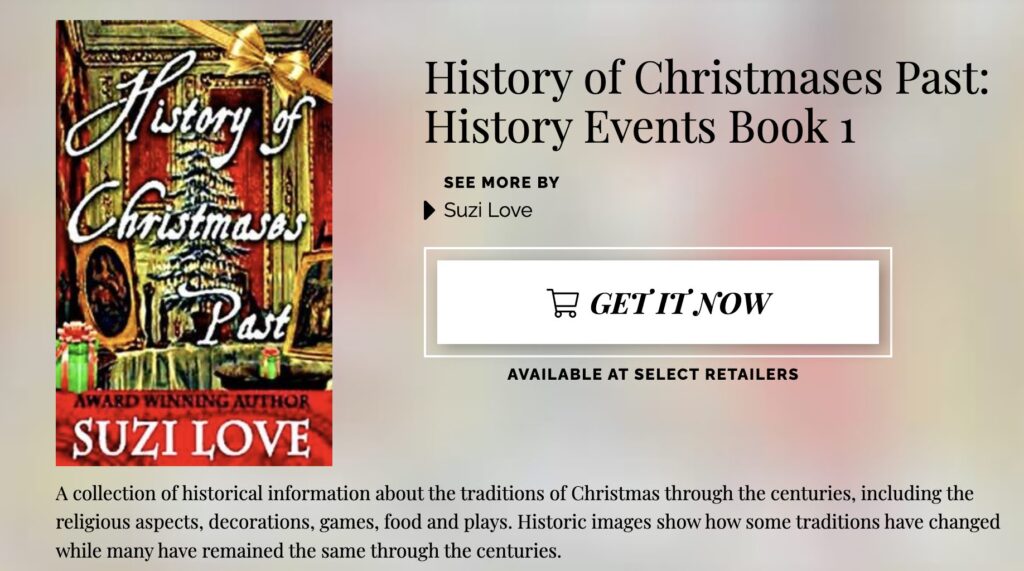
How did they celebrate Christmas in Bridgerton and Jane Austen times? Historical information about the traditions of Christmas through the centuries, including the religious aspects, decorations, games, food and plays. History Of Christmases Past has lots of information and images about Christmas through the centuries, including religious aspects, decorations, games, food and plays. Historic images show how some traditions have changed while many have remained the same through the centuries. books2read.com/suziloveHOCP
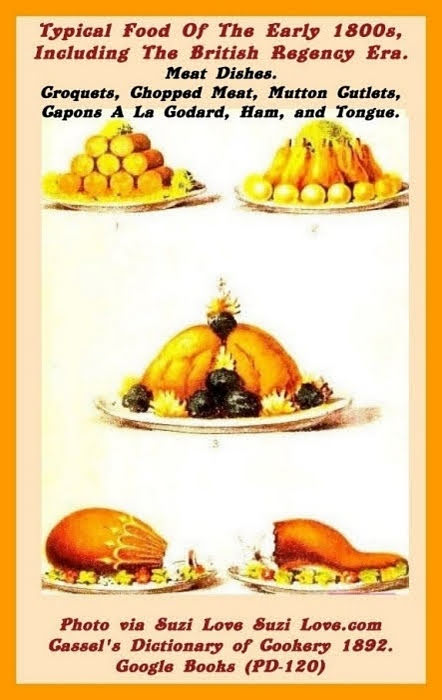
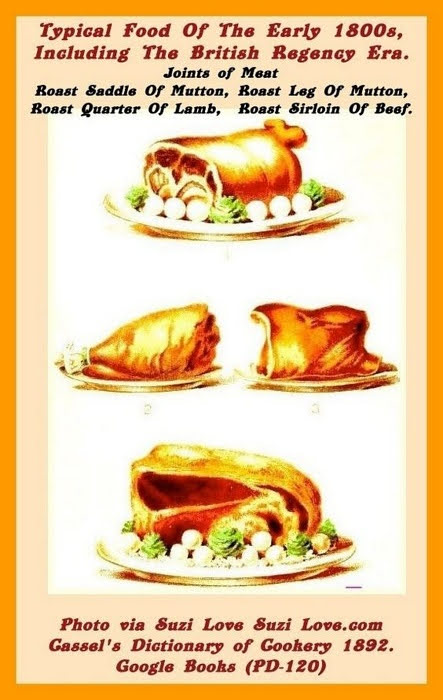
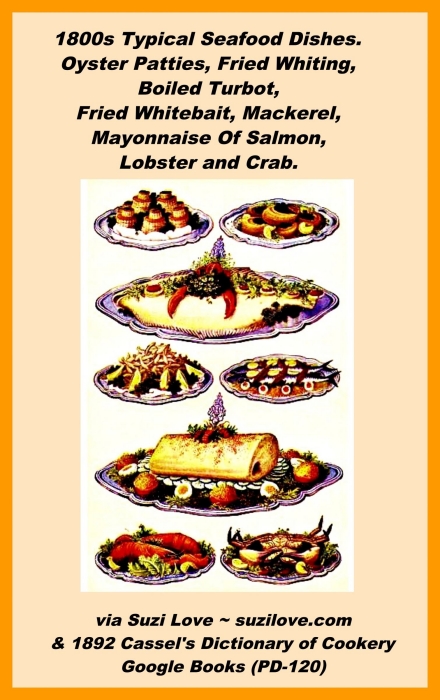
Christmas: Typical Christmas Food Eaten By the Bridgerton and Jane Austen Families. #Christmas #Food #JaneAusten #Bridgerton
On the Christmas menu was generally mince pies and perhaps a goose or a piece of beef, depending on the family’s wealth and status. Mince pies were not made of fruit mince as we do now, but of offal or meat such as bullock’s tongue cooked with spices, orange peel, and wine and then used to fill pastry cases.
Another Christmas specialty was a Yorkshire Christmas pie which would be filled with turkey, goose, a hen, or perhaps woodcocks, partridge, or pigeons. And after the main courses, came the Plum Pudding, mixed on Stir-Up Sunday according to each family’s recipe and then boiled in a cloth.