1770-1790 ca. Stays, or Corset, English. Pink silk damask, lined with linen, reinforced with whalebone, fingers spread over hips. via Victoria and Albert Museum, London, UK. collections.vam.ac.uk. https://books2read.com/SuziLoveCorsetBook15


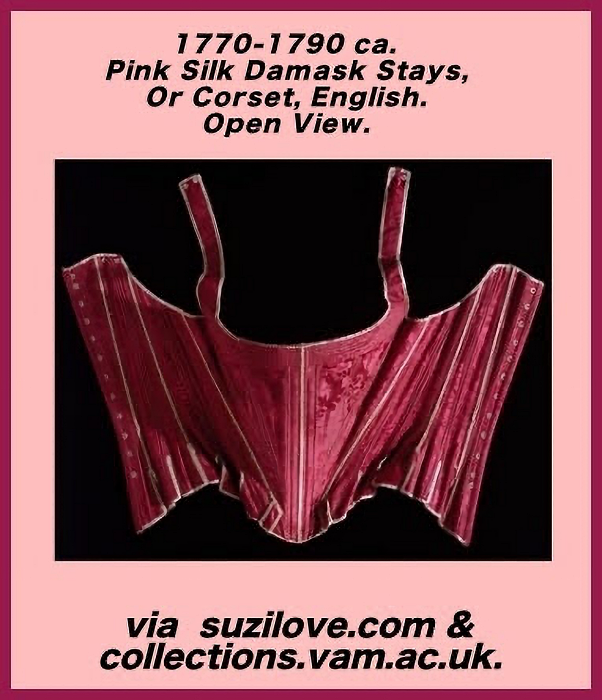



1770-1790 ca. Stays, or Corset, English. Pink silk damask, lined with linen, reinforced with whalebone, fingers spread over hips. via Victoria and Albert Museum, London, UK. collections.vam.ac.uk. https://books2read.com/SuziLoveCorsetBook15
1805 Red Velvet Redingote, French. Shoulder cape with satin piping on the coat, white dress underneath, black hat with flowers to trim and white gloves. Fashion Plate via Journal des Dames et des Modes, or Costume Parisien. This is the type of outdoor walking dress, or pelisse, worn by Jane Austen and contemporaries in England as French fashion plates were obsessively copied despite the two countries being at war for many years. English fashion magazines frequently published plates copied from French fashion magazines.
This is the type of outdoor walking dress, or pelisse, worn by Jane Austen and contemporaries in England as French fashion plates were obsessively copied despite the two countries being at war for many years. English fashion magazines frequently published plates copied from French fashion magazines.
Definition Redingote, Pelisse, Walking Dress: The term, Redingote, was used more in France and other parts of Europe and Pelisse or Walking Dress was used more in England. While the terms Redingote and Pelisse are often used interchangeably, the Redingote usually features a close fitted top and flares out at the hemline with a more tailored or military look than a Pelisse.


1700s Late Pair of Pattens, English. Iron supports underneath leather and wood. via Victoria and Albert Museum, London, UK. collections.vam.ac.uk.
Definition Pattens: Under shoes that strapped onto shoes and worn outdoors and to lift shoes and dresses out the mud. People in Jane Austen’s lifetime would have used these to protect the hems of dresses and legs of men’s pants, plus protect delicate shoes.
Fashion Women Late 1700s History Notes Book 1.
What was fashionable for women in the late 1700s? Extravagant colors and fabrics and outrageous styles were all seen in these flamboyant fashions. Take a look at their dresses, suits, hats, shoes and bedroom fashions. books2read.com/suziloveFashWomen1700s


1809 March. White walking dress as Jane Austen. would have worn in England. Pale blue tunic worn over a white dress and with an unusual blue hat trimmed in yellow to match the tunic. Carrying a matching blue reticule and wearing blue slippers and yellow gloves. Description on Fashion Plate, “A Polish cap, and pelisse of silver grey cloth, trimmed with gold or silver, buttoned down the front with small round buttons, a high collar, with a lace ruff ; boots of same colour as the pelisse, and both embroidered with gold or silver. York tan gloves. This dress was transmitted to a lady of high rank from Warsaw, and would alone evince the taste and elegance of the ladies of that country, were they not already sufficiently known. Engraved Plate via Rudolph Ackermann’s ‘The Repository’ of Arts.
Definition Reticule Or Ridicule Or Bag or Purse: Often with a drawstring to pull closed and usually made of cloth or covered cardboard and often decorated with beading or embroidery. A reticule, or purse, or handbag, was usually carried by a woman during the Regency period to carry all their daily necessities. Earlier, women used pockets that tied at the waistline and were hidden in the folds of their skirts. Empire style, or early 1800s, high-waisted dresses made it impossible to either sewn in a pocket or to tie on a pocket. So women began carrying small, decorated bags called Reticules, or ridicules, which generally pulled close at the top with a drawstring.

Fashion Women 1805-1809 History Notes Book 26 What did Jane Austen and friends wear? This book looks at early 1800s fashions, which were elegant and pretty with high waists and fabrics that were almost transparent. These Empire style gowns, named after Napoleon’s first Empress, became popular throughout Europe, and were then copied around the world. Colorful outwear was added to make an ensemble more attractive and warmer. https://books2read.com/SuziLoveFashionWomen1805-1809
1817 November Evening Mourning Dress, English. Black short length dress, layers of feathers on the skirt, long lace headdress falling from an upswept hairstyle and black shoes. Fashion Plate via John Belle’s La Belle Assemblée or, Bell’s Court and Fashionable Magazine, London.
Mourning – Full Or Deep Mourning: Entire ensemble and accessories must be black. Shiny fabrics were not allowed so bombazine became the fabric of choice for many. Hats had veils added and jet was the preferred jewelry.
Mourning – Half or Slight Mourning: allowed touches of grey and white to be added to full, or deep, mourning ensembles. Some lustre, or shine, was allowed in fabrics and accessories. After a time, mauve or deep purple could also be worn.

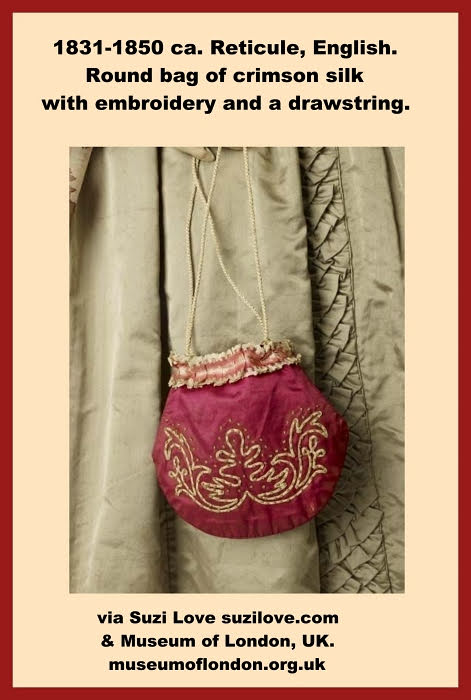
1831-1850 ca. Reticule, English. Round bag of crimson silk with embroidery and a drawstring. via Museum Of London.
Definition Ridicule, Reticule, or Handbag: From the late 1700s, pockets could no longer be sewn into gowns, as skirts fell from just under the bust and were full and flowing. Instead, women began carrying small bags, known at first as ridicules and later as reticules, to keep necessary items on their person e.g. handkerchiefs, coins, vinaigrettes, calling cards, glasses etc.
The term ‘ridicule’ derived from the Latin ‘ridiculum’ and first used in France during the 17th century and meant subjecting something or someone to mockery. As women’s tiny bags were mocked, or ridiculed, for being a useless fashion accessory when they were first used in the late 1700s, it’s likely this is how the name ‘ridicule’ started. The later term ‘reticule’ derived from the Latin reticulum, meaning ‘netted bag’ and was applied when bags became larger and often made from netting.
In the early nineteenth century, reticules started to look like future handbags as they were often made from rigid card or molded Maché or card into a variety of shapes. Early bags were circular and with a drawstring but as women wanted their reticules to look individual they could be made with two halves and a hinged metal closure or with concertina sides. Materials varied from silk, cotton and string and shapes were round, hexagonal or lozenge shapes with shell shaped bags becoming very popular during the Regency and Romantic Eras.
1800s magazines were written for well-bred women who could read, so they gave plenty of ideas for how ladies could make and embellish reticules for their own use and as pretty gifts. Needlework was highly encouraged as a pastime for a lady, so bags were frequently embroidered or decorated with beading. By the 1820s, reticules became more like our modern handbags using soft leather gathered at the top or hard leather with a rigid fastener and metal chain for carrying.
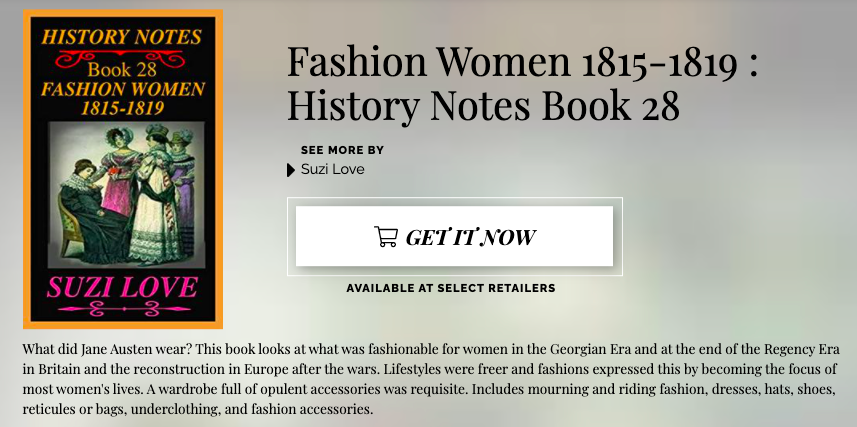
What was fashionable for purses in past centuries? Call them what you like: purses, bags, handbags, reticules, ridicules, clutches, or pocket replacements. They all did the same job and they changed greatly with the prevailing fashions of time. books2read.com/suziloveReticules History Notes Book 3 By Suzi Love.

Four Times A Virgin: “Are you suffering some sort of aliment in your abdomen, Your Grace?” #RegencyRomance #HistoricalMystery #ReadARegency #HistoricalEroticRomance
books2read.com/suziloveFTAV
The Viscount’s Pleasure House. Irresistible Aristocrats Book 1. Three naive country ladies coerce their way into London’s most infamous brothel and the last Sultan’s gala. Disenchanted Viscount tutoring three Regency Ladies. What could go wrong?
The Viscount’s Pleasure House allows Justin, the most notorious Viscount in London, to fund his search for his missing mother and sisters. But after three years catering to the sordid whims of the perpetually bored Upper Ten Thousand in early Victorian times, the Virile Viscount announces his retirement.
Justin plans to sell his exotically themed brothel and cease all Arabian Nights held on his estate, a desperate attempt to cleanse his blackened soul and perhaps revive his deadened sexual interest. So when Lady Chrissie Wellsby begs Justin to tutor her two friends in the amorous arts in exchange for information about his family, Justin is torn. For though he’ll do anything to discover the whereabouts of his family, including teaching three naive ladies how to act like well-schooled courtesans, he loathes being forced into this last performance as a sex God served by his harem.
Having Chrissie willingly act as his sex slave stirs the world-weary viscount into the wildest performance ever given at the Sultan’s tent, but does little to convince Chrissie that he has fallen head over heels in love with her and put his rakish ways behind him. Justin enjoys a wonderful reunion with his family but feels cheated of his chance at love until Chrissie’s friends encourage her to trust the newly reformed viscount.
Chrissie organizes one final gala at the Pleasure House, an erotic night of lovemaking for two to prove her love for Justin and show him she longs to be his wife.


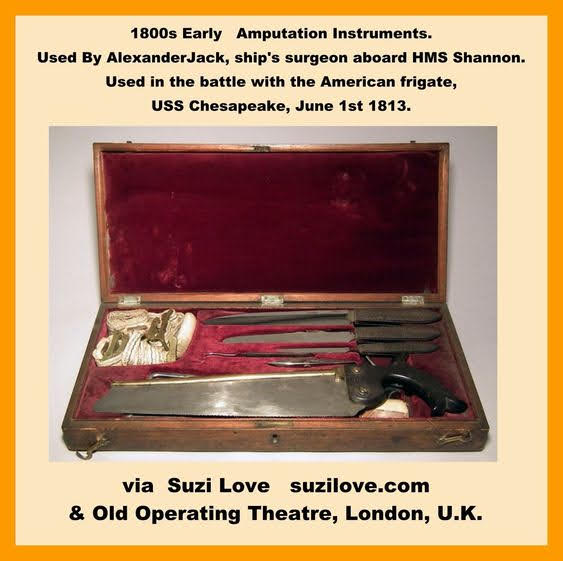
1800s Early Amputation Instruments used by Alexander Jack in Jane Austen’s times. Jack was a ship’s surgeon aboard H.M.S. Shannon and used by him in the battle between the Shannon & the American frigate the USS Chesapeake on June 1st, 1813, during the War of 1812. via Old Operating Theatre, London.
Jane Austen’s brother, Francis William Austen, was appointed Admiral of the Fleet in the British Royal Navy on 27 April, 1863. He had been a Royal Navy Captain from 1799 to 1830, age 25 to 56, Rear Admiral in 1838, age 64, Full Admiral in 1848, age 74. This is the type of medical instruments found on all of his ships.
In Jane Austen’s time, amputations were carried out frequently to prevent infections that could kill.

1817 November Cambric Muslin Walking Dress, English. As would have been worn by Jane Austen and her female contemporaries when out walking. Row of pointed work forms a narrow pelerine, high on the bosom, and ends in a point in front. The skirt has a deep muslin flounce beneath a row of soft muslin bouffone. Brown Spencer of gros de Naples has figured buttons which are intermixed with an elegant trimming. Sleeves ends are like the hem with a double row of buttons and trimming. The newly fashionable epaulette is edged and finished with buttons on the shoulder. Autumnal bonnet has a large front, low crown, and ties under the chin with a large bow. Swansdown muff, lilac sandals and pale lemon kid gloves finish the ensemble. ‘We have been favored this month with both our dresses by a lady, one of our subscribers, who purchased them, we understand, at Mrs. Bell’s in St. James’s Street.’ Fashion Plate via Rudolph Ackermann’s ‘The Repository of Arts’.
Definition Empire Style Dress: Named after the First Empire in France. Empire dresses had a low neckline and skirts started directly under the bust and flowed into the classical relaxed wide styles of Greece and Rome. This style of dress is associated with Jane Austen and her contemporaries as a high-waisted dress was worn most days. Cotton, silk or taffeta were the popular fabrics. Only the very wealthy could afford white dress in this style as the cottons were imported from India and had to be carefully cleaned, usually by a lady’s maid.
Definition Spencer: Short jacket, cropped at the waist, worn over a dress, or gown. These close-fitting, tight sleeved, waist length jackets were modeled on a gentleman’s riding coat, but without tails. Delicate and regency dresses provided so little protection from the cold, so over garments were essential for warmth, modesty and good health.

