17th Century Late – 18th Century Early. Purse, French. Silk and Metal. via Metropolitan Museum, N.Y.C., U.S.A. metmuseum.org



17th Century Late – 18th Century Early. Purse, French. Silk and Metal. via Metropolitan Museum, N.Y.C., U.S.A. metmuseum.org
1803 White Redingote, Or Overcoat, French. Striped vest, casually knotted white cravat, blue trousers tucked into high boots. Fashion Plate via Journal des Dames et des Modes, or Costume Parisien.
Definition Redingote Or Pelisse Or Walking Dress Or Coat: French word developed from English words, riding coat. Long fitted outdoor coat worn over other garments for warmth. Originally made with several capes and trimmed with large buttons. For women, the coat was often cut away in the front or left open to show off the dress underneath. French fashion plates call these coats Redingotes and they were worn by men, women, and children. English fashion plates call the coats a Pelisse, a walking dress, Promenade dress, or Carriage dress. books2read.com/suzilovePelisse

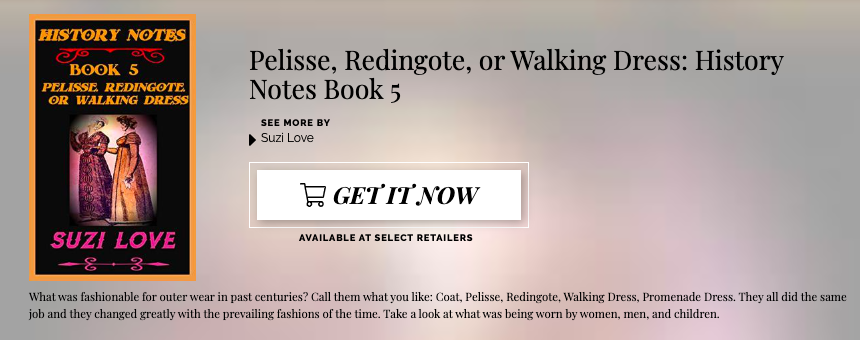
1809 Purple Redingote, Or Coat, French. V-shaped bodice with gold braid trim on sleeves, neck and hem, short puffed sleeves over long straight sleeves, matching hat and walking shoes. Fashion Plate via Journal des Dames et des Modes, or Costume Parisien.
Definition Redingote Or Pelisse: Long fitted outdoor coat worn over other garments for warmth. French word developed from English words, riding coat. Redingotes or Pelisses were needed to cover the flimsy dresses made of lightweight fabrics of the Regency years to provide warmth and some protection from windy conditions when gowns might lift and cause modesty issues. Jane Austen and her contemporaries often walked to places and so would have needed the warmth of a Pelisse or coat in the cold British winters.
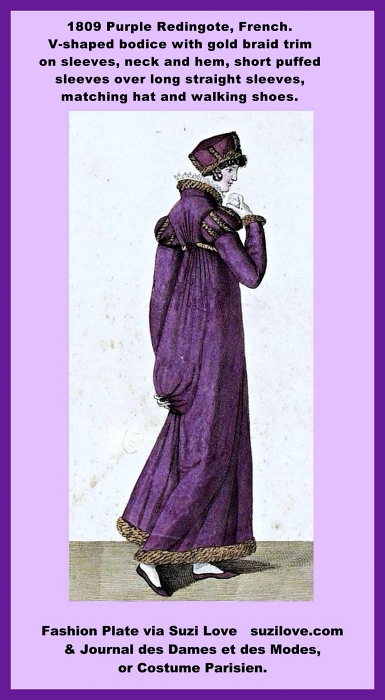

1715 ca. Rectangular Envelope Style Bag, French. Polychrome opaque and translucent glass beads strung with linen thread, held together by interlocking looping stitches (sablé). Design on white ground: woman playing table organ, woman seated, boy and girl flanking, urn with flowers right, two insects and curtain above (obv.); sun and phoenix of Louis XIV, ribbon above inscribed IE VIS SANS MOURIR, inscribed at bottom and right SI IE MEURS CE NEST QUE POVR REVIVRE (rev.); vegetative scene (flap). Gilt-galloon binding. Salmon figured silk lining and side panels. Cardboard foundation. via Los Angeles County Museum of Art, California, USA. collections.lacma.org
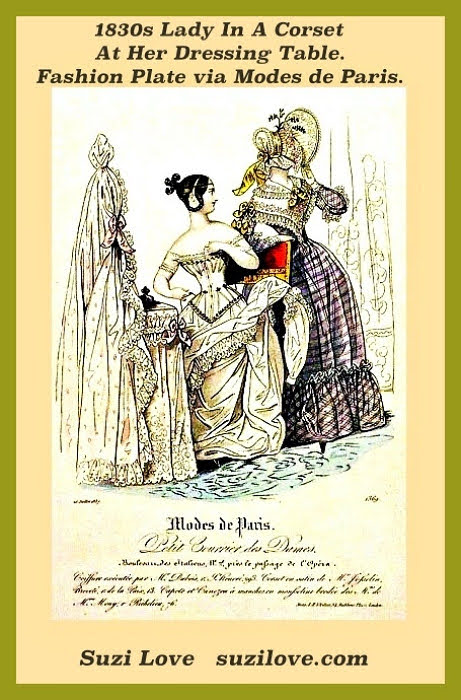
1830s Lady In A Corset At Her Dressing Table. Fashion Plate via Modes de Paris.
Romantic Era women’s corsets supported plus fitted well to give a fashionable silhouette. Becoming a fashion item, rather than simply hidden underclothing.
https://books2read.com/SuziLoveCorsetBook18

19th Century Mother Of Pearl Carnet De Bal Or Dance Card, French. via Ruby Lane Antiques.


1804 Fawn Drap Riding Habit in Jane Austen style. High-waisted dress with a full skirt and train, skirt buttoned at the side, long straight sleeves, velvet snug hat, Fichu around her neck, riding crop, two views of hairstyles. Fashion Plate via Journal des Dames et des Modes, or Costume Parisien.
Male tailors made most women’s riding habits during the Regency years and they were constructed similarly to men’s riding outfits. Generally in two pieces, a jacket and a skirt, and with a shirt with a frilled collar or front opening underneath. The trains of a habit could be caught up for walking, usually with a button and loop, and unhooked and let down so that the skirt flowed over the woman’s legs when she rode side saddle. Due to the numerous wars during the early 1800s, it was seen as patriotic for women to add military style touches to outfits in support of military men. The shoulder and cuff trims resemble the epaulettes and coat trims of a military uniform.


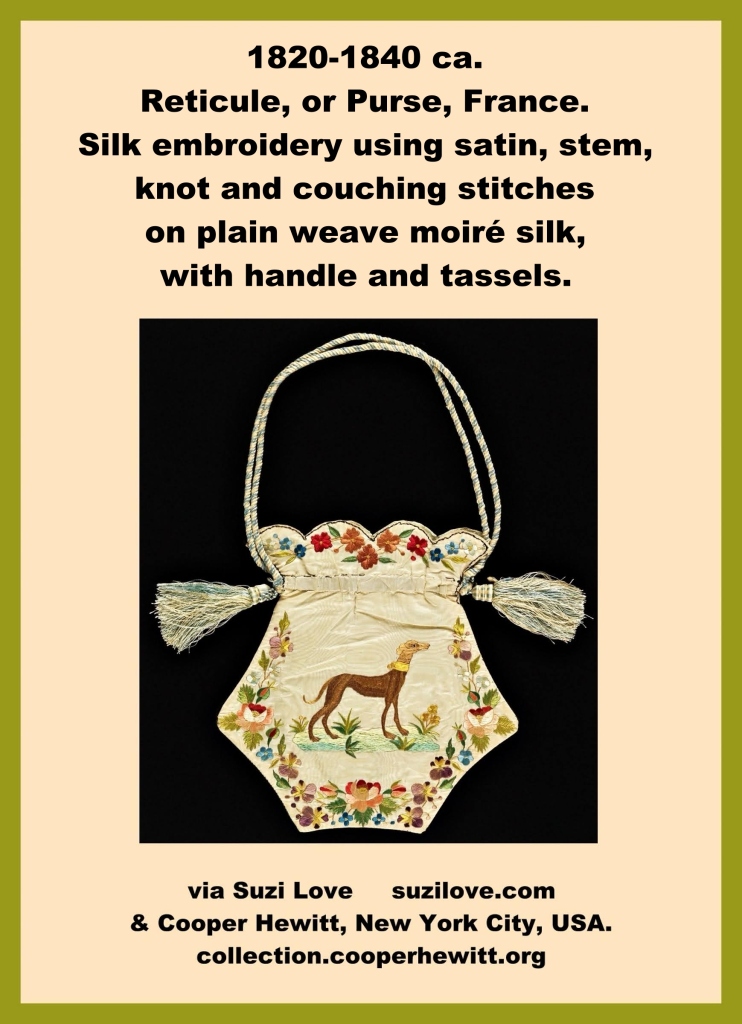
1820-1840 ca. Reticule, Or Purse, France. Bag of plain weave white moiré silk embroidered in colored silks using satin, stem, knot and couching stitches. Shape is five-sided, flat, with a scalloped top. Borders of flower wreaths. Embroidered on one side with a greyhound and with a long-tailed bird on the other. Worked as two separate panels, joined. Lined in pale blue taffeta. Blue and white silk cord. via Cooper Hewitt, New York City, USA. collection.cooperhewitt.org
Definition Reticule: Bag or purse, often with a drawstring to pull closed and usually made of cloth or covered cardboard and often decorated with beading or embroidery. A reticule, or purse, or handbag, was usually carried by a woman during the Regency period to carry all their daily necessities. Earlier, women used pockets that tied at the waistline and were hidden in the folds of their skirts. Empire style, or early 1800s, high-waisted dresses made it impossible to either sewn in a pocket or to tie on a pocket. So women began carrying small, decorated bags called Reticules, or ridicules, which generally pulled close at the top with a drawstring. http://books2read.com/suziloveReticules

1863 Traveler’s Chest, French. Sewing Tools, Ruby Perfume, Aide de Memoire or Notebook, etc. Inside lid with theatre curtains. via Ruby Lane Antiques. rubylane.com


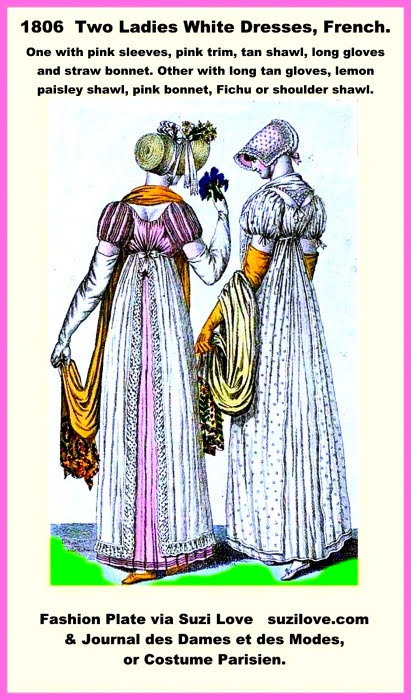
1806 Two Ladies In White Dresses, French. One with pink sleeves, pink trim, tan shawl, long gloves and straw bonnet. Other with long tan gloves, lemon paisley shawl, pink bonnet, Fichu or shoulder shawl. Fashion Plate via Journal des Dames et des Modes, or Costume Parisien. These fashionable ensembles with a variety of fashionable and practical accessories would have been worn by Jane Austen and her family and friends during the day when out walking in the park or visiting village shops. Hats were a necessity to protect fair skin from the sun and scarfs and shawls added color and warmth to an outfit.
Definition Fichu: Draped scarf or shawl worn about shoulders and tied in knot at breast, with ends hanging down loosely. Word, meaning negligee or careless, first used to describe breaking away from stiff collar of the past.