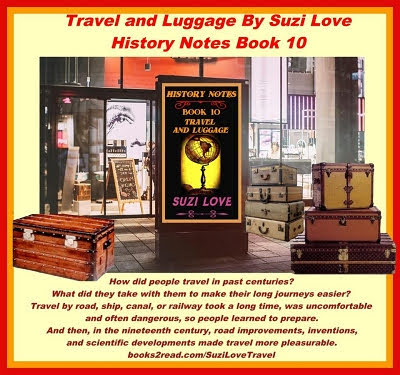
Travel and Luggage By Suzi Love History Notes Book 10. How did people travel in Bridgerton’s and Jane Austen’s times? What did they take with them to make their long journeys easier? Travel by road, ship, canal, or railway all took a long time and had dangers so people learned to prepare. And then, in the nineteenth century, road improvements, inventions, and scientific developments made travel more pleasurable. books2read.com/SuziLoveTravel
There has been some discussion on the names for Corset Makers. I’ve seen lots of names, including Stay Maker, Stay Manufacturer, Corset Maker, Body Tailor and Milliner. It was mainly men who were Stay Makers, but there were also some women who included stay making with their millinery.
Corsets Overview History Notes Nonfiction Book 14. This book shows how body wraps, stays, and corsets were worn to create a variety of fashionable silhouettes through past centuries. Corsets flattened breasts and accentuated rounded hips or pushed up breasts and showed off the bust line depending on the fashions of the time and the desired silhouette. Includes corsets through the Georgian, Regency, Victorian and Edwardian Eras and Jane Austen’s lifetime. Overview of corsets through history, including the Georgian, Regency, Victorian and Edwardian Eras and Jane Austen’s lifetime.
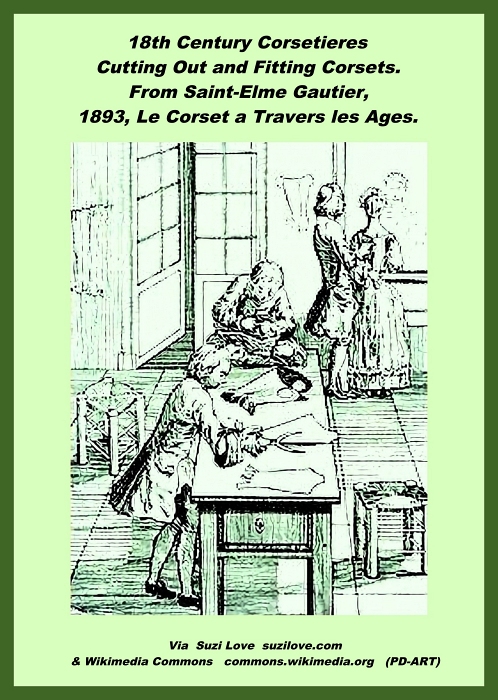
1776 April 28th John McQueen, Stay Maker., New York. At the sign of the White Stays in Smith Street,near the Mayor’s baths, New York. Making all sorts of stays in the newest fashion that is worn by the ladies of Great Britain or France. Packthread stays for babies from one month to seven years, stays for children of Tabby, Ruffled Canvas, Or Buckram, and for older girls an assortment of thin boned stays of different sorts and sizes.1835 Milliner, Dress and Corset Maker to the Royal Family. Mrs. Langdon. 37 Milson Street, Bath, U.K. Local Trade Advertisements. From 1835 The Historical and Local New Bath Guide By C. Duffield. via Google Books (PD- 150)18th Century Interior of the shop of a body tailor, or corset maker. From 1893 The Art of the Tailor of the Bodies of Women and Children.1835 Fashionable Long and Short Stay Manufacturer. Robert Drew & Co. Local Trade Advertisements. From- 1835 The Historical and Local New Bath Guide. Published by C. Duffield via Google Books (PD-150)18th Century Corset Maker From 1893 Le Corset, A Travers Les Ages.18th Century Corsetieres cutting out and fitting. From Saint-Elme Gautier, Le Corset a Travers les Ages. en.wikipedia.org
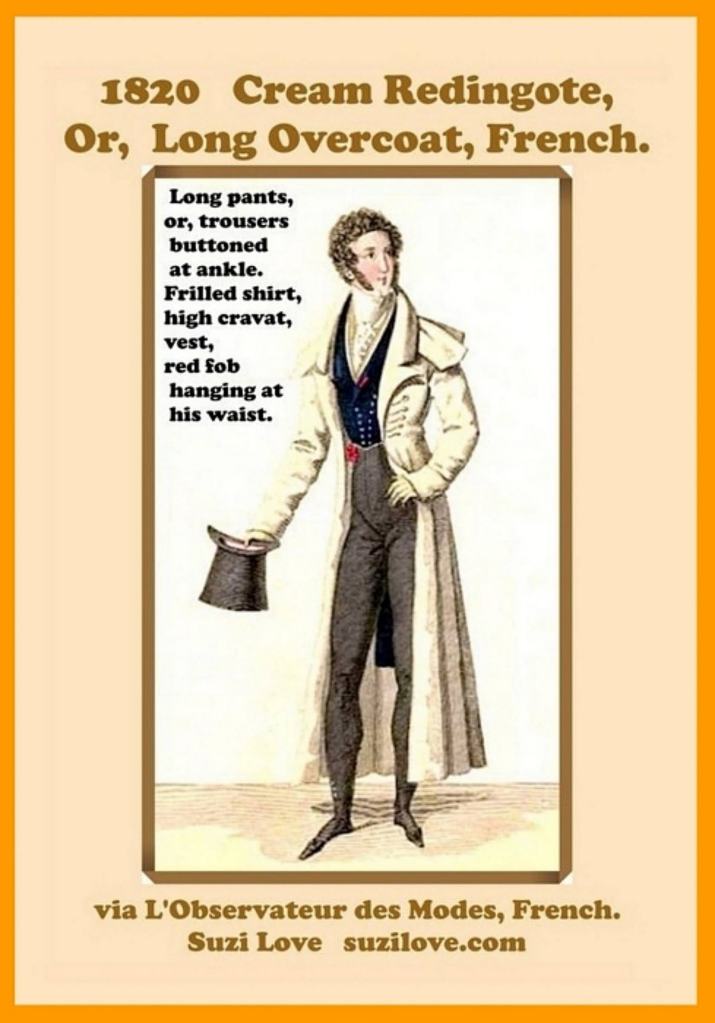
1820 Gentleman’s Cream Redingote, Or Long Overcoat, French. Long pants, or trousers, buttoned at the ankles, frilled shirt, high cravat, vest, red fob hanging at his waist. via L’Observateur des Modes, French.
1840s Woman’s Shoes or Slippers, Probably United States. Square toes, silk satin, sueded leather, linen, and kid leather. via Los Angeles County Museum of Art, California, USA. collections.lacma.org Shoes in the early 1800s were flat or low heeled and occasionally decorated with a bow or floral embellishments. From the 1820s onwards, square toes became fashionable.
1840s Woman’s Shoes or Slippers, Probably United States. Square toes, silk satin, sueded leather, linen, and kid leather. via Suzi Love suzilove.com
& Los Angeles County Museum of Art, California, USA.
collections.lacma.org
19th Century Early Women’s Cotton Caps. Worn as morning caps, night caps, or under other hats. With lappets, hanging ties, or tails, which were also called ‘follow me lads’, or ‘flirtation ribbons’. via Museum of Fine Arts, Boston, U.S.A. mfa.org. via Museum of Fine Arts, Boston, U.S.A. mfa.org
Definition Caps: Worn as morning caps, night caps, or under other hats. Jane Austen and her family and female friends would have worn caps like these, sometimes during the morning at home, to bed to keep their long hair from becoming knotted, or under a bonnet to hold a hairstyle in place. Caps sometimes had hanging ties, or tails, were also called ‘follow me lads’, or ‘flirtation ribbons’.
Definition Lappets: Two long strips of material, often lace, hanging from top of head down back or over shoulders. Sometimes extensions of a headdress and a requirement for court dress.
Fashion Women 1815-1819 History Notes Book 28 https://books2read.com/SuziLoveFashionWomen1815-1819
19th Century First Half Woman’s Embroidered Cap, French. In the 19th Century, women wore some sort of headwear during the day and the evening. Finely decorated cotton caps were worn during the morning with informal or At-Home, dress and at night with nightwear. These caps had fine embroidery, ruffles, lace edgings on the streamers, embroidered, pointed edges of the ruffles, ties, and streamers, known as ‘follow me lads’ or ‘flirtation ribbons’.
19th Century First Half Woman’s Embroidered Cap, French. Cotton mull with cotton embroidery, linen bobbin lace insertion, silk ribbon, round gathered crown with spoked wheel design in center surrounded by long leafed wreath, outside this a wreath of carnations, same carnations around forehead band and neck band, design embroidered with white linen thread, white taffeta ribbon run through the embroidered net casing and tied in center back. via Museum of Fine Arts, Boston, U.S.A. mfa.org
1810–1850 ca. Corset, American or European. Front lacing, extra wide straps for under a square neckline dress. via Metropolitan Museum, N.Y.C., U.S.A. metmuseum.org
Surviving stays, or corsets as they became to be called in the nineteenth century, show that both longline and shorter corsets were worn and that they were made of cotton, silk and sateen. A lot of these corsets were front fastening, plus many were laced at both the front and the back so our aristocratic fictional heroines could indeed dress and undress themselves without the assistance of a maid.
Corsets 1810-1830 History Notes Book 17 This book shows how corsets changed to fit well under clothing, give maximum support and comfort. Corsets pushed up breasts and showed off the bust line beneath a square-cut and low-cut neckline as in the early 1800s, or Regency years. Jane Austen and her female and friends wore these corsets. https://books2read.com/SuziLoveCorsetBook17
1845-1865 ca. Black Faille Evening Slippers, French. Designed By Melnotte for Department Store J. Petit. Black slippers, which went with anything, were an essential for mid 1800s fashionable ladies. Generally made of satin so dull faille fabric is unusual so possibly for mourning. Label written largely in French of London shop, exclusive agent, plus other fashionable imported Parisian accessories. via Metropolitan Museum, NYC, U.S.A. metmuseum.org
Cartoons For Riders At The Hunt. Typical comical scenes from The Bridgertons and Jane Austen’s Daily Lives. From: 1860 Mr. Sponge’s Sporting Tour by Robert Smith Surtees. via Google Books (PD-100)
Success At The Hunt. Riding with the hounds separates the good riders from the pretenders. How embarrassing! Coming to grief on the hunt. Excitement of The Hunt for all riders. A Good Place To Watch the Hunt Go Past.A Young Man Speaking To A Young Lady At the Hunt. RL_2_D2D_RetailerBuyLink_RL_2
https://books2read.com/suziloveYGD