1808 Richard Trevithick’s Steam Circus, Bloomsbury, London, U.K. Site where Trevithick ran his locomotive ‘Catch Me Who Can’. Trevithick wanted to prove that traveling by train was faster than on horseback. Locomotive ran at top speed of 19 km per hour and people paid a shilling to sit in an attached car and be pulled around. Via Wikimedia Commons commons.wikimedia.org (PD-ART) This was the start of the railway expansions across England in Jane Austen’s time.
1808 Richard Trevithick’s Steam Circus, Bloomsbury, London, U.K. Site where Trevithick ran his locomotive ‘Catch Me Who Can’. Trevithick wanted to prove that traveling by train was faster than on horseback. Locomotive ran at top speed of 19 km per hour and people paid a shilling to sit in an attached car and be pulled around. Via Wikimedia Commons commons.wikimedia.org (PD-ART)
D2D_RetailerBuyLink_HN_10.books2read.com/SuziLoveTravel
What was fashionable outdoor wear for Jane Austen and contemporaries? Reticules, Spencers, and Pelisses, or Walking Dresses, Or Redingotes. History Notes Books 3, 4, and 5 By Suzi Love.
What sort of coats did women wear during the Regency years? them what you like: Coat, Pelisse, Redingote, Walking Dress, Promenade Dress. Take a look at what was being worn by women, men, and children. books2read.com/suzilovePelisse
HN_5_What was fashionable for outer wear in past centuries? Different names in different countries- Pelisse, Redingote, Or Walking Dress. #Regency #Fashion #History books2read.com:suzilovePelisse
1800s French Palais Royal Sewing Box and Twelve Mother of Pearl Enamel Tools. This is the style of sewing box Jane Austen and her family would have used in the early 1800s, or Regency years. via via suzilove.com and 1st Dibs Auctions 1stdibs.com
Definition: Palais Royal: Name of an area around the Royal Palace in Paris, France, that specialized in making small and exquisite works of art during the 18th and 19th centuries. Palais Royal sewing tools were elaborate and usually feature mother-of-pearl, often intricately carved or engraved. During the 19th century, workboxes were often works of art with engravings, carvings, mother-of-pearl, and elaborate gilt metal mounts. Most popular were scissors with steel blades and gilt mounts, thimbles and needle cases which were often shaped like animals or other natural forms. Workmanship was exceptional and the tools almost too fragile to use.
1800s French Palais Royal Sewing Box and Twelve Mother of Pearl Enamel Tools. via via suzilove.com and 1st Dibs Auctions 1stdibs.comHN_11_D2D_Craftsmen created containers of precious metals, leather, silks, and decorated them with jewels to make exquisite and expensive items as well as practical carrying cases. books2read.com/suziloveBoxesCases
Early 1800s Typical Regency Couple in a Curricle. The sort of vehicle Jane Austen and her contemporaries would have driven in. Young men loved them and occasionally women drove them.
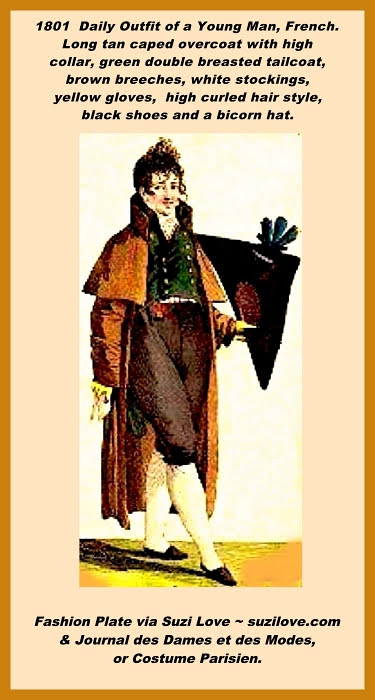
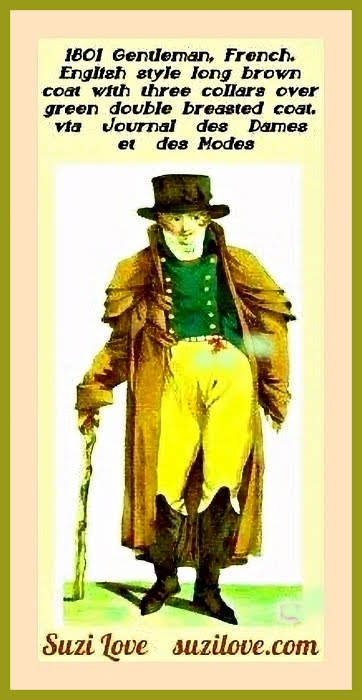
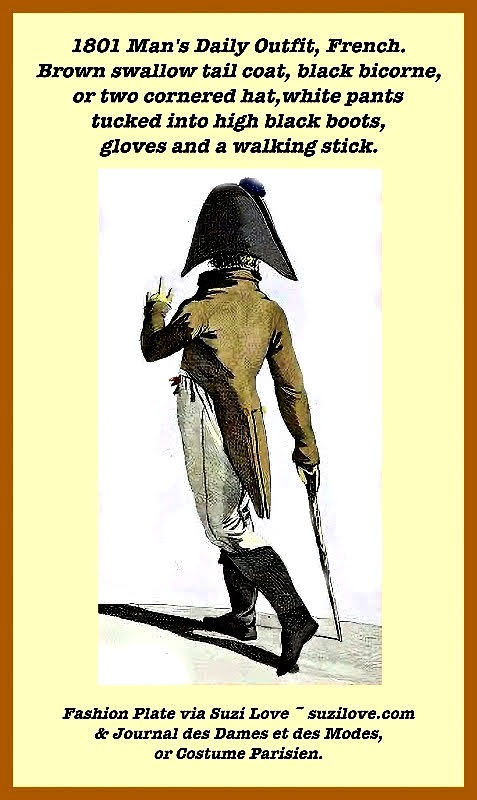
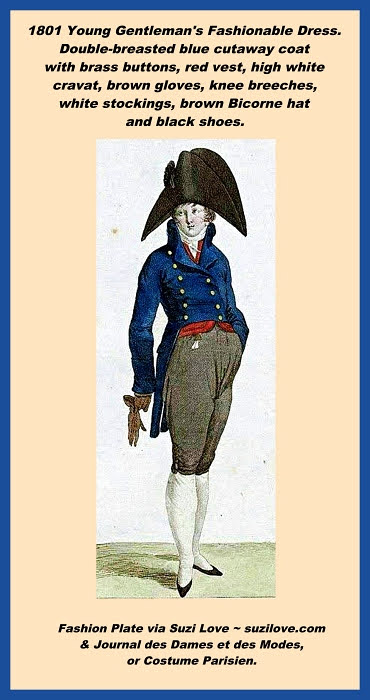
1801 Typical Gentlemen’s Fashions for the early 1800s, or Regency Era, or Jane Austen’s times. Fashion Plates via Journal des Dames et des Modes, Costume Parisien.
Typical menswear in the early 1800s included a tailcoat, a vest or waistcoat, either breeches, pants, or the newer trousers, stockings, shoes or boots, all worn with an overcoat and hat. This basic ensemble was accessorized with some form of neckcloth or cravat, gloves, a walking stick, cane or riding crop, handkerchief, fobs, a watch and perhaps a quizzing glass or eye glass.
From the finish of the 18th century until 1820, men’s fashions in European and European-influenced countries moved away from the formal wear of brocades, lace, wigs and powder to more informal and relaxed styles. Focus was on undress rather than formal dress. Typical menswear in the early 1800s included a tailcoat, a vest or waistcoat, either breeches, pants, or the newer trousers, stockings, shoes or boots, all worn with an overcoat and hat. This basic ensemble was accessorized with some form of neckcloth or cravat, gloves, walking stick, cane or riding crop, handkerchief, fobs, watch and perhaps a quizzing glass or eye glass.
Skirted coats were replaced with short-fronted, or cutaway, tailcoats worn over fitted waistcoats and plain, white linen shirts. Knee breeches were gradually replaced by tight-fitting pantaloons and later trousers, decorative shoes with buckles were replaced with a variety of boot styles, and fussy and ruffled neckwear gave way to intricately tied, white linen neck cloths. A Regency Era, or early 1800s, gentleman was outfitted in more practical fabrics, such as wool, cotton and buckskin rather than the fussy brocades and silks of the late 1700s.
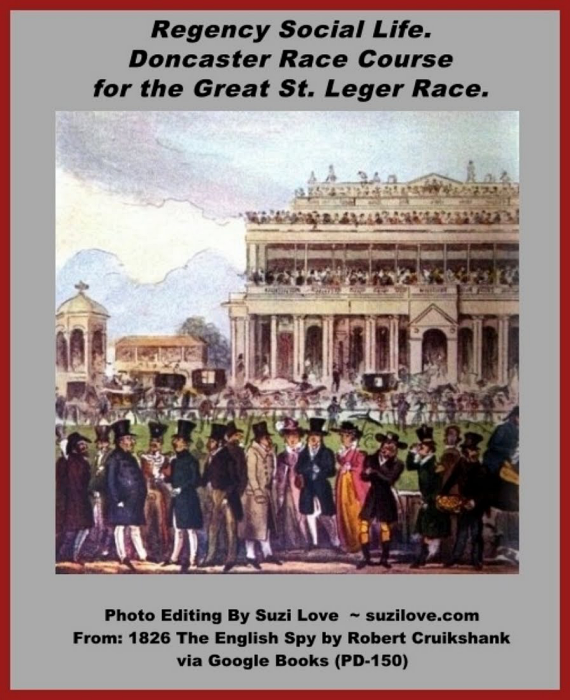
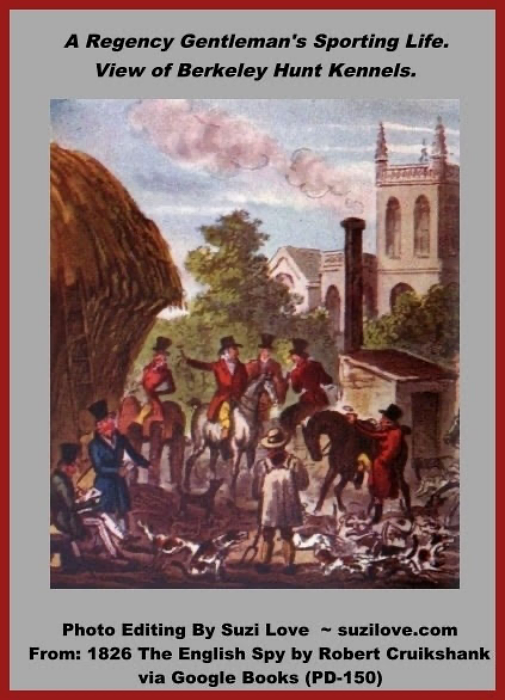
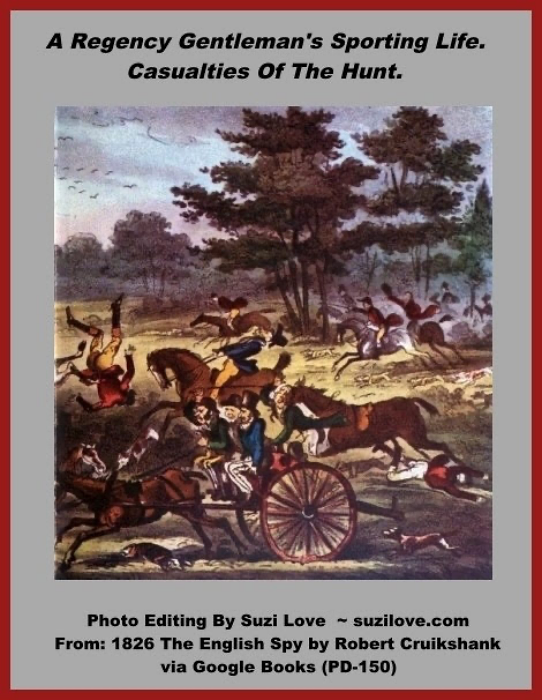
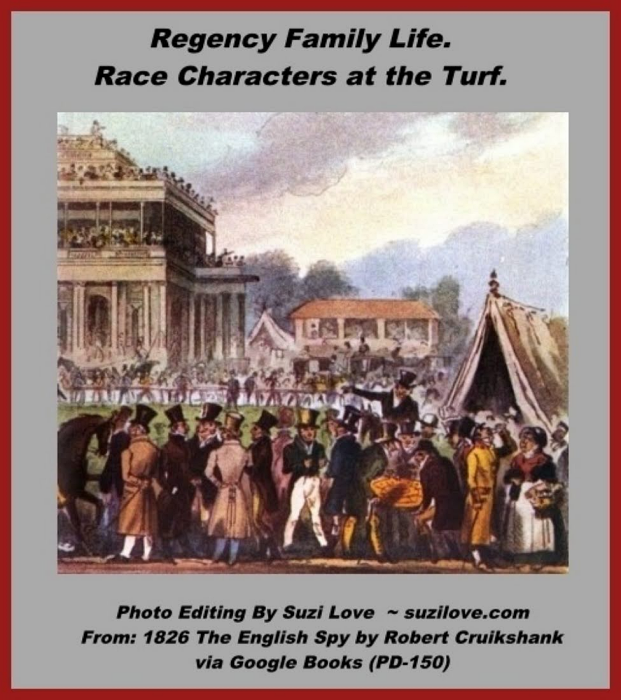
Regency Gentleman’s Sporting Life in the times of Jane Austen. By Robert Cruikshank via Google Books Races, bowls, sailing, fox hunting… all the sports enjoyed by people in Regency Era. From: 1826 The English Spy by Robert Cruikshank via Google Books (PD150)
1826 Doncaster Race Course for the Great St. Leger Race. Regency Sporting Life. via 1826 The English Spy By English Cartoonist, Robert Cruikshank.1826 Bowling Alley at Worcester, England. Regency Sporting Life. via 1826 The English Spy By English Cartoonist, Robert Cruikshank.1826 View of Berkeley Hunt Kennel, England. Regency Sporting Life. via 1826 The English Spy By English Cartoonist, Robert Cruikshank.1826 Casualties Of The Hunt.A Regency Gentleman’s Sporting Life. Regency Sporting Life. via 1826 The English Spy By English Cartoonist, Robert Cruikshank.1826 Race characters at the turf, Regency Sporting Life. via 1826 The English Spy By English Cartoonist, Robert Cruikshank.RL_2_D2D_RetailerBuyLink_RL_2
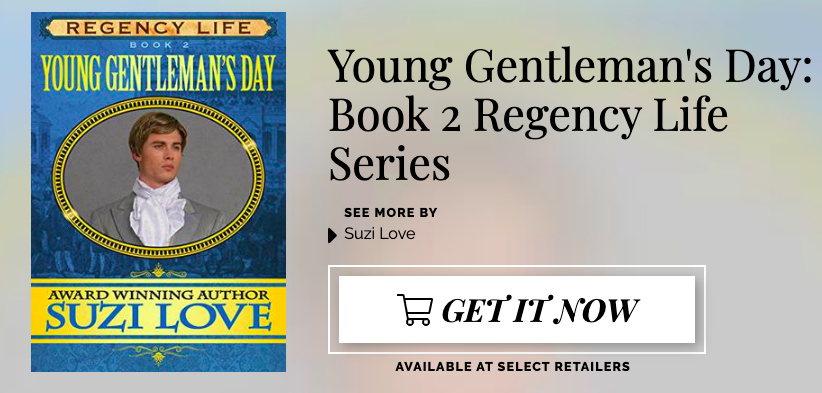
https://books2read.com/suziloveYGD
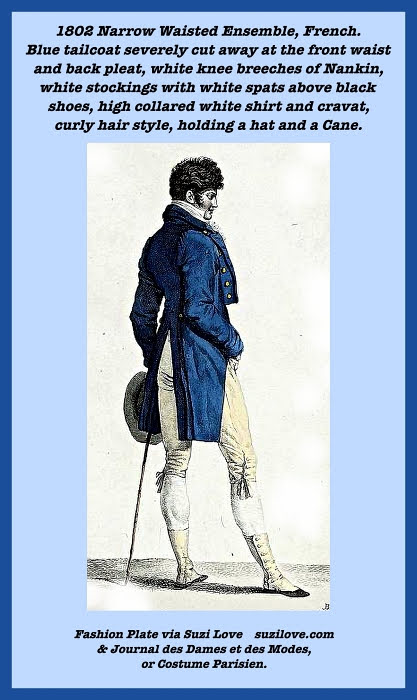
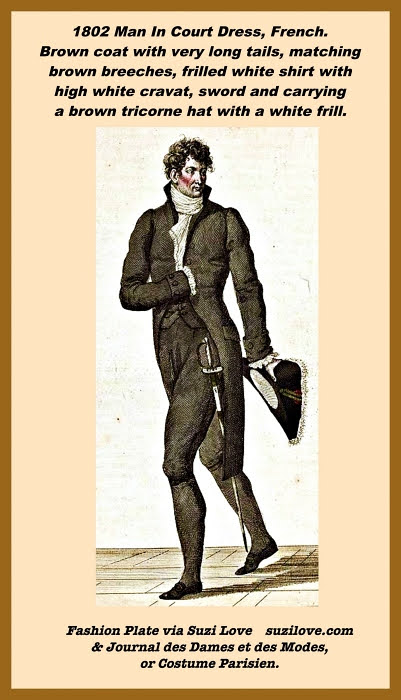
1802 Typical Gentlemen’s Fashions worn during the early 1800s, or Regency Era, or Jane Austen’s times. Fashion Plates via Journal des Dames et des Modes, Costume Parisien.
Regency Menswear: Typical menswear in the early 1800s included a tailcoat, a vest or waistcoat, either breeches, pants, or the newer trousers, stockings, shoes or boots, all worn with an overcoat and hat. This basic ensemble was accessorized with some form of neckcloth or cravat, gloves, a walking stick, cane or riding crop, handkerchief, fobs, a watch and perhaps a quizzing glass or eye glass.
1802 Young French Man. Brown cutaway coat, calf length pants, frilled white shirt and cravat.1802 Narrow Waisted Ensemble, French. Blue tailcoat severely cut away at front waist and back pleat, white knee breeches of Nankin.1802 Man In Court Dress, French. Brown coat with very long tails, matching brown breeches.
From the finish of the 18th century until 1820, men’s fashions in European and European-influenced countries moved away from the formal wear of brocades, lace, wigs and powder to more informal and relaxed styles. Focus was on undress rather than formal dress. Typical menswear in the early 1800s included a tailcoat, a vest or waistcoat, either breeches, pants, or the newer trousers, stockings, shoes or boots, all worn with an overcoat and hat. This basic ensemble was accessorized with some form of neckcloth or cravat, gloves, walking stick, cane or riding crop, handkerchief, fobs, watch and perhaps a quizzing glass or eye glass.
Skirted coats were replaced with short-fronted, or cutaway, tailcoats worn over fitted waistcoats and plain, white linen shirts. Knee breeches were gradually replaced by tight-fitting pantaloons and later trousers, decorative shoes with buckles were replaced with a variety of boot styles, and fussy and ruffled neckwear gave way to intricately tied, white linen neck cloths. A Regency Era, or early 1800s, gentleman was outfitted in more practical fabrics, such as wool, cotton and buckskin rather than the fussy brocades and silks of the late 1700s.
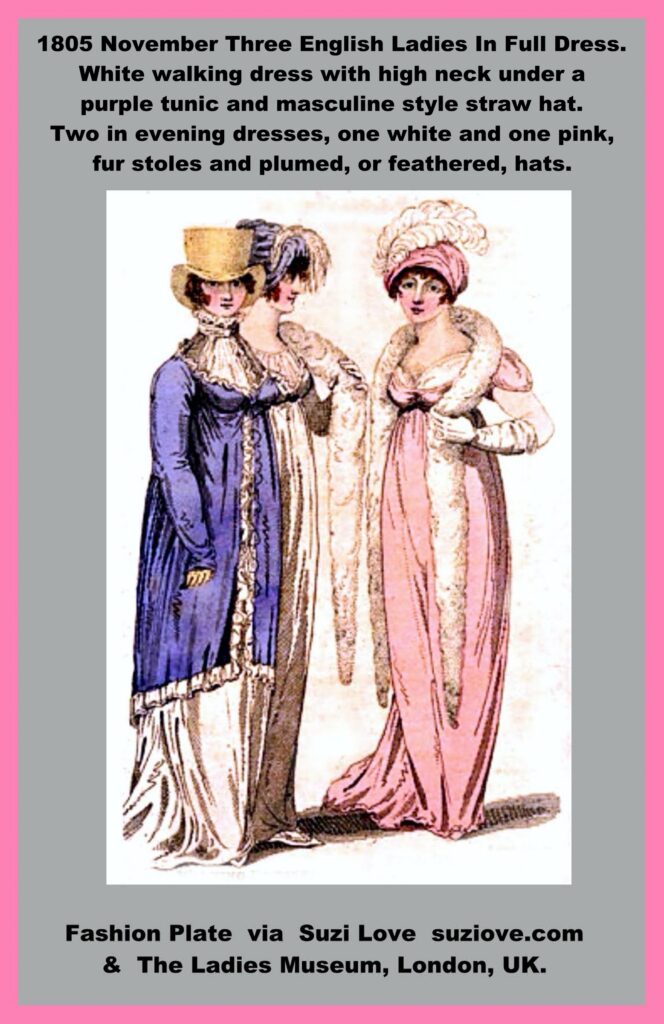
1805 November Three English Ladies In Full Dress. White walking dress with high neck under a purple tunic and masculine style straw hat. Two in evening dresses, one white and one pink, fur stoles and plumed, or feathered, hats. via Vernon and Hood Poultry at The Lady’s Monthly Museum, London, U.K. These gorgeous dresses show the transition from the round dresses of the late 1700s to the Empire style dresses with the waistline high under the bust. Small trains were still worn in the early 1800s, but much more manageable than the larger and more elaborate trains of the late 1700s. Jane Austen and her friends would have worn dresses like this to their assemblies and evening events.
Definition Accessory: An accessory completes and complements an outfit. Two groups – 1. Those worn e.g. bonnets, caps and hats, boots and shoes, cravats and ties, gloves, mittens and muffs, jewelry, scarves and shawls, socks and stockings. 2. Those carried e.g. bags, fans, and parasols.
Definition Full Dress: The most formal and complete ensemble, worn for day or night events, and includes the fullest range of accessories that could be added to the outfit to make the most impressive display.
1805 November Three English Ladies In Full Dress. White walking dress with high neck under a purple tunic and masculine style straw hat. Two in evening dresses, one white and one pink, fur stoles and plumed, or feathered, hats. via Vernon and Hood Poultry at The Lady’s Monthly Museum, London, U.K.Fashion Women 1805-1809 History Notes Book 26
What did Jane Austen and friends wear? This book looks at early 1800s fashions, which were elegant and pretty with high waists and fabrics that were almost transparent. These Empire style gowns, named after Napoleon’s first Empress, became popular throughout Europe, and were then copied around the world. Colorful outwear was added to make an ensemble more attractive and warmer.
https://books2read.com/SuziLoveFashionWomen1805-1809
Drama and romance at the Duke Of Sherwyn’s snowbound country estate in the English countryside in December. Michael Brandon travels to introduce the woman he loves to family but is shocked when his missing brother, presumed dead for years, arrives at the country estate of the Duke Of Sherwyn where several people are stranded due to a severe snow storm. https://books2read.com/suziloveDS December Scandal, Book 3 Scandalous Siblings.
DS December Scandal Michael Brandon travels to introduce the woman he loves to family but is shocked when his missing brother arrives. #HistoricalRomance #FamilySaga https-::books2read.com:suziloveDSD2D_RetailerBuyLink_DS