1798 Woman’s Light Blue Douillette, Or Housecoat, French. Trimmed with pink velvet, pink fan, black slave sandals, apricot hat with black trim. Fashion Plate via Journal des Dames et des Modes, or Costume Parisien.
Description Douillette: A coat or housecoat, sometimes quilted, worn in France.
What was fashionable for women in the late 1700s? Extravagant colors and fabrics and outrageous styles were all seen in these flamboyant fashions. #Georgian #nonfiction #amwriting books2read.com/suziloveFashWomen1700s
1750-1770 ca. Back Lacing Linen Corset, European. Made of linen, lining of natural linen, chamois leather to strengthen, straps of linen, stiffening of whalebone. Corset: deep point, hip flaps, lacing at the back, Netherlands.
Description: Quilted linen corset with vertical tunnels and with ribs. Whalebone stiffening, point on front, hip flaps, front shoulder straps of fabric plus long narrow linen strips to tie. Lined and has chamois leather at armpits, front point and waist. Linen corset with a deep thickened point at the front, hip flaps, and lacing at the back. Fully quilted with vertical tunnels, with ribs. Thickened tip at the front is slightly triangular. Above for round shape due to wide horizontal rib. Flares from the waist into hip phlangers, or fingers. Lacing eyelets and criss-crossed lacing at the back. Front shoulder straps are of the fabric with very long linen straps with narrower linen strap, total 110 cm, and two horizontal linen loops on top of the backs. There is a narrow linen strip on all seams and along all edges. Armpits and the front point are reinforced with chamois leather and chamois leather is at the waist with straps attached. Via Mode Museum Province of Antwerp
Corsets 1700-1790 History Notes Book 15 This book shows how body wraps, stomachers and stays were worn during the 1700s. They created a variety of fashionable silhouettes to suit the elaborate fashions worn for court and daily life during the 18th Century. Wearing the correct underclothing was essential for keeping garments in place and giving the best fashion display.
1740–1760 ca. Silk and Cotton Petticoat. via Suzi Love ~ suzilove.com & Metropolitan Museum, N.Y.C., U.S.A. metmuseum.org
HN_1 Fashion Women Late 1700s History Notes Book 1 by Suzi Love.
What was fashionable for women in the late 1700s? Extravagant colors and fabrics and outrageous styles were all seen in these flamboyant fashions.
books2read.com/suziloveFashWomen1700s
1798 Two ladies in Jane Austen style white walking dresses. Left: Dress has gold trim, white bonnet, green Parasol. Right: Stand up collar, short puffed sleeves, brown shawl and coiled head dresses, both with necklaces. via Rijks Museum, Amsterdam, Netherlands. rijksmuseum.nl
HN_1 Fashion Women Late 1700s History Notes Book 1 by Suzi Love.
What was fashionable for women in the late 1700s? Extravagant colors and fabrics and outrageous styles were all seen in these flamboyant fashions.
books2read.com/suziloveFashWomen1700s
18th Century Gorgeous Georgian frock coats and waistcoats for men. via The Argory, County Armagh, National Trust Collections, U.K.
Typical men’s fashion in the 1700s was a silk three piece suit. This consisted of a vest or waistcoat, a coat and breeches, Fabrics were luxurious an usually featured multi-colored embroidery and buttons, often of the same fabric. Vests were generally collarless and coats had turned over collars.
18th Century Gentlemen.
Frock coats and waistcoats. via The Argory, County Armagh, National Trust Collections, U.K.HN_2_D2D_Fashion Men 1700s
books2read.com/suziloveFashMen1700
1763 Shagreen Etui Or Necessaire, English. via Gould Antiques ~ gouldantiques.com
Definition Etui Or Necessaire: Small toiletry, writing, or sewing containers carried by ladies and gentlemen in vast castles or large manor houses so their essentials were always on hand. Also used when traveling, where space was always limited. Easily carried in a pocket, or bag or reticule, to use for personal grooming, sewing repairs e.g. ripped hem or missing button, to do embroidery or to write a letter.
Definition Shagreen: Type of rawhide, originally made from the back of a horse or a wild donkey. In the 18th century, the skin of a shark was used as well.
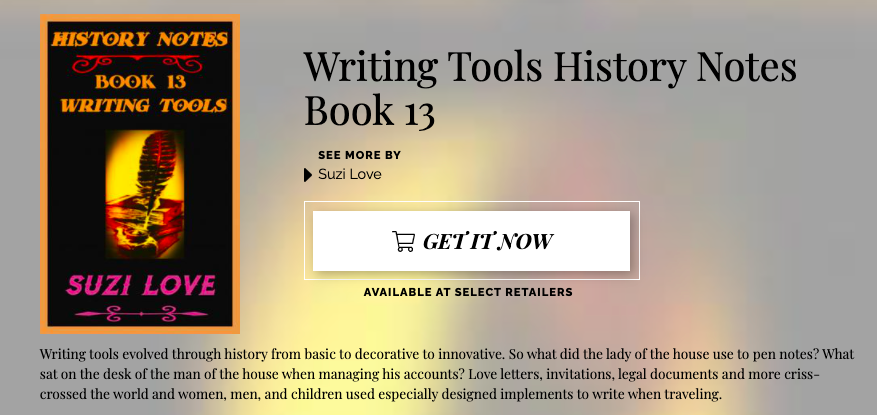
1763 Shagreen Etui Or Necessaire, English. via Gould Antiques ~ gouldantiques.comHN_13_D2D_WritingTools Book 13 What did the lady of the house use to pen notes? What sat on the desk of the man of the house when managing his accounts? #History #Nonfiction #travel books2read.com/SuziLoveWritingTools
1745-1750 ca. Necessaire, or small decorative box, with watch, probably German. Fitted with sewing and writing implements as well as a watch, this unmarked nécessaire shows delightful chinoiserie decoration in the Rococo style, echoing the work of the influential Munich designer François Cuvilliés (1695–1768). via Metropolitan Museum New York City, U.S.A. metmuseum.org
Small toiletry, writing, or sewing containers were called Necessaire or Etui: Tiny boxes or containers were carried in large castles or sprawling manor houses so a lady or gentleman had their essentials with them all day. They were also important when traveling by coach, trains, or ships where space was always limited. A necessaire or Etui was easily carried in a bag, reticule, or pocket so essentials were on hand for personal grooming, to repair a ripped hem, replace a button, to embroider, or to write a note or letter.
1745-1750 ca. Necessaire With Watch. Probably German. via Suzi Love suzilove.com and Metropolitan Museum New York City, U.S.A. metmuseum.orgHN_13_D2D_Writing Tools books2read.com/SuziLoveWritingTools
1750 ca. Spanish colonial ‘escritorio’, or writing desk, Columbia. Bone and mother of pearl inlay, hand etched sgraffito and original hand forged iron hinges. Interior has checkerboard drop front and ten compartments, each with original 18th century drawer pulls. Facade over-layed in mother of pearl with hand etched city-scapes, cathedrals, geometric patterns and foliate motifs. Interior has hand carved and gilt wood columns. Via Live Auctions ~ liveauctioneers.com
1797 Elegant Couple Dancing At A Ball. Man: Bottle green tailcoat, yellow knee breeches, white stockings, red vest and black dancing slippers. Lady: White spotted dress with a pale pink overdress open at the front, high belted waist, red and green turban and a parure, or jewelry set. via Fashion Plate via Journal des Dames et des Modes, or Costume Parisien.
HN_2_D2D_Fashion Men 1700s
books2read.com/suziloveFashMen1700
18th Century Wool, Leather And Linen Front Lacing Stays. via digitalmuseum.norway
In the early 18th century, stays were basically quilted waistcoats, laced in the front and un-boned and to be worn on informal occasions. Mid century, the role of stays changed. They were then supposed to create a V shaped form and support a woman’s back, so baleen from whales was inserted into the garments and backs became longer.
Eyelet holes were stitched and staggered in spacing, so stays could be spiral laced. Stays were strapless or had straps attached in the back and tied at the front sides. Eyelet holes were stitched and staggered in spacing, so stays could be spiral laced. Later, they began to support the bust, give a fashionable conical shape, and draw shoulders back.
It was around the 1790s that the term corset started to be used as a refined name for stays. The Times of 24 June 1795 stated that: ‘corsettes about six inches long…are now the only defensive paraphernalia of our fashionable belle’.
corset_18th Century Wool, Leather And Linen Front Lacing Stays. via digitalmuseum.norwaycorset_18th Century Wool, Leather And Linen Front Lacing Stays. via digitalmuseum.norwaycorset_18th Century Wool, Leather And Linen Front Lacing Stays. via digitalmuseum.norwaycorset_18th Century Wool, Leather And Linen Front Lacing Stays. via digitalmuseum.norwaycorset_18th Century Wool, Leather And Linen Front Lacing Stays. via digitalmuseum.norwaycorset_18th Century Wool, Leather And Linen Front Lacing Stays. via digitalmuseum.norway