1880 ca. Travelling Inkwell, English. Red Leather and Heart Shaped. via Ruby Lane Antiques. rubylane.com



1880 ca. Travelling Inkwell, English. Red Leather and Heart Shaped. via Ruby Lane Antiques. rubylane.com
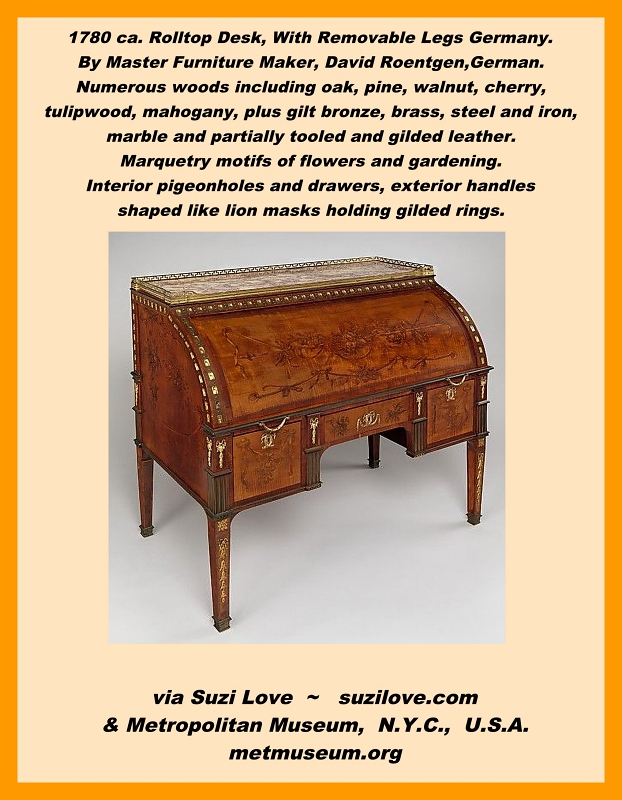
1780 Rolltop Desk, With Removable Legs Germany. By Master Furniture Maker, David Roentgen,German. Numerous woods including oak, pine, walnut, cherry, tulipwood, mahogany, plus gilt bronze, brass, steel and iron, marble and partially tooled and gilded leather. Marquetry motifs of flowers and gardening. Interior pigeonholes and drawers, exterior handles shaped like lion masks holding gilded rings. via Metropolitan Museum, N.Y.C., U.S.A. metmuseum.org
1774-1775 ca. Gold Etui, Or Decorative Container, For Holding Sealing Wax, French. #GeorgianEra #Europe #Antiques #writingtools. https://www.suzilove.com/wp-admin/books2read.com/SuziLoveWritingTools
Continue reading →19th Century Mid-Late Five Desk Seals. L-R Carnelian seal with silver mounts set with colored stones; malachite urn seal: gilt-bronze seal with winged cherub heads: Silver-gilt seal eagle, Silver-gilt seal as eagle’s leg below a blue glass ball. via Sotheby’s Auctions. sothebys.com
In the Bridgerton family, or Jane Austen’s household, and during the Regency Era, sealing wax was not only impressed onto the back of a letter with a seal to protect against tampering, but also to identify the sender of the letter. People, especially aristocrats, kept personal and family seals to be used for many different purposes e.g. A letter to a government official would be sealed with an aristocrat’s crest or title. Personal seals for identification have been since early civilizations. The rubber stamps and embossers we use today serve the same purpose, identifying the sender.
Definition: Wax Seals: Pressed onto a letter or envelope to show that a document is unopened or to verify the sender’s identity. A signet ring or was seal is pressed into a dollop of hot wax to seal a letter or envelope closed.


1800 ca. Writing Box, British, as would have been used by people in Jane Austen’s times, or, the Regency Era. Small brass bound solid mahogany writing box of dovetail construction. Green baize sloping writing surface with compartments for storing papers beneath. Small size may be designed for private intimate correspondence. Drop down carrying handles on two sides are early form of handle. Side drawer pulls out after retaining brass pin is taken out. via hygra.com


1795 ca. Ormolu Mounted and Brass Inlaid Mahogany Traveling Desk, Russian. #GeorgianEra #Russia #History #Antiques books2read.com/SuziLoveWritingTools
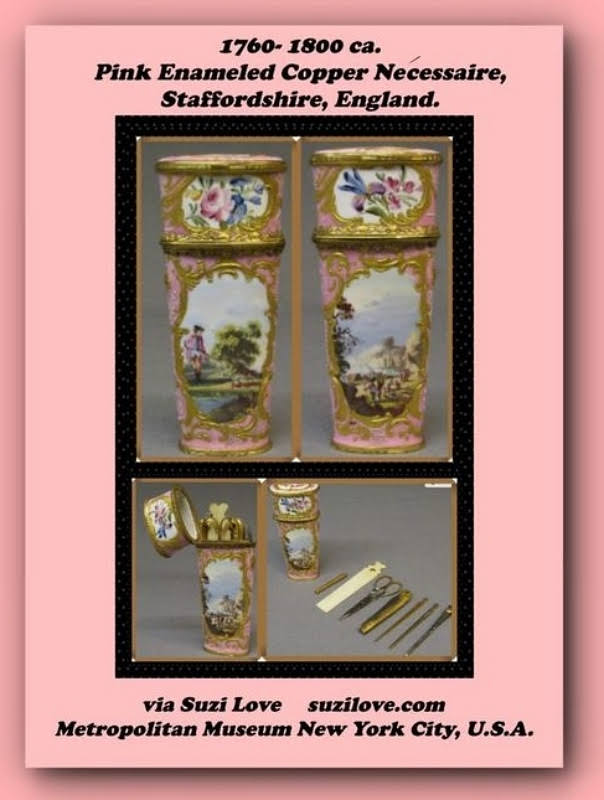
Continue reading →1760-1800 ca. Pink Enamel and Copper Necessaire Or Etui, Staffordshire, England. Dimensions: 3 3/4 x 1 5/8 in. (9.5 x 4.1 cm) Credit: Pierpont Morgan, 1917 via Metropolitan Museum, N.Y.C., U.S.A. metmuseum.org
Definition Necessaire Or Etui: Small toiletry, writing, or sewing containers were called Necessaire or Etui: Tiny boxes or containers were carried in large castles or sprawling manor houses so a lady or gentleman had their essentials with them all day. They were also important when traveling by coach, trains, or on ships where space was always limited. A necessaire or Etui was easily carried in a bag, reticule, or pocket so essentials were on hand for personal grooming, to repair a ripped hem, replace a button, to embroider, or to write a note or letter.

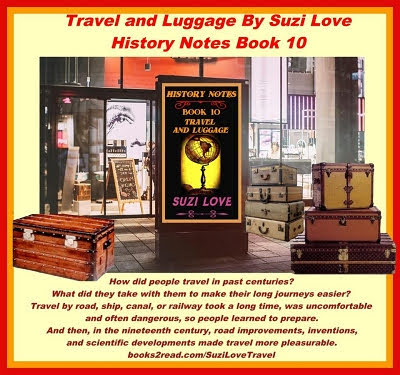
Travel and Luggage By Suzi Love History Notes Book 10. How did people travel in Jane Austen’s times. In past centuries? What did they take with them to make their long journeys easier? Travel by road, ship, canal, or railway all took a long time and had dangers so people learned to prepare. And then, in the nineteenth century, road improvements, inventions, and scientific developments made travel more pleasurable. books2read.com/SuziLoveTravel


1863 Traveler’s Chest, French. Sewing Tools, Ruby Perfume, Aide de Memoire or Notebook, etc. Inside lid with theatre curtains. via Ruby Lane Antiques. rubylane.com

Travel and Luggage By Suzi Love History Notes Book 10. How did people travel in Bridgerton’s and Jane Austen’s times? What did they take with them to make their long journeys easier? Travel by road, ship, canal, or railway all took a long time and had dangers so people learned to prepare. And then, in the nineteenth century, road improvements, inventions, and scientific developments made travel more pleasurable. books2read.com/SuziLoveTravel