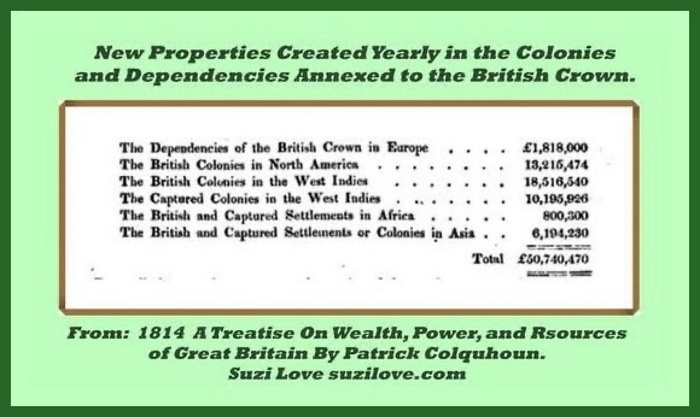
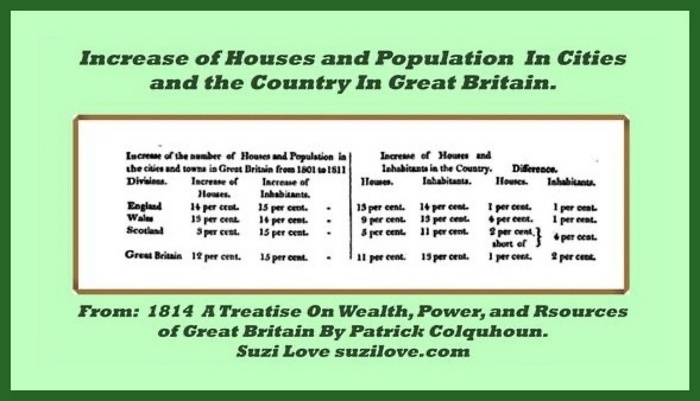
1814 Statistics On Classes, Properties and Population In Great Britain. From: 1814 A Treatise On Wealth and Power. By Patrick Colquhoun. These are the statistics for England in Jane Austen’s time, or the early 1800s, or Regency Era.
1814 Statistics On Classes, Properties, Population In Jane Austen’s Great Britain. #JaneAusten #BritishHistory #RegencyEra #Statistics books2read.com/suziloveROver
1802 ‘The Cow Pock or The Wonderful Effects Of The New Inoculation’. By James Gillray. Caricature depicting the early controversy surrounding Dr. Edward Jenner’s cowpox vaccination program begun in 1796 in England. Recipients of the vaccine developing cow-like appendages. Via British Museum, London, UK. britishmuseum.org (PD-Art)
Cartoon: 1802 ‘The Cow Pock or The Wonderful Effects Of The New Inoculation’ By James Gillray. #Cartoon #RegencyEra #medical https://books2read.com/suziloveROver
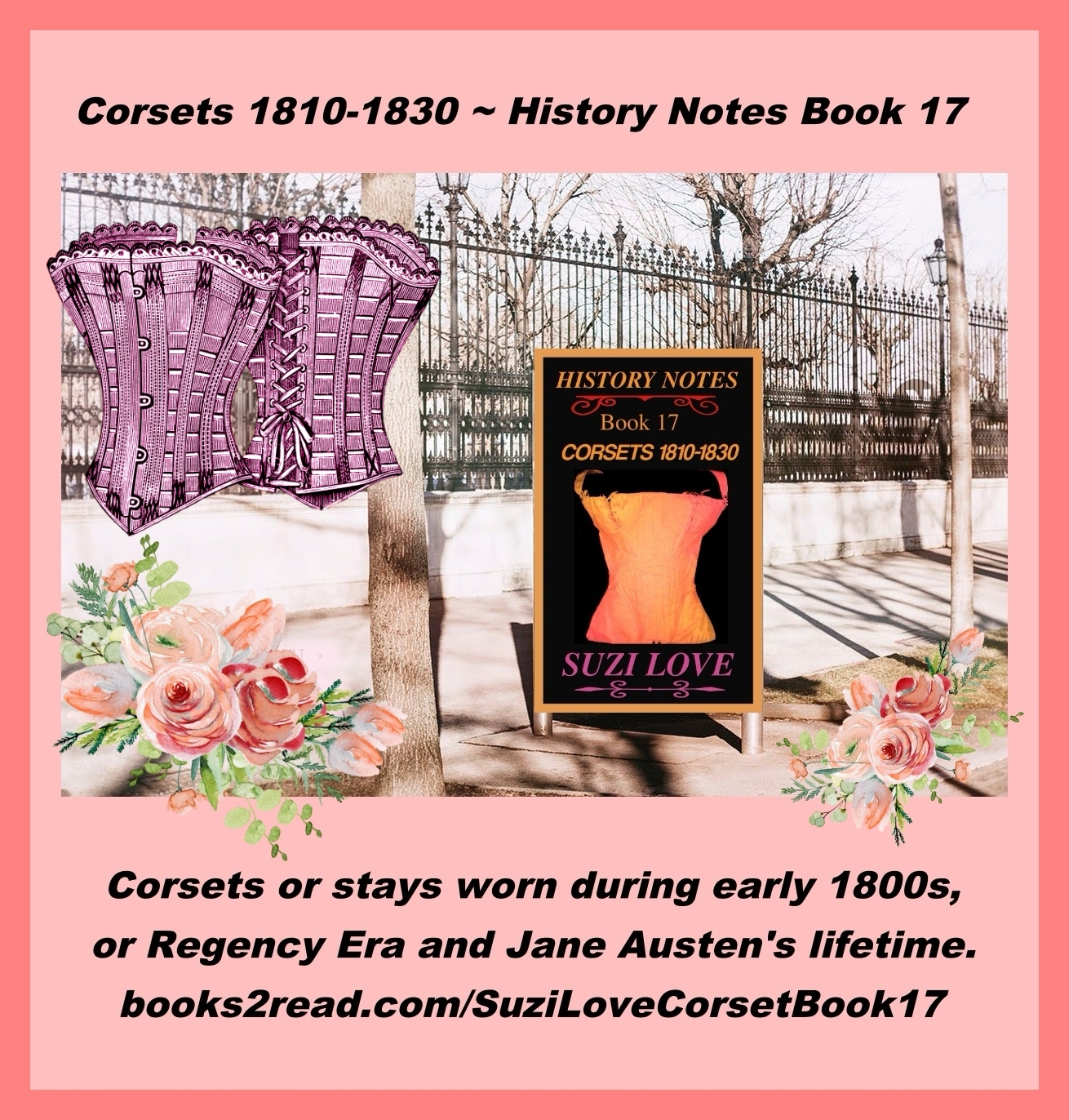
This book shows how corsets changed to fit well under clothing, give maximum support and comfort. Corsets pushed up breasts and showed off the bust line beneath a square-cut and low-cut neckline as in the early 1800s, or Regency years. Jane Austen and her female and friends wore these corsets. Corsets or stays worn during the early 1800s, or Jane Austen’s lifetime. https://books2read.com/SuziLoveCorsetBook17
Are you a Reader or Writer of Regency Era Fashions? Jane Austen and Bridgerton corsets. #corsets #historicalfashion #RegencyFashion #JaneAusten #Bridgerton https://books2read.com/SuziLoveCorsetBook17
1811 White Dress, French. Worn under a white spotted tunic with yellow over dress with long sleeves. White gloves, shoes and hat with plume, or feathers, or aigrette. Fashion Plate via Journal des Dames et des Modes, or Costume Parisien. Even though this is a French fashion plate, Jane Austen and her contemporaries would have worn long coats like these to keep warm when out and about, visiting, shopping etc. The thin muslin dresses worn in the early 1800s were little protection against European winters so warmth and color was added by tunics and coats in a huge variety of styles.
Definition Aigret, aigrette, egret: Plume of feathers or jeweled ornament in shape of feathers worn on head or hats. During the early 19th century., or Jane Austen’s lifetime, the favorite feathers were osprey and heron.
1811 White Dress, French. Worn under a white spotted tunic with yellow over skirt. White gloves, shoes and hat. Fashion Plate via Journal des Dames et des Modes, or Costume Parisien.
Suzi Love Author avatar link
Suzi Love Author
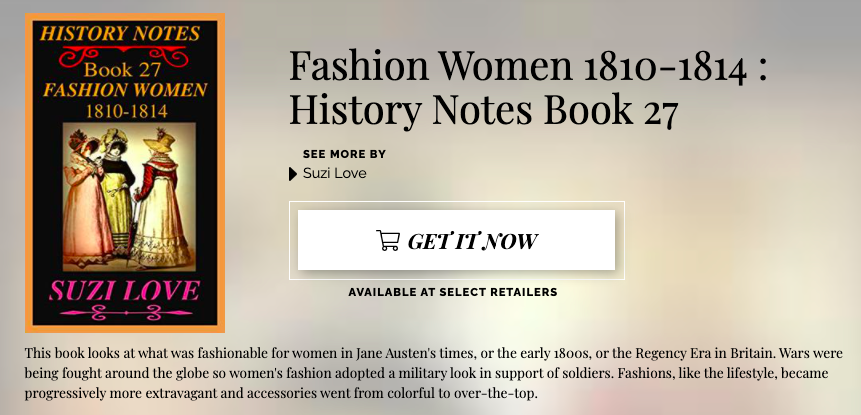
1811 Jane Austen Style White Dress With Spotted Tunic And Yellow Overdress. #JaneAusten #RegencyFashion #19thcenturydress https://books2read.com/SuziLoveFashion1810-1814
Fashion Women 1800 By Suzi Love History Notes Book 12 #Regency #Fashion Love gorgeous historical women’s fashions? Take a look at what women wore and carried in 1800 in Europe and around the world. books2read.com/SuziLoveFashionWomen1800
Women’s dress changed dramatically after 1785. The rich fabrics and complicated, formal shapes of the late 18th century gave way to simple, light fabrics that draped easily. These new gowns achieved something of the effect of the simple tunics shown on classical Greek and Roman statues and vases. Inspired in part by the statuary of ancient Greece and Rome, the new fashion was epitomised by light cotton gowns falling around the body in an unstructured way, held around the high waist with a simple sash and accompanied by a soft shawl draped around exposed shoulders. This style was ideal for the Indian imports like Kashmiri shawls and Bengali muslin, as used in this embroidered gown. Championed by such influential figures as Emma Hamilton in England and Madame Récamier in France, the so-called ‘Empire’ style catapulted Indian muslin into the forefront of fashion.
Empire Dress: Owes its name, physical emancipation, popularity, and even its sexiness to France. In this English example, French style is slavishly followed in the gown’s high waist and modish stripes.
Empire style, or early 1800s, high-waisted dresses made it impossible to either sewn in a pocket or to tie on a pocket. So women began carrying small, decorated bags called Reticules, or ridicules, which generally pulled close at the top with a drawstring.
Inspired in part by the statuary of ancient Greece and Rome, the new fashion was epitomised by light cotton gowns falling around the body in an unstructured way, held around the high waist with a simple sash and accompanied by a soft shawl draped around exposed shoulders. This style was ideal for the Indian imports like Kashmiri shawls and Bengali muslin, as used in this embroidered gown. Championed by such influential figures as Emma Hamilton in England and Madame Récamier in France, the so-called ‘Empire’ style catapulted Indian muslin into the forefront of fashion.
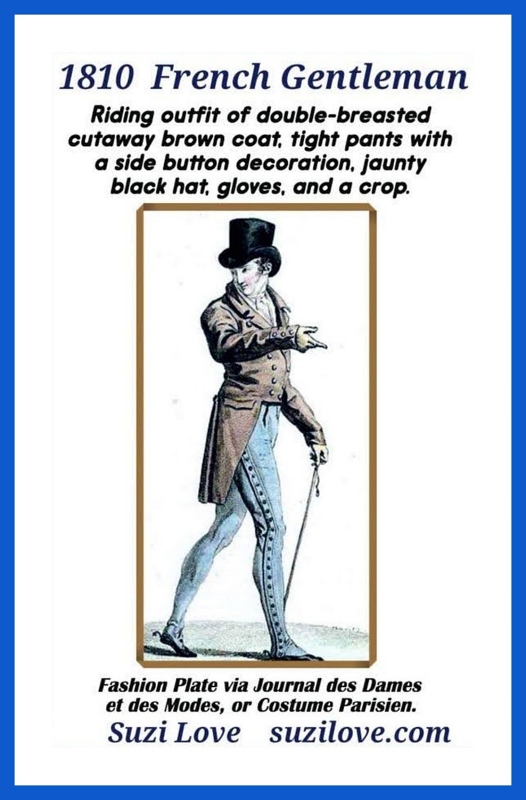
1810 French Gentleman. Riding outfit of double-breasted brown coat, tight pants with a side button decoration, jaunty black hat, gloves, and a crop. As Worn by Gentleman in Jane Austen Families. #RegencyFashion #JaneAusten Fashion Plate via Journal des Dames et des Modes, or Costume Parisien.
Pantaloons: When tailcoats lengthened, breeches extended below the knees to accommodate the longer tails and were gradually replaced with slimmer fitting, longer pants, or pantaloons, that ended at the ankle. Pantaloons were close-fitting and sometimes buttoned all the way down the leg. To make them hug the leg tighter, knitted fabrics were used, or fabrics like nankin and kerseymere were cut on the bias.
In the early 1800s, men no longer wore complicated styles and extravagant fabrics. Men’s fashion simplified and became more conservative. A well cut tailcoat, vest, pantaloons and an immaculate cravat of beautiful white linen in the style of George Bryan, or Beau, Brummell. Clothes were a status symbol and indicated a man’s social position. These clothing items were the sort worn by Jane Austen’s male family and friends.
1810 Riding Outfit French DoubleBreastedBrownCoat Fashion Plate via Journal des Dames et des Modes, or Costume Parisien.
1810 Pantaloons and Double-Breasted Cutaway Coat As Worn by Gentleman in Jane Austen years. #RegencyFashion #JaneAusten #pantaloonshttps://books2read.com/SuziLoveFashionMen1800-1819
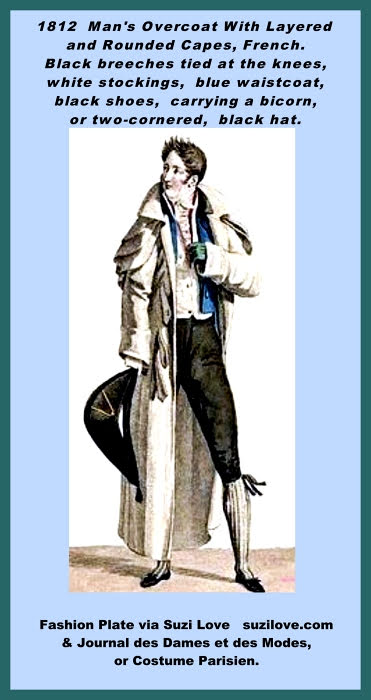
1812 Man’s Overcoat With Layered and Rounded Capes, French. Black breeches tied at the knees, white stockings, blue waistcoat, black shoes and carrying a bicorn, or two-cornered black hat. Fashion Plate via Journal des Dames et des Modes, Costume Parisien.
In the early 1800s, men no longer wore complicated styles and extravagant fabrics. Men’s fashion simplified and became more conservative. A well cut tailcoat, vest, pantaloons and an immaculate cravat of beautiful white linen in the style of George Bryan, or Beau, Brummell. Clothes were a status symbol and indicated a man’s social position. These clothing items were the sort worn by Jane Austen’s male family and friends.
Rates of Postage of single Letters in Pence In Great Britain in Jane Austen’s times.
From any post-office in England or Wales, to any place not exceeding 15 miles from such office – 3
For any distance above 15, and not exceeding 30 miles — 4
For any distance above 30, and not exceeding 50 miles — 5
For any distance above 50, and not exceeding 80 miles – 6
For any distance above 80, and not exceeding 12O miles — 7
For any distance above 120, and not exceeding 170 miles – 8
For any distance above 170, and not exceeding 230 miles — 9
For my distance above 230, and not exceeding 300 miles – 10
For any distance above 300, and not exceeding 400 miles – 11
For any distance above 400, and nut exceeding 500 mites – 12
1802 Picture of London Printed for R. Phillips via Google Books (PD-180)
The Twopenny Post- Office.
There are two principal offices, one in the General Post—office yard, Lombard—street and the other in Gerrard-street, Soho. There are also numerous receiving houses in both the town and country.
There are SI X collections and deliveries of letters in town daily, (Sundays excepted) and there are two dispatches from, and three deliveries at, most places in the country, within the limits of this office.
1802 Picture of London Printed for R. Phillips via Google Books (PD-180)
1802 Rates Of Postage Of Single Letters In Pence. From: 1802 Picture of London Printed for R. Phillips via Google Books (PD-180))
Rates of Postage of single Letters in Pence In Great Britain in Jane Austen’s times. #JaneAusten #RegencyEra #Postal #BritishHistory https://books2read.com/suziloveROver
1600 Pair of Backless Chopines. Pine-wood covered with punched kid leather. via Victoria and Albert Museum, London, UK. collections.vam.ac.uk.
Definition Chopine: Women’s platform shoes worn in the 15th, 16th, and 17th centuries. Used as a patten, clog, or evershoe to protect shoes and dresses from mud and street soil. Worn in Venice by courtesans and patrician women from 1400-1700.
These chopines are made of pine-wood. The wood is covered in kid leather with punched decoration and figured silk underlay. This pair are fairly modest. More extreme versions were over 50 cms high. Chopines were based on the shoes worn at Turkish baths. They were first worn by Venetian prostitutes and fashionable Venetian aristocrats then adopted them. The chopine was originally a form of overshoe, which is why it has no back. Later versions could be worn as either overshoes or on their own.
1800s Typical Cold Collation Dishes served during the 1800s. These are the sort of dishes Jane Austen’s family would have eaten on a regular basis. Pigeon Pie, Raised Game Pie, Cutlets and Peas, Prawn Bouquet, Creamed Chicken, Plover’s Eggs, Lamb Cutlets, Stuffed Larks, Piped Ham, Boned Capon. From: 1860 Mrs. Isabella Beeton’s Book of Household Management.