↓
 

Suzi Love

Making history fun, one year at a time.

Header_
  • Home
  • Newsletter
  • Pre order form
  • Shop
    • Cart
    • Checkout
    • My account
    • Refund and Returns Policy
  • Blog
  • BOOKS
    • History Events
    • Kelly’s Justice
    • Irresistible Aristocrats
    • History Notes
    • Scandalous Siblings
    • Love After Waterloo
    • Regency Life Series
  • Privacy Policy
  • EVENTS
Home » Edwardian Era 1 2 3 >>

Tag Archives: Edwardian Era

Post navigation

← Previous Post

Easter Cards: Jenny Nystrom (1884-1946) Vintage Easter Cards. #EasterCard #Vintage #Card

Suzi Love Posted on March 31, 2026 by Suzi LoveMarch 27, 2026

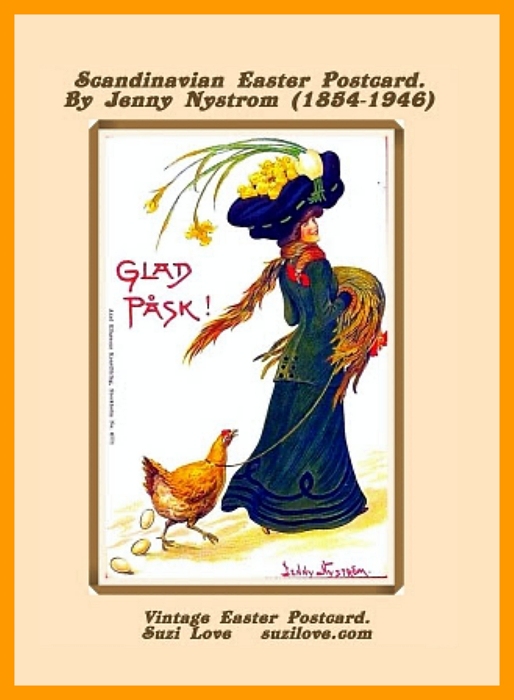
Jenny Nystrom (1884-1946) Vintage Easter Cards. Jenny Eugenia Nyström (1854 – 1946) was a Swedish painter and illustrator who illustrated Easter postcards for, and about, children and happy images.

Jenny Nystrom (1884-1946) Vintage Dutch Easter Card.
Jenny Nystrom (1884-1946) Dutch Vintage Easter Card.
Jenny Nystrom (1884-1946) Vintage Dutch Easter Card.
Jenny Nystrom (1884-1946) Dutch Vintage Easter Card.
Jenny Nystrom (1884-1946) Vintage Scandinavian Easter Card.
Jenny Nystrom (1884-1946)Scandinavian Vintage Easter Card.
Jenny Nystrom (1884-1946) Vintage Scandinavian Easter Card.
Jenny Nystrom (1884-1946)Scandinavian Vintage Easter Card.
Jenny Nystrom (1884-1946) Vintage Scandinavian Easter Card.
Jenny Nystrom (1884-1946)Scandinavian Vintage Easter Card.
Easter Card: Jenny Nystrom, Swedish Illustrator designed pretty and happy Easter Cards. #EasterCard #Vintage #Card https://books2read.com/suziloveEaster Share on X

Posted in 1900s, art, Decorative Item, Easter, Edwardian Era, Europe, History, Suzi Love Images, Victorian Era | Tagged Easter, Easter in Images, Edwardian Era, europe, Suzi Love Books, Suzi Love Images, Sweden, Victorian Era, vintage | Leave a reply

1890-1905 ca. Chatelaine Purse Of Silvered Cast Brass, English. #VictorianEra #EdwardianEra #Chatelaine #Antique

Suzi Love Posted on March 29, 2026 by Suzi LoveFebruary 21, 2026

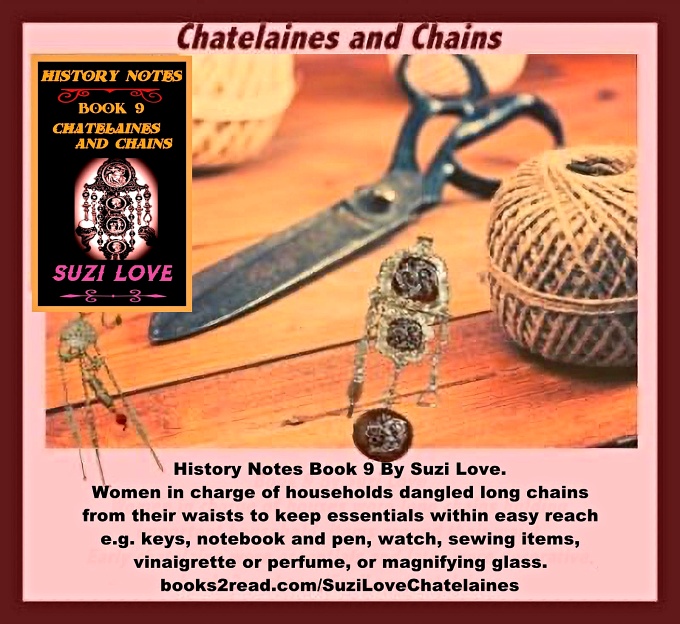
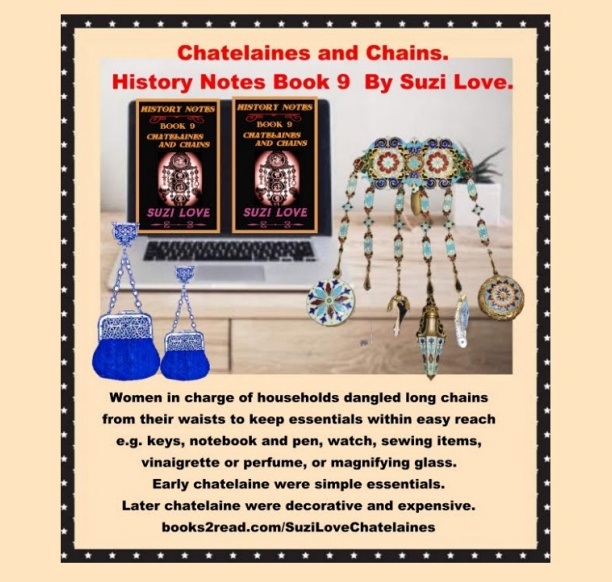
1890-1905 ca. Chatelaine Purse Of Silvered Cast Brass, English. #VictorianEra #EdwardianEra #Chatelaine #Antique books2read.com/SuziLoveChatelaines

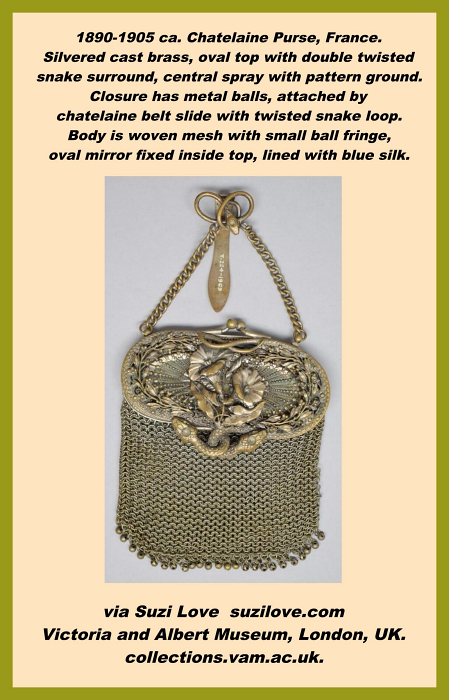
chatelaine_1890-1905 ca. Chatelaine Purse, France. Silvered cast brass, oval top with double twisted snake surround, central spray with pattern ground. Closure has metal balls, attached by chatelaine belt slide with twisted snake loop. Body is woven mesh with small ball fringe, oval mirror fixed inside top, lined with blue silk. via Suzi Love suzilove.com Victoria and Albert Museum, London, UK. collections.vam.ac.uk.
1890-1905 ca. Chatelaine Purse Of Silvered Cast Brass, English. #VictorianEra #EdwardianEra #Chatelaine #Antique http://books2read.com/suziloveReticules Share on X
HN_3_D2D_RetailerBuyLink_HN_3 http://books2read.com/suziloveReticules
D2D_RetailerBuyLink_HN_3 http://books2read.com/suziloveReticules
Posted in 1800s, 1800s women's fashion, 1900s, Chatelaine, Edwardian Era, France, Reticule or Bag, Suzi Love Images, Victorian Era | Tagged 1800s women's fashion, Edwardian Era, France, reticule or bag, Victorian fashion

17th – 20th Centuries Luggage For Travel in Jane Austen and Bridgerton times. #JaneAusten #Bridgerton #RegencyEra #VictorianEra #EdwardianEra

Suzi Love Posted on March 28, 2026 by Suzi LoveFebruary 27, 2026

17th – 20th Centuries Luggage For Travel.

1930-1939 ca. Louis Vuitton Wardrobe Trunk. Monogrammed coat hangers, leather handle, and multiple drawers. via Suzi Love ~ suzilove.com & 1st Dibs ~ 1stDibs.com
1930-1939 ca. Louis Vuitton Wardrobe Trunk. Monogrammed coat hangers, leather handle.
1930-1939 ca. Louis Vuitton Steamer Trunk. Stenciled LV monogram canvas, stamped solid brass hardware and lozine trim, leather side handles, painted French flag each side, large removable tray with compartments inside, removable tray underneath. via Suzi Love ~ suzilove.com & 1st Dibs ~ 1stDibs.com
1930-19391930-1939 ca. Louis Vuitton Steamer Trunk.
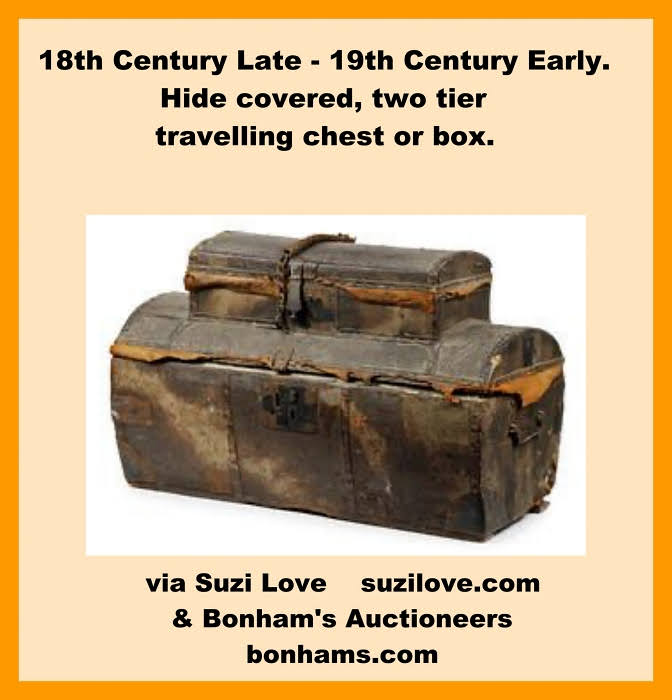
18th Century Late - 19th Century Early. Hide covered, two tier traveling chest or box. Via Bonham’s Auctions.
18th Century Late – 19th Century Early. Hide covered, two tier traveling chest or box. Via Bonham’s Auctions.
17th Century Iron Trunk With Locking Mechanism. via 1st Dibs ~ 1stDibs.com
17th Century Iron Trunk With Locking Mechanism.
1900s Early Bags and Suitcases. 1st Dibs Auctions.
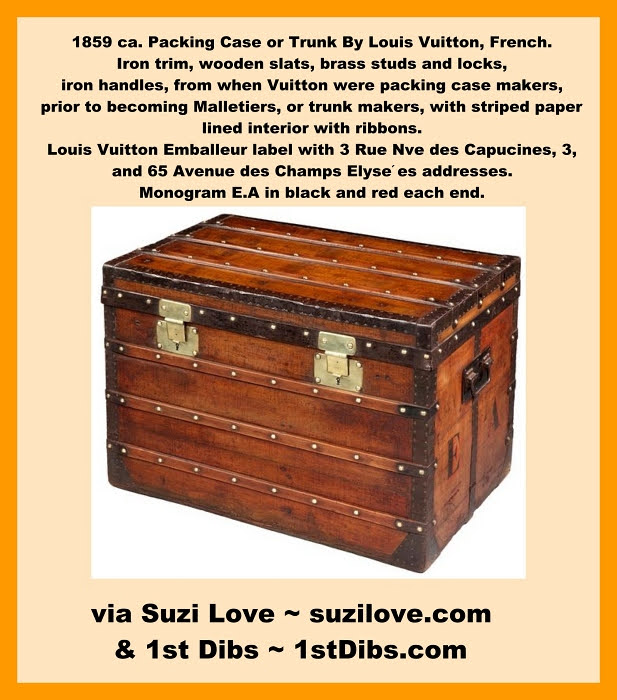
1859 ca. Packing Case or Trunk By Louis Vuitton, French. Iron trim, wooden slats, brass studs and locks, iron handles, from when Vuitton were packing case makers, prior to becoming Malletiers, or trunk makers, with striped paper lined interior with ribbons. Louis Vuitton Emballeur label with 3 Rue Nve des Capucines, 3, and 65 Avenue des Champs Elyse?es addresses. Monogram E.A in black and red each end. via 1st Dibs ~ 1stDibs.com
1859 ca. Packing Case or Trunk By Louis Vuitton, French. Iron trim, wooden slats, brass studs and locks.
1951 November 19th Vintage Luggage. Advertising Poster Life Magazine.
1925 Asprey Luggage. Asprey Gifts Advertising, UK.
1901 Louis Vuitton Luggage. Advertisement From The 1901 Orient Pacific Guide.
17th – 20th Centuries Luggage For Travel. #RegencyEra #VictorianEra #EdwardianEra books2read.com/SuziLoveTravel Share on X
HN_10_D2D_RetailerBuyLink_HN_10
books2read.com/SuziLoveTravel
HN_10_D2D_RetailerBuyLink_ History Notes Book 10 books2read.com/SuziLoveTravel
Posted in 1700s, 1800s, 1900s, Australia, Box Or Container, Bridgerton, Canada, Carriage, Decorative Item, Edwardian Era, England, Europe, household, Jane Austen, Regency Era, Romantic Era, travel, U.S.A, Victorian Era | Tagged Book 10, Box Or Container, Bridgerton, Edwardian Era, Georgian era, History Notes, Jane Austen, Regency Era, Suzi Love Books, travel, Victorian Era

1900 Friendship, or Hoof, Faberge Egg, Russia. #easter #easteregg #russia #faberge

Suzi Love Posted on March 28, 2026 by Suzi LoveMarch 26, 2026

1900 Friendship, or, Hoof Faberge Egg, Russia. Presented by Tzarina Alexandra to one of her friends. Red gold bowenite, diamonds, rubies and pearls.

egg_1900 Friendship, or, Hoof Faberge Egg (1). Presented by Tzarina Alexandra to one of her friends. Red gold bowenite, diamonds, rubies and pearls. Faberge Easter Egg, Russia

The name Faberge is associated with the Russian Imperial family for whom most of the world’s most famous eggs were created. In 1870, Faberge inherited his father’s jewelry business and quickly became known for his brilliant designs. A display of his work and the gold medal he was awarded in Moscow’s Pan-Russian Exhibition of 1882 brought him to the attention of the Russian nobility.
In 1885, Faberge was commissioned by Tsar Alexander III of Russia to create an Easter egg for his wife, the Empress Maria Fedorovna. This became known as The Hen Egg, the first Imperial Faberge Egg, and is made of gold. The Empress was so happy with the gift that Alexander appointed Fabergé a ‘Goldsmith by Special Appointment to the Imperial Crown’ and the following year commissioned another egg. From then on, Faberge was given complete freedom with future Imperial designs which become even more elaborate every year. A famous Fabergé egg is one of sixty eight jeweled eggs made by Fabergé and his assistants for the Russian Tzars and private collectors between 1885 and 1917.
After the Russian Revolution, the House of Faberge was nationalized by the Bolsheviks and the Faberge family fled to Switzerland where Peter Carl Faberge died in 1920. Several of the Faberge Imperial eggs are still missing.1900  Friendship, or, Hoof #Faberge #Easter Egg. Presented by Tzarina Alexandra to one of her friends. Red gold bowenite, diamonds, rubies and pearls. Faberge Easter Egg, Russia.

1900 Friendship, or, Hoof Faberge Egg. #easter #easteregg #faberge #russia https://books2read.com/suziloveEaster Share on X
Posted in 1900s, Decorative Item, Easter, Edwardian Era, Ester In Images, household, Royalty, Russia | Tagged decorative, Easter, easter egg, Easter in Images, Edwardian Era, household, Russia

1911 Orange Tree, or, Bay Tree Faberge Imperial Easter Egg. #Easter #EasterEgg #christianity #russia #faberge

Suzi Love Posted on March 25, 2026 by Suzi LoveMarch 25, 2026

1911 Orange Tree, or, Bay Tree Faberge Imperial Easter Egg. Gift to Maria from her son. Automaton nightingale emerges and sings when the correct orange is turned. Gold, jade, diamonds, vitrines, amethysts, rubies, pearls, agates, and bird has feathers. Faberge Easter Egg, Russia.

The name Faberge is associated with the Russian Imperial family for whom most of the world’s most famous eggs were created. In 1870, Faberge inherited his father’s jewelry business and quickly became known for his brilliant designs. A display of his work and the gold medal he was awarded in Moscow’s Pan-Russian Exhibition of 1882 brought him to the attention of the Russian nobility.In 1885, Faberge was commissioned by Tsar Alexander III of Russia to create an Easter egg for his wife, the Empress Maria Fedorovna. This became known as The Hen Egg, the first Imperial Faberge Egg, and is made of gold. The Empress was so happy with the gift that Alexander appointed Fabergé a ‘Goldsmith by Special Appointment to the Imperial Crown’ and the following year commissioned another egg. From then on, Faberge was given complete freedom with future Imperial designs which become even more elaborate every year. A famous Fabergé egg is one of sixty eight jeweled eggs made by Fabergé and his assistants for the Russian Tzars and private collectors between 1885 and 1917.After the Russian Revolution, the House of Faberge was nationalized by the Bolsheviks and the Faberge family fled to Switzerland where Peter Carl Faberge died in 1920. Several of the Faberge Imperial eggs are still missing.

egg_1911_OrangeTreeEasterEgg
1911 Orange Tree, or, Bay Tree Faberge Imperial Easter Egg. #Easter #EasterEgg #christianity #russia #faberge https://books2read.com/suziloveEaster Share on X
Posted in 1900s, Customs & Manners, Decorative Item, Easter, Ester In Images, household, Royalty, Russia, Suzi Love Books | Tagged decorative, Easter, easter egg, Easter in Images, Edwardian Era, Faberge, household, Royalty, Russia
easter-collage_fabergeeaster-eggsbeautiful_collage_sml

1900s Early Gorgeous Faberge Eggs From Russia. 2. #Easter #Faberge #Russia

Suzi Love Posted on March 25, 2026 by Suzi LoveMarch 26, 2026

The name Faberge is associated with the Russian Imperial family for whom most of the world’s most famous eggs were created. In 1870, Faberge inherited his father’s jewelry business and quickly became known for his brilliant designs. A display of his work and the gold medal he was awarded in Moscow’s Pan-Russian Exhibition of 1882 brought him to the attention of the Russian nobility.

In 1885, Faberge was commissioned by Tsar Alexander III of Russia to create an Easter egg for his wife, the Empress Maria Fedorovna. This became known as The Hen Egg, the first Imperial Faberge Egg, and is made of gold. The Empress was so happy with the gift that Alexander appointed Fabergé a ‘Goldsmith by Special Appointment to the Imperial Crown’ and the following year commissioned another egg. From then on, Faberge was given complete freedom with future Imperial designs which become even more elaborate every year. A famous Fabergé egg is one of sixty eight jeweled eggs made by Fabergé and his assistants for the Russian Tzars and private collectors between 1885 and 1917.

After the Russian Revolution, the House of Faberge was nationalized by the Bolsheviks and the Faberge family fled to Switzerland where Peter Carl Faberge died in 1920. Several of the Faberge Imperial eggs are still missing.

1900 Cockerel Faberge Easter Egg, or, Cuckoo Clock Egg was given by Tsar Nicholas II to Empress Maria Feodoronova. Mechanism on top rear enables its bird to come out and move. The egg is part of the Viktor Vekselberg Collection, owned by The Link of Times Foundation, and housed in the Fabergé Museum in Saint Petersburg, Russia. Faberge Easter Egg, Russia.

Easter_1900 Imperial Cockerel Faberge Easter Egg, or, Cuckoo Clock Egg was given by Tsar Nicholas II to Empress Maria Feodoronova. Mechanism on top rear enables its bird to come out and move. The egg is part of the Viktor Vekselberg Collection, owned by The Link of Times Foundation, and housed in the Fabergé Museum in Saint Petersburg, Russia. Faberge Easter Egg, Russia. Suzi Love suzilove.com
egg_1912_imperial_faberge-easter-egg-russia
Easter_1912 Imperial Napoleonic Faberge Surprise Egg. Made by Henrik Emanuel Wigström, miniatures by Vassily Ivanovich Zuiev. Gold, guilloch enamel, rose-cut diamond, platinum, gold, ivory, gouache, velvet, silk. For Tsar Nicholas II Alexandrovich Romanov to give to Empress Maria Feodorovna. via suzilove.com and Metropolitan Museum New York City, U.S.A. metmuseum.org
1912 Imperial Napoleonic Faberge Surprise Egg. Made by Henrik Emanuel Wigström, miniatures by Vassily Ivanovich Zuiev. Gold, guilloch enamel, rose-cut diamond, platinum, gold, ivory, gouache, velvet, silk. For Tsar Nicholas II Alexandrovich Romanov to give to Empress Maria Feodorovna. via Metropolitan Museum New York City, U.S.A. metmuseum.org
1900s Early Gorgeous Faberge Eggs From Russia. 2. #Easter #Faberge #Russia. https://books2read.com/suziloveEaster Share on X

Posted in 1900s, Box Or Container, Decorative Item, Easter, Edwardian Era, Europe, History, Russia, Suzi Love Books, Suzi Love Images | Tagged 1900s, Easter, Easter in Images, Edwardian Era, Faberge, Russia, Suzi Love Books, Suzi Love Images | Leave a reply

Christmas: Candy Cane And It’s Fascinating History #Christmas #holidays #Traditions #Customs

Suzi Love Posted on December 11, 2025 by Suzi LoveDecember 10, 2025

Legend has it that during the 17th century, craftsmen created straight white sticks of candy in the shape of shepherds’ crooks at the suggestion of the choirmaster at the Cologne Cathedral in Germany. The treats were given to children to keep them quiet during ceremonies at the living creche, or Nativity scene, and the custom of passing out the crooks at such ceremonies soon spread throughout Europe.

‘The legends of the candy cane are many, including that the cane was shaped like a “J” for Jesus, the three red stripes symbolized the Holy Trinity, the hardness of the candy represented the Church’s foundation on solid rock and the peppermint flavor reflects the use of hyssop, an herb referred to in the Old Testament.’ via Encyclopedia Britannica

In celebrations of Saint Nicholas Day, candy canes are given to children as they are also said to represent the crosier of the Christian bishop, Saint Nicholas; crosiers themselves allude to the Good Shepherd, a title associated with Jesus. Some people explain the symbolism of a striped cane as white representing Christ’s purity, red the blood he shed, and the three red stripes the Holy Trinity.

In the mid 1600s, sugar roses were added but weren’t popular so plain white canes remained until red stripes were added around 1890. In 1847, a German immigrant living in Wooster, Ohio, U.S.A. looped candy canes that he brought with him from Europe over the boughs of his Christmas tree.

In 1919,  Bob McCormack of Albany, Georgia, made candy canes for family, friends and local shopkeepers. The canes were bent by hand as they came off the assembly line into the  ‘J’ shape of a shepherd’s crook, so breakage was often over 20 percent. In the 1920s, a cherubic child in a red-and-white hat sold peppermint candy cane to Albany natives in an advertisement for Bob’s candy company.  McCormack was the first manufacturer to wrap his candy in cellophane. Bobs moved to a larger facility in the 1930s so that it could expand its product lines and was one of the few candy companies to remain solvent during the Great Depression.

As the economy improved, people bought more sweet treats,  but Bobs Candy was then leveled by a tornado and, as the company had no tornado insurance, they had to rebuild on their own. By August 1940 the company was back in business and employed McCormack’s three children.

During World War II (1941-45), when sugar was rationed, coconuts were in short supply, and pecans were expensive, Bobs took advantage of a plentiful local product—the peanut—and sold peanut-butter crackers and vacuum-packed peanuts. During the 1950s, Bobs began making money with such innovations as break-proof packaging, moisture-proof candy wrappers.

In 1952, Bob McCormack’s brother-in-law, Catholic priest Gregory Keller, invented the Keller Machine which automated the process of twisting soft candy into spiral striping and then cutting them into precise lengths as candy canes.

Harding Keller invented the Keller Machine around 1950 for his brother-in-law Bob McCormack. The machine twisted and cut stick candy, allowing for the mass production of the company’s signature candy canes and other items. – Courtesy of Farley’s and Sathers Candy Company, Inc.

First, candy sticks cut to the desired length enter the machine. Each stick is bent individually, but the machine has a system of multiple grippers and rollers to continually bend the sticks, one after the other. As each stick enters the machine, it is positioned in a gripper which holds the straight portion of the cane with the part to be bent protruding out. Each gripper has on one side a curved die which the protruding end will be bent over. The candy stick is first bent to a right angle as it is moved past and put into contact with an inclined face. The patent application describes two potential versions of the mechanism which complete the bending process.

The first version of the mechanism has a chain around two sprockets on which are mounted bending rollers. Each bending roller is attached to a cam which rides along another inclined face to move the roller along the protruding surface of the cane to complete bending it around the die. In the second version, the chain and sprockets are replaced by a wheel on which the bending rollers are mounted. In modern candy cane production, the sticks are wrapped in cellophane before they are bent.

By the middle of the century, Bob’s company – originally the Famous Candy Company, then the Mills-McCormack Candy Company, and later Bobs Candies, had become one of the world’s leading candy cane producers.Bobs Candies was sold to Farley’s and Sathers in Spring 2005. Farley’s and Sathers merged with the Ferrara Candy Company which continues to make candy canes under the Bobs name.

By the middle of the century, Bob’s company – originally the Famous Candy Company, then the Mills-McCormack Candy Company, and later Bobs Candies, had become one of the world’s leading candy cane producers.

Xmas_Candy Cane
Xmas_Candy Cane
Xmas_Candy Cane
Christmas: Candy Cane And It's Fascinating History #Christmas #holidays #Traditions #Customs https://books2read.com/suziloveHOCP Share on X
Posted in 1800s, 1900s, Christmas, Customs & Manners, Edwardian Era, Food and Drink, History Of Christmases Past, Suzi Love Books, U.S.A, Victorian Era | Tagged Christmas, Customs and Traditions, Edwardian Era, Food, History Of Christmases Past, Suzi Love Images, Suzi Love Research, USA, Victorian Era

Christmas: How did they celebrate Christmas in Bridgerton and Jane Austen times? #Christmas #Christianity #Bridgerton #JaneAusten #holidays

Suzi Love Posted on December 10, 2025 by Suzi LoveDecember 9, 2025

How did they celebrate Christmas in Bridgerton and Jane Austen times? Historical information about the traditions of Christmas through the centuries, including the religious aspects, decorations, games, food and plays. History Of Christmases Past has lots of information and images about Christmas through the centuries, including religious aspects, decorations, games, food and plays. Historic images show how some traditions have changed while many have remained the same through the centuries. books2read.com/suziloveHOCP

How did they celebrate Christmas in Bridgerton and Jane Austen times? Historical information about the traditions of Christmas through the centuries, including the religious aspects, decorations, games, food and plays. #holidays #Christmas #Christianity #Bridgerton #JaneAusten http://books2read.com/suziloveHOCP
How did they celebrate Christmas in Bridgerton and Jane Austen times? Historical information about the traditions of Christmas. #holidays #Christmas #Christianity #Bridgerton #JaneAusten http://books2read.com/suziloveHOCP Share on X


Posted in 1700s, 1800s, 1900s, Australia, Bridgerton, Canada, Christmas, Customs & Manners, Edwardian Era, England, Europe, Events, Food and Drink, Georgian Era, History Of Christmases Past, household, Jane Austen, Music, Regency Era, Romantic Era, Royalty, South Pacific, Suzi Love Books, Suzi Love Images, U.S.A, Victorian Era | Tagged Book 1, Bridgerton, British history, Christmas, Customs and Traditions, drinks, Edwardian Era, Food, Georgian era, History Events, History Of Christmases Past, household, Jane Austen, music, Queen Victoria, Regency Era, Regency Royalty, Suzi Love Books, Victorian Era

What did the lady of the house use to pen notes in Bridgerton and Jane Austen’s years? What sat on the desk of her male contemporaries? #bridgerton #JaneAusten #RegencyEra #Antiques

Suzi Love Posted on August 27, 2025 by Suzi LoveAugust 21, 2025

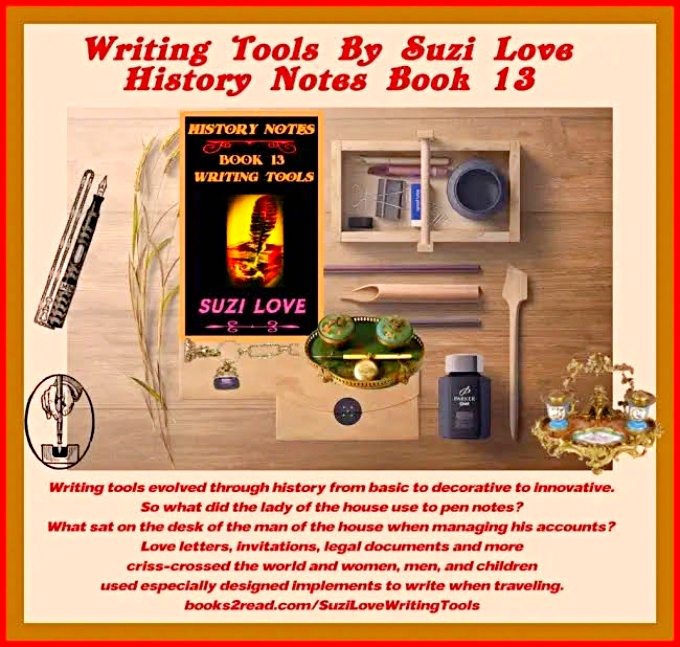
What did the lady of the house use to pen notes in Bridgerton and Jane Austen’s years? What sat on the desk of Jane Austen’s male contemporaries when they managed household and estate accounts? books2read.com/SuziLoveWritingTools. Writing Tools, History Notes Book 13.

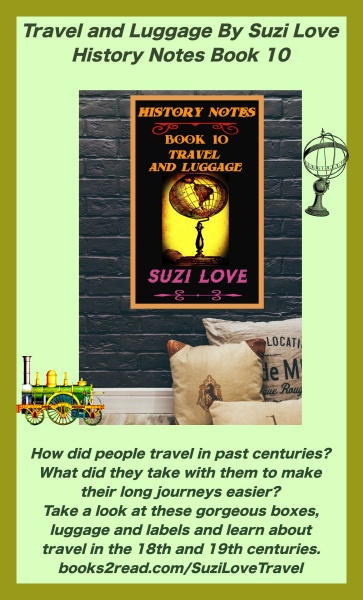
HN_10_Travel and Luggage By Suzi Love History Notes Book 10. How did people travel in Jane Austen's times. In past centuries? What did they take with them to make their long journeys easier? Travel by road, ship, canal, or railway all took a long time and had dangers so people learned to prepare. And then, in the nineteenth century, road improvements, inventions, and scientific developments made travel more pleasurable. books2read.com/SuziLoveTravel
What did the lady of the house use to pen notes in Bridgerton and Jane Austen's years? What sat on the desk of her male contemporaries? #bridgerton #JaneAusten #RegencyEra #Antiques books2read.com/SuziLoveWritingTools Share on X
HN_13_D2D_Writing Tools books2read.com/SuziLoveWritingTools
Posted in 1700s, 1800s, 1900s, Australia, Box Or Container, Bridgerton, Canada, cartoon, Decorative Item, Edwardian Era, England, Europe, Food and Drink, France, Georgian Era, Google Books, History, History Notes, Jane Austen, London, medical, postal, Regency Era, Romantic Era, Russia, Suzi Love Books, Suzi Love Images, Suzi Love Writing, travel, U.S.A, Victorian Era, Writing Tools | Tagged antiques, Book 13, Bridgerton, decorative, Edwardian Era, furniture, Georgian era, History Notes, household, Jane Austen, Romantic Era, Suzi Love Books, travel, Victorian Era, Writing Tools

1900-1910 ca. Livingstone Medicine Chest, England. #EdwardianEra #Medical #England

Suzi Love Posted on August 15, 2025 by Suzi LoveJuly 7, 2025

1900-1910 ca. Livingstone Medicine Chest, England. via Science Museum, London, U.K.
sciencemuseum.org.uk

1900-1910 ca. Livingstone Medicine Chest, England. via Suzi Love suzilove.com & Science Museum, London, U.K. sciencemuseum.org.uk
1900-1910 ca. Livingstone Medicine Chest, England. #EdwardianEra #Medical #England https://www.bookbub.com/profile/suzi-love Share on X
Suzi Love Book Bub https://www.bookbub.com/profile/suzi-love
Posted in 1900s, Box Or Container, Edwardian Era, England, London, medical, Regency Era, Suzi Love Images | Tagged Box Or Container, Edwardian Era, medical, Science Museum

Post navigation

← Previous Post

SUBSCRIBE TO SUZI LOVE'S NEWSLETTER.

Recent Posts

  • What shoes did the Bridgertons and Jane Austen wear? Gray Slippers, American, with long ankle ties. #JaneAusten #Bridgerton #shoes #regencyfashion
  • Book Hooks: Lady Laura Jamison believes her extraordinary olfactory senses will sniff out her perfect match, but will the Earl prove her wrong? #HistoricalRomance #RomCom #RegencyRomance
  • 1880’s Gorgeous corset of silk satin, steel busk, and bone, French. #VictorianEra #Corset #VictorianFashion
  • “Happiness in marriage is entirely a matter of chance.” Jane Austen #PrideandPrejudice (1813) #JaneAusten #Quote #RegencyEra
  • Do You Know What A Half Parure Is? 1806 Muslin Dress With Train, Shawl and Half Parure Jewelry Set. #RegencyFashion #JaneAusten #HistoricalFashion

Recent Comments

  1. Jana Richards on Book Hooks: Lady Laura Jamison believes her extraordinary olfactory senses will sniff out her perfect match, but will the Earl prove her wrong? #HistoricalRomance #RomCom #RegencyRomance
  2. Kayelle Allen on Book Hooks: Lady Laura Jamison believes her extraordinary olfactory senses will sniff out her perfect match, but will the Earl prove her wrong? #HistoricalRomance #RomCom #RegencyRomance
  3. Tina Donahue on Book Hooks: Lady Laura Jamison believes her extraordinary olfactory senses will sniff out her perfect match, but will the Earl prove her wrong? #HistoricalRomance #RomCom #RegencyRomance
  4. Maggie Blackbird on Book Hooks: Lady Laura Jamison believes her extraordinary olfactory senses will sniff out her perfect match, but will the Earl prove her wrong? #HistoricalRomance #RomCom #RegencyRomance
  5. James DiBenedetto on Book Hooks: Lady Laura Jamison believes her extraordinary olfactory senses will sniff out her perfect match, but will the Earl prove her wrong? #HistoricalRomance #RomCom #RegencyRomance

Login

  • Log in

Archives

  • May 2026
  • April 2026
  • March 2026
  • February 2026
  • January 2026
  • December 2025
  • November 2025
  • October 2025
  • September 2025
  • August 2025
  • July 2025
  • June 2025
  • May 2025
  • April 2025
  • March 2025
  • February 2025
  • January 2025
  • December 2024
  • November 2024
  • October 2024
  • September 2024
  • August 2024
  • July 2024
  • June 2024
  • May 2024
  • April 2024
  • March 2024
  • February 2024
  • January 2024
  • November 2023
  • October 2023
  • September 2023
  • August 2023
  • July 2023
  • June 2023
  • April 2023
  • March 2023
  • February 2023
  • June 2022
  • April 2022
  • March 2022

Categories

  • 1700s
  • 1700s Mens fashion
  • 1700s Womens Fashion
  • 1800s
  • 1800s Mens Fashions
  • 1800s women's fashion
  • 1900s
  • art
  • Australia
  • Bath
  • bedroom fashion
  • Book Hooks
  • Box Or Container
  • Bridgerton
  • Bus Trips
  • Canada
  • Carriage
  • cartoon
  • Celebrity
  • Chatelaine
  • children
  • Children
  • Christmas
  • Coat or Pelisse Or Redingote
  • Contemporary
  • Corset
  • Couple
  • Customs & Manners
  • dancing
  • December Scandal
  • Decorative Item
  • Dress Or Robe
  • Easter
  • Edwardian Era
  • Embracing Scandal
  • England
  • Ester In Images
  • Europe
  • Events
  • Fashion
  • fashion accessories
  • Food and Drink
  • Four Times A Virgin
  • France
  • furniture
  • Georgian Era
  • Georgian Fashion
  • Google Books
  • Grand Tour
  • Group
  • hats
  • History
  • History Events
  • History Notes
  • History Of Christmases Past
  • household
  • Hygiene
  • Irresistible Aristocrats
  • Jane Austen
  • Keanu Reeves
  • Kellys Justice
  • Legal
  • London
  • Love After Waterloo
  • Loving Lady Katharine
  • medical
  • military
  • money
  • mourning
  • Music
  • Outback Arrival
  • pants
  • Pastimes
  • peerage
  • People
  • Petunia and Pearl Diver
  • Places
  • Pleasure House Ball
  • postal
  • Queensland
  • Quotations
  • Regency Era
  • Regency Fashion
  • Regency Life Series
  • Reticule or Bag
  • riding
  • Romantic Era
  • Royalty
  • Russia
  • Scandalous Siblings Series
  • Scenting Scandal
  • Self Publishing
  • sewing
  • Shirt
  • shoes
  • South Pacific
  • Spencer
  • sports
  • Suit
  • Sunday Snippet
  • Suzi Love
  • Suzi Love Books
  • Suzi Love Images
  • Suzi Love Writing
  • Swain Cove
  • THe Viscount's Pleasure House
  • travel
  • U.S.A
  • underclothing
  • Vest or Waistcoat
  • Victorian Era
  • Victorian Fashion
  • weapons
  • weddings
  • Writing Tools

1800s men fashion 1800s women's fashion antiques Bridgerton British history Cartoons Corset cravat decorative Dress Or Gown England europe fashion accessories Fashion Plate France Georgian era Georgian Fashion gloves google books Hats And Hair historical romance History Notes household Jane Austen jewelry Journal des Dames et des Modes London Metropolitan Museum NYC pants Redingote Or Pelisse Or Coat Regency Era Regency Fashion Regency London reticule or bag riding sewing shawls Shoes Suzi Love Books Suzi Love Images Tailcoat The Repository Of Arts underclothing Vest or Waistcoat Writing Tools

©2026 - Suzi Love - Weaver Xtreme Theme Privacy Policy
↑