1820 ca. Typical Regency Wrap Corset.. Worn over a chemise. Cross-over fabric and lacing at the back. Tied around at the front. via Roger-Viollet Palais Galliera, Musée de la Mode de la Ville de Paris.
Corsets changed at the end of the Regency Era to fit well under clothing, give maximum support and comfort. Corsets pushed up breasts and showed off the bust line beneath a square-cut and low-cut neckline as in the early 1800s, or Regency years. The Bridgerton ladies, Jane Austen and their female friends would have worn this type of soft wrap corset. https://books2read.com/SuziLoveCorsetBook17.
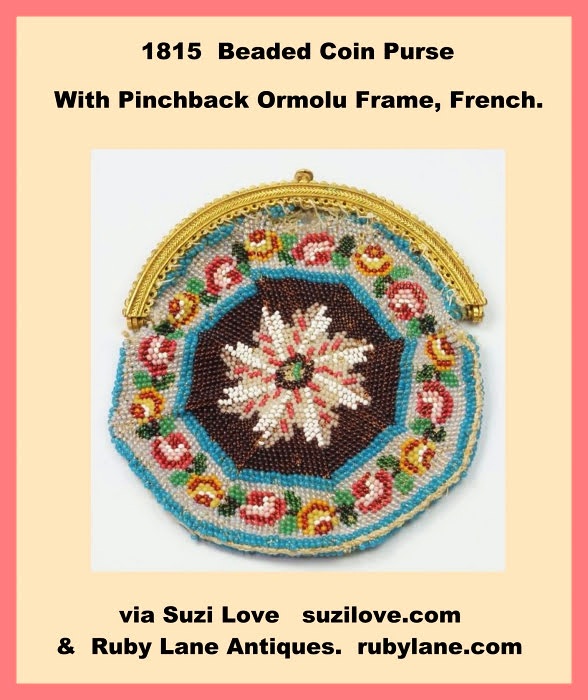
1815 Beaded Coin Purse With Pinchback Ormolu Frame. Would have been carried inside a reticule, or larger bag, so a woman had small coinage on hand to pay for items on those occasions when a gentleman wasn’t with her to pay for them. Via Ruby Lane Antiques.
A reticule, or purse, or handbag, was usually carried by a woman during the Regency period to carry all their daily necessities. Earlier, women used pockets that tied at the waistline and were hidden in the folds of their skirts. Empire style, or early 1800s, high-waisted dresses made it impossible to either sewn in a pocket or to tie on a pocket.
1815 Beaded Coin Purse With Pinchback Ormolu Frame from Jane Austen and Bridgerton years. #JaneAusten #Bridgerton #handbag #RegencyFashion books2read.com/suziloveReticules
1823 Couple In Evening Costumes, French. Short length dancing dress of white gauze, short sleeves, pink ribbon trim, flowers, parure, or jewelry set, dancing shoes and hair in a bandeau. Man in half dress of black tailcoat, yellow vest, short length white trousers, high white cravat, blue fob, and curled hair style. via Modes Francaises L’Indiscreet, France.
From the finish of the 18th century until 1820, men’s fashions in European and European-influenced countries moved away from the formal wear of brocades, lace, wigs and powder to more informal and relaxed styles. Focus was on undress rather than formal dress. Typical menswear in the early 1800s included a tailcoat, a vest or waistcoat, either breeches, pants, or the newer trousers, stockings, shoes or boots, all worn with an overcoat and hat. This basic ensemble was accessorized with some form of neckcloth or cravat, gloves, walking stick, cane or riding crop, handkerchief, fobs, watch and perhaps a quizzing glass or eye glass.
Skirted coats were replaced with short-fronted, or cutaway, tailcoats worn over fitted waistcoats and plain, white linen shirts. Knee breeches were gradually replaced by tight-fitting pantaloons and later trousers, decorative shoes with buckles were replaced with a variety of boot styles, and fussy and ruffled neckwear gave way to intricately tied, white linen neck cloths. A Regency Era, or early 1800s, gentleman was outfitted in more practical fabrics, such as wool, cotton and buckskin rather than the fussy brocades and silks of the late 1700s.
1807 Two Ladies In Morning Dress, French. Left: Morning dress with short puffed sleeves over long straight sleeves ruffles around collar sleeves and hem white cap carrying blue parasol. Right: Blue Fichu or neck Shawl, blue Bonnet. Fashion Plate via Journal des Dames et des Modes, or Costume Parisien.
These are the types of outfits worn by Jane Austen and contemporaries in English magazines, where French fashions were obsessively copied despite the two countries being at war for many years.
Definition Fichu: Piece of lace, muslin, or other cloth worn about the neck and cleavage to preserve a lady’s modesty. From French word meaning neckerchief.
Fashion Women 1805-1809 History Notes Book 26
What did Jane Austen and friends wear? This book looks at early 1800s fashions, which were elegant and pretty with high waists and fabrics that were almost transparent. These Empire style gowns, named after Napoleon’s first Empress, became popular throughout Europe, and were then copied around the world. Colorful outwear was added to make an ensemble more attractive and warmer.
https://books2read.com/SuziLoveFashionWomen1805-1809
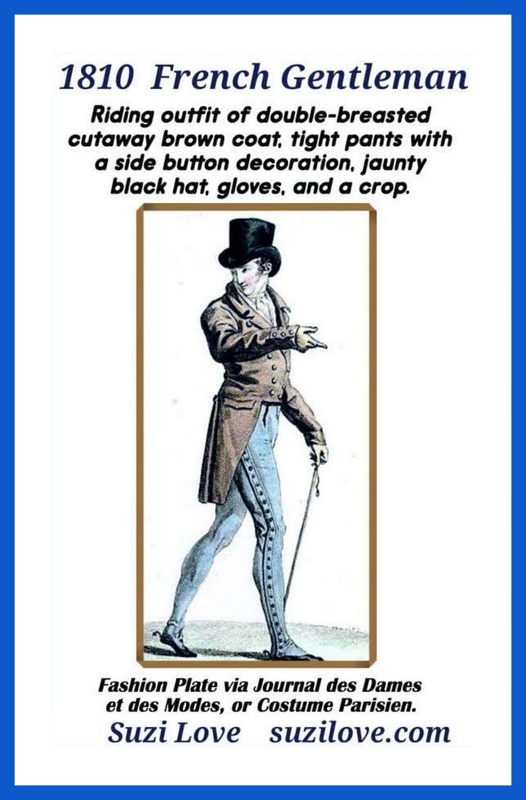
1810 French Gentleman. Riding outfit of double-breasted brown coat, tight pants with a side button decoration, jaunty black hat, gloves, and a crop. As Worn by Gentleman in Jane Austen Families. #RegencyFashion #JaneAusten Fashion Plate via Journal des Dames et des Modes, or Costume Parisien.
Pantaloons: When tailcoats lengthened, breeches extended below the knees to accommodate the longer tails and were gradually replaced with slimmer fitting, longer pants, or pantaloons, that ended at the ankle. Pantaloons were close-fitting and sometimes buttoned all the way down the leg. To make them hug the leg tighter, knitted fabrics were used, or fabrics like nankin and kerseymere were cut on the bias.
In the early 1800s, men no longer wore complicated styles and extravagant fabrics. Men’s fashion simplified and became more conservative. A well cut tailcoat, vest, pantaloons and an immaculate cravat of beautiful white linen in the style of George Bryan, or Beau, Brummell. Clothes were a status symbol and indicated a man’s social position. These clothing items were the sort worn by Jane Austen’s male family and friends.
1810 Riding Outfit French DoubleBreastedBrownCoat Fashion Plate via Journal des Dames et des Modes, or Costume Parisien.
1810 Pantaloons and Double-Breasted Cutaway Coat As Worn by Gentleman in Jane Austen years. #RegencyFashion #JaneAusten #pantaloonshttps://books2read.com/SuziLoveFashionMen1800-1819
1800 Gentleman In Morning Dress French. Looking In Mirror, Double breasted, long coat high black boots with tan tops red cravat walking stick. Fashion Plate via Journal des Dames et des Modes, or Costume Parisien.
During the early 1800s skirted coats were replaced with short-fronted, or cutaway, tailcoats worn over fitted waistcoats and plain, white linen shirts. Knee breeches were gradually replaced by tight-fitting pantaloons and later trousers, decorative shoes were replaced with boot, such as the tan topped boots worn here, and fussy neckwear gave way to intricately tied, white linen neck cloths. A Regency Era, or early 1800s, gentleman was outfitted in more practical fabrics, such as wool, cotton and buckskin rather than the fussy brocades and silks of the late 1700s. The men in Jane Austen’s life would have worn an elegant outdoor ensemble like this for everyday excursions around the countryside.
HN_23_D2D_Fashion Men 1800-1819 History Notes Book 23
https://books2read.com/SuziLoveFashionMen1800-1819
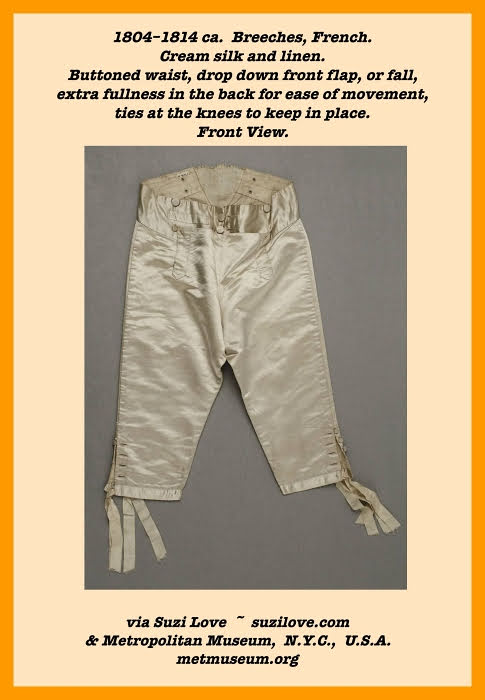
1804-1814 ca. Breeches, French. Cream silk and linen. Buttoned waist, drop down front flap, or fall, extra fullness in the back for ease of movement, ties at the knees to keep in place. via Metropolitan Museum, N.Y.C., U.S.A. metmuseum.org
Definition Pants – Breeches: Men’s close-fitting pants that fastened just below the knees or above the ankles with buttons, drawstrings, or buckles. They had a horizontal front flap called a ‘fall’ which unbuttoned to drop down. Some falls were narrow and some wide. Breeches were worn with stockings. In Jane Austen’s times, or the Regency Era, breeches were worn tighter to show off a gentleman’s manly physique, often leaving nothing to the imagination.
1804-1814 ca. Front View. Breeches, French. 1804-1814 ca. Back View. Breeches, French. 1804-1814 ca. Buttoned Waist View. 23_d2d_fashionmen1800-1819. https://books2read.com/SuziLoveFashionMen1800-1819
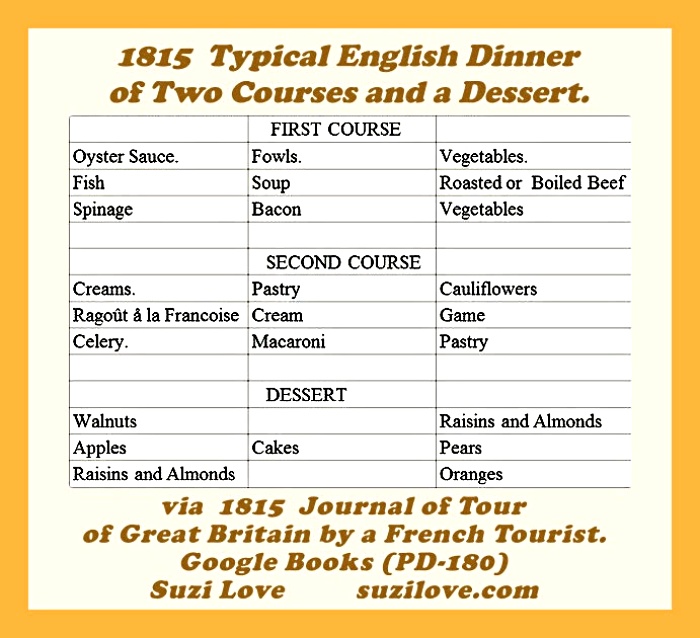
1815 Typical English Dinner In Jane Austen and Bridgerton Times. Two Courses and a Desert. From- 1815 Journal of Tour of Great Britain by a French Tourist via Google Books (PD-180)
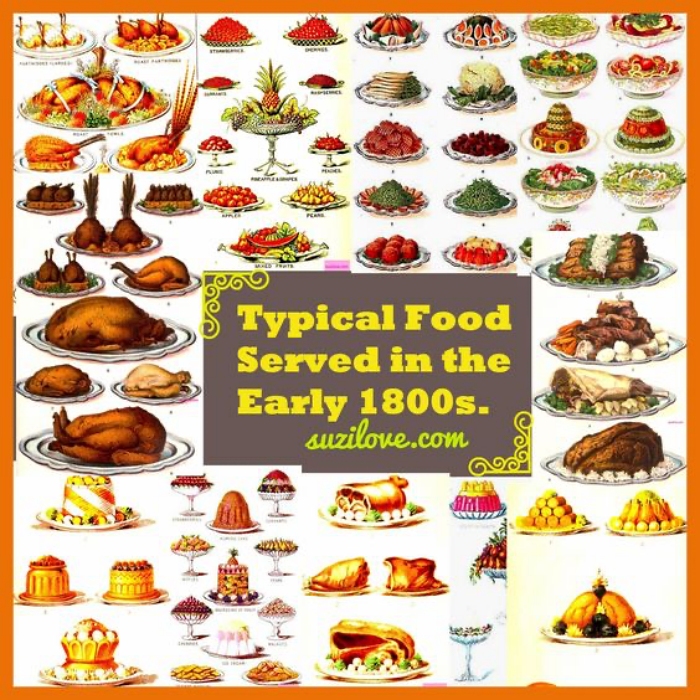
Typical food served during the early 1800s, or Regency Era. ‘Removes‘ were the dishes removed from the table during a meal, usually the soup and fish, and then replaced by other dishes. After all diners have had a chance to eat all the dishes on the table, the table is cleared and another set of dishes put on the table. This is the second course.
1814 Gentleman’s Redingote, or Overcoat, French. Back View of coat with back pleats and metal buttons worn with high topped boots, top hat, and a cane. Fashion Plate via Journal des Dames et des Modes, or Costume Parisien.
Definition Redingote Or Coat: French word developed from English words, riding coat. Long fitted outdoor coat worn over other garments for warmth. Originally made with several capes and trimmed with large buttons. For women, the coat was often cut away in the front or left open to show off the dress underneath. French fashion plates call these coats Redingotes and they were worn by men, women, and children. English fashion plates call the coats a Pelisse, a walking dress, Promenade dress, or Carriage dress.
Love After Waterloo by Suzi Love. Despite Wellington’s victory over Napoleon four days earlier, soldiers, to use the term loosely, still lingered around Waterloo. They and deserters from both sides had joined local famers in picking through the remains of bodies, uniforms, and armory to pilfer anything of value. There’d been nowhere safe to hide her and her son, Daniel, so Lady Melton’s’ brothers had packed what remained of their equipment and taken them, along with a few wounded British soldiers, to the Captain’s quarters, knowing that his orders were to protect whoever remained of French stragglers and deserters.
Anne’s twin brothers hadn’t lingered, because Wellington and what was left of his British troops were marching back towards Brussels and Brendon’s skills as a physician were urgently needed. Benjamin, an aide to Wellington, had stayed to organize the repatriation of their soldiers and the departure of their sister and nephew. Neither twin had understood her reluctance to join Captain Belling and his group and had ignored her pleas to stay with them in Europe, stating firmly that it was time that she and Daniel returned to London.
They hoped that Anne could reopen their townhouse in London and prepare for when they could join her, optimistically within a few weeks. She wasn’t quite so optimistic. Napoleon was an egotist. He wasn’t the type to accept defeat easily, and she imagined he’d already be making plans for a triumphant return in the future, despite the carnage left behind at Waterloo when he and his remaining troops retreated. Her brothers had reported that the plains had been covered with the dead and the dying, both men and horses.